Introduction
GLP-1 medicines now sit at the center of weight care, diabetes care, employer benefit debates, Medicaid budgets, pharmacy access questions, and everyday patient routines. The numbers below were last checked on July 13, 2026. They cover how many adults are using these drugs, what people pay, where coverage is thin, why public spending has risen, and how supply and compounding rules affect the market.
GLP-1 statistics: top facts
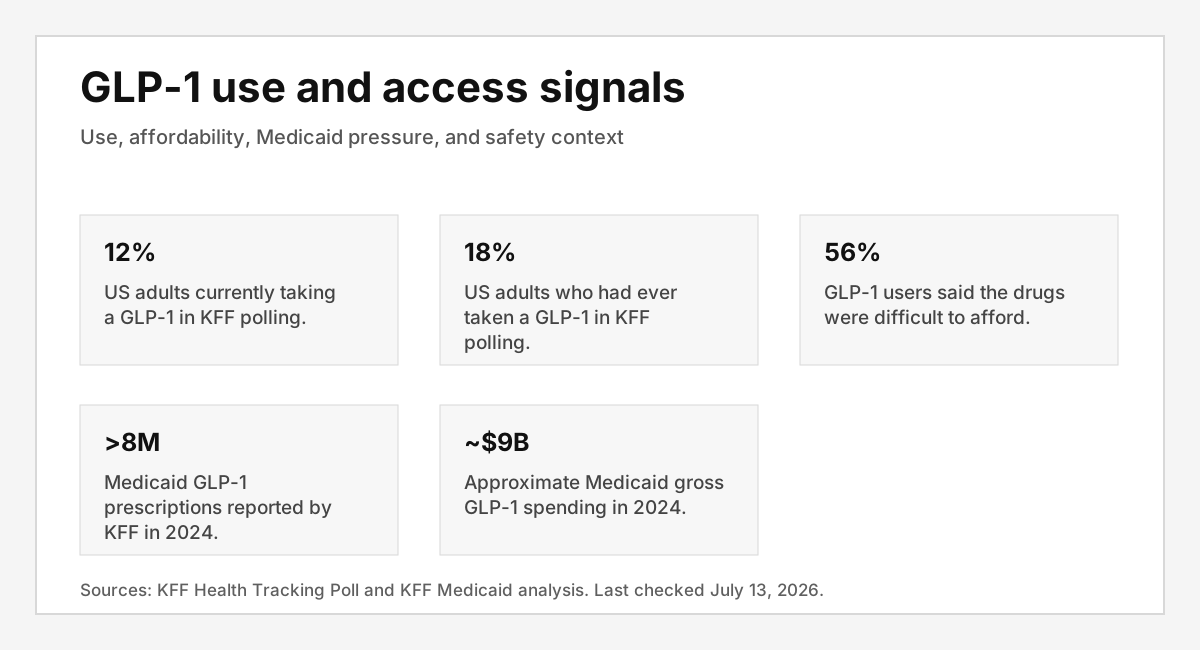
- 12% of US adults said they were currently taking a GLP-1 drug in KFF polling published in late 2025.
- 18% of US adults said they had taken a GLP-1 drug at some point in the same KFF poll.
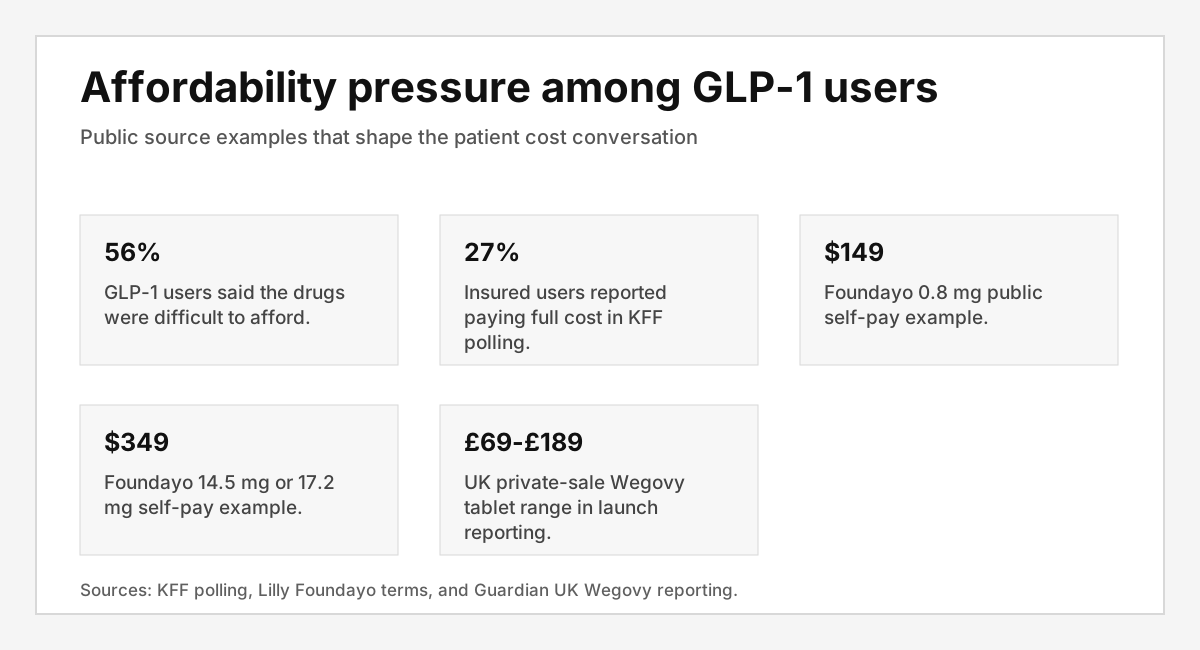
- 56% of GLP-1 users said the drugs were difficult to afford, according to KFF.
- 27% of insured GLP-1 users said they paid the full cost themselves, according to KFF.
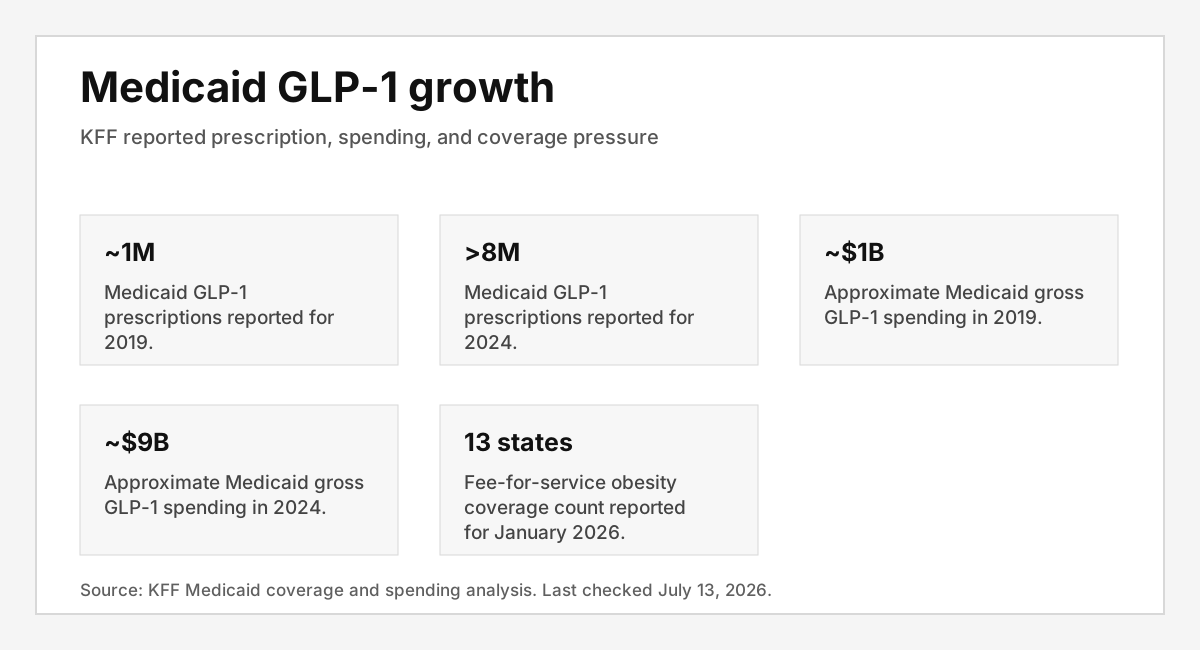
- 13 state Medicaid programs covered GLP-1 drugs for obesity treatment under fee-for-service as of January 2026, according to KFF.
- KFF reported that Medicaid GLP-1 prescriptions rose from about 1 million in 2019 to more than 8 million in 2024.
- KFF reported that Medicaid gross spending on GLP-1 drugs rose from about $1 billion in 2019 to almost $9 billion in 2024.
- FDA determined the tirzepatide injection shortage was resolved in 2024 and the semaglutide injection shortage was resolved in 2025.
- FDA has warned about fraudulent compounded semaglutide and tirzepatide products marketed in the United States.
- FDA approved Foundayo, an oral orforglipron tablet, for chronic weight management in adults with obesity or certain adults with overweight in 2026.
Why these numbers matter in 2026
GLP-1 statistics now cover diabetes treatment, chronic weight management, cardiovascular risk reduction, sleep apnea indications, Medicaid policy, employer benefits, online prescribing, compounding, counterfeit risk, pharmacy access, and daily patient behavior. A use statistic does not answer the same question as a price statistic. A shortage update does not answer the same question as an insurance rule.
The most reliable public numbers do not all answer the same question. KFF polling describes self-reported adult use and affordability. KFF Medicaid analysis describes state program coverage, prescriptions, and gross spending. FDA pages describe approval, shortage, compounding, and safety concerns. Company materials describe specific products and launches. Public interest and news volume can show attention, but they do not prove use. Each source has to be read for what it can actually support.
Approval, availability, coverage, and personal fit are not the same thing. A medicine can be FDA-approved and still be hard to afford. It can be listed as available while a local pharmacy has delays. It can be covered for diabetes but excluded for obesity. A product can have strong trial data and still be the wrong choice for a particular person.
| Source type | Good for | Limit |
|---|---|---|
| National polling | Adult use, affordability, public experience | Self-reported answers and field dates matter. |
| FDA pages | Approval, shortage, labeling, safety alerts | FDA pages do not say which product is right for a person. |
| KFF policy analysis | Coverage, Medicaid spending, payer rules | Coverage varies by state, plan, indication, and time. |
| Company releases | Product details and launch statements | Commercial materials need checking against labels and regulators. |
Source: Lina analysis of KFF, FDA, regulator, and company source types.
How many adults use GLP-1 drugs?
KFF polling published in late 2025 found that 12% of adults said they were currently taking a GLP-1 drug such as Ozempic or Wegovy for weight loss, diabetes, or another condition. The same poll found that 18% said they had taken a GLP-1 drug at some point. Those two numbers answer different questions. Current use describes active treatment at the time of the survey. Ever use includes people who stopped because of cost, side effects, access, insurance, pregnancy planning, a clinician decision, or another reason.
The gap between current use and ever use matters because it suggests many people try these medicines without staying on them forever. Some stop because of cost. Some stop because of side effects, pharmacy problems, or a change in goals. Others restart after a coverage change or a switch in product. That is one reason it helps to keep a clear record of doses, appetite, symptoms, weight, meals, and questions, especially if treatment becomes uneven over time.
High use does not mean these medicines are right for everyone. It does show why so many people are now comparing prices, checking side effects, and asking harder questions about muscle loss, long-term access, and what happens if they stop.
| Measure | Share of adults | How to read it |
|---|---|---|
| Currently taking a GLP-1 drug | 12% | Active use at the time of the survey. |
| Ever taken a GLP-1 drug | 18% | Includes current users and people who stopped. |
| Users who said the drugs were difficult to afford | 56% | Affordability pressure among users. |
| Insured users who said they paid full cost | 27% | Coverage did not prevent full out-of-pocket payment for this group. |
Source: KFF Health Tracking Poll.
How much do GLP-1 drugs cost?
GLP-1 cost questions usually come from practical pressure. A person may have a prescription but no coverage. They may have coverage for diabetes but not obesity. They may have a coupon that changes after a few months. They may see a direct-to-consumer subscription price that does not match the pharmacy counter. They may be weighing an FDA-approved product against a compounded offer and trying to understand the risk.
KFF reported that 56% of users said GLP-1 drugs were difficult to afford. That is why cost questions now sit near the center of the GLP-1 conversation. The most useful answer keeps the date, product, source, insurance setting, and country attached to every number, then checks the exact medication, indication, plan rules, pharmacy benefit, coupon eligibility, prior authorization, quantity limit, and refill timing.
If you are paying out of pocket, the medicine often becomes part of a monthly budgeting decision rather than a simple pharmacy pickup. In that situation it helps to keep a clean record of doses, side effects, weight trend, meals, protein, hydration, and appointment questions. A record can support a clinician conversation or an insurance appeal, but it does not guarantee coverage.
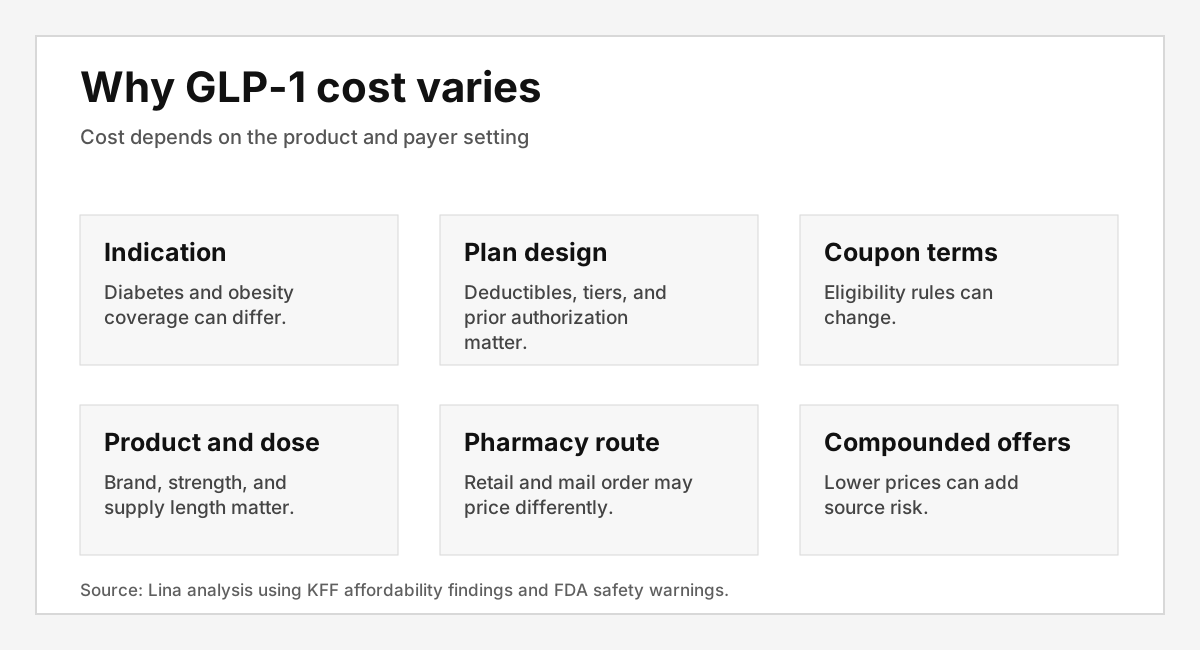
| Factor | Why it changes the price a patient sees |
|---|---|
| Indication | A plan may cover diabetes use differently from obesity use. |
| Plan design | Deductibles, formularies, tiers, and prior authorization can change out-of-pocket cost. |
| Coupon terms | Manufacturer savings programs have eligibility rules and can change. |
| Product and dose | Brand, strength, package, and supply length matter. |
| Pharmacy route | Retail, mail order, direct-to-consumer, and telehealth channels may show different prices. |
| Compounded offers | Lower advertised prices can involve unapproved products and added safety questions. |
Source: Lina analysis based on KFF affordability findings and FDA warnings about unapproved GLP-1 products.
Coverage is uneven across Medicaid programs
KFF reported that 13 state Medicaid programs covered GLP-1 drugs for obesity treatment under fee-for-service as of January 2026. That figure matters because Medicaid policy is one of the clearest examples of uneven access. A person’s coverage can depend on state decisions, managed care rules, the diagnosis attached to the prescription, prior authorization, and budget changes. A national statement about coverage can mislead if it hides those details.
Medicaid spending has also grown fast. KFF reported that Medicaid prescriptions for GLP-1 drugs rose from about 1 million in 2019 to more than 8 million in 2024, while gross spending rose from about $1 billion to almost $9 billion over the same period. Those figures explain why state coverage debates are intense. The medicines have real clinical uses, but program budgets face near-term cost pressure.
If you rely on Medicaid or another plan with strict rules, the most useful preparation is often practical rather than theoretical. Keep medication history, symptom notes, refill issues, and appointment questions in one place. That does not force a payer to cover a product, but it does make the timeline easier to explain when access suddenly changes.
| Measure | 2019 | 2024 or January 2026 | Source note |
|---|---|---|---|
| Medicaid prescriptions for GLP-1 drugs | About 1 million | More than 8 million in 2024 | KFF Medicaid analysis. |
| Medicaid gross spending on GLP-1 drugs | About $1 billion | Almost $9 billion in 2024 | KFF Medicaid analysis. |
| State Medicaid programs covering obesity treatment under fee-for-service | Not stated in this comparison | 13 as of January 2026 | KFF Medicaid analysis. |
Source: KFF Medicaid coverage and spending analysis.
Shortage status changed the compounding market
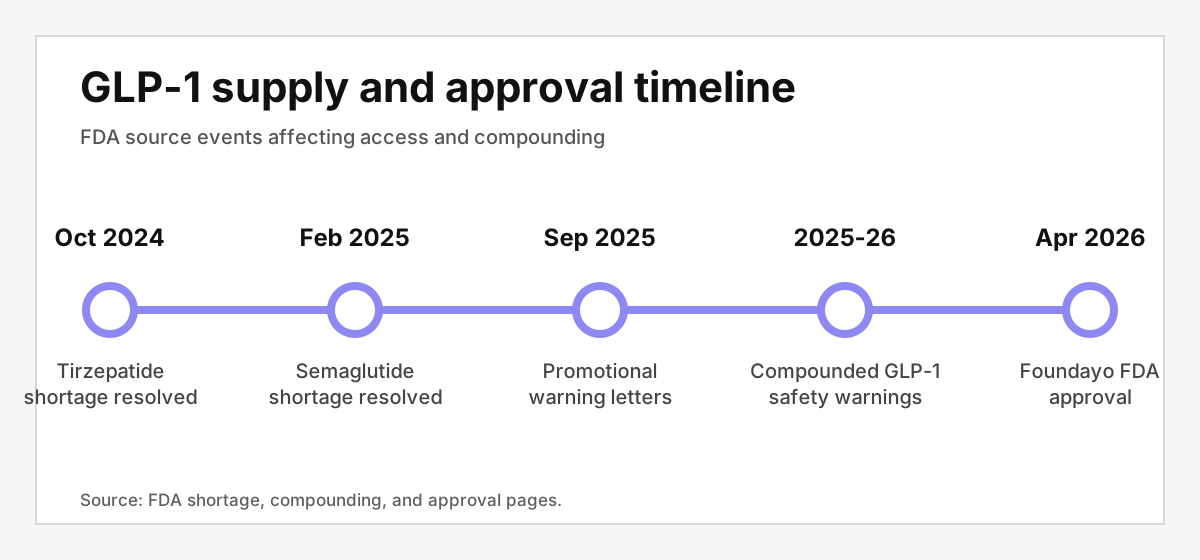
FDA shortage decisions are central to GLP-1 market reporting because they affect compounding policy. FDA determined that the shortage of tirzepatide injection products was resolved in 2024 and that the shortage of semaglutide injection products was resolved in 2025. FDA also set transition periods for certain compounders after the semaglutide shortage determination. Those policy details matter for anyone writing about compounded semaglutide or compounded tirzepatide in 2026.
The public conversation can be confusing because a national shortage decision does not mean every patient finds every dose easily at every local pharmacy. It also does not mean compounded copies are automatically allowed. The safest reading is to stay close to what FDA actually said, when it said it, and what that decision changes in practice. A legal or supply status is not personal medical advice.
FDA has also warned about fraudulent compounded semaglutide and tirzepatide marketed in the United States. The agency said some products contained false label information, including pharmacy names that did not match the actual source. That warning matters because growth in the category has also created more unsafe and misleading supply channels.
| Date | Event | Why it matters |
|---|---|---|
| October 2024 | FDA determined the tirzepatide injection shortage was resolved. | Changed the policy context for compounded tirzepatide copies. |
| February 2025 | FDA determined the semaglutide injection shortage was resolved. | Started transition periods described by FDA for certain compounders. |
| 2025-2026 | FDA warned about unapproved and fraudulent compounded GLP-1 products. | Raised safety and sourcing concerns for patients and publishers. |
| April 2026 | FDA approved Foundayo for chronic weight management. | Added an oral GLP-1 option to the US obesity market. |
Source: FDA shortage, compounding, and approval pages.
What do current public prices look like?
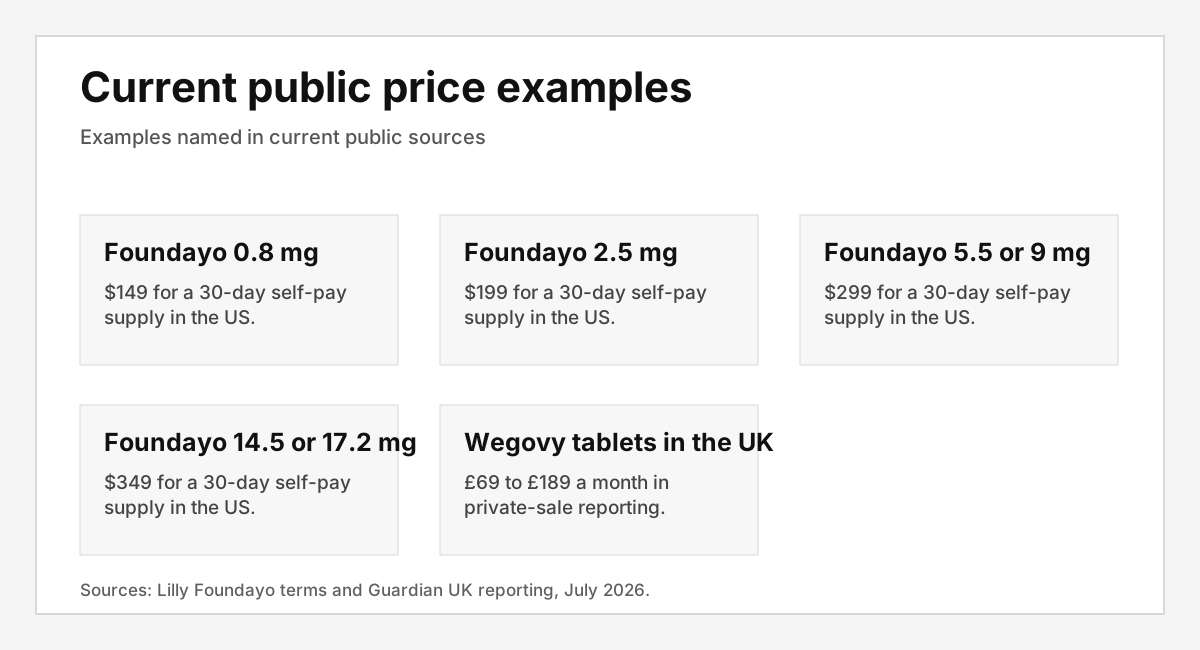
Public price examples are useful because they show how wide the spread can be before insurance enters the picture. In Lilly’s public Foundayo self-pay terms, a month of the lowest dose is listed at $149, while the highest strengths are listed at $349. In the United Kingdom, the Guardian reported that private-sale prices for Wegovy tablets ranged from £69 to £189 a month when the pill launched in July 2026. These are not universal patient costs. They are public examples tied to specific products, dates, and market settings.
The safest way to read those numbers is to keep the product, dose, country, and channel attached. A self-pay offer in the United States is not the same as a list price in another country. A private pharmacy price in the UK is not the same as NHS access. A daily tablet also should not be compared to a weekly injection as if the routine were identical.
| Product and market | Public price example | What the number means |
|---|---|---|
| Foundayo 0.8 mg in the US | $149 for a 30-day self-pay supply | Public self-pay price listed in Lilly terms. |
| Foundayo 2.5 mg in the US | $199 for a 30-day self-pay supply | Public self-pay price listed in Lilly terms. |
| Foundayo 5.5 mg or 9 mg in the US | $299 for a 30-day self-pay supply | Public self-pay price listed in Lilly terms. |
| Foundayo 14.5 mg or 17.2 mg in the US | $349 for a 30-day self-pay supply | Public self-pay price listed in Lilly terms. |
| Wegovy tablets in the UK | £69 to £189 a month | Private-sale range reported by the Guardian in July 2026. |
Source: Lilly Foundayo self-pay pricing terms and Guardian reporting on UK Wegovy tablet launch prices.
What these numbers mean if you are thinking about starting
The biggest surprise for many people is that the medicine decision often turns into an access decision. The prescription itself is only one part of the question. The harder part may be whether the product is covered, whether the pharmacy can supply it, whether the price will hold after a savings offer changes, and whether the routine still feels manageable after the first month.
That is why it helps to think in two tracks at the same time. One track is clinical: what medicine, what goal, what side effects, what follow-up. The other is practical: what it costs, how it is taken, what to do if supply slips, and what you want written down before your next appointment. A clean record does not answer the clinical question for you, but it does make the conversation clearer.
| Question | Why it matters |
|---|---|
| Is the product approved for the reason I am taking it? | Coverage, labeling, and follow-up can differ by use. |
| What is my price after insurance, coupons, or self-pay terms? | The listed price may not be your monthly cost. |
| What happens if my dose is unavailable or delayed? | Supply problems can change the whole plan. |
| What should I track in the first month? | Early notes on symptoms, appetite, meals, and weight often become useful later. |
| When should I call rather than wait? | Some symptoms and access problems should not sit until the next visit. |
Source: Lina patient-preparation framework using KFF, FDA, and current product source material.
Methodology and source checks
- US data is used by default unless a section names another regulator or market.
- Polling, policy analysis, approval pages, labels, pricing terms, and safety alerts are treated as separate kinds of evidence.
- Cost examples are dated and tied to a specific product, market, and source.
- Medical, approval, cost, coverage, shortage, and safety claims are only included when a dated source is available.
- Lina is a wellness tracking companion. It does not diagnose, prescribe, verify medication authenticity, or decide insurance coverage.