Introduction
If you are considering compounded semaglutide or tirzepatide for weight loss or diabetes in the United States, you need to understand that these products are not FDA-approved and that most legal pathways for pharmacies to make copycat versions have now closed. The FDA has documented hundreds of serious adverse events and is actively cracking down on unsafe and misleading compounded GLP-1 (glucagon-like peptide-1) drugs. This guide explains the current access market, safety statistics, enforcement actions, and what these changes mean for people weighing their GLP-1 options.
main facts at a glance
- 990 reports - Adverse events for compounded semaglutide
- 730+ reports - Adverse events for compounded tirzepatide
- April 22, 2025 - Semaglutide shortage exemption ended
- Feb 18, 2025 - Tirzepatide shortage exemption ended
- $936–$1,349/month - Typical US list price for GLP-1 drugs
- 54–56% - GLP-1 users reporting affordability difficulty
- $50/month - Medicare GLP-1 Bridge patient cost
- 13 states - Medicaid states covering GLP-1s for obesity
The market for compounded GLP-1 drugs in the United States has changed dramatically over the past 18 months. When Ozempic, Wegovy, Mounjaro, and Zepbound first surged in popularity, national shortages led the FDA to allow some compounding under narrow conditions. Those shortages are now officially resolved, and the temporary compounding windows have closed. For semaglutide, the shortage exemption ended April 22, 2025 for state-licensed 503A pharmacies and May 22, 2025 for 503B outsourcing facilities. For tirzepatide, the exemption ended February 18, 2025 for 503A pharmacies and March 19, 2025 for 503B facilities. This means that routine pharmacy compounding of copycat Ozempic, Wegovy, Mounjaro, or Zepbound is no longer allowed under the shortage exception. If you are offered ongoing, mass-market compounded semaglutide or tirzepatide today as a routine replacement, that product is not using the old shortage exception and is more likely to attract FDA scrutiny.
What compounded GLP-1s are and why they exist
A compounded drug is mixed or customized by a pharmacy or outsourcing facility, often as a liquid in a vial, a capsule, or a different strength, rather than being manufactured and approved by a drug company and reviewed by the FDA. For GLP-1s, compounded semaglutide or tirzepatide is often sold as a multiple-dose vial you draw up with a syringe, instead of a pre-filled pen. Some products are labeled as a salt form like semaglutide sodium, which is not the same ingredient used in Ozempic or Wegovy and is not FDA-approved. The core trade-off is straightforward. Approved GLP-1s like Ozempic, Wegovy, Mounjaro, and Zepbound are tested, labeled, and quality-controlled, but expensive and sometimes hard to get. Compounded versions may be cheaper or easier to obtain locally or online, but they sit outside the FDA approval system, and the agency has logged hundreds of serious adverse events and is actively limiting them.
Adverse event statistics and what they mean
The FDA's adverse-event counts show patterns, not precise risk. As of November 30, 2024, the FDA had received 392 semaglutide and 215 tirzepatide adverse events from compounded products. One federal memo from November 2024 reported 619 adverse events, 144 hospitalizations, and 12 deaths associated with compounded semaglutide. By May 31, 2026, the FDA reported 990 adverse events for compounded semaglutide and more than 730 for compounded tirzepatide. These reports include dosing errors where patients accidentally took 5 to 20 times their intended dose from vials, leading to severe nausea, vomiting, dehydration, fainting, pancreatitis, and hospital stays. They also include possible salt-form issues where the chemical form differs from approved products, with unknown safety and effectiveness.
These numbers confirm real, documented harm linked to compounded GLP-1s, especially dosing mistakes and quality concerns. They do not tell you your personal chance of a problem, because reporting is voluntary and likely undercounts events, and many reports describe known side effects more common with any GLP-1 like nausea and diarrhea, do not simply compounded versions. If a clinic says compounded semaglutide is basically the same but cheaper, the data say otherwise. Errors and serious events are occurring often enough to trigger multiple FDA safety alerts and enforcement waves.
| Date | Compounded semaglutide events | Compounded tirzepatide events | Notable details |
|---|---|---|---|
| November 30, 2024 | 392 reports | 215 reports | Early signal of safety concerns |
| November 2024 (OMB memo) | 619 events, 144 hospitalizations, 12 deaths | Not specified | Federal memo show serious outcomes |
| May 31, 2026 | 990 reports | 730+ reports | Substantial increase; FDA updates public guidance |
Source: FDA adverse event reports and OMB memo, November 2024 through May 2026
Timeline of shortage resolutions and compounding windows
Understanding when and why compounding was allowed, and when those windows closed, is essential for evaluating any current offer. In late 2024, the FDA determined that the tirzepatide shortage was resolved and began winding down shortage-based compounding. Under shortage exemptions, 503A state-licensed pharmacies could keep compounding tirzepatide until February 18, 2025, and 503B outsourcing facilities until March 19, 2025. On February 21, 2025, the FDA removed semaglutide injections from the drug shortage list. The FDA issued a compounding policy clarifying temporary enforcement discretion: 503A pharmacies and physicians could continue compounding essentially a copy of semaglutide for 60 days, until April 22, 2025, and 503B outsourcing facilities for 90 days, until May 22, 2025.
By mid-2025, legal analyses and FDA responses confirmed that both semaglutide and tirzepatide shortage exemptions were over and copycat compounding windows had closed. In July 2024, the FDA issued a compounding risk alert about dosing errors and hospitalizations tied to compounded semaglutide in vials, an alert that remained highly relevant through 2025 and 2026. On May 9, 2025, the FDA launched a green list import alert to block unsafe GLP-1 active ingredients from questionable foreign sources, explicitly citing compounded semaglutide and tirzepatide issues. In September 2025, FDA warning letters targeted online sellers offering unapproved GLP-1s, including compounded and research-only formulations. Throughout 2026, the FDA has continued import alerts and warning letters aimed at compounded GLP-1 marketers and misbranded clinic blends.
| Medication | Shortage resolved | 503A compounding ended | 503B compounding ended |
|---|---|---|---|
| Tirzepatide (Mounjaro, Zepbound) | December 2024 | February 18, 2025 | March 19, 2025 |
| Semaglutide (Ozempic, Wegovy) | February 21, 2025 | April 22, 2025 | May 22, 2025 |
Source: FDA drug shortage communications and compounding policy, 2024–2025
FDA enforcement actions and proposed rule changes
The FDA has taken multiple enforcement steps beyond simply ending the shortage exemptions. On July 26, 2024, the FDA issued a compounding risk alert about dosing errors and hospitalizations tied to compounded semaglutide in vials. On May 9, 2025, the FDA launched a green list import alert to block unsafe GLP-1 active ingredients from questionable foreign sources. In September 2025, FDA warning letters targeted online sellers offering unapproved GLP-1s. On June 15, 2026, the FDA updated its public guidance page, reporting 990 adverse-event reports for compounded semaglutide and more than 730 for compounded tirzepatide as of May 31, 2026. On April 30, 2026, the FDA proposed to exclude semaglutide, tirzepatide, and liraglutide from the 503B bulks list, which would stop outsourcing facilities from using these raw ingredients even if shortages return.
These actions reflect a clear regulatory stance. The FDA is not neutral about compounded GLP-1s. The agency has expressed serious concerns about dosing, salt forms, and quality, and is actively working to limit their availability and use. For patients, this means that compounded GLP-1s are not a casual substitute for approved products. They carry higher regulatory risk, higher safety risk, and less legal protection.
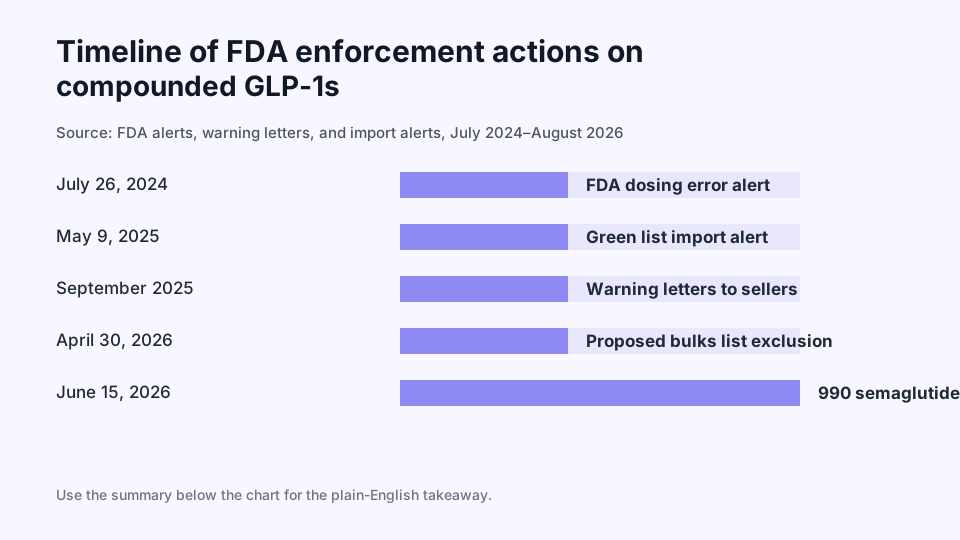
This timeline shows the progression of FDA enforcement from initial dosing alerts to import controls, warning letters, and proposed rule changes, illustrating the agency's increasing scrutiny of compounded GLP-1s.
Cost, coverage, and why people still consider compounded options
KFF polling finds that about 1 in 5 US adults has ever taken a GLP-1 drug for weight loss, diabetes, or another condition. About half of GLP-1 users say the drugs are difficult to afford, even with insurance. List prices are roughly $936 to $1,349 per month before discounts. GLP-1s make up only about 1% of Medicaid prescriptions in 2024 but over 8% of Medicaid drug spending, and some states are cutting obesity coverage. When monthly costs approach or exceed $1,000, it is understandable that some people look for cheaper compounded offers or cash-pay telehealth clinics.
Regulators are not neutral about compounded GLP-1s. FDA documents express serious concerns about dosing, salt forms, and quality. At the same time, programs like the Medicare GLP-1 Bridge now offer certain approved GLP-1s for $50 per month to eligible older adults, and Medicaid and employer coverage are evolving. For many people, the safer long-term strategy is to ask a clinician or pharmacist to explore approved options, patient-assistance programs, or insurance appeals first, and to treat compounded GLP-1s, if considered at all, as a temporary, closely monitored option, not a casual substitute.
| Item | Approximate figure | What it means in practice |
|---|---|---|
| Typical US list price for GLP-1 drugs | $936–$1,349 per month | Many people face four-figure monthly charges without coverage, driving interest in cheaper compounded versions |
| Difficulty affording GLP-1s | 54–56% of GLP-1 users | Even people with insurance often struggle, and some pay full cost out of pocket |
| Medicaid share of GLP-1 prescriptions vs spending | ~1% of prescriptions, >8% of spending | GLP-1s are a small slice of use but a large share of cost, making states cautious about obesity coverage |
| States covering GLP-1s for obesity under Medicaid FFS | 13 states as of January 2026 | In many states, Medicaid may cover GLP-1s for diabetes but not for weight loss |
| Medicare GLP-1 Bridge patient cost | $50/month for covered drugs | Eligible Medicare beneficiaries have a low, predictable copay for certain approved GLP-1s |
Source: KFF polls, KFF Medicaid reports, CMS GLP-1 Bridge, January–July 2026
Expected weight loss and trial context
GLP-1 receptor agonists are backed by large clinical trials, but those trials studied FDA-approved products, not compounded versions. Semaglutide 2.4 mg, sold as Wegovy, showed average weight loss of about 15% of body weight over roughly 68 weeks in obesity trials, when combined with diet and activity changes. Tirzepatide, sold as Zepbound, showed average weight loss up to around 20 to 22% of body weight at higher doses over 72 weeks. In practical terms, for a person weighing 250 pounds, 15% loss is about 37 to 38 pounds over roughly 1.5 years, and 20% loss is about 50 pounds over a similar period.
Clinics may advertise similar expected weight loss for compounded versions, but compounded versions have not gone through these trials. The dose in a vial may not match the labeled strength, and salt forms may behave differently in the body. If someone says their compounded semaglutide works just like Wegovy, that is not backed by the same level of evidence. The best available data support expectations for approved products. Compounded GLP-1s ride on those numbers without being directly tested.
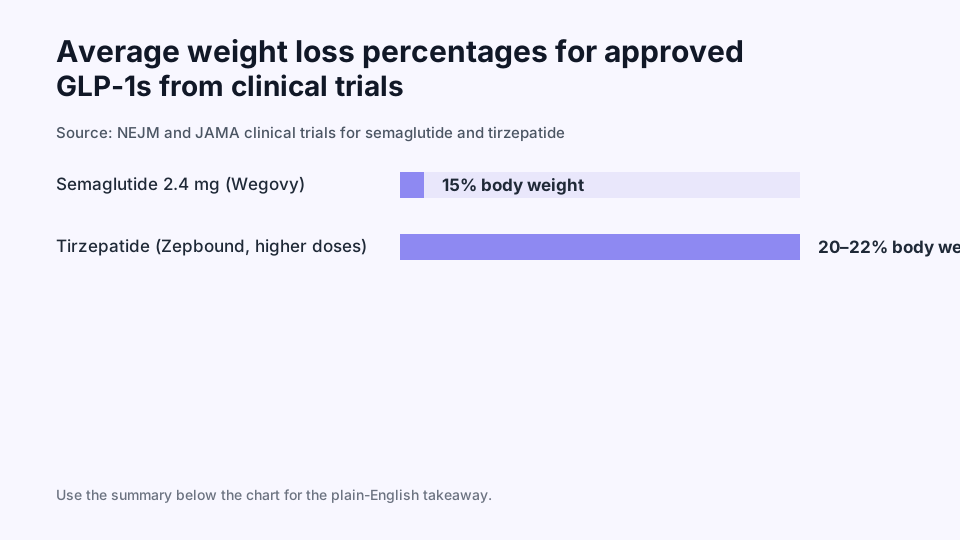
Trial-backed weight loss for approved semaglutide and tirzepatide over 68 to 72 weeks. Compounded versions have not been tested in large trials, so their effectiveness is unknown.
Practical questions to ask your clinician or pharmacist
If you are weighing compounded versus approved GLP-1 options, here are main questions to ask. When a compounded GLP-1 is offered, ask: Is this drug FDA-approved, or compounded? Why are we using a compounded version instead of an approved one? Is the active ingredient exactly semaglutide or tirzepatide as used in approved products, or a different salt form? How is the dose measured? If it is a vial, ask: Can you show me, step-by-step, how to draw the correct dose? What syringe size should I use, and what exact markings? What monitoring will we do for side effects and lab work? How will we handle switching to an approved product later, and will my dose change?
For any GLP-1, compounded or approved, ask: What side effects should make me call you or go to urgent care? How long should I expect to stay on this medication if it is working? What happens to my weight and blood sugar if I stop? These questions help you understand the trade-offs, the safety plan, and the long-term strategy.
Routine and self-administration tips
If you and your clinician decide to proceed with a compounded injection, treat dose measurement like a technical skill. Ask for hands-on teaching using saline or training supplies. Confirm doses in mg and mL, do not simply vague units. Keep a log with the date, dose, where you injected, and any side effects like nausea, vomiting, abdominal pain, or mood changes. This helps catch dosing pattern mistakes and supports safety reporting if needed. If using approved pens, follow the manufacturer's titration schedule and instructions exactly. Even here, track side effects, weight, and blood pressure, and bring your notes to visits.
Red flags and when to pause
Red flags that should prompt questions or caution include: the product is labeled as research use only, not for human use, or has no clear manufacturer listed; the clinic claims their compounded product is FDA-approved or identical to Ozempic, Wegovy, Mounjaro, or Zepbound; you are told to start at a high dose quickly or ramp up much faster than seen in approved product labels; you receive a vial and vague dosing instructions like take a small syringe each week without specific measurement training. If any of these appear, it is reasonable to pause and ask: Can we instead discuss using an FDA-approved GLP-1, or adjusting lifestyle and other medications while we sort out a safer option?
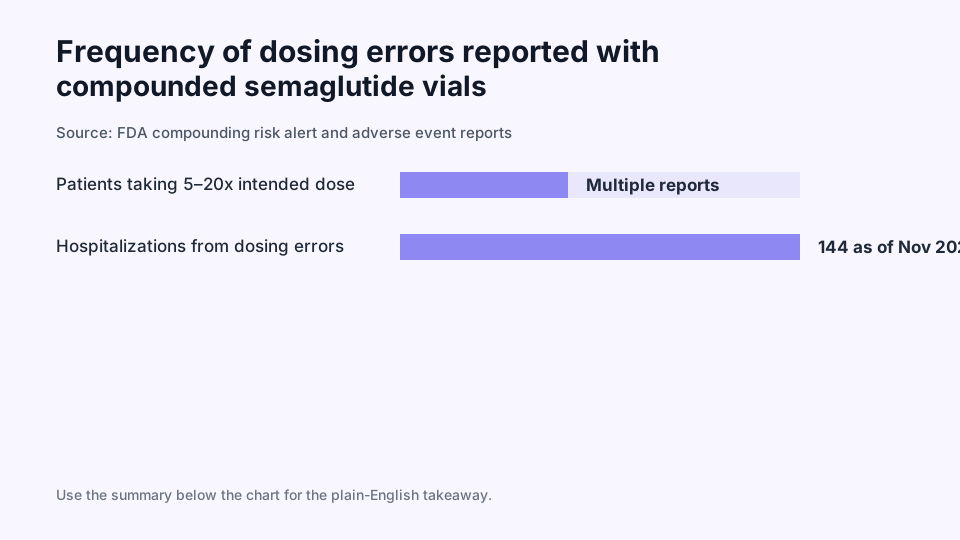
Dosing errors are a major safety concern with compounded GLP-1 vials, with patients sometimes taking 5 to 20 times the intended dose, leading to severe nausea, vomiting, dehydration, and hospitalization.
Medicare GLP-1 Bridge and policy shifts
On July 1, 2026, CMS officially launched the Medicare GLP-1 Bridge, offering Wegovy, Zepbound KwikPen, and Foundayo for $50 per month to eligible Part D beneficiaries through December 31, 2027. This program is designed to expand access to regulated, labeled GLP-1s for older adults, reducing pressure to rely on lower-cost compounded versions. As more older adults get access to approved GLP-1s at a predictable, affordable copay, the need for compounded alternatives decreases. This is a meaningful policy shift that directly addresses one of the main drivers of compounded GLP-1 use: cost.
The Medicare GLP-1 Bridge is part of a broader set of policy changes aimed at improving access to approved GLP-1s while tightening restrictions on compounded versions. Medicaid coverage for GLP-1s remains limited and varies by state, with only 13 states covering GLP-1s for obesity under fee-for-service Medicaid as of January 2026. Employer coverage is also evolving, with some employers expanding coverage for weight-loss GLP-1s and others restricting it due to cost concerns. For patients, this means that navigating coverage requires understanding your specific insurance plan, state Medicaid rules, and available patient-assistance programs.
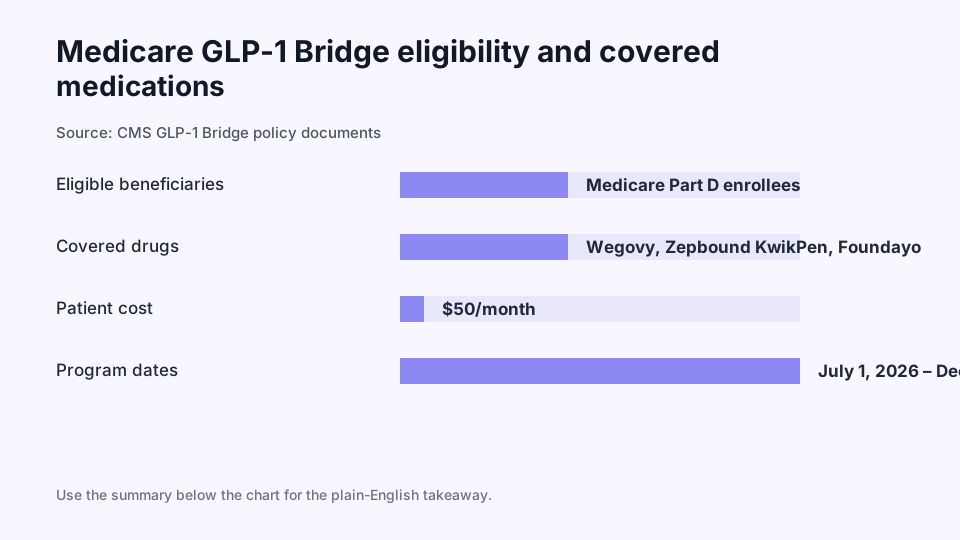
The Medicare GLP-1 Bridge offers certain approved GLP-1s for $50 per month to eligible beneficiaries, providing a low-cost, regulated alternative to compounded products.
What Lina tracks and how it helps
Lina is a GLP-1 companion app for people using Wegovy, Mounjaro, Ozempic, Zepbound, Saxenda, and related medications. It helps users track doses, side effects, meals, weight, protein, hydration, and habits in one place. Lina does not treat, diagnose, prevent, or manage disease. It does not validate, recommend, calculate, or prescribe compounded medication. Lina is a wellness tracking companion, not a medical device and not a substitute for medical advice. If you are using a compounded GLP-1 or considering one, Lina can help you log your doses, track side effects, and bring organized data to your clinician visits. This is especially useful when dosing is manual and error-prone, or when you are comparing compounded and approved options over time.
How this guide was built
- Source priority: FDA drug alerts, safety communications, compounding policies, import alerts, and warning letters; CMS GLP-1 Bridge and BALANCE model documents; Kaiser Family Foundation polls and Medicaid coverage analyses; peer-reviewed papers from NEJM, JAMA, BMJ, and PubMed Central for compounded drug safety and GLP-1 clinical trials; major news outlets and academic medical centers only to clarify timing or context, never as sole sources for safety or legal claims.
- Last checked date: August 4, 2026, including targeted checks for any GLP-1 compounding, safety, access, or payer-policy changes within the last 90 days.
- Sources treated cautiously or excluded: Pharmacy marketing blogs, peptide sellers, online telehealth advertising sites, generic generic web-style health content, and informal social media posts. These may describe local pricing but are not reliable for regulatory status, safety statistics, or clinical guidance.
- What this guide cannot determine for an individual patient: Whether a compounded GLP-1 is appropriate or safe enough for you personally; your exact risk of adverse events, weight loss amount, or insurance coverage path; any diagnosis, specific dosing plan, or medical advice. Those decisions require direct discussion with a licensed clinician who can review your medical history, medications, lab results, and local pharmacy options. This is source-reviewed only, based on publicly available regulatory and research documents, not on a clinician's individual chart review or patient examination.
Update history
- Updated source review.
Data and sources
All statistics, dates, and regulatory details in this guide are drawn from primary sources including FDA alerts, CMS policy documents, KFF polls, and peer-reviewed medical literature. No data was invented or extrapolated beyond what primary sources support.