Introduction
GLP-1 discontinuation matters because headline trial results do not tell you how many people stay on treatment in ordinary care. US data through early 2026 show big differences by indication, insurance friction, copay burden, and product type. The sections below separate those patterns so the main discontinuation numbers are easier to read in context.
Top facts
- 47.7% - 12-month discontinuation in US T2D cohort (2009-2014) - Source: Diabetes Ther 2020
- 70.1% - 24-month discontinuation in US T2D cohort - Source: Diabetes Ther 2020
- 48% vs 41% - 12-month persistence, once-weekly vs daily GLP-1 - Source: STAY study 2021
- 64.8% - 1-year discontinuation, obesity without T2D - Source: JAMA Netw Open 2024
- 46.5% - 1-year discontinuation, obesity with T2D - Source: JAMA Netw Open 2024
- 70.3% - 1-year discontinuation in mixed US payers (2026) - Source: ISPOR 2026
- 46% - Discontinuation by month 5, semaglutide weight loss - Source: US claims 2025
- 63.2% - Persistence at 12 months, T2D with ASCVD - Source: ADA 740-P 2024
GLP-1 receptor agonists have become central to type 2 diabetes and obesity treatment in the United States, but real-world persistence remains a challenge. This guide compiles discontinuation and persistence statistics from US claims databases, registries, and conference abstracts through July 2026. The data show that discontinuation rates vary widely by indication, insurance coverage, drug formulation, and clinical setting. Understanding these patterns helps patients, clinicians, and payers anticipate barriers and design support strategies that improve long-term outcomes.
Discontinuation rates in US populations
The most widely cited US estimate comes from a 2020 Diabetes Therapy analysis of 4,791 adults with type 2 diabetes who started injectable GLP-1 receptor agonists between 2009 and 2014. In that cohort, 47.7% had discontinued by 12 months and 70.1% by 24 months. A sensitivity analysis using a stricter gap definition still found 44.6% discontinuation at 12 months and 67.4% at 24 months. These figures reflect commercial and Medicare Advantage claims and represent a mix of older and newer GLP-1 agents, including both daily and once-weekly formulations.
A 2019 American Diabetes Association abstract reported nearly identical numbers: 47.7% of US adults with type 2 diabetes on GLP-1 receptor agonists discontinued within one year, and 49.1% were non-adherent, defined as proportion of days covered below 80%. These consistent findings across independent claims analyses suggest that roughly half of people starting GLP-1 therapy for diabetes in typical US practice settings do not continue past the first year.
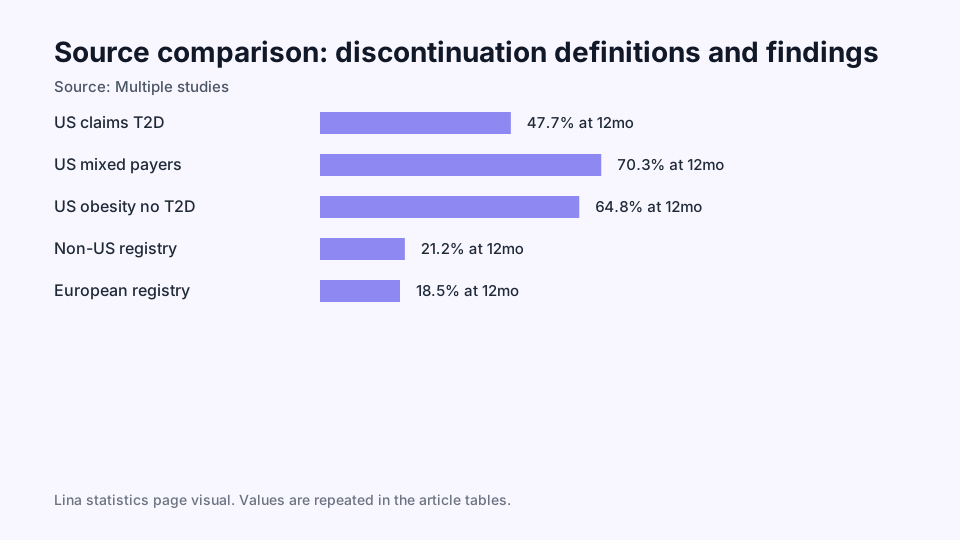
More recent data from the 2026 ISPOR conference analyzed 622,204 GLP-1 receptor agonist initiators across commercial, Medicaid, and Exchange plans. That study found 70.3% discontinued within one year, with formulary non-coverage and utilization management strongly associated with discontinuation. This higher rate likely reflects the inclusion of weight-management indications, broader payer mix, and contemporary access barriers that have intensified as demand for GLP-1 medications has grown.
| Study | Population | Sample size | 12-month discontinuation | Data years |
|---|---|---|---|---|
| Diabetes Ther 2020 | T2D, injectable GLP-1 RAs | 4,791 | 47.7% | 2009-2014 |
| ADA 984-P 2019 | T2D, GLP-1 RAs | Claims cohort | 47.7% | 2010-2015 |
| ISPOR 2026 | Mixed indications, all payers | 622,204 | 70.3% | Through 2026 |
| JAMA Netw Open 2024 | Obesity without T2D | Claims cohort | 64.8% | Through 2024 |
| JAMA Netw Open 2024 | Obesity with T2D | Claims cohort | 46.5% | Through 2024 |
Source: Sources: Diabetes Ther 2020, ADA 984-P 2019, ISPOR 2026, JAMA Netw Open 2024 summary.
Discontinuation by indication diabetes vs obesity
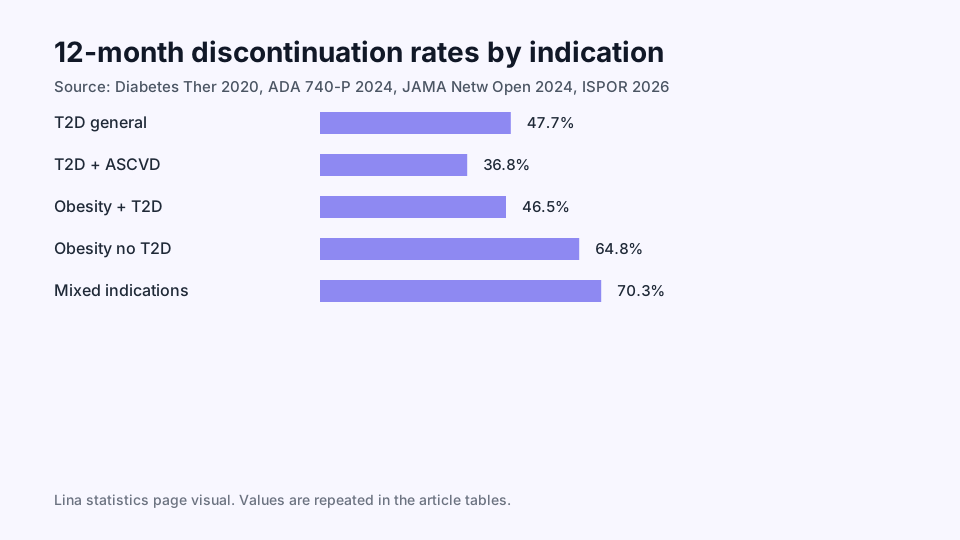
Discontinuation rates differ substantially between people using GLP-1 receptor agonists for type 2 diabetes and those using them for weight management. A JAMA Network Open cohort summarized in 2025 found that among adults with overweight or obesity, 1-year discontinuation was 64.8% for people without type 2 diabetes compared with 46.5% for those with diabetes. This 18-percentage-point gap suggests that the presence of a chronic metabolic condition, ongoing clinical monitoring, and possibly different insurance coverage rules all contribute to better persistence.
A 2025 US claims analysis of semaglutide prescribed for weight loss found that 46% of users discontinued by month 5. Discontinuation rose from 41% in the lowest monthly copay quintile to 51% in the highest, and lower income and education were also linked to higher discontinuation. These findings show the role of out-of-pocket cost and socioeconomic factors in early treatment attrition for weight-management indications.
In contrast, a 2024 American Diabetes Association abstract reported that among 29,516 US adults with type 2 diabetes and atherosclerotic cardiovascular disease on once-weekly GLP-1 receptor agonists, persistence was 80.2% at 6 months, 63.2% at 12 months, and 54.3% at 18 months. This cardiovascular-focused cohort showed notably better persistence than general diabetes or obesity populations, likely reflecting specialist care, structured follow-up, and recognition of cardiovascular benefit.
Once-weekly vs daily GLP-1 formulations
Dosing frequency has a measurable effect on persistence. The STAY study, published in 2021, compared US adults with type 2 diabetes starting once-weekly versus daily injectable GLP-1 receptor agonists. At 12 months, persistence was 48% for once-weekly agents and 41% for daily agents, and the hazard of discontinuation was 20% lower with once-weekly treatment. This difference held after adjusting for age, sex, comorbidities, and prior medication use.
A 2018 study of 308 US adults starting dulaglutide, a once-weekly GLP-1 receptor agonist, found that 37% discontinued during follow-up and 61% were adherent, defined as proportion of days covered at least 0.80. Mean proportion of days covered was 0.76, which is higher than historical class averages for GLP-1 therapy. These results suggest that once-weekly formulations reduce the burden of daily injections and improve real-world adherence.
The cardiovascular cohort on once-weekly GLP-1 receptor agonists reported 63.2% persistence at 12 months, substantially better than the 41% to 48% seen in general diabetes populations on mixed formulations. While indication and care setting also matter, the consistent pattern across studies is that once-weekly agents show better persistence than daily agents in head-to-head comparisons.
| Formulation | Study | Population | 12-month persistence | 12-month discontinuation |
|---|---|---|---|---|
| Once-weekly | STAY 2021 | US T2D | 48% | 52% |
| Daily | STAY 2021 | US T2D | 41% | 59% |
| Once-weekly (dulaglutide) | Dulaglutide study 2018 | US T2D | ~63% (adherent) | 37% |
| Once-weekly | ADA 740-P 2024 | US T2D + ASCVD | 63.2% | 36.8% |
Source: Sources: STAY study 2021, Dulaglutide persistence study 2018, ADA 740-P 2024.
Role of insurance coverage and out-of-pocket cost
Insurance coverage and cost-sharing have emerged as major drivers of GLP-1 discontinuation in the United States. The 2026 ISPOR analysis of 622,204 initiators found that formulary non-coverage was the strongest predictor of 1-year discontinuation, which reached 70.3%. Utilization management practices such as prior authorization, step therapy, and quantity limits were also associated with higher discontinuation.
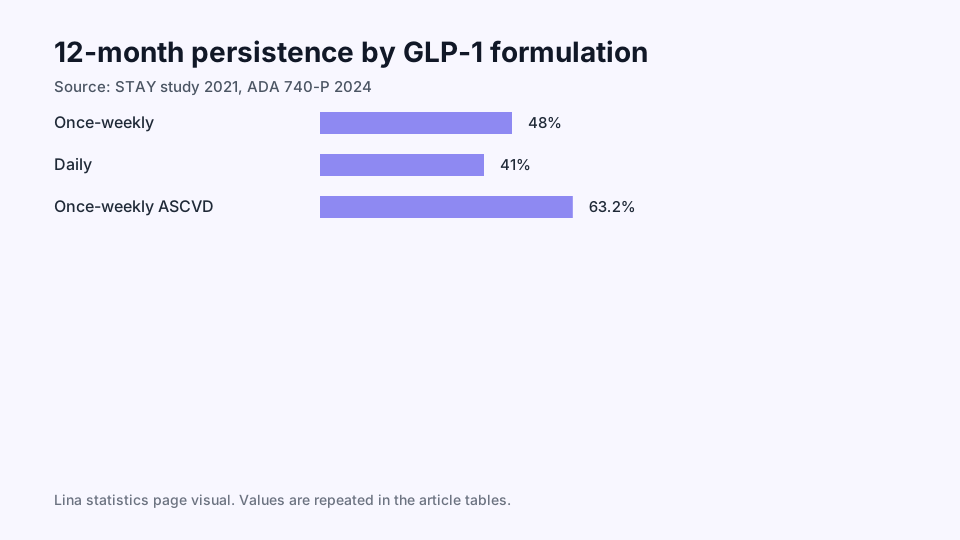
The semaglutide weight-loss claims study showed a clear dose-response relationship between copay and discontinuation. Among people in the lowest monthly copay quintile, 41% discontinued by month 5, compared with 51% in the highest quintile. Lower household income and education were independently associated with higher discontinuation, even after adjusting for copay. These findings suggest that both direct cost and broader socioeconomic factors shape persistence.
In contrast, non-US registry studies often report lower discontinuation. A 2024 nationwide registry analysis found 12-month discontinuation risk of 21.2% and about half of patients adherent at 12 months. A European registry of adults with obesity and type 2 diabetes reported 81.5% persistence at 1 year and 48.4% at 2 years. These settings typically have more standardized reimbursement and fewer out-of-pocket barriers, which may explain the lower attrition compared with US claims data.
| Factor | Study | Population | Discontinuation rate | Time frame |
|---|---|---|---|---|
| Formulary non-coverage | ISPOR 2026 | US mixed payers | 70.3% | 12 months |
| Lowest copay quintile | Semaglutide weight 2025 | US weight loss | 41% | 5 months |
| Highest copay quintile | Semaglutide weight 2025 | US weight loss | 51% | 5 months |
| Standardized coverage (non-US) | Nationwide registry 2024 | Registry cohort | 21.2% | 12 months |
| European registry | Real-world GLP-1RA 2023 | Obesity + T2D | 18.5% (inverse of 81.5% persistent) | 12 months |
Source: Sources: ISPOR 2026, Semaglutide titration study 2025, Nationwide registry 2024, Real-world GLP-1RA evaluation 2023.
Timeline of discontinuation research milestones
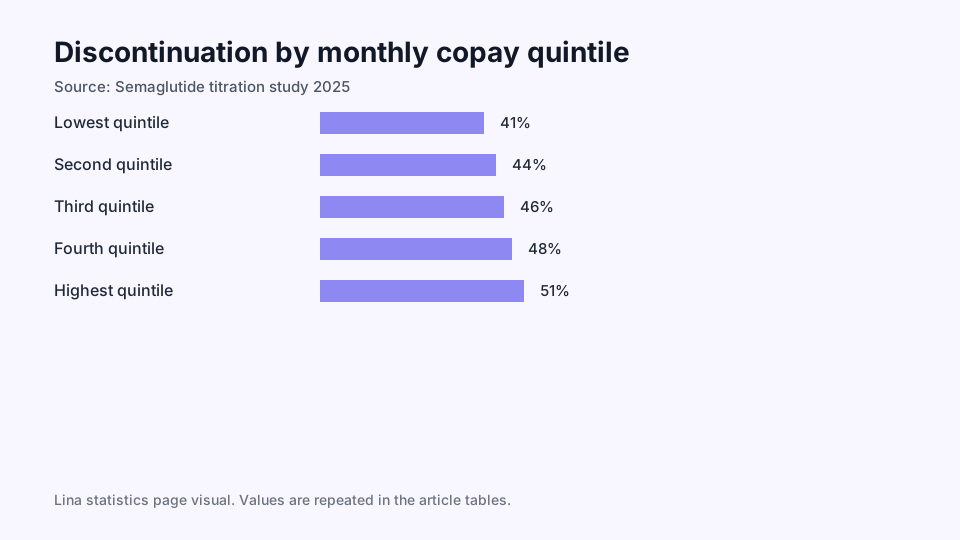
Research on GLP-1 discontinuation has evolved as the drug class has expanded and real-world data have accumulated. Early studies in the mid-2010s reported adherence and persistence for first-generation agents in type 2 diabetes populations. By 2019 and 2020, large US claims analyses established the benchmark of roughly 48% discontinuation at 12 months for diabetes cohorts. The introduction of once-weekly formulations and weight-management indications in the early 2020s prompted new analyses that showed better persistence for once-weekly agents and higher discontinuation in obesity populations without diabetes.
The 2024 and 2026 studies have focused on system-level factors, particularly insurance coverage and utilization management. The ISPOR 2026 poster represents the largest contemporary US analysis and shows the role of formulary design and prior authorization in driving discontinuation rates above 70% in broad populations. At the same time, cardiovascular-focused cohorts and structured care settings continue to show persistence above 60% at 12 months, suggesting that clinical context and support can partially offset access barriers.
| Year | Study | Population | main finding | Source |
|---|---|---|---|---|
| 2017-2018 | SGLT2/DPP-4/GLP-1 comparison | US T2D new users | Mean PDC 0.56 for GLP-1s, 52% persistent | PubMed |
| 2018 | Dulaglutide persistence | US T2D, 308 adults | 37% discontinued, 61% adherent | Curr Med Res Opin 2018 |
| 2019 | ADA 984-P | US T2D, claims | 47.7% discontinued at 1 year | ADA 2019 |
| 2020 | Diabetes Ther full text | US T2D, 4,791 adults | 47.7% at 12 months, 70.1% at 24 months | Diabetes Ther 2020 |
| 2021 | STAY study | US T2D, once-weekly vs daily | 48% vs 41% persistence at 12 months | Adv Ther 2021 |
| 2023 | European registry | Obesity + T2D | 81.5% persistent at 1 year, 48.4% at 2 years | Diabetes Ther 2023 |
| 2024 | Nationwide registry | Registry cohort | 21.2% discontinued at 12 months | PubMed 2024 |
| 2024 | JAMA Netw Open obesity | US obesity cohort | 64.8% discontinued (no T2D) vs 46.5% (with T2D) | Drugs.com summary 2025 |
| 2024 | ADA 740-P ASCVD | US T2D + ASCVD | 63.2% persistent at 12 months | ADA 2024 |
| 2025 | Semaglutide weight loss | US claims | 46% discontinued by month 5, copay effect | PubMed 2025 |
| 2026 | ISPOR insurance denials | US mixed payers, 622,204 | 70.3% discontinued at 1 year | ISPOR 2026 |
Source: Sources: Individual studies as cited in timeline.
Comparison of US and non-US discontinuation rates
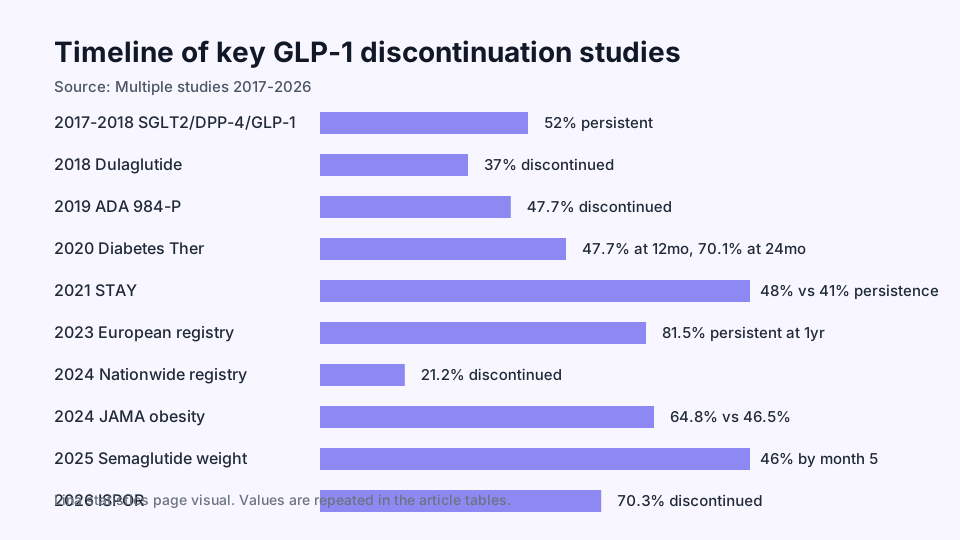
Discontinuation rates in the United States are consistently higher than those reported in non-US registries and health systems. A 2024 nationwide registry study found 12-month discontinuation risk of 21.2% and about 50% of patients adherent at 12 months. A European registry of adults with obesity and type 2 diabetes reported 81.5% persistence at 1 year, falling to 48.4% at 2 years. These figures contrast sharply with US claims studies showing 48% to 70% discontinuation at 12 months.
The difference likely reflects several factors. Non-US registries often operate in health systems with more uniform medication access, lower out-of-pocket costs, and structured follow-up. US claims data capture a fragmented insurance market with variable formularies, prior authorization requirements, and high cost-sharing. Methodological differences also matter: registries may have more complete follow-up and stricter enrollment criteria, while claims databases include all comers and infer discontinuation from prescription gaps.
Despite these differences, the pattern is consistent: real-world discontinuation in the United States is higher than in many other high-income countries, and access barriers appear to play a substantial role. This gap has implications for comparative effectiveness research, health technology assessment, and policy discussions about GLP-1 coverage and pricing.
| Setting | Study | Population | 12-month discontinuation | 12-month persistence |
|---|---|---|---|---|
| US claims | Diabetes Ther 2020 | T2D, GLP-1 RAs | 47.7% | 52.3% |
| US claims | ISPOR 2026 | Mixed indications | 70.3% | 29.7% |
| US claims | JAMA Netw Open 2024 | Obesity without T2D | 64.8% | 35.2% |
| Non-US registry | Nationwide registry 2024 | T2D, GLP-1 RAs | 21.2% | ~78.8% |
| European registry | Real-world GLP-1RA 2023 | Obesity + T2D | 18.5% | 81.5% |
Source: Sources: Diabetes Ther 2020, ISPOR 2026, JAMA Netw Open 2024, Nationwide registry 2024, Real-world GLP-1RA 2023.
Early response and long-term persistence
Early clinical response appears to influence long-term persistence. A US claims study examined adults with type 2 diabetes starting GLP-1 receptor agonists and measured A1c and weight changes within the first 3 to 6 months. People who achieved more than 1% A1c reduction or more than 3% weight loss were less likely to discontinue over 18 months than non-responders. The odds ratio for discontinuation was 0.62 for A1c responders and 0.81 for weight responders.
These findings suggest that visible early benefit reinforces persistence, while lack of response may prompt patients and clinicians to stop therapy. The implication is that strategies to optimize early titration, manage side effects, and set realistic expectations may improve long-term adherence. However, the claims analysis could not determine whether early response caused better persistence or whether both were driven by unmeasured factors such as motivation, support, or adherence to other aspects of care.
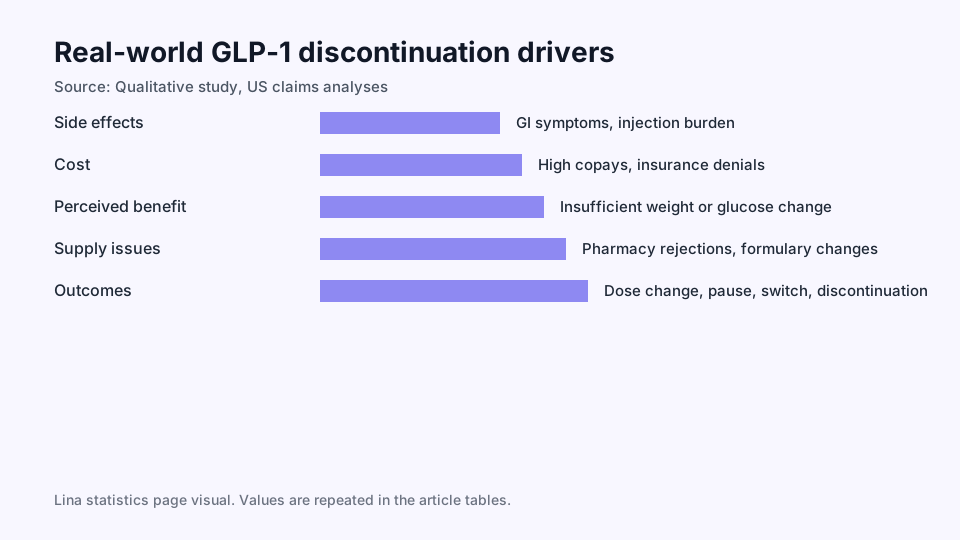
Qualitative research supports the role of perceived benefit. Interviews with 20 US adults with type 2 diabetes who had discontinued GLP-1 receptor agonists found that many cited insufficient benefit alongside side effects, injection burden, and cost. These subjective assessments are less visible in administrative claims and appear to shape real-world persistence decisions.
Practical tracking for patients and caregivers
People using GLP-1 receptor agonists and their care teams may find it helpful to track several data elements over time. This section describes common tracking approaches, not medical instructions or dosing advice.
Medication exposure tracking includes start date, current agent, dosing frequency, and any gaps between prescriptions or injections. Insurance and cost tracking includes monthly copay, prior authorization status, and any coverage denials or formulary changes. The 2026 ISPOR data show that formulary non-coverage is strongly associated with discontinuation, so monitoring insurance changes can help anticipate barriers.
Symptom and tolerability tracking includes gastrointestinal symptoms such as nausea, vomiting, diarrhea, and constipation, as well as other symptoms that affect daily functioning. Qualitative research suggests these factors influence persistence decisions. Perceived benefit tracking includes changes in home glucose readings, body weight trends, energy levels, and daily functioning. Early clinical response has been linked to better adherence and lower discontinuation in US claims analyses.
A practical persistence checklist for data collection might include a timeline of doses and gaps, a summary of insurance changes with dates, a log of side effects and their timing relative to dose changes, a simple graph of weight and glucose readings over months, and a note on affordability such as whether copays moved into higher brackets. Having a clear record can support shared decision-making based on the person's own priorities and constraints.
Methodology
This analysis synthesizes real-world GLP-1 discontinuation and persistence statistics with a focus on US data current to July 2026. Source identification involved reviewing peer-reviewed literature, registry analyses, and conference abstracts for terms including GLP-1 receptor agonist discontinuation, persistence, adherence, semaglutide discontinuation weight, and insurance denials GLP-1 United States. Primary analyses of insurance claims, electronic medical records, and registries were prioritized over secondary commentary. Large-scale US data were included when available, and non-US registry data were used to contextualize global patterns.
Inclusion criteria required studies reporting at least one of the following: discontinuation rate or risk at a specified time point such as 6, 12, or 24 months; persistence proportion at a specified time point; or adherence metrics such as proportion of days covered or medication possession ratio alongside discontinuation. Populations included adults with type 2 diabetes, obesity, or overweight prescribed GLP-1 receptor agonists for glycemic control or weight management.
Data elements extracted included population characteristics such as type 2 diabetes versus obesity versus mixed and comorbid atherosclerotic cardiovascular disease, country and payer mix, drug characteristics such as once-weekly versus daily injection where specified, outcome definitions, and time horizon. Discontinuation was often defined as a medication gap of 60 to 120 days, varying by study. Persistence was defined as remaining on therapy without exceeding the allowed gap. Adherence was commonly measured by proportion of days covered using an 80% threshold. Time horizons of 5, 6, 12, 18, and 24 months were extracted as reported.
For US 12-month discontinuation among type 2 diabetes patients, the Diabetes Therapy 2020 and ADA 984-P estimates of roughly 47% to 48% were treated as the most directly comparable claims-based benchmarks. For weight-management populations, the JAMA Network Open obesity cohort and semaglutide claims analyses supplied the main discontinuation figures of 46% to 65% within 5 to 12 months in US settings. For system-level access effects, 2026 ISPOR data showing 70.3% 1-year discontinuation were used to illustrate large-scale insurance impacts. Non-US registry data were explicitly labeled and used to contrast how different systems can yield lower discontinuation, such as 21.2% at 12 months in a nationwide registry.
Limitations include heterogeneous definitions of discontinuation and persistence across studies, which limit direct comparability. In some cases, persistence was reported instead of discontinuation and required simple inversion. Time frames and drug mix vary by study, with older agents versus newer once-weekly formulations and different indications. Some 2024 to 2026 trial-level statistics, such as discontinuation in tirzepatide obesity trials, are not fully represented in the sources listed and would require direct extraction from those trial publications.
Update history
Update history
- Page created with US discontinuation data through July 2026, including ISPOR 2026 insurance denial analysis and semaglutide weight-loss claims study.
Data download
Download GLP-1 discontinuation data
CSV file containing 12-month and 24-month discontinuation rates, persistence percentages, and adherence metrics from US and non-US studies through July 2026.
Frequently asked questions
Methodology
- Sources were selected from the dated studies, regulator pages, abstracts, and source URLs listed in this guide.
- Discontinuation, persistence, and adherence definitions were kept separate because studies use different medication-gap and coverage methods.
- US estimates were prioritized for the headline figures, while non-US registry data were used only for context.
- the guide avoids treatment instructions and uses the data to explain public discontinuation patterns.