Introduction
US employer GLP-1 coverage in 2026, including weight-loss rules, prior authorization, affordability, Medicare, Medicaid, and safety questions.
Eight figures to know
- 19% - Large employers covering weight-loss GLP-1s
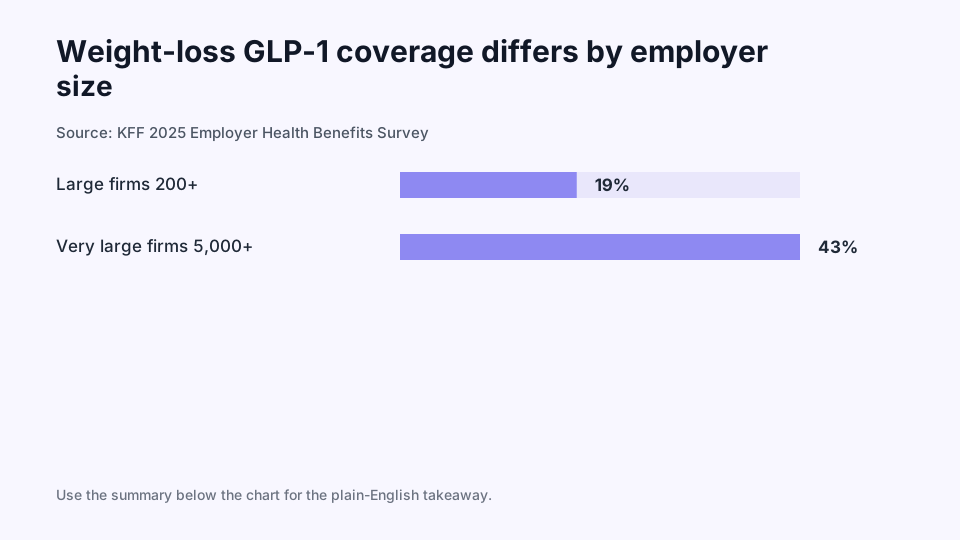
- 43% - Very large employers covering weight-loss GLP-1s
- 34% - Covering firms requiring a program or professional visit
- 70% - Users reporting some insurance payment
- 27% - Insured users who paid full cost
- 56% - Users finding medicines difficult to afford
- 13 states - Medicaid programs covering obesity treatment
- $50 per month - Medicare GLP-1 Bridge payment
What employer coverage figures mean for your plan
The 19% figure is not a prediction of what any one employer offers. It describes the largest plan at surveyed firms with at least 200 workers. Still, it gives a useful starting point: if you need a GLP-1 primarily for weight management, assume coverage needs checking rather than assuming the plan will pay. Employer size makes a visible difference. At firms with 5,000 or more workers, 43% reported weight-loss coverage. That is close to one in two, compared with roughly one in five across the broader group of large employers. A large national employer may therefore offer better odds, but its formulary, diagnosis rules, and pharmacy benefit manager can still limit access. KFF's employer work also shows why approval can involve more than a prescription. Among firms that covered weight-loss GLP-1s, 34% required participation in a lifestyle program or a meeting with a dietitian, case manager, or therapist. Ask whether the requirement applies before the first approval, at renewal, or both, and whether the plan supplies the program.
| Measure | Reported result | What it can mean |
|---|---|---|
| Large firms with 200 or more workers covering GLP-1s primarily for weight loss | 19% in 2025 | Weight-loss coverage was the exception, not the standard benefit. |
| Very large firms with 5,000 or more workers covering GLP-1s primarily for weight loss | 43% in 2025 | Working for a very large employer improved the reported odds, without guaranteeing access. |
| Covering firms requiring a lifestyle program or professional contact | 34% | Plan participation may be part of approval or renewal. |
Source: Source: KFF 2025 Employer Health Benefits Survey and KFF/Peterson-KFF employer perspectives.
Why diabetes coverage and obesity coverage can look different
GLP-1 medicines are used for more than one condition, and health plans commonly tie payment to the Food and Drug Administration, or FDA, approved use written in the benefit rules. A plan may pay for a diabetes brand when records support type 2 diabetes, then deny a related obesity brand when the request is solely for weight loss. Before making a treatment decision, ask member services to check the exact brand, indication, and pharmacy benefit. Ask whether the medication needs prior authorization, step therapy, a body mass index requirement, or evidence of another health condition. Body mass index, or BMI, is a weight-for-height screening measure commonly used in plan criteria. Do not rely on a colleague's experience, a drug-maker savings card, or a general formulary category. Employer contracts and individual eligibility can differ. Get the answer in writing through the plan portal when possible, and keep the approval letter and renewal date.
Costs can remain difficult even when insurance is involved
KFF polling found that 70% of adults who had used GLP-1 medicines said insurance paid at least part of the cost. The same polling found that 27% of insured users paid the full cost themselves. Those two figures can coexist because coverage may be limited to another diagnosis, a particular brand, or a specific pharmacy arrangement. Affordability is a treatment-continuity issue, not simply a shopping problem. Fifty-six percent of users said the medicines were difficult to afford, and 14% said they had stopped because of cost. A high deductible, coinsurance, a denied renewal, or a job and plan change can turn a manageable copay into a bill a household cannot sustain. Ask the plan for the estimated member cost after deductible and coinsurance, not simply whether a drug is covered. A pharmacist can also explain whether the prescription must go through a specialty pharmacy, whether a lower-cost covered alternative exists, and whether a manufacturer program is available for your insurance status. None of those options changes the plan's medical rules.
| Reported measure | Result | Practical meaning |
|---|---|---|
| Insurance paid at least part of cost | 70% | Some insurance help was common, but the amount of help varied. |
| Insured users who paid full cost | 27% | Having insurance did not ensure payment for the prescription. |
| Users reporting affordability difficulty | 56% | Monthly treatment costs were hard to manage for more than half of users. |
| Users who stopped due to cost | 14% | Cost was a reported reason for ending treatment. |
| Users who stopped due to side effects | 13% | Tolerability was also a reported reason for ending treatment. |
Source: Source: KFF Health Tracking Poll reporting on GLP-1 use and prescription drug costs, November 2025.
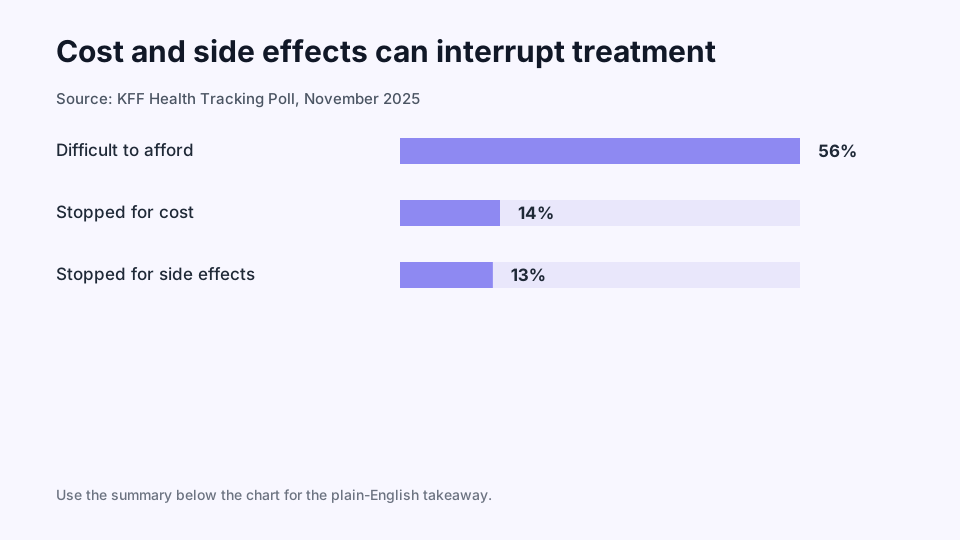
The chart separates affordability strain from reported reasons for stopping, showing that both budget and tolerability can affect continuity.
What to expect from approval and renewal
Prior authorization means the insurer asks for clinical information before it agrees to pay. It can require the prescriber to document diagnosis, BMI, prior treatments, related conditions, and sometimes participation in a support program. It is a coverage decision, not a medical judgment about your worthiness for treatment. An approval may also have an end date. Ask when renewal is due, what evidence the plan wants, and whether it expects documented weight change, laboratory results, visit notes, or program attendance. Hemoglobin A1c, often written HbA1c or A1c, is a blood test that estimates average blood sugar over roughly two to three months and may be relevant for people treated for diabetes. A simple record can make appointments and renewals less chaotic. Keep a dated weight trend, symptoms, doses as prescribed, relevant blood-pressure or laboratory results, and copies of plan messages. Lina is a GLP-1 companion app for people using Wegovy, Mounjaro, Ozempic, Zepbound, Saxenda, and related medications. It helps users track doses, side effects, meals, weight, protein, hydration, and habits in one place. It is a wellness tracking companion, not a medical device or a replacement for medical advice.
| Ask the plan or pharmacy | Why it matters | Record to keep |
|---|---|---|
| Is this exact brand covered for my diagnosis? | Diabetes and obesity benefits may differ. | Formulary response and reference number |
| Is prior authorization required and when does it expire? | A paid first fill may not answer the renewal question. | Approval letter and expiry date |
| Are there BMI, diagnosis, step-therapy, or program rules? | These rules can decide eligibility and continued payment. | Written criteria and completed-program records |
| What is my member cost after deductible and coinsurance? | A covered drug can still create a large monthly bill. | Cost estimate and pharmacy details |
| What changes at the next plan year? | Employer benefits can change at open enrollment. | Summary of benefits and plan notices |
Source: Source: KFF 2025 Employer Health Benefits Survey; KFF/Peterson-KFF employer perspectives. Individual requirements must be confirmed with the plan.
Public coverage follows different rules
Medicaid coverage for obesity treatment remains highly dependent on state policy. KFF reported that 13 state Medicaid programs covered GLP-1 medicines for obesity under fee-for-service as of January 2026, while some states had reduced coverage because of budget pressure. Diabetes coverage follows a different legal and benefit structure, so do not treat an obesity exclusion as a statement about all GLP-1 uses. Medicaid use and spending grew quickly. KFF reported prescriptions rising from 1 million in 2019 to 8 million in 2024, while gross spending before rebates rose from $1 billion to almost $9 billion. Those figures help explain why states and employers use eligibility rules, but they do not tell a person whether their state plan will approve a prescription. For Medicare, CMS says the Medicare GLP-1 Bridge began July 1, 2026. Eligible Medicare Part D beneficiaries can access certain GLP-1 medicines for weight loss for $50 a month through December 31, 2027, subject to program eligibility and prior authorization. CMS has not published a complete official drug list on the overview materials cited here, so specific drug claims should be treated as unverified until CMS confirms them.
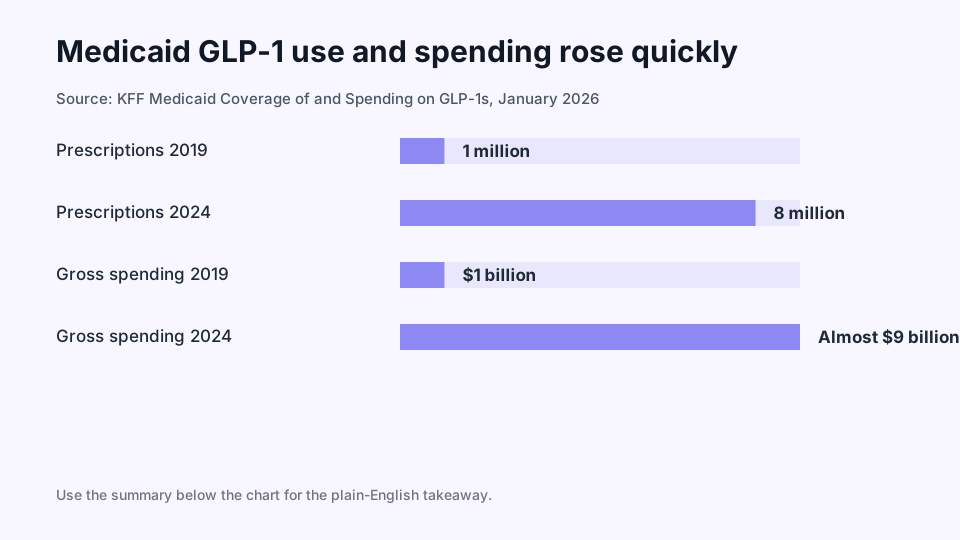
The chart compares the 2019 and 2024 scale of Medicaid prescriptions and gross spending before rebates.
Safety and compounded product limits
FDA-approved GLP-1 medicines have reviewed labeling, manufacturing standards, and known safety information. Side effects can still be significant, and 13% of GLP-1 users in KFF polling said they stopped because of side effects. A clinician or pharmacist can explain warnings, interactions, and symptoms that need prompt attention for a person's own history and other medicines. FDA warns that unapproved compounded GLP-1 products have not been reviewed by the agency for safety, effectiveness, or quality. The agency has reported dosing errors, adverse events, fraudulent products, and concerns about salt forms. Price pressure can make compounded products seem like a simple substitute, but a lower cash price does not make an unapproved copy equivalent to an FDA-approved medicine. FDA says national shortages of semaglutide and tirzepatide are resolved and has tightened the conditions under which compounders can make copies. On April 1, 2026, FDA clarified that the active ingredients were not on the 503B bulks list or the shortage list for routine compounding. Narrow lawful exceptions may exist, but a prescriber or pharmacist should be asked about the product's source and status.
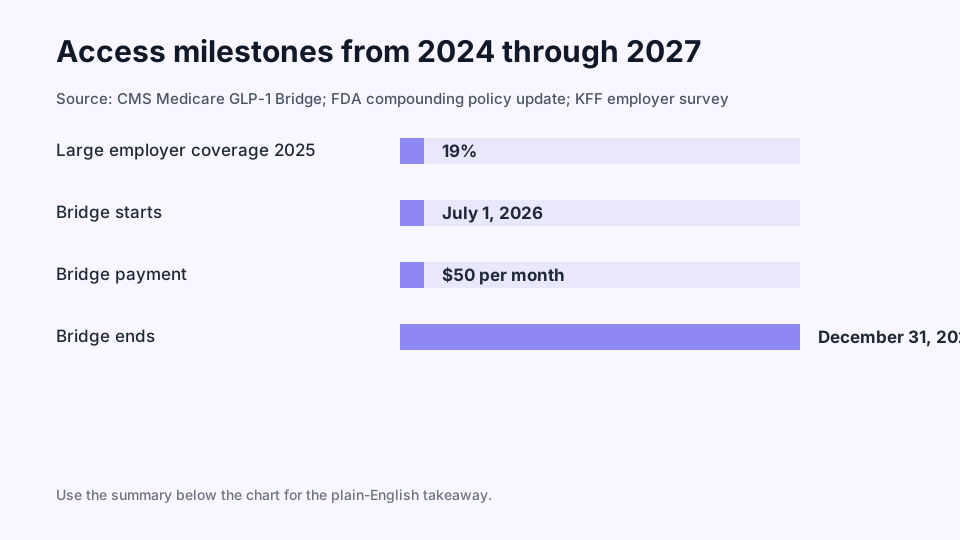
The timeline shows when the employer snapshot was measured and the fixed-payment Medicare program's operating period.
Plan for maintenance and possible coverage changes
Weight management with a GLP-1 can be a long-term conversation. The draft's broad trial context describes average losses of about 10% to 15% of starting weight over 12 to 18 months with semaglutide and about 15% to 20% over similar periods with tirzepatide. Those trial estimates are not included in the tables because the supplied source pack does not provide trial citations for them, and they should not be used to predict an individual's result. Stopping treatment can bring weight regain for some people, so it is reasonable to ask about maintenance before starting. Ask a clinician what follow-up would look like if coverage ends, if side effects become difficult, or if a change in work changes the health plan. Do not change, stretch, or stop a prescribed medicine without discussing it with the clinician who manages it. At open enrollment, compare formularies and prior-authorization rules before focusing only on premium cost. If a spouse's plan is an option, compare the exact medication benefit, deductible, coinsurance, specialty-pharmacy rules, and continuation requirements. The lowest monthly premium is not always the lowest total cost for someone using an expensive ongoing medicine.
Questions for a clinician or pharmacist
Bring your plan information to the appointment. Useful questions include: Is this medicine covered for my diagnosis? What result and timeframe are realistic for me? Which symptoms should prompt a call? How will we decide whether treatment is helping? What records are useful for authorization renewal? Ask a pharmacist: Which pharmacy does my plan require? What will the first fill and later fills cost after my deductible? Is prior authorization already on file? Is there a covered alternative on the formulary? If coverage changes, who should I contact first? These questions do not guarantee coverage or replace clinical care. They can help connect the medication decision to the practical commitments of cost, refills, monitoring, and plan rules.
Methodology
- Source priority: KFF employer surveys and health polls were used for coverage and affordability figures; CMS was used for Medicare GLP-1 Bridge details; FDA was used for shortage, compounding, and unapproved-product safety information.
- Date checked: primary and near-primary materials were checked on August 5, 2026.
- Excluded or treated cautiously: affiliate sites, peptide sellers, generic blogs, Reddit, YouTube, speculative approval claims, and media or consultant projections were excluded from the factual source list. No verified national employer coverage percentage broken down by firm size for 2026 was available in the cited primary materials.
- Patient and medical limits: survey statistics cannot determine an individual's eligibility, medical risk, dose, expected result, or out-of-pocket cost. Plan documents, a clinician, and a pharmacist are needed for those decisions.
- Review status: the guide is source-reviewed and not clinically reviewed. It is educational information, not medical advice.
Update history
- Published with KFF 2025 employer and affordability data, KFF Medicaid data from January 2026, CMS Medicare GLP-1 Bridge information, and FDA compounding updates.
Data notes
The figures reproduce the reported values in the cited KFF, CMS, and FDA materials. They are population-level measures and should not be used as a benefits quote, a clinical forecast, or a price guarantee.