Introduction
FDA-approved GLP-1 medicines in the US, with approved uses, trial results, safety warnings, cash prices, Medicare access, and clinician questions.
The numbers to know
- 13 - Stand-alone approved products or dosage forms
- 2005 - First GLP-1 approval
- Dec. 20, 2024 - Zepbound sleep-apnea approval
- Apr. 1, 2026 - Foundayo approval
- 14.9% - Wegovy trial average
- 20.9% - Zepbound trial average
- $50 monthly - Medicare Bridge copay
- Dec. 31, 2027 - Bridge end date
FDA approval is tied to the product and use
GLP-1 means glucagon-like peptide-1. A GLP-1 receptor agonist acts like a gut hormone involved in insulin release, appetite, and digestion. Tirzepatide also acts on the glucose-dependent insulinotropic polypeptide, or GIP, receptor, so it is described as a dual GIP/GLP-1 medicine. The active ingredient alone does not establish the approved use. Ozempic, Rybelsus, and Wegovy contain semaglutide, but their labels differ. Mounjaro and Zepbound contain tirzepatide, yet Mounjaro is approved for type 2 diabetes and Zepbound is approved for chronic weight management and, in qualifying adults with obesity, moderate-to-severe obstructive sleep apnea. Wegovy injection has the broadest set of listed uses in this group. Its label includes chronic weight management, reduced risk of major adverse cardiovascular events, or MACE, in eligible adults, and adults with noncirrhotic metabolic dysfunction-associated steatohepatitis, or MASH, with F2 to F3 fibrosis. MACE usually means cardiovascular death, nonfatal heart attack, or nonfatal stroke.
| Medicine | Routine | FDA-approved indication or indications | Age eligibility |
|---|---|---|---|
| Byetta | Injection twice daily | Type 2 diabetes | Adults |
| Bydureon BCise | Weekly injection | Type 2 diabetes | Age 10 and older |
| Victoza | Daily injection | Type 2 diabetes; reduced MACE in certain adults with diabetes and cardiovascular disease | Age 10 and older for diabetes |
| Saxenda | Daily injection | Chronic weight management | Age 12 and older with obesity under the label; eligible adults |
| Trulicity | Weekly injection | Type 2 diabetes; reduced MACE in certain adults with diabetes and cardiovascular risk | Age 10 and older for diabetes |
| Ozempic | Weekly injection | Type 2 diabetes; specified cardiovascular and kidney-risk uses in adults with diabetes | Age 10 and older for diabetes |
| Rybelsus | Daily tablet | Type 2 diabetes; reduced MACE in adults with diabetes at high cardiovascular risk | Adults |
| Wegovy injection | Weekly injection | Chronic weight management; reduced MACE in eligible adults; MASH with F2-F3 fibrosis | Age 12 and older for obesity; adults for other listed uses |
| Wegovy tablets | Daily tablet | Adult chronic weight management; reduced MACE in eligible adults | Adults |
| Wegovy HD | Higher-dose weekly injection | Adult chronic weight management | Adults |
| Mounjaro | Weekly injection | Type 2 diabetes | Age 10 and older |
| Zepbound | Weekly injection | Chronic weight management; moderate-to-severe obstructive sleep apnea in adults with obesity | Adults |
| Foundayo | Daily tablet | Chronic weight management | Adults |
Source: Source: FDA prescribing information and FDA approval announcements, including Wegovy, Zepbound, and Foundayo. This list excludes fixed-ratio insulin/GLP-1 combinations such as Soliqua and Xultophy.
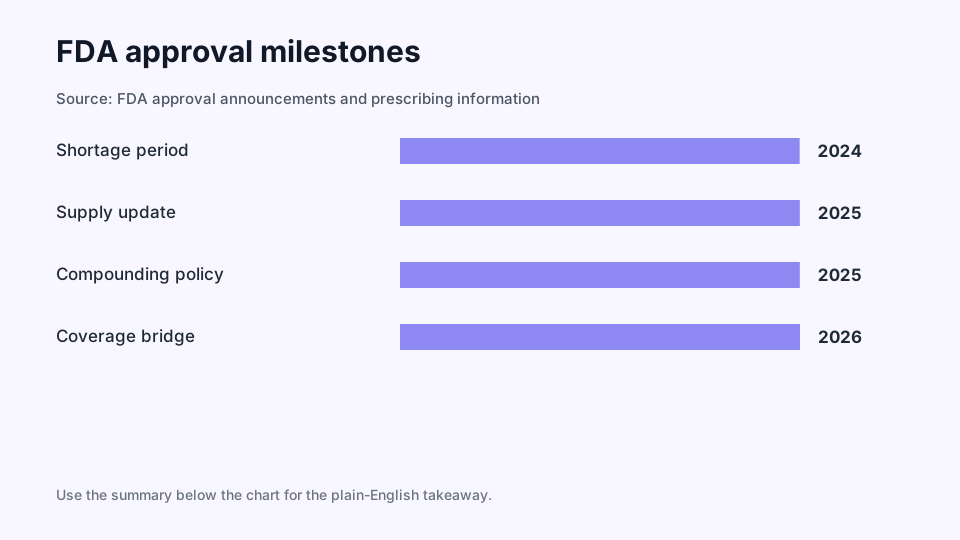
The timeline shows the move from diabetes-only approvals to weight management and obesity-related indications, which explains why brand labels and coverage pathways now differ.
The approval timeline explains why labels now differ
The first FDA-approved GLP-1 medicine, Byetta, arrived in 2005 for type 2 diabetes. Chronic weight management entered the timeline with Saxenda in 2014, followed by Wegovy injection in 2021 and Zepbound in 2023. Recent changes affect access conversations because they add approved non-weight uses. Wegovy received a cardiovascular-risk expansion on March 8, 2024, an accelerated-approval MASH indication on August 15, 2025, and later tablet and higher-dose injection forms. Zepbound's sleep-apnea approval arrived on December 20, 2024. Foundayo, orforglipron, was approved on April 1, 2026 for adult chronic weight management. It is a daily GLP-1 pill, but FDA has not approved it for diabetes, cardiovascular-risk reduction, sleep apnea, or MASH. A pill routine may be appealing, but it does not make products interchangeable.
| Date | Product or milestone | Approved use at that point |
|---|---|---|
| Apr. 28, 2005 | Byetta | Type 2 diabetes |
| Dec. 23, 2014 | Saxenda | Chronic weight management |
| Dec. 5, 2017 | Ozempic | Type 2 diabetes |
| Sep. 20, 2019 | Rybelsus | Type 2 diabetes |
| Jun. 4, 2021 | Wegovy injection | Chronic weight management |
| May 13, 2022 | Mounjaro | Type 2 diabetes |
| Nov. 8, 2023 | Zepbound | Chronic weight management |
| Mar. 8, 2024 | Wegovy expansion | Reduced MACE risk in eligible adults |
| Dec. 20, 2024 | Zepbound expansion | Moderate-to-severe obstructive sleep apnea in adults with obesity |
| Aug. 15, 2025 | Wegovy expansion | MASH with F2-F3 fibrosis in adults under accelerated approval |
| Dec. 22, 2025 | Wegovy tablets | Adult chronic weight management and reduced MACE risk |
| Mar. 19, 2026 | Wegovy HD | Higher-dose weekly injection for adult chronic weight management |
| Apr. 1, 2026 | Foundayo | Adult chronic weight management |
Source: Source: FDA approval announcements, prescribing information, and Drugs@FDA materials. Wegovy's MASH approval is accelerated approval, so confirmatory clinical benefit remains under study.
Expected weight results need a timeframe
Controlled trials give useful averages, not promises. They include structured follow-up, gradual dose increases, and lifestyle support that may differ from day-to-day care. Health conditions, tolerability, missed doses, affordability, and whether treatment continues can all change an individual's result. In STEP 1, adults without diabetes using weekly semaglutide 2.4 mg lost an average 14.9% of starting weight at week 68. At a 250-pound starting weight, that is about 37 pounds on average. In SURMOUNT-1, tirzepatide 15 mg averaged 20.9% at week 72, roughly 52 pounds from 250 pounds. Foundayo 17.2 mg averaged 11.1% at 72 weeks among adults without diabetes and 9.6% among adults with type 2 diabetes. That is about 28 pounds and 24 pounds, respectively, from 250 pounds. These are separate studies, so the figures are not a head-to-head test and should not be used as a personal forecast.
| Trial and product | Time point | Average result | Approximate change from 250 pounds |
|---|---|---|---|
| STEP 1 Wegovy 2.4 mg semaglutide | 68 weeks | 14.9% weight reduction | About 37 pounds |
| SURMOUNT-1 Zepbound 15 mg tirzepatide | 72 weeks | 20.9% weight reduction | About 52 pounds |
| Foundayo 17.2 mg without diabetes | 72 weeks | 11.1% weight reduction | About 28 pounds |
| Foundayo 17.2 mg with type 2 diabetes | 72 weeks | 9.6% weight reduction | About 24 pounds |
| Wegovy MASH trial | 72 weeks | 63% had MASH resolution without worsening fibrosis | A liver-biopsy result, not pounds lost |
Source: Sources: STEP 1 in the New England Journal of Medicine; SURMOUNT-1 in the New England Journal of Medicine; Foundayo prescribing information; FDA MASH approval announcement. Weight outcomes come from separate trials and are not direct comparisons.
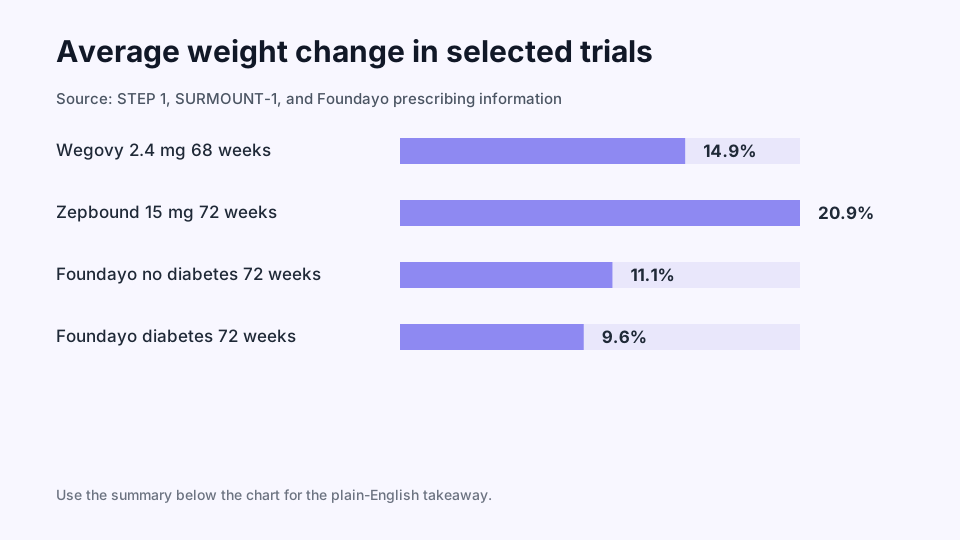
The bars show average weight reduction from separate trials over similar timeframes, useful as benchmarks but not head-to-head results or personal predictions.
MASH results measure liver response rather than pounds
MASH is metabolic dysfunction-associated steatohepatitis, a form of fatty liver disease that can involve inflammation and scarring. For Wegovy's MASH indication, the main study results are biopsy outcomes. At week 72, 63% of people taking Wegovy had MASH resolution without worsening fibrosis, compared with 34% taking placebo. Fibrosis improved without worsening MASH in 37% with Wegovy and 22% with placebo. FDA granted accelerated approval, which allows approval based on a surrogate endpoint while a required trial continues to confirm clinical benefit such as fewer liver-related events, transplants, or deaths. This indication is for adults with noncirrhotic MASH and F2 to F3 fibrosis, not for every person with fatty liver.
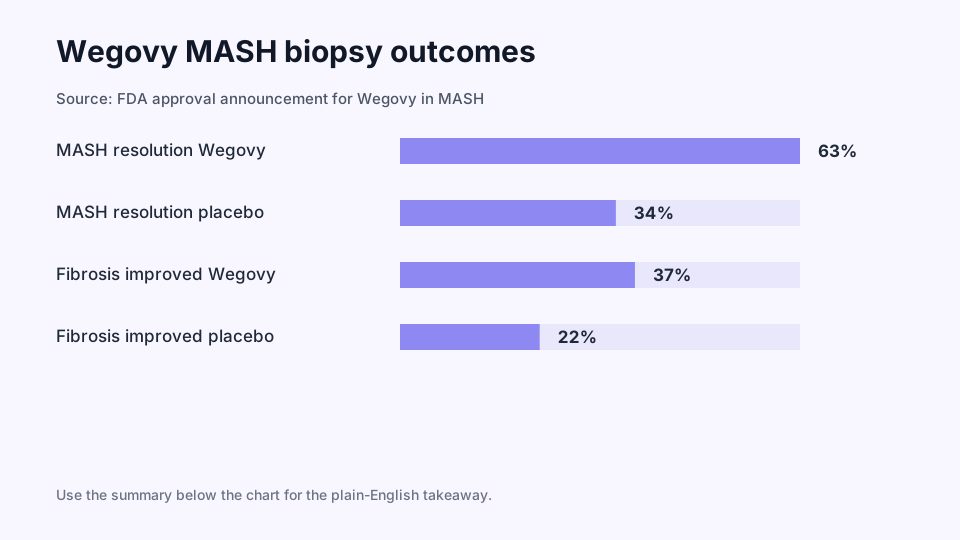
The grouped bars separate MASH resolution from fibrosis improvement, showing why the MASH indication uses liver-biopsy outcomes rather than a weight-loss percentage.
Coverage and price are separate questions
FDA approval does not require an insurer to pay. Commercial plans may require prior authorization, a qualifying diagnosis, body-mass-index documentation, or use of another product first. Call the plan or check its formulary for the exact brand and formulation, because a decision for Wegovy injection may not answer the question for Wegovy tablets or Wegovy HD. Medicare Part D can cover GLP-1 medicines for covered uses other than weight management, such as type 2 diabetes and certain labeled cardiovascular, MASH, or sleep-apnea uses. On July 1, 2026, CMS started the Medicare GLP-1 Bridge for eligible Part D enrollees using specified products for weight management. It has a $50 monthly copay and is scheduled through December 31, 2027. Published manufacturer figures are starting points, not a promise of your pharmacy bill. A deductible, coinsurance, savings-card eligibility, dose, and the dispensing channel can change what you pay. The Bridge's $245 monthly manufacturer net-price figure is a program payment figure, not a usual retail cash price.
| Product or program | Published figure | What it means |
|---|---|---|
| Wegovy injection, tablets, and HD list price | $1,349.02 per package | Manufacturer list price, not a guaranteed cash price |
| Wegovy standard injection cash offer | $349 per month | Eligible self-pay offer after the introductory period; terms apply |
| Wegovy HD cash offer | $399 per month | Eligible self-pay offer after the introductory period; terms apply |
| Zepbound 2.5 mg KwikPen or vial | $299 per month | Published manufacturer direct-pay price for the lowest strength |
| Zepbound 15 mg KwikPen or vial | $699 per month | Published manufacturer direct-pay price for the highest strength |
| Medicare GLP-1 Bridge | $50 monthly copay | For eligible Part D participants using specified products for weight management |
| Medicare GLP-1 Bridge net price | $245 monthly supply | Program payment figure, not standard pharmacy cash price |
Source: Sources: NovoCare Wegovy cost and offer materials, Lilly Zepbound coverage and savings materials, and CMS Medicare GLP-1 Bridge materials. Offers and eligibility terms can change.
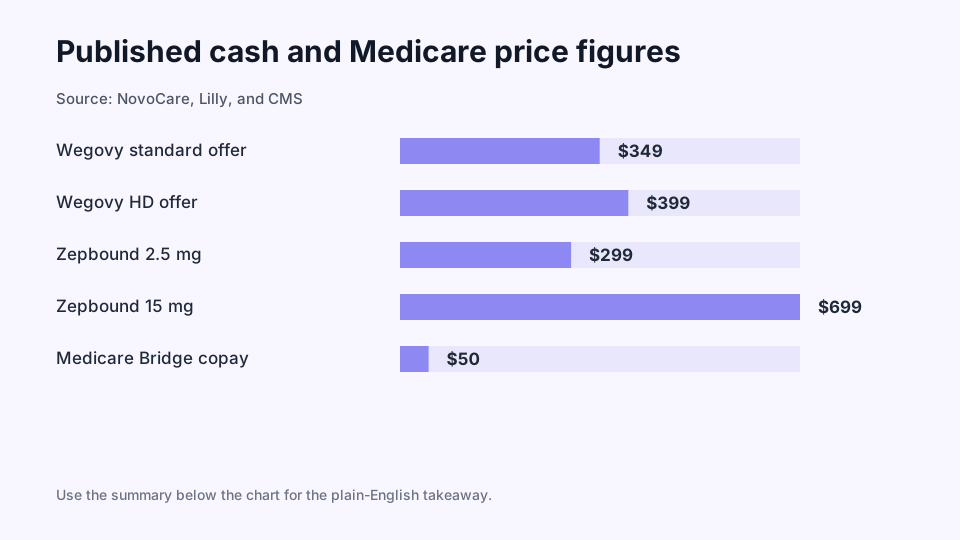
The chart compares published access figures only. It does not estimate insurance out-of-pocket costs because deductibles, coverage, eligibility, and pharmacy charges vary.
Safety and routine questions to bring to the pharmacy
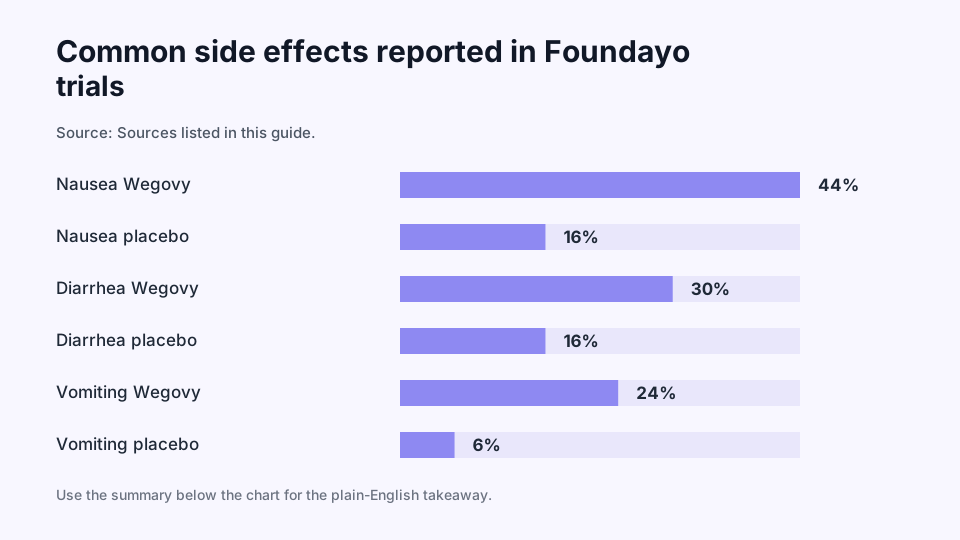
Nausea, diarrhea, vomiting, constipation, stomach pain, reduced appetite, and other digestive symptoms are common with these medicines. Symptoms can be more noticeable while a dose is being increased. Severe or persistent symptoms deserve prompt discussion with the prescribing clinician or pharmacist. Labels also contain warnings or precautions about pancreatitis, gallbladder disease, dehydration-related kidney injury, low blood sugar when used with insulin or certain diabetes drugs, and delayed stomach emptying. Most products carry a boxed warning about thyroid C-cell tumors seen in rodents. They should not be used by people with a personal or family history of medullary thyroid carcinoma or multiple endocrine neoplasia syndrome type 2; the relevance of the rodent finding in humans is unknown. Compounded semaglutide or tirzepatide is not FDA-approved in the way branded products are. FDA has warned about dosing errors, salt forms, quality concerns, and adverse events involving some compounded GLP-1 products. National shortages of semaglutide and tirzepatide injections have been resolved, so a lower price alone is not evidence that a compounded vial is equivalent or appropriate.
Maintenance deserves a plan before a stop or restart
Weight-management labels describe long-term reduction and maintenance. When treatment stops, appetite effects can fade and weight regain is common. That pattern does not mean someone has failed; it means stopping is a health and practical decision that benefits from a follow-up plan. A conversation about continuing, pausing, restarting, or changing a product can cover side effects, affordability, nutrition, movement, muscle preservation, pregnancy plans, surgery, other medicines, and the condition being treated. Do not assume a change between brands, tablets, injections, or compounded products is a milligram-for-milligram substitution. Bring the exact product name, formulation, start date, recent refill history, plan name, and pharmacy costs to a visit. Tracking symptoms, food and fluid intake, weight when useful, sleep, movement, blood glucose if you monitor it, and refill barriers can make a medical or financial problem easier to identify. Lina is a GLP-1 companion app for people using Wegovy, Mounjaro, Ozempic, Zepbound, Saxenda, and related medications. It helps users track doses, side effects, meals, weight, protein, hydration, and habits in one place.
Questions for a clinician or pharmacist
- What is the exact FDA-approved indication for my prescription?
- Is this brand approved for my condition, or is it being used off-label?
- Which side effects should lead to a same-day call, urgent evaluation, or pharmacy check-in?
- Could delayed stomach emptying affect my other oral medicines or a planned procedure?
- What documentation does my plan require for coverage or prior authorization?
- What might I pay after my deductible, coinsurance, savings-card rules, or cash program?
- What is the plan if the medicine becomes unaffordable, unavailable, or poorly tolerated?
- If I stop or restart, what follow-up and maintenance plan fits my circumstances?
Methodology
- Source priority was FDA approval announcements, FDA prescribing information and Drugs@FDA materials, then CMS coverage materials, peer-reviewed randomized trials, and official manufacturer access pages.
- Sources were last checked on August 24, 2026. Labels, access programs, prices, and coverage rules can change after that date.
- Affiliate content, telehealth marketing, peptide sellers, social-media claims, generic approval trackers, unsourced price lists, and material that treats compounded products as FDA-approved were excluded or treated cautiously.
- Trial averages cannot determine whether a medicine is safe, appropriate, covered, available, or preferable for one person. Medical history, current medicines, diagnosis, age, pregnancy considerations, benefits, supply, and clinician judgment matter.
- Manufacturer savings offers are reported as published access information, not permanent pricing or a guarantee of eligibility.
Update history
- Checked FDA approvals and labels, CMS Medicare GLP-1 Bridge information, manufacturer access figures, and cited trial evidence. Added Wegovy HD and Foundayo approvals and current Medicare Bridge details.
Download the data
Download the approval dates, labeled uses, trial benchmarks, and published access figures used in the tables and charts.