Introduction
GLP-1 medicines are now a tens-of-billions market in the US. Learn what Medicare, Medicaid, and employer spending means for your coverage, cost, and access in 2026.
Top facts
- 6% - Share of US adults currently using a GLP-1 - Source: KFF health tracking poll
- $27.5 billion - Medicare Part D gross GLP-1 spending, 2024 - Source: KFF Medicare analysis
- ~$9 billion - Medicaid gross GLP-1 spending, 2024 - Source: KFF Medicaid analysis
- 13 - State Medicaid programs covering GLP-1s for obesity, January 2026 - Source: KFF Medicaid coverage report
- $50/month - Medicare GLP-1 Bridge patient copay - Source: CMS press release
- $245/month - Medicare GLP-1 Bridge manufacturer net price - Source: KFF BALANCE explainer
- $58–82 billion - Global GLP-1 market size estimate, 2026 - Source: Industry research synthesis
- ~1% scripts, ~8% spending - Share of Medicaid prescriptions vs spending (GLP-1s, 2024) - Source: KFF Medicaid analysis
GLP-1 medicines have become one of the largest drug classes in the United States, with spending, use, and policy attention all rising sharply over the past few years. For someone aged 30 to 60 who is considering, starting, restarting, paying for, or staying on a GLP-1, the market size numbers matter because they explain why coverage rules are tightening, why prior authorization is common, and why your cost and access depend so heavily on your insurance plan, income, and the specific drug you need. This guide explains what tens of billions in spending means for your coverage, cost, and access in 2026. It covers Medicare, Medicaid, employer plans, the new Medicare GLP-1 Bridge program, and practical steps to prepare for a visit with your clinician or pharmacist.
How common GLP-1 use really is
A Kaiser Family Foundation (KFF) health tracking poll found that about 12% of US adults have ever taken a GLP-1 medicine, and 6% are currently using one. That translates to tens of millions of people across the country. For someone in the 30 to 60 age range, this means you probably know several people on Ozempic, Wegovy, Mounjaro, Zepbound, or similar drugs, even if they do not talk about it openly. This broad use also means systems are adjusting. Insurers are tightening criteria, employers are debating costs, and federal programs like Medicare and Medicaid are revisiting coverage. Your clinician is unlikely to see GLP-1s as experimental anymore. Most primary care and endocrinology practices now have many GLP-1 patients, and the infrastructure for prior authorization, formulary management, and patient support is maturing.
| Metric | Value | What it means for a patient |
|---|---|---|
| Share of US adults who have ever used a GLP-1 | ~12% | GLP-1s are now mainstream; your clinician and pharmacist have experience with them |
| Share of US adults currently using a GLP-1 | ~6% | Tens of millions of people are on GLP-1s, making coverage and access a major policy issue |
| Medicare Part D gross GLP-1 spending, 2024 | $27.5 billion | Medicare is a major GLP-1 buyer; coverage rules will keep evolving |
| Medicaid gross GLP-1 spending, 2024 | ~$9 billion | States see GLP-1s as high-cost drugs and often limit obesity-only use |
| Medicaid GLP-1 prescriptions, 2024 | ~8 million | Small share of users, big share of budget, driving tight controls |
Source: Data from KFF analyses of Medicare and Medicaid claims, and KFF health tracking polls.
Why spending numbers matter for your coverage
The big dollar amounts tell you one thing clearly: GLP-1s are expensive and widely used. Medicare Part D spent $27.5 billion on GLP-1s in 2024, and Medicaid spent almost $9 billion. These are gross spending figures before rebates, but they still reflect the scale of use and the pressure on payers to manage costs. For an individual, that translates into stricter prior authorization. Plans often require certain body mass index (BMI) thresholds, documented comorbidities like type 2 diabetes, cardiovascular disease, or sleep apnea, and evidence you tried lifestyle changes or other medicines first. Coverage differences by indication are common. The same drug may be covered for type 2 diabetes but not for weight alone. Ozempic may be covered for diabetes, while Wegovy might be covered for obesity, cardiovascular risk, or not at all. More talk about step therapy and duration limits is also emerging. Some plans set time limits or require switching to cheaper options after a certain period. The market size is do not simply a business story. It explains why your doctor and pharmacist may spend more time dealing with forms, denials, and appeals around your GLP-1.
What the Medicare GLP-1 Bridge changes for seniors
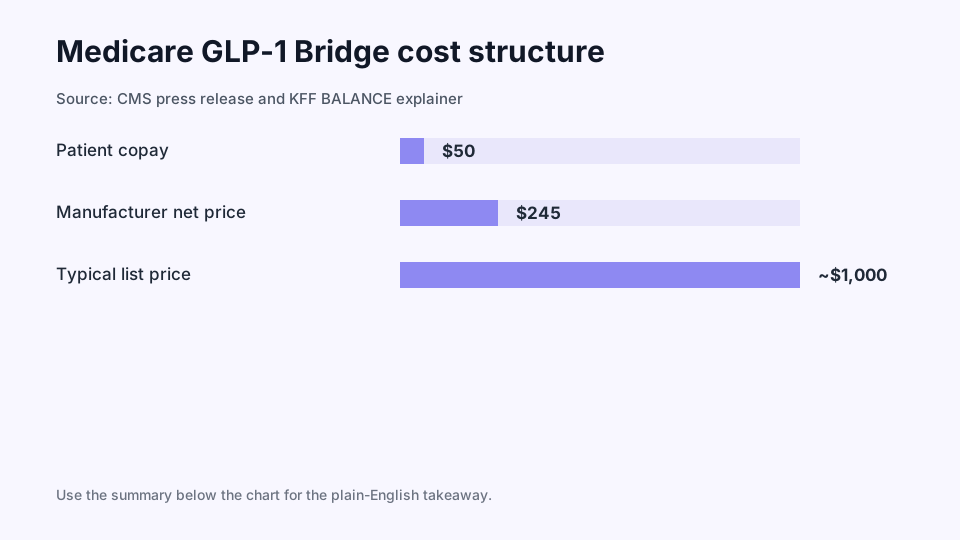
If you are on Medicare or caring for someone who is, the Medicare GLP-1 Bridge program is a meaningful change. Until now, Medicare generally did not cover GLP-1s purely for obesity. Coverage focused on diabetes and a few specific conditions. From July 1, 2026, the Medicare GLP-1 Bridge offers access to select GLP-1s for weight management with a flat $50 monthly copay, for eligible Part D enrollees, through December 31, 2027. In practice, for a patient, your drug choice is limited to the Bridge list. Current information from health plans mentions Wegovy, Zepbound KwikPen, and Foundayo tablets. You still need to meet clinical criteria, such as BMI cut-offs and related health risks. The Bridge copay does not count toward your Part D out-of-pocket totals, so you get price predictability; however, not extra help with your in the full dataset Part D spending. This program makes Medicare a larger part of the GLP-1 market. It also increases pressure on manufacturers and Congress to decide what happens after 2027. The Centers for Medicare & Medicaid Services (CMS) originally planned a longer-term BALANCE model but has since delayed it indefinitely and extended the Bridge through 2027. No definitive, source-backed plan for post-2027 obesity GLP-1 coverage in Medicare Part D has been finalized. Future rules will depend on policy decisions not yet made.
The Medicare GLP-1 Bridge sets a patient copay of $50 per month, with manufacturers receiving a net price of $245, compared to typical list prices near $1,000, showing how the program reduces patient costs while manufacturers absorb the difference.
Medicaid and employer coverage why obesity alone is hardest
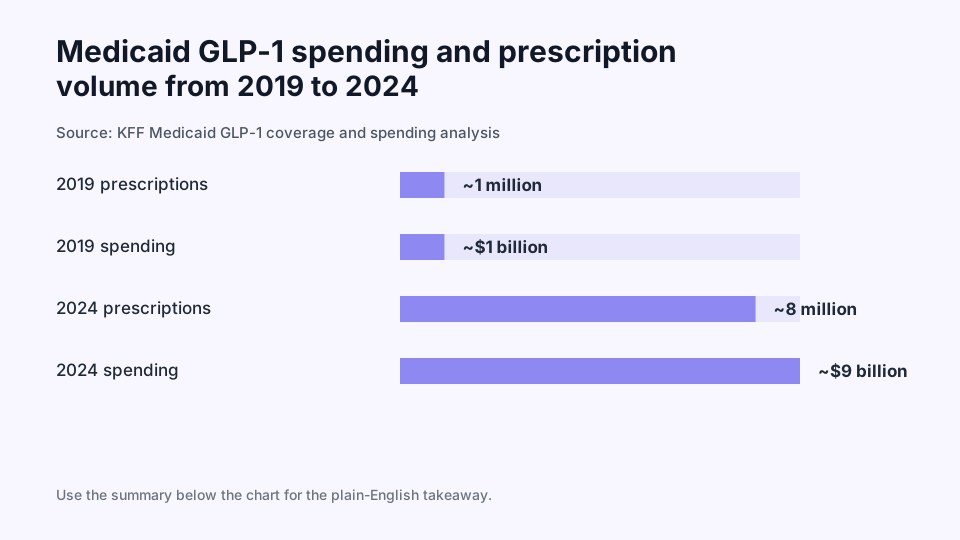
Medicaid data show GLP-1s are only about 1% of prescriptions but about 8% of spending, meaning they are much more expensive per prescription than most drugs in the program. That leads to tight rules. Only 13 state Medicaid programs cover GLP-1s for obesity as of January 2026. Many states cover them only for type 2 diabetes. Some states have started restricting weight-loss coverage after seeing GLP-1s take up a large share of drug budgets. Employers show similar concerns in surveys. Many employers worry that covering GLP-1s for obesity will sharply raise premiums and long-term costs. Some cover diabetes indications widely but set stricter requirements or exclusions for weight loss alone. For you, this means if you want GLP-1 mainly for weight, your coverage is often less certain and more likely to be denied or time-limited. If you have type 2 diabetes plus obesity, your odds of coverage are usually higher, but criteria and copays still vary.
| Year | Prescriptions (millions) | Gross spending (billions) | Share of Medicaid drug spending |
|---|---|---|---|
| 2019 | ~1 | ~$1 | Low single digit % |
| 2023 | Growing | Growing | Several % |
| 2024 | ~8 | ~$9 | ~8% |
Source: Data from KFF Medicaid GLP-1 coverage and spending analysis.
Price realities list prices, negotiated prices, and cash pay
KFF and news coverage describe monthly list prices for brand-name GLP-1s near $1,000 per month, depending on drug and dose. That does not equal what most insured patients pay,; however, it explains why 54% of GLP-1 users in one KFF poll said it was hard to afford their medicine, and about 22% said it was very difficult. It also explains why many people stop or pause GLP-1 treatment when coverage changes or deductibles reset. At the same time, Medicare and Medicaid negotiate or receive rebates, so net spending is lower than headline numbers, but copays can still be high for patients. The compounded GLP-1 market grew with prices in the $200 to $300 per month range, but the Food and Drug Administration (FDA) has raised safety concerns and clarified compounders' obligations once brand supply stabilizes. For someone choosing a GLP-1 today, if you are insured, your plan's formulary and specialty tier matter more than list price alone. If you are paying cash, telehealth and compounded options may look cheaper, but you must weigh safety, FDA warnings, and the risk that coverage or legality changes over time.
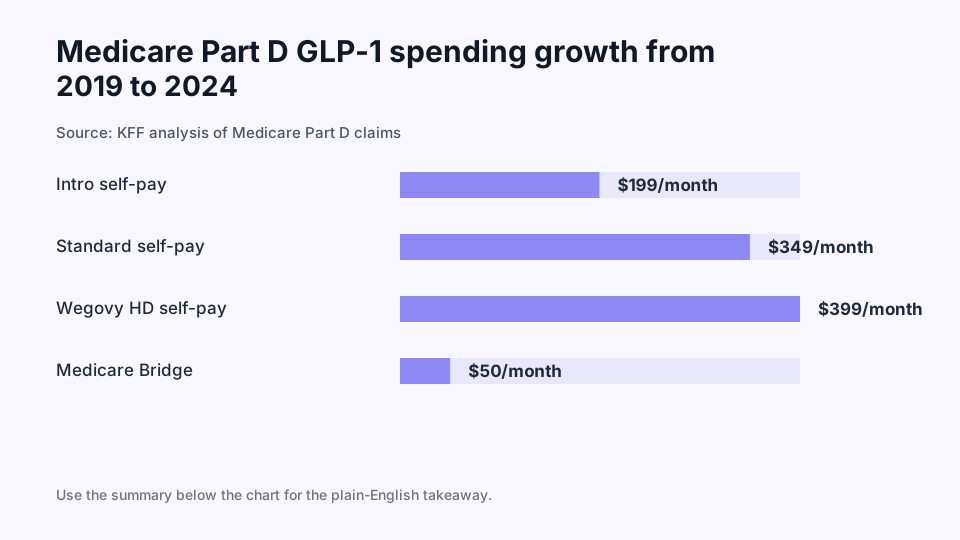
Medicare Part D GLP-1 spending grew sharply from 2019 to 2024, reflecting both increased use and higher per-prescription costs, which drives tighter coverage rules and prior authorization.
How market size relates to effectiveness
this guide is about market size and access, but it helps to connect that to why demand is so strong. Clinical trials have consistently shown weight loss in the range of 10 to 20% of body weight over 1 to 2 years for higher-dose semaglutide and tirzepatide in obesity trials, depending on adherence and lifestyle. Blood sugar improvements in type 2 diabetes are often enough to reduce hemoglobin A1c (HbA1c, a long-term blood sugar measure) by around 1 percentage point or more and lower the need for additional medicines in many patients. Reductions in major adverse cardiovascular events (MACE), which include heart attack, stroke, and cardiovascular death, have been seen in some high-risk populations when treating obesity and cardiovascular risk with GLP-1s. Regulators and payers respond to this. The Centers for Disease Control and Prevention (CDC) show GLP-1s as part of the toolbox for obesity treatment, alongside lifestyle support. Medicare and Medicaid models like the Bridge and the delayed BALANCE model focus on obesity and cardiometabolic risk because data suggest big benefits in those areas. For a person considering the cost, the market is large do not simply because prices are high,; however, because many people and clinicians see real health gains and stay on the drug for years. This long duration of use amplifies spending and makes insurers cautious, but also validates GLP-1s as more than short-term treatments.
| Geography | Estimated market size | Source |
|---|---|---|
| Global | $58–82 billion | Grand View Research, Towards Healthcare, industry synthesis |
| United States | $25–50+ billion | Precedence Research, industry synthesis |
Source: Market size estimates from reputable industry research firms. Exact figures vary by method and scope.
Practical tracking and patient preparation
Given the cost and long-term nature of GLP-1s, it helps to prepare for visits and track your own experience. Here are concrete questions to ask your clinician, pharmacist, and plan, and what to track during treatment.
Questions to ask your clinician
Bring concrete questions tied to coverage and routine, do not simply 'Should I take this?' Consider asking about indication and goals: 'Are we using this mainly for type 2 diabetes, weight, heart risk, or sleep apnea?' and 'Based on the evidence, how much weight loss or HbA1c improvement is realistic for me over 6 to 12 months?' Ask about duration and stopping: 'If I respond well, what is the likely plan for staying on or tapering off?' and 'What tends to happen to weight and blood sugar when people stop GLP-1s?' Ask about alternatives and combinations: 'Could lower-cost medicines or lifestyle programs work instead or alongside a GLP-1 in my case?' and 'If my insurance denies obesity coverage, what other medically sound options do we have?'
Questions to ask your pharmacist or plan
Pharmacists and plan representatives are closest to the actual billing rules. Ask about coverage specifics: 'Is my GLP-1 covered for my diagnosis (diabetes versus obesity versus heart risk)?' and 'Which GLP-1s are preferred on my plan's formulary, and what are the copays?' Ask about prior authorization and step therapy: 'Does this prescription need prior authorization? If yes, what information is required?' and 'Are there step-therapy rules that force me to try another medicine first?' If you have Medicare Part D, ask about the Medicare GLP-1 Bridge: 'Do I qualify for the GLP-1 Bridge program?' and 'Is my pharmacy set up to process Bridge claims, and what documentation do we need?'
Personal tracking during treatment
Track monthly out-of-pocket costs, noting copays, deductibles, and any changes at renewal time. Track weight, HbA1c, and symptoms every 3 months to see if the benefits justify staying on the medicine from your perspective. Log side effects like nausea, vomiting, bowel changes, or other symptoms, and how they change with dose or diet. This tracking does not replace medical advice,; however, it gives you a clear picture when you revisit the decision to continue, switch, or stop.
Medicaid GLP-1 prescriptions grew from about 1 million in 2019 to about 8 million in 2024, with spending rising from about $1 billion to almost $9 billion, showing that GLP-1s are a small share of prescriptions but a large share of spending.
Developments in the last 90 days
Several meaningful changes have happened recently that matter for patients. On May 6, 2026, CMS issued a press release confirming that under the Medicare GLP-1 Bridge, eligible beneficiaries will pay $50 per month for a qualifying GLP-1 prescription from July 1, 2026 through December 31, 2027. In practice, if you are on Medicare Part D and qualify based on BMI and health conditions, your monthly GLP-1 cost could drop from hundreds of dollars to a predictable $50. On June 4, 2026, CMS published training materials and an MLN newsletter explaining how pharmacies should process Bridge claims through a central processor starting July 1, 2026. In practice, this reduces the risk that your pharmacy will be confused on day one. They have guidance on billing correctly. From July 1 to 13, 2026, CMS confirmed the Bridge is live, and clarified that it operates outside normal Part D coverage, with a central processor handling payment and prior authorization. KFF later noted the extension of the Bridge through end of 2027 and the indefinite delay of the BALANCE model. In practice, you do not have to wait for a long-term obesity model in Medicare. The temporary Bridge program now runs longer than originally planned. No major new federal list-price cuts or across-the-board commercial insurance mandates for GLP-1 coverage have been documented in preferred sources over the last 90 days. Most commercial and employer coverage policies remain plan-specific and are not centrally tracked.
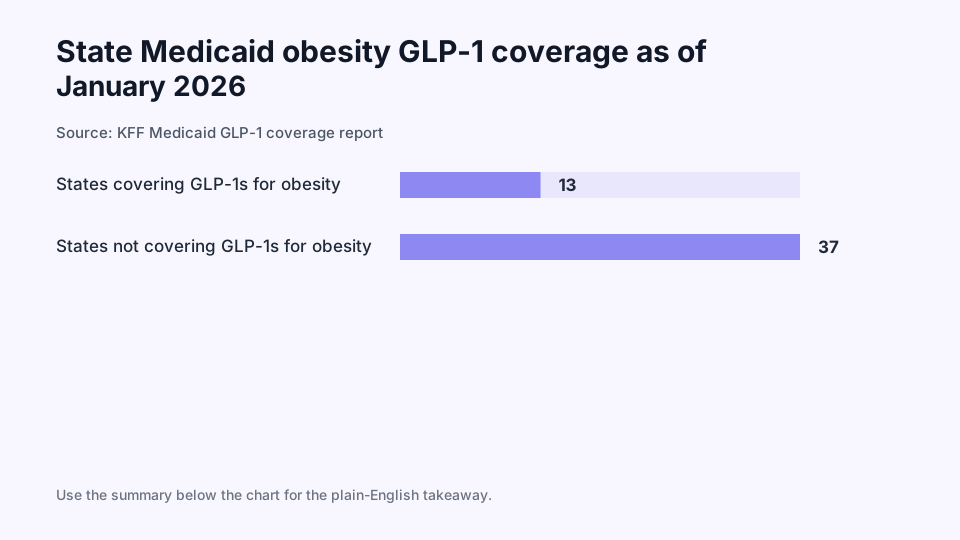
Only 13 state Medicaid programs cover GLP-1s for obesity as of January 2026, while most states limit coverage to type 2 diabetes indications, reflecting budget concerns and the high cost per prescription.
Methodology
- This guide relies first on primary and near-primary sources: KFF analyses of Medicare and Medicaid GLP-1 use and spending (claims-based), KFF health tracking polls on GLP-1 use and affordability, CMS official pages, press releases, FAQs, and training materials for the Medicare GLP-1 Bridge, FDA updates on GLP-1 drug safety and compounded drug policies, CDC data on adult obesity and obesity treatment tools, and reputable market-research and industry reports for global and US market-size estimates.
- The data and policies reflected here were last reviewed on July 23, 2026.
- We excluded or treated with caution: affiliate marketing sites, peptide sellers, generic web-style health blogs, Reddit threads, YouTube content, and speculative approval or pricing trackers. We used news coverage primarily when it directly quoted or summarized KFF or government data, and when the underlying primary document was not easily accessible in this context.
- This guide cannot tell you whether a GLP-1 is medically appropriate for you, what dose you should take, or how long you should stay on it. It cannot predict your exact insurance copay, approval odds, or timing of prior authorization. It cannot substitute for clinician judgment on side effects, interactions, or long-term treatment plans. Use this as background for better conversations with your clinicians, pharmacists, and insurers, not as a treatment plan.
Update history
- Initial publication covering GLP-1 market size, spending, and access in the US as of July 2026, including the Medicare GLP-1 Bridge program launch.
Download data
Download the GLP-1 market size and access data used in this guide as a CSV file.