Introduction
Medicaid GLP-1 coverage varies by diagnosis and state. See the January 2026 obesity coverage count, costs, trial results, safety, and next steps.
Eight facts to know
- 13 - States covering obesity GLP-1s
- 16 states - October 2025 count
- About 1 million - Medicaid GLP-1 prescriptions in 2019
- More than 8 million - Medicaid GLP-1 prescriptions in 2024
- About $1 billion - Gross Medicaid GLP-1 spending in 2019
- Nearly $9 billion - Gross Medicaid GLP-1 spending in 2024
- 56% - GLP-1 users reporting affordability difficulty
- 990 - FDA reports tied to compounded semaglutide
Why the diagnosis changes Medicaid coverage
GLP-1 means glucagon-like peptide-1. It describes a hormone pathway that affects appetite, digestion, and blood sugar. Tirzepatide acts on GLP-1 and glucose-dependent insulinotropic polypeptide, or GIP, pathways. Federal Medicaid law allows states to exclude drugs when they are used for weight loss. That exception helps explain the split in access. Medicines prescribed for medically accepted non-weight-loss uses can follow a different coverage route, although the plan may still require prior authorization or favor one product over another.
| Situation | Relevant FDA-approved use | What it can mean for Medicaid |
|---|---|---|
| Obesity alone | Chronic weight management for eligible adults | A state may exclude the drug when it is used for weight loss. |
| Type 2 diabetes | Diabetes treatment for eligible products | Coverage generally follows medically accepted non-weight-loss use rules, with plan controls still possible. |
| Established cardiovascular disease with overweight or obesity | Wegovy can reduce cardiovascular death, heart attack, and stroke risk for certain adults | The request may be reviewed under this labeled indication rather than weight loss alone. |
| Moderate to severe obstructive sleep apnea with obesity | Zepbound is FDA-approved for this condition in eligible adults | The diagnosis may create a distinct coverage route, but plan criteria still apply. |
Source: Sources: KFF, Medicaid Coverage of and Spending on GLP-1s, January 16, 2026; FDA Wegovy cardiovascular approval, March 8, 2024; FDA Zepbound sleep-apnea approval, December 20, 2024.
The January 2026 state coverage baseline
KFF found 13 state Medicaid fee-for-service programs covering GLP-1 medicines for obesity treatment in January 2026: Delaware, Kansas, Massachusetts, Michigan, Minnesota, Mississippi, Missouri, North Carolina, Rhode Island, Tennessee, Utah, Virginia, and Wisconsin. Obesity-only coverage was the exception rather than the standard benefit. That list is a baseline, not a promise. It does not show whether your managed-care organization uses the same policy, whether a drug is preferred, whether the diagnosis meets current criteria, or whether a state made a later formulary change. Michigan, Rhode Island, and Wisconsin were among states KFF identified as planning or considering further restrictions.
| State | January 2026 status | Practical access note |
|---|---|---|
| Delaware | Covered | Check the current medicine and authorization criteria. |
| Kansas | Covered | Check the preferred-drug list and prior-authorization form. |
| Massachusetts | Covered | Benefit arrangements can have different pharmacy rules. |
| Michigan | Covered | KFF reported planned or considered restrictions. |
| Minnesota | Covered | Confirm the precise drug and diagnosis. |
| Mississippi | Covered | Verify current Medicaid or plan policy directly. |
| Missouri | Covered | Authorization may be needed at first fill and renewal. |
| North Carolina | Covered | Confirm current Medicaid benefit requirements. |
| Rhode Island | Covered | KFF reported planned or considered restrictions. |
| Tennessee | Covered | Check TennCare and plan-specific processes. |
| Utah | Covered | Use the current Medicaid pharmacy criteria. |
| Virginia | Covered | Managed-care plans may use separate criteria. |
| Wisconsin | Covered | KFF reported planned or considered restrictions. |
Source: Source: KFF, Medicaid Coverage of and Spending on GLP-1s, January 16, 2026. The count is fee-for-service Medicaid and is not a live list of individual approvals.
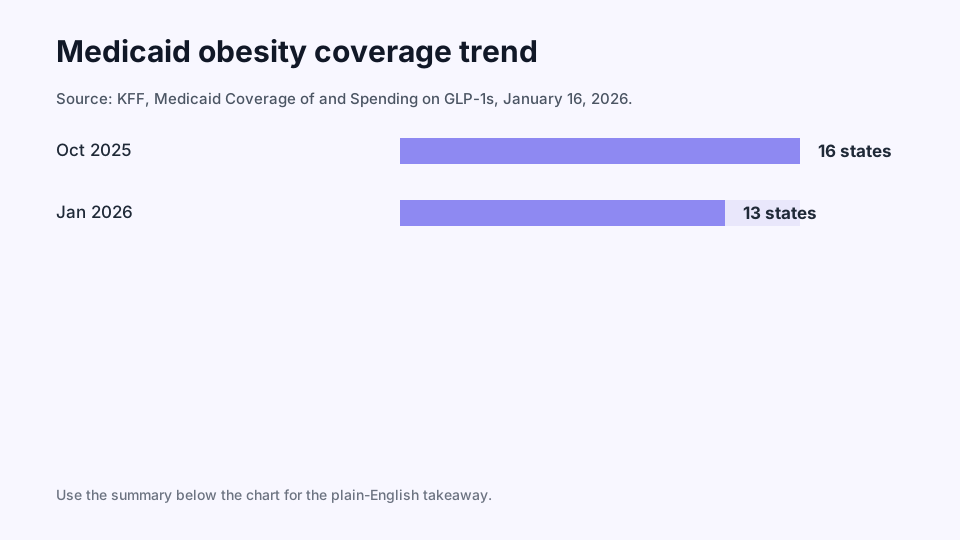
The count of state Medicaid fee-for-service programs covering GLP-1 medicines for obesity fell by three states in roughly three months, showing why a current formulary check matters.
What prior authorization means for a refill
Prior authorization is a plan review before it pays for a medicine. The prescriber may need to send information about the diagnosis, body mass index, related conditions, past treatments, lab information, safety considerations, or why a preferred medicine is not suitable. A denial does not always mean the medicine is permanently unavailable. It can reflect an excluded indication, a non-preferred product, missing documentation, an incorrect diagnosis code, or a request for an exception. Ask for the written denial notice, the stated reason, appeal rights, and deadline.
Why states are tightening coverage
Medicaid GLP-1 prescriptions rose from about 1 million in 2019 to more than 8 million in 2024, according to KFF's analysis of State Drug Utilization Data. Gross spending rose from about $1 billion to nearly $9 billion over the same period. Those totals combine diabetes and other FDA-approved uses with obesity treatment, so they cannot show obesity spending alone. Gross spending is not the final amount paid by state programs. Medicaid receives mandatory and supplemental rebates, which can reduce net costs. For a member, the useful question is much narrower: whether the exact product is covered for the diagnosis and what copay, if any, appears after the pharmacy runs the claim.
| Measure | 2019 | 2024 | What the change means |
|---|---|---|---|
| GLP-1 prescriptions | About 1 million | More than 8 million | More people used products across all approved indications. |
| Gross Medicaid spending | About $1 billion | Nearly $9 billion | Budget pressure helps explain tighter utilization rules. |
| Gross spending per prescription | Not reported here | About $1,000 | An average gross amount, not a member's price. |
| Users reporting affordability difficulty | Not reported here | 56% | Coverage barriers and full-price exposure can still occur. |
| Insured users who paid full cost | Not reported here | 27% | A person can be insured but lack coverage for a specific use or product. |
Source: Sources: KFF, Medicaid Coverage of and Spending on GLP-1s, January 16, 2026; KFF Health Tracking Poll: Prescription Drug Costs, Views on Trump Administration Actions, and GLP-1 Use. Spending figures are before rebates.
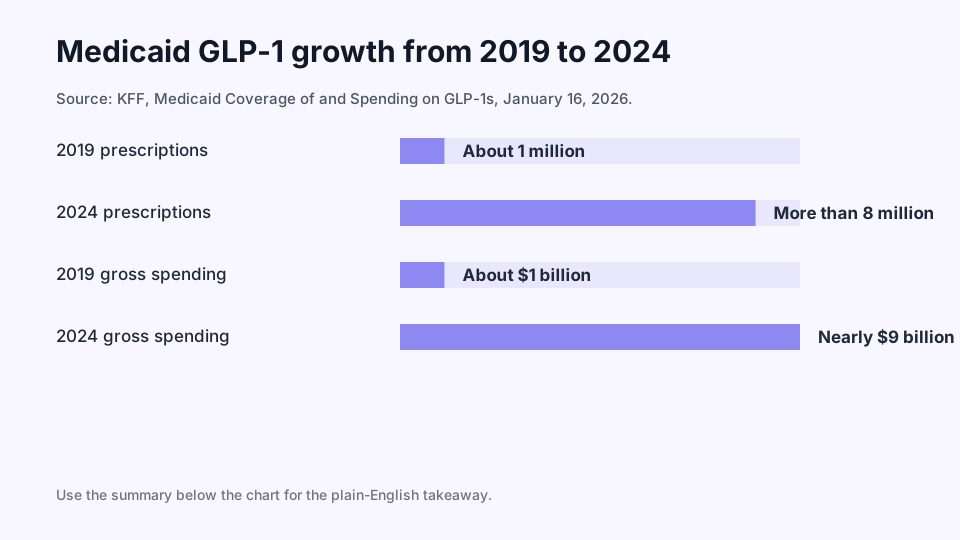
Use and gross spending grew sharply across all FDA-approved GLP-1 uses, helping explain plan restrictions while not showing a person's net cost.
What trial averages can and cannot tell you
Coverage rules are payment rules, not a measure of whether a medicine works for a particular person. Before investing time in an authorization, trial data can still help set a realistic expectation about the size and timing of average weight change. In STEP 1, adults without diabetes using semaglutide 2.4 mg with lifestyle support lost an average of 14.9% of starting body weight at week 68, compared with 2.4% with placebo. At a starting weight of 250 pounds, 14.9% is about 37 pounds on average. That is a trial average, not a prediction for an individual. In SURMOUNT-1, adults without diabetes using tirzepatide 15 mg lost an average of 20.9% at week 72, compared with 3.1% with placebo. At 250 pounds, 20.9% is about 52 pounds on average. These were separate trials with different populations and timeframes, so they are not a direct head-to-head comparison.
| Study | Medicine and timeframe | Average result | What it means in practice |
|---|---|---|---|
| STEP 1 | Semaglutide 2.4 mg at 68 weeks | -14.9% versus -2.4% placebo | About 15 pounds per 100 pounds of starting weight on average. |
| SURMOUNT-1 | Tirzepatide 15 mg at 72 weeks | -20.9% versus -3.1% placebo | About 21 pounds per 100 pounds of starting weight on average. |
| STEP 1 extension | Semaglutide stopped after 68 weeks, then one year off treatment | 11.6 percentage points regained on average | Substantial regain after stopping was common in this study. |
Source: Sources: Wilding et al., New England Journal of Medicine, STEP 1; Jastreboff et al., New England Journal of Medicine, SURMOUNT-1; Wilding et al., STEP 1 trial extension, PubMed. Trials were not direct comparisons of semaglutide and tirzepatide.
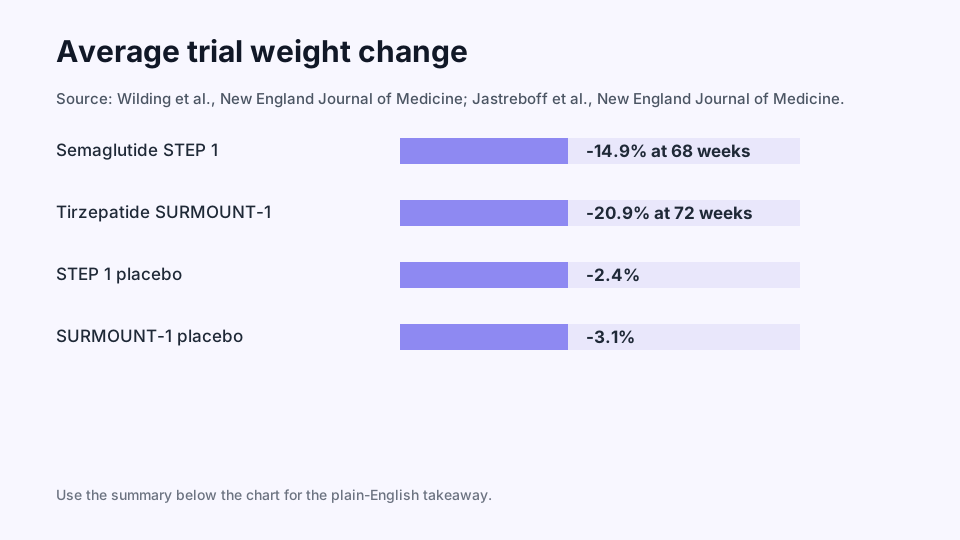
The studies show substantial average weight loss with both medicines compared with placebo, but they were separate trials and do not provide a direct product comparison.
Continuity is part of the access question. In the STEP 1 extension, participants regained about two-thirds of their prior semaglutide-related weight loss during the year after treatment and lifestyle support stopped. People do not all have the same experience,; however, a coverage loss or refill gap is worth raising promptly with the clinician who manages the prescription. Common side effects of approved GLP-1-based medicines include nausea, vomiting, diarrhea, constipation, abdominal discomfort, and reflux symptoms. Product labels also carry more serious warnings and contraindications, including pancreatitis, gallbladder disease, low blood sugar when used with certain diabetes medicines, kidney problems related to dehydration, and a thyroid C-cell tumor warning. A clinician or pharmacist can review the label against a person's health history and other medicines.
Recent federal developments that do and avoid change Medicaid
On July 1, 2026, the Centers for Medicare & Medicaid Services launched the Medicare GLP-1 Bridge. Eligible Medicare Part D members can access certain GLP-1 medicines through December 31, 2027 with a $50 copay. It is a Medicare demonstration and does not create a nationwide Medicaid benefit or override a state Medicaid formulary. California's Medi-Cal exclusion of GLP-1s used for weight loss took effect on January 1, 2026. FDA also approved Wegovy HD, a 7.2 mg semaglutide option for certain adults, on March 19, 2026. An FDA approval does not require a state Medicaid program to add a new strength to its formulary.
Compounded GLP-1 products need extra caution
A compounded product is not an interchangeable, covered version of an FDA-approved medicine. FDA does not approve compounded drugs for safety, effectiveness, or quality before marketing. The agency has raised concerns about dosing errors, fraudulent labels, questionable salt forms of semaglutide, storage problems, and products presented as equivalent to approved medicines. As of May 31, 2026, FDA had received 990 adverse-event reports associated with compounded semaglutide and more than 730 associated with compounded tirzepatide. A report cannot always establish that the product caused an event, and reporting can be incomplete. The figures are still a reason to discuss any compounded product with a clinician or pharmacist rather than treating it as a simple insurance fallback.
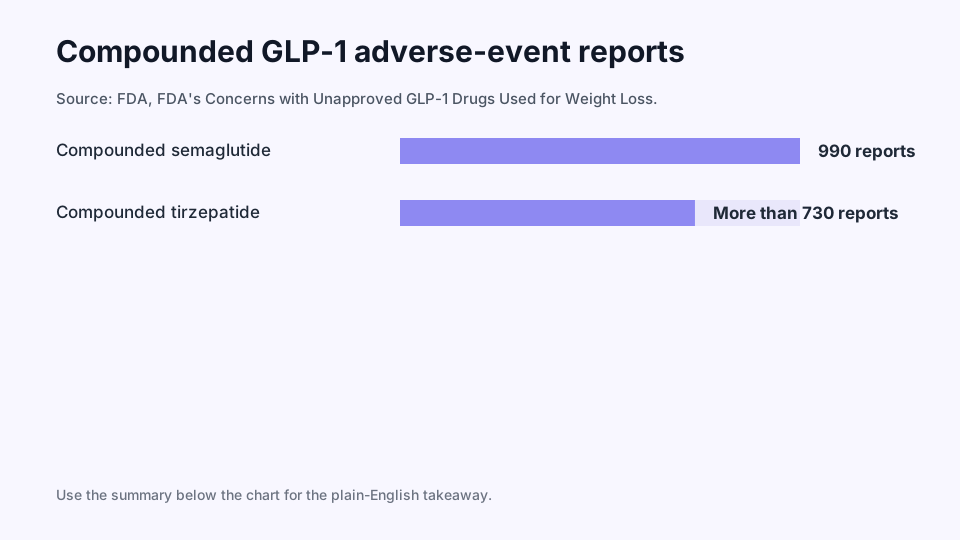
FDA report totals through May 31, 2026 are safety signals that support caution with unapproved compounded products; they do not prove that a product caused an event.
How to check coverage without losing time
Start with the exact medicine and diagnosis. A broad question about GLP-1 coverage usually cannot produce a reliable answer because plan rules are often drug- and indication-specific. Ask the prescriber whether the request is for obesity treatment, type 2 diabetes, cardiovascular-risk reduction, obstructive sleep apnea, or another FDA-approved use. Check the state Medicaid preferred-drug list, then the managed-care plan formulary and prior-authorization page. Look at the effective date on the criteria. A plan may administer pharmacy benefits differently from fee-for-service Medicaid, and an old PDF may no longer govern the claim.
Questions for a clinician, pharmacist, or plan
- Which FDA-approved indication applies to my prescription?
- Is this medicine preferred, non-preferred, or excluded by my Medicaid plan?
- Is prior authorization needed before the first fill, at renewal, or both?
- What records must the prescriber submit?
- If coverage changes or the pharmacy cannot fill it, what is the safe plan for avoiding a gap?
- Are there side effects, interactions, or safety concerns with my other medicines and health history?
- If the claim is denied, who handles the appeal and what is the deadline?
Methodology
- Source priority: FDA, CMS, Medicaid.gov, and state Medicaid materials came first; KFF policy research and polling came next; New England Journal of Medicine trials and PubMed-indexed research supplied treatment evidence.
- Date checked: August 6, 2026. The latest nationwide Medicaid obesity-coverage count located in the preferred sources was KFF's January 16, 2026 fee-for-service analysis.
- Treated cautiously or excluded: pharmacy marketing, telehealth sales pages, affiliate content, coupon sites, social posts, peptide sellers, unverified state trackers, and generic approval summaries were not used to establish coverage, cost, safety, or state policy.
- Limits for patients: the data cannot determine current approval by an individual managed-care plan, exact out-of-pocket cost after claim processing, medical suitability, or how a specific person will respond to treatment.
- Spending limitation: Medicaid gross spending is before mandatory and supplemental rebates and should not be read as net state spending or a member bill.
Update history
- Published with the January 2026 KFF state-count benchmark, July 2026 CMS Medicare GLP-1 Bridge information, and FDA compounded-product safety figures reported through May 31, 2026.
Data notes and download
The figures use the reported values in the tables: state fee-for-service coverage counts, national Medicaid prescriptions and gross spending, trial averages, and FDA report totals. State coverage is a January 2026 snapshot, not a real-time eligibility tool.