Introduction
US Medicaid GLP-1 prescriptions exceeded 8 million in 2024. See spending, coverage, trial results, safety limits, and practical access questions.
Numbers to know
- More than 8 million - Medicaid GLP-1 claims
- About 1 million - 2019 GLP-1 claims
- Almost $9 billion - Gross spending
- About $1 billion - 2019 gross spending
- About $1,000 - Average gross reimbursement
- About 1% - Prescription share
- More than 8% - Spending share
- 13 programs - Obesity coverage
What the spending number means for your wallet
Almost $9 billion is a measure of gross Medicaid reimbursement before manufacturer rebates. It is useful for showing the scale of purchasing, but it is not a published national net-cost figure. Medicaid rebates can materially reduce what a program ultimately pays, and those arrangements are not fully visible in the public claims totals. The roughly $1,000 figure is also easy to misread. It is an average gross reimbursement per claim, not a pharmacy cash price, a patient copay, or a promise that a plan will pay that amount for a particular product. A Medicaid member may have a low copay or no copay for a covered prescription, while someone whose drug is excluded for their indication may face a much larger bill. A GLP-1 is a glucagon-like peptide-1 receptor agonist. Tirzepatide acts on both glucose-dependent insulinotropic polypeptide, called GIP, and GLP-1 receptors, but it is commonly grouped with GLP-1 medicines in spending discussions. Ozempic and Wegovy contain semaglutide; Mounjaro and Zepbound contain tirzepatide. Shared ingredients do not guarantee identical coverage because brands have different FDA-approved labeling.
| Measure | 2019 | 2024 | What it means |
|---|---|---|---|
| Prescription claims | About 1 million | More than 8 million | Claims rose about sevenfold. They are not a count of unique patients. |
| Gross spending | About $1 billion | Almost $9 billion | Amounts are recorded before manufacturer rebates. |
| Gross spending per claim | Not reported here | About $1,000 | This is not a personal copay or cash price. |
| Share of all prescriptions | Not reported here | About 1% | GLP-1 claims were a small part of total prescription volume. |
| Share of gross drug spending | Not reported here | More than 8% | Their share of dollars was much larger than their share of claims. |
Source: Source: KFF analysis of CMS State Drug Utilization Data. Gross spending is before rebates.
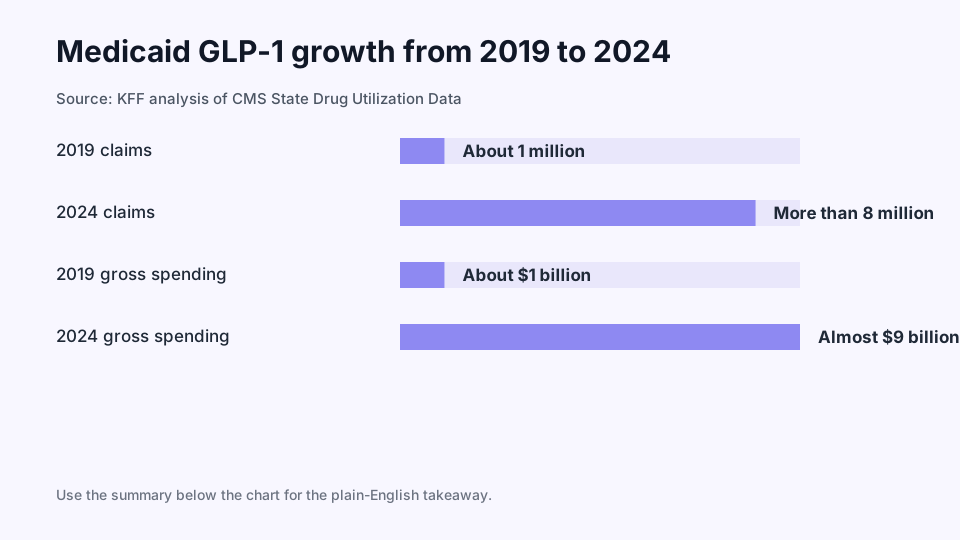
The chart compares the rise in reimbursed prescription claims with gross spending before rebates, showing that both grew steeply from 2019 to 2024.
Why Medicaid coverage can differ by brand and diagnosis
Federal Medicaid rules allow states to exclude drugs when used for weight loss. That helps explain why obesity-only coverage can be narrower than coverage for a diabetes-labeled medicine, even when two products contain the same active ingredient. KFF identified 13 state Medicaid fee-for-service programs covering GLP-1 medicines for obesity treatment in January 2026. That snapshot does not settle an individual claim. Managed-care plans can use their own formularies, preferred-drug lists, prior authorization forms, renewal periods, and documentation rules. A plan may ask for information about the approved reason for treatment, prior treatment history, follow-up, or response before it approves or renews coverage. FDA approvals can also change the coverage conversation. Wegovy was approved for chronic weight management in June 2021, then gained an FDA-approved cardiovascular-risk reduction indication in March 2024 for certain adults with established cardiovascular disease and overweight or obesity. Zepbound was approved for chronic weight management in November 2023 and for moderate to severe obstructive sleep apnea in adults with obesity in December 2024. CMS says state Medicaid agencies may join its voluntary BALANCE model from May 2026 through January 1, 2027. BALANCE means Better Approaches to Lifestyle and Nutrition for Comprehensive hEalth. The model lists selected products including Mounjaro, Ozempic, Rybelsus, Wegovy, Zepbound KwikPen, and Foundayo, but CMS does not say every state has joined or that every person will qualify.
| Date | Milestone | Practical relevance |
|---|---|---|
| June 2021 | FDA approved Wegovy for chronic weight management | A semaglutide brand had an obesity-specific indication. |
| May 2022 | FDA approved Mounjaro for type 2 diabetes | Tirzepatide entered diabetes treatment. |
| November 2023 | FDA approved Zepbound for chronic weight management | Tirzepatide became available in an obesity-specific brand. |
| March 8 2024 | FDA approved Wegovy for cardiovascular-risk reduction in a defined population | Some people have an approved reason beyond weight management alone. |
| December 20 2024 | FDA approved Zepbound for obstructive sleep apnea in adults with obesity | Sleep apnea became another approved indication for a defined group. |
| May 2026 onward | BALANCE state enrollment window opened | Participation and eligibility remain state- and program-specific. |
Source: Sources: FDA approval announcements and CMS BALANCE model materials.
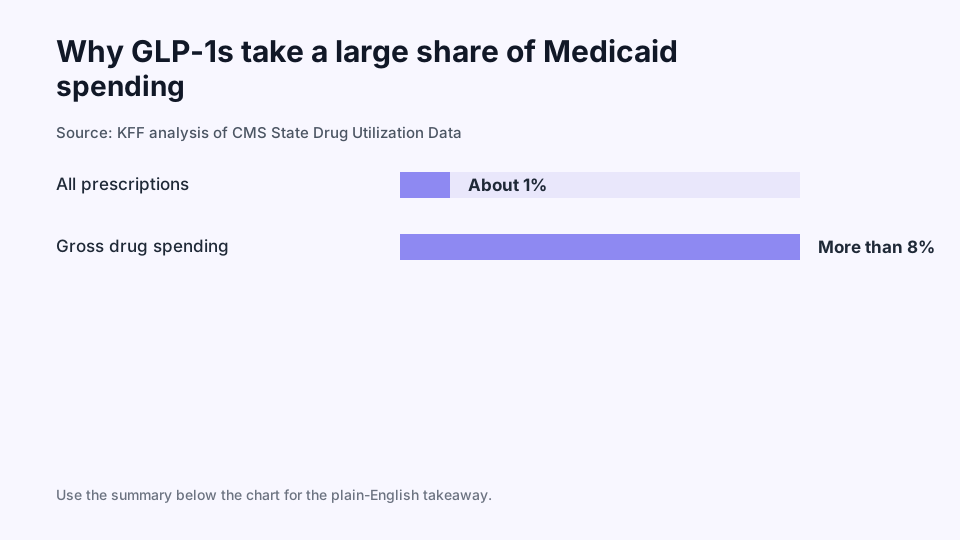
GLP-1s made up about one in 100 Medicaid prescription claims in 2024 but accounted for more than eight cents of every gross prescription-drug dollar.
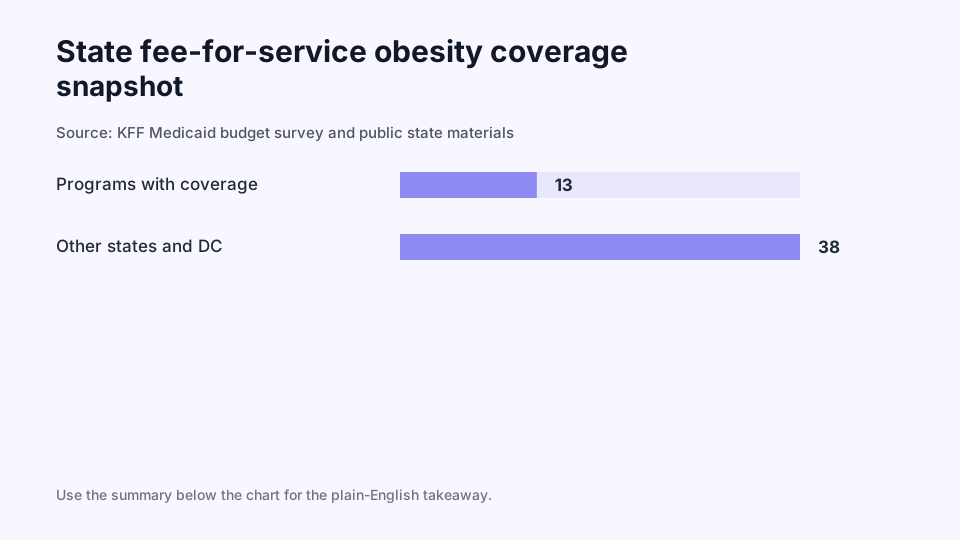
The January 2026 snapshot shows limited fee-for-service obesity coverage, but managed-care plan rules can differ and state policies can change.
What trial results suggest about treatment expectations
Medicaid claims data cannot show whether someone lost weight, improved glucose levels, or tolerated treatment. Trials answer a different question: what happened on average among participants who met study criteria and received structured study support. They can help set expectations, but they cannot predict a particular person's result or determine which medicine is appropriate. In STEP 1, adults with overweight or obesity without diabetes received semaglutide 2.4 mg or placebo alongside lifestyle support. Mean weight change at 68 weeks was a 14.9% loss with semaglutide and a 2.4% loss with placebo. For someone who starts at 250 pounds, 14.9% is about 37 pounds on average, while individual changes ranged substantially. SURMOUNT-1 studied tirzepatide in adults with obesity or overweight without diabetes for 72 weeks. Mean weight loss was 15.0%, 19.5%, and 20.9% across the three studied dose groups, compared with 3.1% with placebo. The studies were separate, with different participants and designs, so the percentages are not a direct head-to-head comparison. The SELECT trial looked at semaglutide in adults with established cardiovascular disease and overweight or obesity who did not have diabetes. Major adverse cardiovascular events, called MACE, means cardiovascular death, nonfatal heart attack, or nonfatal stroke. Events occurred in 6.5% of the semaglutide group and 8.0% of the placebo group over a mean follow-up of nearly 40 months.
| Study group | Timeframe | Average result | How to use the number |
|---|---|---|---|
| STEP 1 semaglutide 2.4 mg | 68 weeks | 14.9% weight loss | An average among trial participants without diabetes and with lifestyle support. |
| STEP 1 placebo | 68 weeks | 2.4% weight loss | Shows the change in the comparison group. |
| SURMOUNT-1 tirzepatide 5 mg | 72 weeks | 15.0% weight loss | One studied dose group, not a personal forecast. |
| SURMOUNT-1 tirzepatide 10 mg | 72 weeks | 19.5% weight loss | A separate dose group in the same trial. |
| SURMOUNT-1 tirzepatide 15 mg | 72 weeks | 20.9% weight loss | A separate dose group in the same trial. |
| SURMOUNT-1 placebo | 72 weeks | 3.1% weight loss | The comparison group in a different trial from STEP 1. |
Source: Sources: STEP 1 and SURMOUNT-1 publications in the New England Journal of Medicine. These are not head-to-head results.
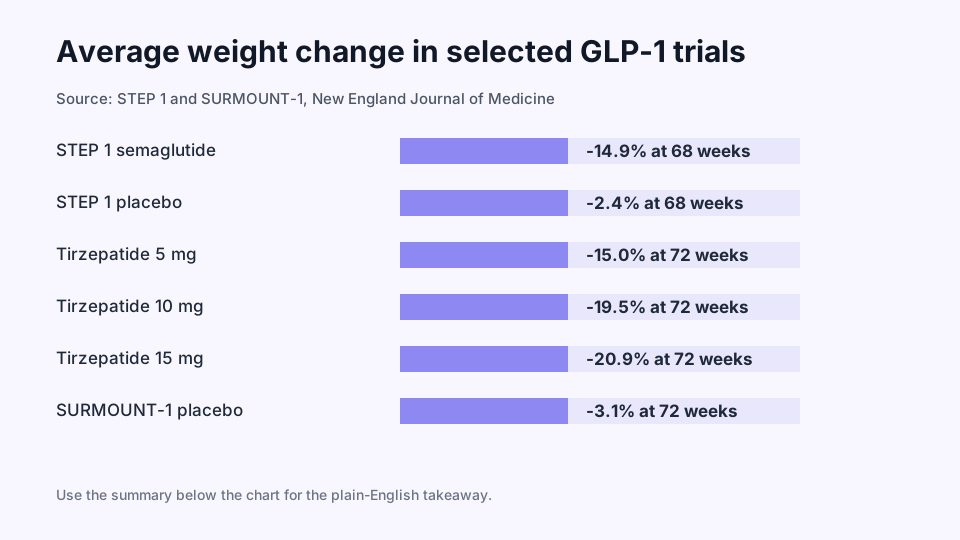
The figure shows trial-average weight change over roughly 16 to 17 months; the studies were separate and are not a direct comparison between medicines.
Plan for maintenance and a possible interruption
Coverage is part of maintenance, not merely a first-fill problem. Prior authorization may expire, a formulary may change, or a Medicaid eligibility redetermination may interrupt access. Ask early when approval ends, what the renewal process needs, and which phone number handles pharmacy-benefit questions. Stopping can bring weight regain. In the STEP 1 extension, participants who stopped semaglutide after 68 weeks regained about two-thirds of their prior weight loss during the following year. That finding does not tell anyone they must continue a medicine indefinitely. It does show why cost, coverage renewal, side effects, and a plan for a possible gap belong in a conversation before treatment is interrupted. Keep the pharmacy rejection message if one appears. A rejection for prior authorization, a noncovered drug, a refill that is too soon, and a supply issue are different problems. The exact wording can help a clinician's office, pharmacist, or plan representative identify the next administrative step.
Safety questions to bring to a clinician or pharmacist
Common side effects listed for approved GLP-1 medicines include nausea, vomiting, diarrhea, constipation, abdominal pain, and indigestion. Product labels also include more serious warning areas that vary by medicine, such as pancreatitis, gallbladder problems, low blood sugar when used with certain diabetes medicines, and kidney problems related to dehydration. A clinician or pharmacist can place those warnings in the context of a person's health history and other medicines. Ask what symptoms should prompt a call, how reduced food intake might affect other medicines, and what should be monitored besides weight. Depending on the reason for treatment, that may include blood pressure, kidney function, sleep apnea symptoms, cardiovascular risk, or hemoglobin A1c, also called HbA1c or A1c. HbA1c is a blood test estimating average blood glucose over roughly two to three months. FDA warns against assuming compounded products are equivalent to FDA-approved medicines. As of May 31, 2026, FDA had received 990 adverse-event reports associated with compounded semaglutide and more than 730 associated with compounded tirzepatide. Reports cannot establish that the compounded product caused an event, and underreporting is possible, but FDA has also described dosing errors, storage and shipping concerns, and fraudulent labeling.
Questions for a plan, clinician, or pharmacist
- Is this exact brand covered by my Medicaid plan for the approved reason documented in my record?
- Is prior authorization required now, and when does it expire?
- What information does the plan need for approval or renewal?
- What side effects or warning signs should lead me to contact the clinic or pharmacy?
- Could nausea, vomiting, slower stomach emptying, or reduced food intake affect my other medicines?
- If coverage changes or a fill is delayed, who should I contact first?
- What should we monitor besides weight?
How the figures were prepared
- Source priority: CMS and Medicaid.gov were used for utilization, spending, and program-policy material; FDA materials were used for approvals and safety; peer-reviewed studies were used for trial and withdrawal results.
- Date checked: August 31, 2026. The newest complete national annual GLP-1 utilization and gross-spending figures identified were for 2024. CMS may revise earlier State Drug Utilization Data releases.
- Exclusions and cautions: affiliate pages, pharmacy marketing, peptide sellers, social posts, unverified price listings, and speculative approval timing were excluded. Public claims were not treated as diagnosis, adherence, unique-patient, outcome, or net-spending data.
- Patient and medical limits: national statistics cannot determine current eligibility, a managed-care rule, a copay, safety, or whether someone should start, stop, restart, or change treatment. Those decisions require current plan materials and a clinician or pharmacist.
Update history
- Checked CMS State Drug Utilization Data, CMS BALANCE materials, FDA approval and safety materials, and trial sources. Confirmed that 2024 remains the newest complete national annual utilization year identified.
Data notes
The figures use national annual values and selected study results stated in the source material. Gross Medicaid spending is before rebates. State coverage is a January 2026 fee-for-service snapshot and does not establish managed-care coverage or individual eligibility.