Introduction
Medicare GLP-1 coverage in 2026, including the $50 Bridge, Part D rules, BMI eligibility, costs, safety, and trial results.
Eight facts to know
- July 1, 2026 - Bridge start
- December 31, 2027 - Bridge end
- $50 per month - Bridge copay
- $2,100 in 2026 - Part D cap
- 9% - Adults 65 and older using GLP-1s
- 22% - Adults ages 50 to 64 using GLP-1s
- 20.2% at 72 weeks - Tirzepatide trial average
- 13.7% at 72 weeks - Semaglutide trial average
Start with the prescription indication
Part D may cover GLP-1 medicines when they are prescribed for a medically accepted use other than weight loss alone. CMS identifies type 2 diabetes, cardiovascular risk reduction, moderate-to-severe obstructive sleep apnea, and noncirrhotic metabolic dysfunction-associated steatohepatitis, called MASH, with moderate-to-advanced fibrosis as relevant pathways. Fibrosis means liver scarring. Wegovy has an FDA-approved use to reduce cardiovascular death, nonfatal heart attack, and nonfatal stroke in adults with established cardiovascular disease and overweight or obesity. Zepbound has an FDA-approved use for moderate-to-severe obstructive sleep apnea in adults with obesity. A person using either medicine for one of these reasons should generally begin with their Part D plan rather than the Bridge. Part D is not a single national formulary. A formulary is the plan's list of covered drugs. The plan can prefer another medicine, require prior authorization, or ask for a coverage determination or formulary exception. Ask the prescriber or pharmacist which indication will appear on the prescription and which documents the plan requires.
| Date | Milestone | What it means |
|---|---|---|
| March 8, 2024 | FDA approved Wegovy for cardiovascular risk reduction | This created a Medicare-relevant use beyond weight management alone. |
| December 20, 2024 | FDA approved Zepbound for moderate-to-severe sleep apnea | Sleep apnea became another possible Part D coverage route. |
| January 2025 | CMS restated the weight-loss exclusion | Part D generally excludes drugs used solely for weight loss or weight management. |
| July 1, 2026 | CMS launched the Medicare GLP-1 Bridge | Eligible Part D enrollees gained a separate temporary route for selected weight-management medicines. |
| December 31, 2027 | Scheduled Bridge end date | Access after this date is not confirmed by the current demonstration. |
Source: Sources: CMS Medicare GLP-1 Bridge guidance and launch announcement; FDA Wegovy and Zepbound prescribing information.
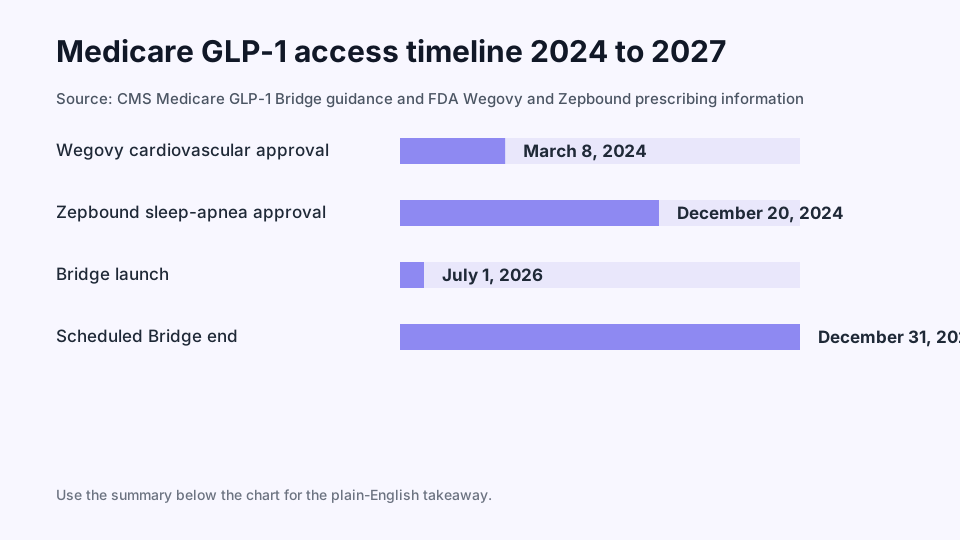
The timeline shows how FDA-approved indications created Part D pathways before the temporary Bridge gave eligible people a separate weight-management route.
Who may use the Medicare GLP-1 Bridge
The Medicare GLP-1 Bridge is for weight reduction or maintaining weight reduction when the prescription is not being handled as a Part D-covered diagnosis. It is nationwide for eligible Part D plan types, but it requires prior authorization. CMS says people who received a GLP-1 through Part D during calendar year 2026 are not eligible for the Bridge in 2026. Body mass index, or BMI, is a screening measure based on height and weight. It is not a complete measure of health,; however, CMS uses the BMI at the start of GLP-1 treatment for these criteria. A prior authorization may also need medical records that establish the listed condition. CMS currently lists Foundayo, Wegovy injection or tablets, and Zepbound KwikPen for eligible Bridge weight-management use. That list does not mean every formulation has ordinary Part D coverage, and CMS can update the products or National Drug Codes.
| Starting-treatment BMI | Additional condition | Route |
|---|---|---|
| 35 or higher | None listed | Eligible route based on BMI. |
| 30 or higher | Heart failure with preserved ejection fraction, uncontrolled hypertension despite two blood-pressure medicines, or chronic kidney disease stage 3a or higher | Eligible route based on BMI plus condition. |
| 27 or higher | Prediabetes, prior heart attack, prior stroke, or symptomatic peripheral artery disease | Eligible route based on BMI plus condition. |
Source: Source: CMS Medicare GLP-1 Bridge information for providers and Part D plans. Final authorization depends on CMS program requirements and submitted documentation.
Costs depend on which route pays
An approved Bridge prescription has a stated beneficiary copay of $50 a month. CMS reports a $245 manufacturer net price for a monthly supply, but that is the program's negotiated price, not the patient's monthly copay. The Bridge payment is predictable only after prior authorization is approved. The 2026 Part D annual out-of-pocket cap is $2,100 for covered Part D drugs. CMS says Bridge payments and Bridge drug spending operate outside Part D, so they do not count toward the cap or a person's true out-of-pocket spending. Manufacturer coupons and discount programs cannot be combined with Bridge claims. This distinction matters for budgeting. A person paying $50 through the Bridge may pay less in a given month, but those payments do not move them closer to the Part D cap for their other covered medicines. A person using a Part D-covered GLP-1 may face different cost sharing depending on plan phase and formulary tier.
| Measure | Figure | Practical meaning |
|---|---|---|
| Bridge beneficiary copay | $50 per month | Applies to an eligible approved Bridge prescription. |
| Bridge manufacturer net price | $245 per monthly supply | Program price, not the stated patient copay. |
| Part D annual out-of-pocket cap | $2,100 in 2026 | Applies to covered Part D drugs, not Bridge fills. |
| Current GLP-1 use among U.S. adults | 12% | About 1 in 8 adults reported current use in KFF's 2025 poll. |
| Current use ages 50 to 64 | 22% | Reported use was highest in this age group. |
| Current use age 65 and older | 9% | Reported use was lower among older adults before the Bridge opened. |
| Users saying drugs were difficult to afford | 56% | Affordability remains a common barrier even among people who obtained treatment. |
| Insured users paying the full cost | 27% | Having insurance does not always mean a low out-of-pocket price. |
Source: Sources: CMS Medicare GLP-1 Bridge information for Part D plans; Medicare.gov Part D costs; KFF 2025 GLP-1 polling. KFF figures are self-reported and are not Medicare claims data.
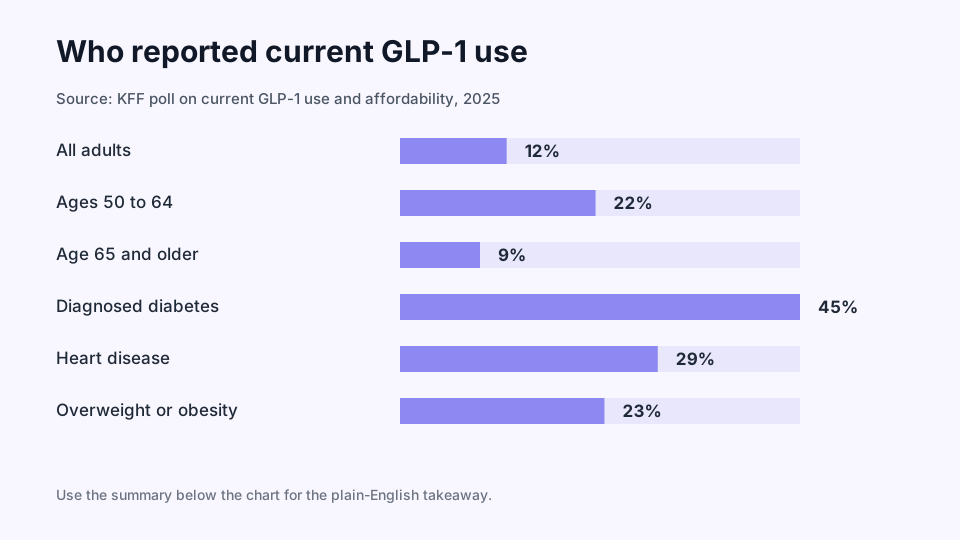
Reported use was lower among adults age 65 and older than among adults ages 50 to 64 before the Medicare GLP-1 Bridge began.
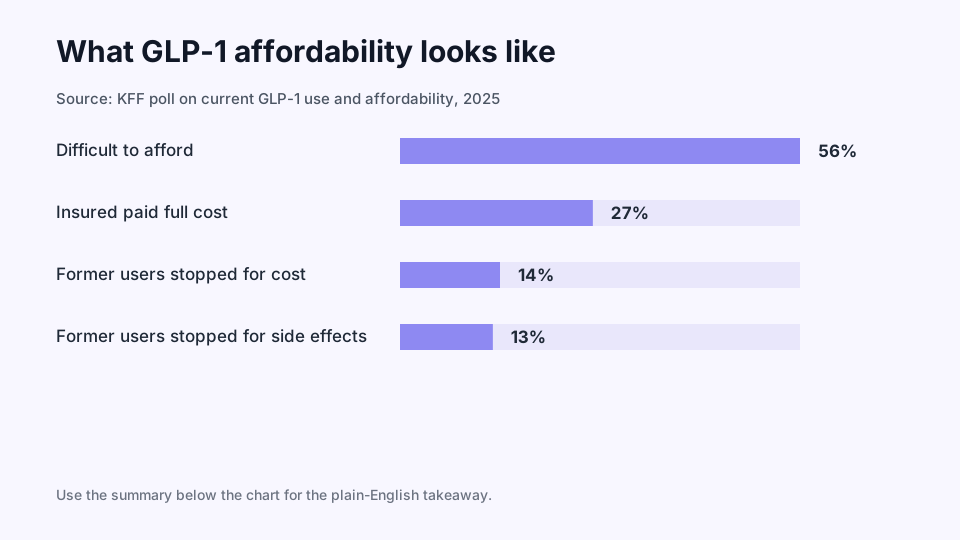
The chart separates a broad affordability problem from two reported reasons former users stopped treatment.
What trial results mean for expected weight loss
Coverage rules are administrative, while treatment results are clinical. The two are related because people often need to decide whether a medicine's likely benefit is worth the recurring cost and effort. Trial averages provide a useful range, but they do not predict one person's result. In a 72-week head-to-head trial among adults with obesity without diabetes, average weight reduction was 20.2% with tirzepatide and 13.7% with semaglutide at maximum tolerated doses. For someone starting at 250 pounds, those averages are roughly 51 pounds and 34 pounds. Dose tolerance, other conditions, routines, access interruptions, and continued treatment can all change the outcome. The SELECT trial enrolled 17,604 adults age 45 or older with established cardiovascular disease and overweight or obesity but without diabetes. Major adverse cardiovascular events, or MACE, means cardiovascular death, nonfatal heart attack, or nonfatal stroke. Over an average 39.8 months, MACE occurred in 6.5% of participants assigned to semaglutide and 8.0% assigned to placebo. That evidence supports Wegovy's cardiovascular indication; it does not mean the result applies to every person taking a GLP-1.
| Study result | Timeframe | What it can mean |
|---|---|---|
| Tirzepatide average weight reduction 20.2% | 72 weeks | About 51 pounds from a 250-pound starting weight, on average in this trial. |
| Semaglutide average weight reduction 13.7% | 72 weeks | About 34 pounds from a 250-pound starting weight, on average in this trial. |
| Semaglutide MACE 6.5% | Average 39.8 months | Event rate among SELECT participants assigned to semaglutide. |
| Placebo MACE 8.0% | Average 39.8 months | Comparator event rate in SELECT participants. |
| Weight regained after semaglutide withdrawal | About two-thirds of prior loss | Average regain during the year after stopping in the STEP 1 extension. |
Source: Sources: NEJM SURMOUNT-5 head-to-head trial; NEJM SELECT cardiovascular outcomes trial; NCBI-hosted STEP 1 extension. These are group results, not individual predictions.
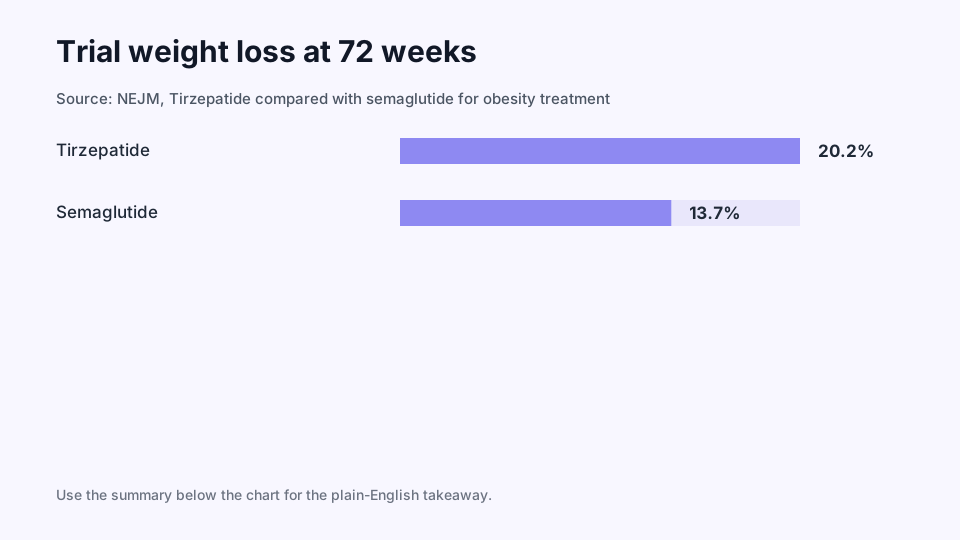
In a 72-week head-to-head trial among adults with obesity without diabetes, tirzepatide had a higher average weight reduction than semaglutide, but neither figure predicts an individual's result.
Maintenance and stopping need a plan
A coverage denial, a change in copay, or side effects can interrupt treatment. In the STEP 1 extension, participants regained about two-thirds of the weight they had lost during the year after semaglutide and structured lifestyle support stopped. Individual experiences vary, but stopping should prompt a maintenance conversation rather than being treated as a simple refill decision. A clinician can discuss what treatment continuation, a pause, or a switch may mean in the context of a person's health history. A pharmacist can help check formulary changes, prior-authorization deadlines, and whether another prescribed medicine raises low-blood-sugar concerns. Do not change or stop a medicine without speaking with the prescriber.
Safety and routine questions to bring to care
Digestive effects such as nausea, diarrhea, vomiting, constipation, and abdominal discomfort are common with GLP-1 medicines, particularly while doses change. FDA labels also warn about pancreatitis, gallbladder problems, dehydration-related kidney injury, severe gastrointestinal reactions, low blood sugar when combined with insulin or certain diabetes medicines, and issues around anesthesia or deep sedation. Wegovy and Zepbound carry boxed warnings about thyroid C-cell tumors observed in rodents. They should not be used by people with a personal or family history of medullary thyroid carcinoma or Multiple Endocrine Neoplasia syndrome type 2. A prescriber and pharmacist should review medical history and the full medication list. FDA warns that unapproved compounded GLP-1 products can involve fraudulent labeling, dosing errors, quality problems, and salt forms that differ from approved active ingredients. They should not be assumed interchangeable with FDA-approved medicines. A lower advertised price is not a substitute for verifying the product and the pharmacy with a clinician or pharmacist.
Prepare before asking for coverage
Bring the current Medicare card, Part D or Medicare Advantage plan details, exact medicine and formulation, and the reason it is prescribed. For a Bridge request, bring the BMI recorded when GLP-1 treatment began and records for any qualifying condition. Keep a list of prior GLP-1 prescriptions and fills, especially any Part D fill in 2026. Useful questions include: What indication will be submitted? Should this request go through my Part D plan or the Bridge? What does the prior authorization require? If the plan denies it, is a coverage determination or formulary exception appropriate? What should I do if cost, digestive effects, or a supply change makes treatment hard to continue? Lina is a GLP-1 companion app for people using Wegovy, Mounjaro, Ozempic, Zepbound, Saxenda, and related medications. It helps users track doses, side effects, meals, weight, protein, hydration, and habits in one place. It is a wellness tracking companion, not a medical device or a substitute for medical advice.
Methodology
- Source priority was CMS and Medicare.gov for coverage and cost rules, FDA labels for approved uses and safety, peer-reviewed trials for outcomes, and KFF polling for access context.
- Sources were last checked on August 7, 2026. CMS, formularies, product lists, and prior-authorization rules can change.
- Affiliate pages, peptide sellers, social posts, generic drug roundups, and speculative approval or pricing claims were excluded or treated cautiously.
- Trial averages cannot determine an individual's weight change, safety, medical suitability, final copay, or coverage approval. Those require current plan, clinician, and pharmacist review.
Update history
- Published with CMS Bridge launch details, 2026 Part D cap, FDA indication context, KFF polling, and peer-reviewed trial results.
Data notes
The figures use the values shown in the tables: CMS program dates and costs, KFF reported-use and affordability percentages, and NEJM trial averages. Polling results describe respondents before the Bridge launch and should not be used to estimate Bridge enrollment.