Introduction
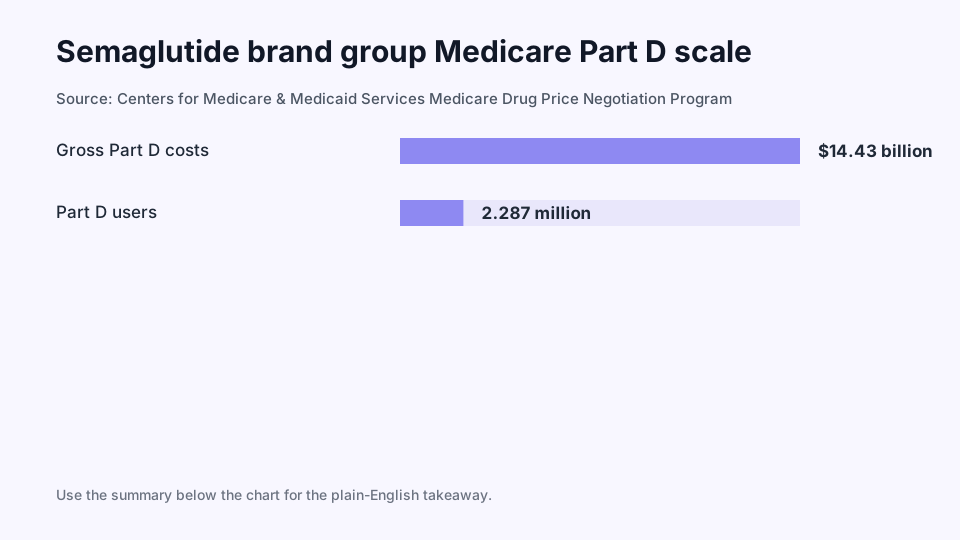
Medicare Part D spent $14.43 billion on Ozempic, Rybelsus, and Wegovy from November 2023 through October 2024. The Medicare GLP-1 Bridge launched July 1, 2026.
main facts
- $14.43 billion - Gross Part D costs for Ozempic, Rybelsus, and Wegovy combined
- 2.287 million - Part D enrollees using the semaglutide brand group
- $6,308 - Rough gross cost per user
- July 1, 2026 - Medicare GLP-1 Bridge launch date
- $50 per month - Bridge copay for eligible enrollees
- $2,100 - 2026 Part D out-of-pocket threshold
- 14.9% - Semaglutide average weight loss in STEP 1
- 20.9% - Tirzepatide average weight loss in SURMOUNT-1
Medicare Part D is the federal prescription drug benefit for people with Medicare. GLP-1 stands for glucagon-like peptide-1, a hormone that helps regulate blood sugar and appetite. GLP-1 receptor agonists are medicines that mimic this hormone. Semaglutide is the active ingredient in Ozempic, Rybelsus, and Wegovy. Tirzepatide is the active ingredient in Mounjaro and Zepbound. These medicines are approved for different uses, including type 2 diabetes and chronic weight management. The Centers for Medicare & Medicaid Services, often shortened to CMS, publishes annual spending data for Medicare Part D. The latest annual file covers calendar year 2023. CMS also publishes newer spending figures for specific medicines as part of the Medicare Drug Price Negotiation Program. The most recent combined figure for Ozempic, Rybelsus, and Wegovy covers the 12 months from November 1, 2023, through October 31, 2024. During that period, the three brands together accounted for $14.43 billion in gross Part D prescription drug costs and were used by about 2.287 million Part D enrollees. This spending figure is gross covered prescription drug cost. It includes Medicare, plan, and beneficiary payments reported on claims, but it does not subtract confidential manufacturer rebates or other price concessions. It should not be read as the government's final net cost or as the amount a person paid at the pharmacy. The figure also combines three brands used for different indications. Ozempic and Rybelsus are commonly prescribed for type 2 diabetes. Wegovy has FDA-approved uses that include chronic weight management and reduction of major adverse cardiovascular events, often shortened to MACE, in certain adults with established cardiovascular disease and overweight or obesity.
On July 1, 2026, CMS launched the Medicare GLP-1 Bridge. This is a temporary demonstration program running through December 31, 2027. It allows eligible Medicare Part D beneficiaries to access certain GLP-1 medicines for weight management at a $50 monthly copay. The Bridge is not ordinary Part D coverage. CMS says it operates outside Part D's coverage and payment flow. That means the Part D deductible does not apply to Bridge fills,; however, the $50 copay does not count toward true out-of-pocket costs, often shortened to TrOOP, or toward the Part D out-of-pocket threshold. The 2026 Part D out-of-pocket threshold is $2,100. Low-Income Subsidy cost-sharing also does not apply to the Bridge copay. CMS lists Wegovy, Foundayo, and the KwikPen version of Zepbound as eligible products for the Bridge when prescribed for the demonstration's covered weight-management use. A person already eligible for a GLP-1 through standard Part D coverage for a covered use, such as type 2 diabetes, does not move to the Bridge simply because its $50 copay looks lower. The Bridge was created for certain people seeking treatment to reduce excess weight or maintain weight reduction who would not otherwise have Part D access.
| Measure | Figure | Period | Practical reading |
|---|---|---|---|
| Latest finalized annual Part D spending data | 2023 | Calendar year 2023 | Do not label 2026 spending as final; CMS has not publicly released that annual file. |
| Semaglutide-brand group gross Part D costs | $14.426566 billion | Nov. 1, 2023 to Oct. 31, 2024 | Combined Ozempic, Rybelsus, and Wegovy gross covered prescription drug costs. |
| Semaglutide-brand group Part D users | 2.287 million | Nov. 1, 2023 to Oct. 31, 2024 | Unique Part D enrollees using the combined brand group. |
| Rough gross cost per user | $6,308 | Same 12-month period | Group spending divided by group users; not an individual bill or net Medicare cost. |
| Medicare GLP-1 Bridge beneficiary copay | $50 per month | July 1, 2026 to Dec. 31, 2027 | Only for eligible beneficiaries and eligible Bridge prescriptions. |
| Participating manufacturer monthly net price to Bridge | $245 per month | Current Bridge policy | CMS says this is outside normal Part D payment flow. |
| 2026 Part D annual out-of-pocket threshold | $2,100 | Calendar year 2026 | Applies to covered Part D drugs; Bridge copays do not count toward it. |
Source: Centers for Medicare & Medicaid Services, Medicare Part D Spending by Drug dataset and Medicare Drug Price Negotiation Program materials.
The $14.43 billion figure works out to roughly $6,308 per user across the selection period. That is a useful scale marker, but it is not an average annual patient invoice. The group combines three brands, different formulations, different clinical uses, and people who may have had different numbers of fills. It also uses gross claim costs rather than the confidential net prices Medicare and plans may pay after rebates. For someone choosing whether to start or continue treatment, the better questions are narrower. Is my medicine covered for my diagnosis and intended use? Is there a prior authorization requirement? What will the pharmacy quote after my plan processes the claim? If weight management is the goal, do I meet the current Bridge criteria? If access changes, what is the plan for maintaining treatment or managing a pause?
| Date | Milestone | Why it matters |
|---|---|---|
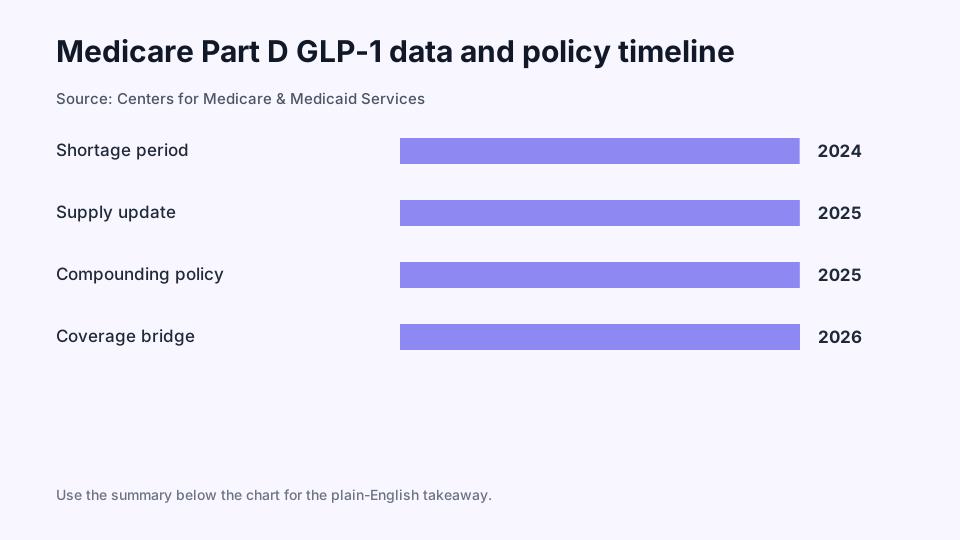
| January 1, 2026 | Medicare Part D annual out-of-pocket threshold became $2,100. | For drugs covered under Part D, out-of-pocket spending is capped at this amount for the calendar year. |
| January 13, 2026 | FDA said its review did not identify an increased risk of suicidal ideation or behavior with GLP-1 receptor agonists and requested removal of that warning from affected labels. | This was a label-safety change, not a finding that GLP-1 medicines have no risks. |
| April 6, 2026 | CMS updated the Bridge's eligible-drug information to include Foundayo and clarify the included Zepbound formulation. | Formulation matters: not every pen or vial configuration is automatically included. |
| July 1, 2026 | CMS launched the Medicare GLP-1 Bridge. | Eligible Part D enrollees can seek access to specified medicines for weight management at a $50 monthly copay. |
| July 13, 2026 | CMS last modified the central Medicare GLP-1 Bridge webpage. | Always recheck this program before relying on eligibility or product information. |
| December 31, 2027 | Current scheduled end date of the Medicare GLP-1 Bridge demonstration. | The program is temporary, so it should not be treated as permanent Part D coverage. |
Source: Centers for Medicare & Medicaid Services, Medicare GLP-1 Bridge program materials and press releases.
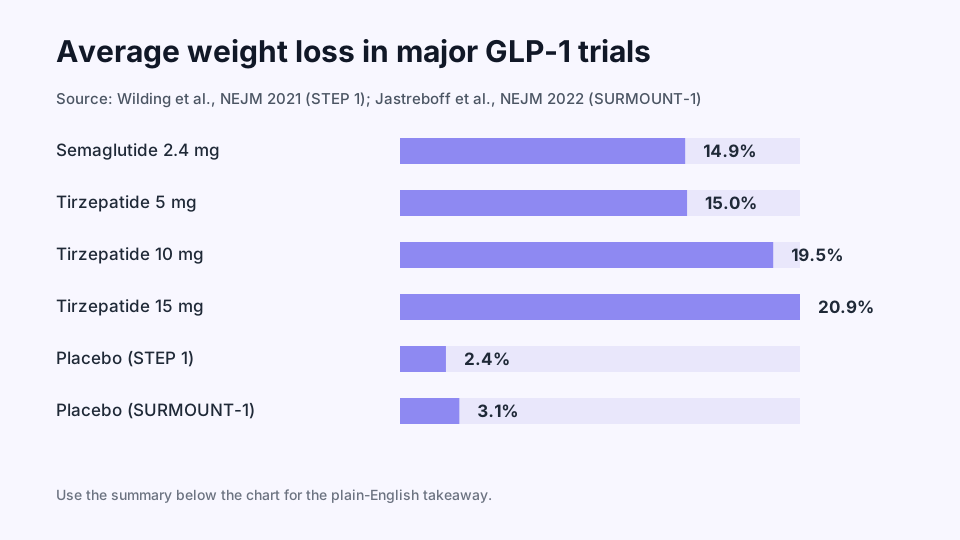
Clinical trials help put access decisions in context. If a medicine is difficult to afford or coverage ends, stopping can matter because these treatments often work as ongoing therapy rather than a short course. In STEP 1, a 68-week trial of once-weekly semaglutide 2.4 mg in adults with overweight or obesity who did not have diabetes, average weight change was negative 14.9 percent with semaglutide and negative 2.4 percent with placebo, both alongside lifestyle intervention. Put simply, a person starting at 200 pounds would translate that average to about 30 pounds lost with semaglutide versus about 5 pounds with placebo. Individual results varied widely. In SURMOUNT-1, a 72-week trial in adults with overweight or obesity without diabetes, average weight change with tirzepatide was negative 15.0 percent, negative 19.5 percent, and negative 20.9 percent across the three studied doses, compared with negative 3.1 percent with placebo. At the highest studied dose, that is roughly 42 pounds from a 200-pound starting weight on average, not a promise that every person will lose that amount. Gastrointestinal side effects were common, particularly during dose escalation.
Compares average weight loss percentages from semaglutide and tirzepatide trials, showing how results vary by dose and medicine.
| Trial | Medicine | Dose | Average weight change | Placebo | Duration |
|---|---|---|---|---|---|
| STEP 1 | Semaglutide | 2.4 mg weekly | Negative 14.9% | Negative 2.4% | 68 weeks |
| SURMOUNT-1 | Tirzepatide | 5 mg weekly | Negative 15.0% | Negative 3.1% | 72 weeks |
| SURMOUNT-1 | Tirzepatide | 10 mg weekly | Negative 19.5% | Negative 3.1% | 72 weeks |
| SURMOUNT-1 | Tirzepatide | 15 mg weekly | Negative 20.9% | Negative 3.1% | 72 weeks |
Source: Wilding et al., New England Journal of Medicine, 2021 (STEP 1); Jastreboff et al., New England Journal of Medicine, 2022 (SURMOUNT-1).
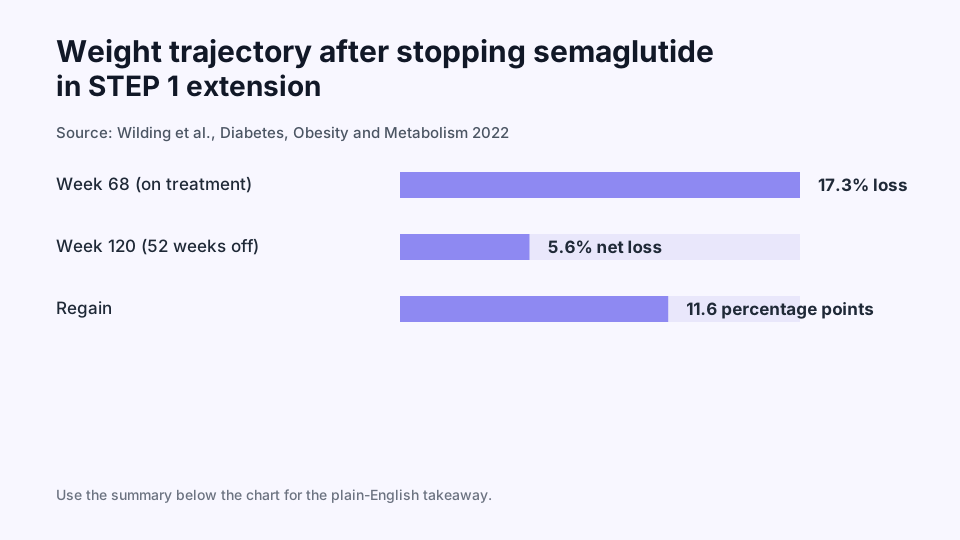
Stopping treatment deserves an equally direct conversation. In the STEP 1 extension, participants who stopped semaglutide after week 68 regained 11.6 percentage points of body weight over the next year, or about two-thirds of the weight they had lost on average. Their cardiometabolic improvements also moved back toward baseline. This does not mean someone must stay on a medicine forever. It means a clinician and patient should discuss a realistic maintenance plan before coverage, cost, or supply forces a sudden stop.
Shows that participants regained about two-thirds of their weight loss on average during the year after stopping semaglutide, illustrating the importance of a maintenance plan.
FDA-approved GLP-1 medicines have product-specific warnings, contraindications, and side effects. Common issues include nausea, vomiting, diarrhea, constipation, and abdominal discomfort. The current Wegovy label also includes serious warnings and precautions that warrant discussion with a clinician or pharmacist, including thyroid C-cell tumor risk, pancreatitis, gallbladder disease, kidney injury related to dehydration, and low blood sugar risk when used with certain diabetes medicines. On January 13, 2026, FDA said its review did not identify increased risk of suicidal ideation or behavior with GLP-1 receptor agonists and requested removal of that warning from affected labels. That finding does not replace individualized mental-health care or make it appropriate to ignore new or worsening mood symptoms. FDA also warns that compounded or otherwise unapproved GLP-1 products are not reviewed by FDA for safety, effectiveness, or quality before marketing. As of May 31, 2026, FDA had received 990 adverse-event reports associated with compounded semaglutide and more than 730 associated with compounded tirzepatide. Reports alone cannot prove the medicine caused an event, and FDA says underreporting is likely.
Before your next prescriber, pharmacist, or plan call, gather the facts that determine access rather than relying on an online price estimate. Start with the exact brand, formulation, and intended use. Semaglutide alone is not enough for a coverage question because Ozempic, Rybelsus, and Wegovy are distinct products with different labels and forms. The same applies to tirzepatide products such as Mounjaro and Zepbound. Keep a simple one-page record with your Part D plan name, member ID, pharmacy, and whether you have Extra Help or another subsidy. Include the exact medication and form prescribed, such as pen, tablet, vial, or KwikPen. Note the diagnosis and FDA-approved purpose your prescriber is documenting. Track the prior authorization status, date submitted, decision date, and any requested records. Record your pharmacy's processed claim price, do not simply a cash price seen online. Note any side effects, missed doses, supply interruptions, and questions for your clinician. Have a plan for what to do if the medicine becomes unaffordable or is no longer covered.
For the Medicare GLP-1 Bridge, ask whether your prescription is being submitted for the demonstration's weight-management use and whether you meet its clinical criteria. CMS says a prescriber must submit both a prescription and a prior authorization request. Medicare beneficiaries can also use Medicare.gov's Bridge information or call 1-800-MEDICARE for program help. Useful questions for a clinician or pharmacist include: What is this medicine approved to treat in my case? Is my request going through standard Part D or the Medicare GLP-1 Bridge? What prior authorization evidence will be needed? What side effects should prompt a call rather than waiting for the next visit? Could my other medicines raise the risk of low blood sugar or dehydration? If I need to stop or pause treatment, what follow-up plan makes sense?
Shows the lag between annual Part D data availability and current policy changes, helping readers understand why 2026 spending is not yet public.
Illustrates the scale of Medicare Part D spending and use for the combined Ozempic, Rybelsus, and Wegovy group from November 2023 through October 2024.
Methodology
- This is a source-reviewed educational guide, not clinician-reviewed medical advice or a personalized coverage determination.
- Source priority: CMS claims and policy documents; FDA labels, safety communications, and approval materials; peer-reviewed trial publications; then near-primary policy and affordability research from KFF. CMS is the primary source for Part D use and spending statistics and for the 2026 Medicare GLP-1 Bridge.
- Last checked: August 3, 2026. The annual CMS Part D Spending by Drug dataset available at the time of review covers 2019 through 2023, with 2023 as the latest annual year. CMS's negotiation material supplies a newer 12-month, combined-brand figure for Ozempic, Rybelsus, and Wegovy from November 2023 through October 2024.
- main definitions: Total spending in the annual CMS Part D file is gross drug cost from claims, including Medicare, plan, and beneficiary payments. Drug-specific rebates and other price concessions are not public in this dataset. Total beneficiaries means unique Part D beneficiaries using a drug during the year; it does not mean new starts or continuous users.
- Sources treated cautiously or excluded: affiliate sites, pharmacy marketing pages, telehealth sales pages, peptide sellers, generic approval trackers, social posts, and unverified cash-price listings. Polling can describe reported affordability concerns, but it is not used as Medicare claims data.
- What this guide cannot determine: whether a particular person qualifies for coverage or the Bridge; whether a plan will approve prior authorization; the final price at a specific pharmacy; personal medical suitability; the exact net cost after rebates; or how much weight an individual will lose, regain, or tolerate.
Update history
- Updated source review.
Data download
Download the source table used for this statistics page.