Introduction
U.S. GLP-1 obesity treatment statistics on use, Wegovy and Zepbound results, prices, Medicare access, coverage, safety, and stopping treatment.
Eight facts to know
- 40.3% - of U.S. adults had obesity in August 2021 through August 2023.
- 2.3% - of 39.1 million clinically eligible adults received an obesity prescription for semaglutide or tirzepatide in one EHR study.
- 12% - of U.S. adults reported current GLP-1 use in late 2025, across all reasons for use.
- 5% - of adults said they had used a GLP-1 primarily for weight loss.
- 3.0% vs 1.2% - were prescribing rates for eligible women and men in the obesity-specific EHR study.
- 20.2% vs 13.7% - were average losses at week 72 for tirzepatide and semaglutide in SURMOUNT-5.
- $50 - is the monthly copay in the temporary Medicare GLP-1 Bridge for eligible beneficiaries and medicines.
- 27% - of insured GLP-1 users said they paid the full cost themselves.
Use remains well below potential eligibility
Obesity affected 40.3% of U.S. adults in the latest measured national period, August 2021 through August 2023. That does not mean all of those adults want, qualify for, or should take a prescription medicine. It does show why even rapid growth in GLP-1 use can still leave obesity treatment reaching a relatively small share of people who might discuss it with a clinician. A 2025 JAMA study examined 39.1 million adults in Epic Cosmos electronic health records who met its clinical eligibility definition and did not have type 2 diabetes. Between July 2020 and October 2024, 887,110 received a prescription for semaglutide or tirzepatide for obesity, or 2.3%. That percentage is a marker of access, not a verdict about appropriate care. People may decide against treatment because of health history, side effects, pregnancy plans, cost, supply, or personal preference. The study also counted prescriptions ordered, not medicines filled or continued, and did not include online-only pharmacies.
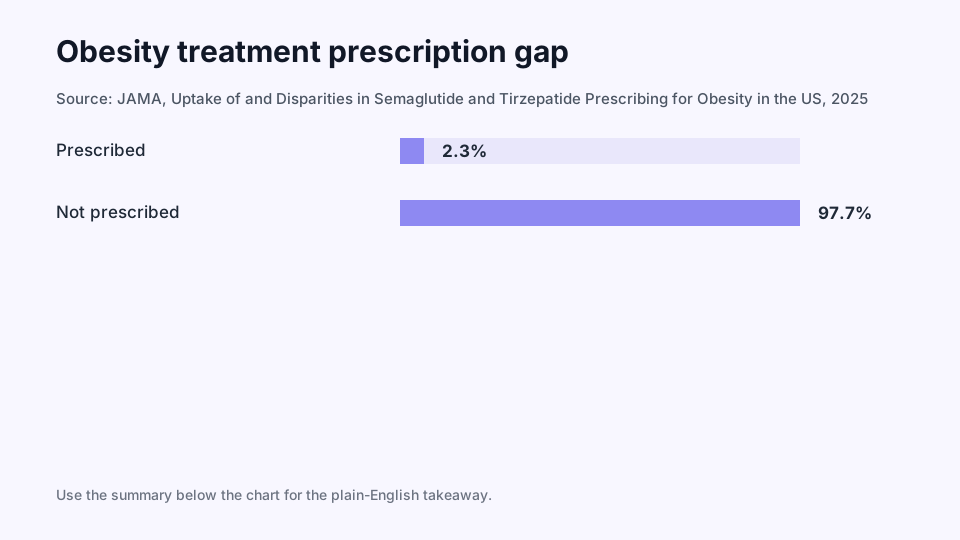
The chart shows that obesity prescriptions reached 2.3% of clinically eligible adults in the EHR study, illustrating the gap between potential eligibility and recorded prescribing.
| Measure | Figure | What it means |
|---|---|---|
| U.S. adults with obesity | 40.3% | A large potential population, based on measured national survey data. |
| Eligible adults prescribed semaglutide or tirzepatide for obesity | 2.3% | An EHR prescription measure, not a national count of filled prescriptions. |
| Adults currently using any GLP-1 | 12% | Includes diabetes, heart disease, weight management, and other approved uses. |
| Adults who used a GLP-1 primarily for weight loss | 5% | A self-reported estimate, not an obesity-label prescribing rate. |
| Insured GLP-1 users who paid full cost | 27% | Insurance status alone does not guarantee coverage. |
Source: Sources: CDC National Center for Health Statistics; JAMA; KFF Health Tracking Poll. Figures use different populations and methods, so they should not be added together or treated as interchangeable.
Access differs across groups and insurance status
In the JAMA EHR study, prescribing was 3.0% among eligible women and 1.2% among eligible men. It was 2.4% in metropolitan areas and 1.5% in rural areas. Prescribing was 2.6% in the least socially vulnerable communities and 1.9% in the most socially vulnerable communities. These group differences cannot identify why an individual did or did not receive a prescription. They do show that access depends on more than medical eligibility. Clinic capacity, insurance rules, pharmacy availability, time off work, follow-up access, and out-of-pocket cost can all affect whether treatment is realistic. KFF found 12% of adults reported current GLP-1 use in late 2025. Among people who had ever used one, 49% reported a diabetes diagnosis and 51% did not. Non-diabetes use should not be assumed to be cosmetic or inappropriate: obesity, cardiovascular disease, sleep apnea, and other conditions may be part of the clinical picture.
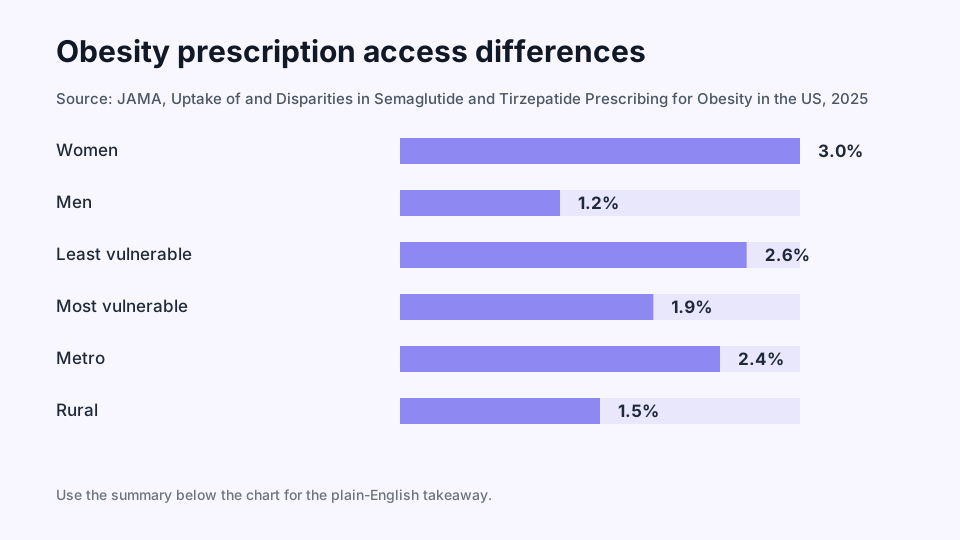
The comparison shows lower recorded prescribing for men, rural residents, and people in the most socially vulnerable communities.
What is approved for chronic weight management
Wegovy is semaglutide, a GLP-1 receptor agonist. Zepbound is tirzepatide, which acts on both GIP, short for glucose-dependent insulinotropic polypeptide, and GLP-1 receptors. Both are FDA-approved for chronic weight management in adults with obesity, or adults with overweight plus at least one weight-related condition. Ozempic is also semaglutide, but its FDA-approved labeling is for type 2 diabetes rather than chronic weight management. Brand names, approved indications, dose forms, supply, and insurance rules matter. A broad question such as whether a plan covers GLP-1 medicines may not answer whether it covers a specific brand for a specific indication. In December 2024, Zepbound also received an FDA indication for moderate to severe obstructive sleep apnea in adults with obesity. In March 2026, FDA approved Wegovy HD, a 7.2 mg semaglutide injection, for certain adults needing weight loss and long-term maintenance. Neither development means the medicine is suitable or available for every person.
| Date | Milestone | Why it matters |
|---|---|---|
| June 2021 | FDA approved Wegovy for chronic weight management. | A semaglutide product became available with an obesity-specific label. |
| November 8, 2023 | FDA approved Zepbound for chronic weight management. | Tirzepatide became a second major weekly obesity option. |
| December 2024 | Zepbound received an obstructive sleep apnea indication. | Some adults with obesity have another approved treatment reason. |
| March 19, 2026 | FDA approved Wegovy HD. | A higher-dose semaglutide option became available for certain adults. |
| July 1, 2026 | CMS started the Medicare GLP-1 Bridge. | Eligible participants can obtain certain medicines at a $50 monthly copay. |
Source: Sources: FDA approval announcements and prescribing information; CMS Medicare GLP-1 Bridge. Approval does not establish individual eligibility or plan coverage.
What trial averages can and cannot tell you
Trials provide the clearest estimates of average weight change, but they are controlled studies with scheduled follow-up, a reduced-calorie eating plan, and increased physical activity. They help set a range of expectations. They cannot predict the result, tolerance, or cost for one person. In STEP 1, adults without diabetes taking semaglutide 2.4 mg lost an average of 14.9% of starting body weight at 68 weeks, compared with 2.4% with placebo. For a person starting at 220 pounds, 14.9% is about 33 pounds on average. In SURMOUNT-1, adults without diabetes taking tirzepatide 15 mg lost an average of 20.9% at 72 weeks, compared with 3.1% with placebo. At 220 pounds, 20.9% is about 46 pounds. Those examples show the scale of an average trial result, not a promise or a target. SURMOUNT-5 made the direct comparison many people want. At 72 weeks, average weight change was 20.2% with tirzepatide and 13.7% with semaglutide among adults with obesity but without diabetes. Tirzepatide had the larger average loss in that trial, but a decision also turns on side effects, medical history, supply, cost, and coverage.
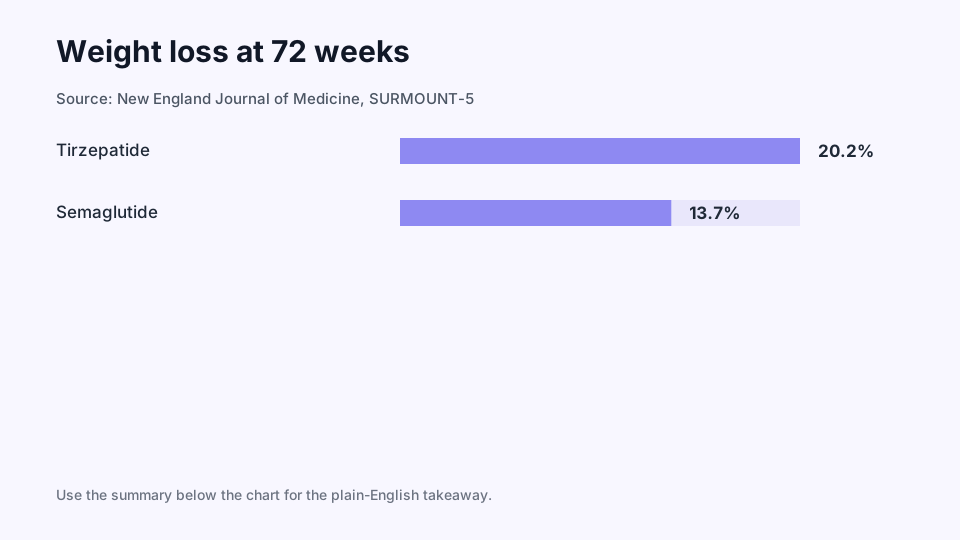
The head-to-head trial found a larger average percentage weight loss with tirzepatide at week 72, though individual tolerability, price, and coverage still affect the choice.
| Study | Result | Practical meaning |
|---|---|---|
| STEP 1 semaglutide | 14.9% average loss at 68 weeks | About 33 pounds from a 220-pound starting weight, on average. |
| SURMOUNT-1 tirzepatide | 20.9% average loss at 72 weeks | About 46 pounds from a 220-pound starting weight, on average. |
| SURMOUNT-5 head-to-head | 20.2% tirzepatide and 13.7% semaglutide at 72 weeks | Tirzepatide had a larger average loss in this direct comparison. |
| STEP 1 extension after stopping semaglutide | 11.6 percentage points regained over one year | Participants regained about two-thirds of earlier weight loss on average. |
Source: Sources: New England Journal of Medicine STEP 1, SURMOUNT-1, and SURMOUNT-5 trials; PubMed record for the STEP 1 extension. Trial averages do not predict an individual's response.
Maintenance and stopping deserve an early conversation
Chronic weight management often requires a longer plan than the first few months of treatment. In the STEP 1 extension, participants who stopped semaglutide after 68 weeks regained 11.6 percentage points of body weight during the following year, about two-thirds of their prior loss on average. Regain does not represent a personal failure. It is evidence that appetite and weight biology can reassert themselves after treatment ends. Before starting, it is reasonable to ask how long treatment may continue, what would happen if coverage changes, and what support is available during an interruption. A1c, also called HbA1c, is a blood test estimating average blood sugar over roughly three months. It may be part of follow-up for a person with diabetes or prediabetes, but it is not a measure of whether weight treatment is working for everyone.
Cost and coverage can change the practical choice
List prices, cash prices, coupons, and insurance copays are different things. The amount a pharmacy charges can depend on the product, dose, plan, deductible, pharmacy network, savings-program terms, and whether the prescription meets an insurer's indication and prior-authorization rules. Official manufacturer offers reported on August 28, 2026 included Zepbound self-pay prices of $299 a month for 2.5 mg, $399 for 5 mg, and a $449 offer for 7.5 mg through 15 mg with refill conditions. Wegovy's official offer listed $199 a month for new patients' first two fills of selected starter doses, then $349 a month for standard pens. These are offers with eligibility restrictions, not universal pharmacy prices. CMS began the Medicare GLP-1 Bridge on July 1, 2026, and updated its information July 13. Through December 31, 2027, eligible Medicare Part D beneficiaries can access certain GLP-1 medicines at a $50 monthly copay. The program runs outside the standard Part D benefit, so payments do not count toward the Part D deductible or true out-of-pocket spending.
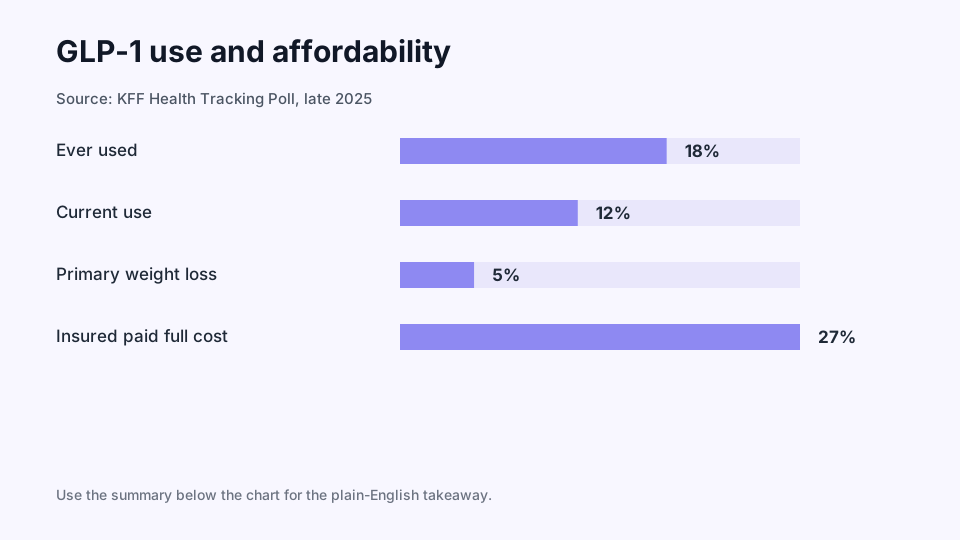
The survey places weight-loss-focused use within broader GLP-1 use and shows that many insured users still report paying the full cost themselves.
Questions to settle before filling a prescription
Call the insurer or review the plan portal with the exact brand and indication. Ask whether prior authorization is required, which records are needed, whether step therapy applies, what the expected pharmacy copay is, and what proof is needed to continue coverage. Ask the pharmacy whether it can obtain the prescribed product before assuming an offer will solve access. Bring a current medication list, relevant diagnoses, past weight-management approaches, insurance details, preferred pharmacy, and a realistic monthly spending limit to a clinician visit. Ask about expected benefits, side effects to watch for, follow-up timing, refill plans, and what to do if treatment is delayed or stopped. Lina is a GLP-1 companion app for people using Wegovy, Mounjaro, Ozempic, Zepbound, Saxenda, and related medications. It helps users track doses, side effects, meals, weight, protein, hydration, and habits in one place. It is a wellness tracking companion, not a medical device or a substitute for medical advice.
Safety limits and compounded products
Common side effects in Wegovy and Zepbound FDA materials include nausea, vomiting, diarrhea, constipation, and abdominal pain. Both labels carry boxed warnings about thyroid C-cell tumors observed in rodents; the relevance to humans is unknown. Both are contraindicated for people with a personal or family history of medullary thyroid carcinoma or Multiple Endocrine Neoplasia syndrome type 2. Contact a clinician or pharmacist promptly for severe or persistent symptoms, symptoms of dehydration, severe abdominal pain, an allergic reaction, or a refill interruption. They can assess the situation using your history and current medicines. This guide does not provide dosing, diagnosis, or treatment instructions. Compounded GLP-1 products are not FDA-approved. FDA says they should generally be used only when a patient's medical need cannot be met by an FDA-approved drug. As of May 31, 2026, FDA had received 990 adverse-event reports associated with compounded semaglutide and more than 730 associated with compounded tirzepatide; reports cannot establish causation and may be underreported. FDA also warns about dosing errors, fraudulent labels, storage problems, and unapproved salt forms.
Methodology
- Source priority was FDA and CMS material, CDC national survey data, peer-reviewed trials and health-services research, official manufacturer price pages, then near-primary KFF survey evidence.
- Sources were last checked August 28, 2026. Prices, savings offers, labels, supply, and coverage policies can change after that date.
- Marketing blogs, affiliate pages, peptide sellers, social posts, generic approval trackers, and claims about non-FDA-approved products were excluded or treated cautiously.
- Prescription orders, paid claims, and self-reported use measure different events. They should not be interpreted as one national treatment rate.
- The guide is source-reviewed and not clinically reviewed. It cannot determine individual eligibility, medical appropriateness, price, pharmacy availability, or insurance approval.
Update history
- Updated source review.
- Updated source review.
Download the data
Download the figures and source-linked dataset used for the charts and tables.