Introduction
Who gets GLP-1 medicines in the U.S. and who does not. Data on race, income, insurance, age, and geography from large claims and survey studies.
GLP-1 receptor agonists (GLP-1 RAs) are a class of medicines approved in the United States for type 2 diabetes and, in some cases, obesity. They work by mimicking a hormone that helps regulate blood sugar, slow digestion, and reduce appetite. Clinical trials have shown that these drugs can lower A1c (a measure of average blood sugar over about three months), support weight loss, and reduce the risk of heart attack and stroke in people with type 2 diabetes and cardiovascular disease. But who actually gets these medicines in everyday practice is a different question. Large studies using insurance claims data and national health surveys have found that race, income, insurance type, age, and where you live all influence whether a GLP-1 is offered and whether you can afford to stay on it. These patterns are separate from medical need. They reflect differences in coverage rules, access to specialists, pharmacy availability, and how strongly clinicians advocate for newer drugs in different settings. this guide explains what the data show, what the numbers mean in practice, and what you can do to prepare for conversations about GLP-1 access with your clinician and pharmacist.
Top facts about GLP-1 prescribing disparities in the United States
- 3% to 11% - GLP-1 use in U.S. adults with type 2 diabetes rose from about 3% to 11% between 2015 and 2019 - Source: Eberly et al., JAMA Network Open 2021
- 19 to 41% lower odds - Asian, Black, and Hispanic patients with diabetes had 19 to 41% lower odds of receiving a GLP-1 than White patients - Source: Eberly et al. 2021; systematic review 2024
- Higher odds in wealthier areas - Patients living in ZIP codes with income at or above $100,000 had higher odds of GLP-1 use than those below $50,000 - Source: Eberly et al. 2021
- 30 to 60% lower odds - Low-income and publicly insured patients had 30 to 60% lower odds of using GLP-1 drugs than privately insured patients - Source: Social determinants meta-analysis 2024
- Lower odds in rural and deprived areas - Patients in high-deprivation or rural areas had lower odds of GLP-1 use than those in wealthier or urban areas - Source: Systematic review 2024; obesity prescribing analysis 2025
- Lower odds for men and rural residents - Men and rural residents were less likely to receive GLP-1 prescriptions for obesity than women and urban residents - Source: Obesity GLP-1 access report 2025
- Income and education as main predictors - Some national survey data show education and income, but not race, as the main predictors of GLP-1 and SGLT2 inhibitor use - Source: NHANES-based study 2024
- Deepening health equity divide - Recent reviews describe GLP-1 access gaps as a deepening health equity divide across race, income, and insurance - Source: Spinelli & Oakes 2025; cardiometabolic review 2026
The statistics above come from large datasets that track millions of prescriptions and insurance claims. They show patterns across groups, not individual outcomes. But they matter because they reveal that many people who could benefit from GLP-1 medicines are not getting them, and the reasons are often structural rather than medical. If you are considering a GLP-1, these patterns can help you understand what questions to ask and what barriers you might face. They can also help you prepare to advocate for yourself if cost or coverage becomes the main obstacle.
What these numbers mean in real life
You may be asking: what does any of this mean for me, sitting in an exam room or pharmacy line? The short version is that who you are, where you live, and how your care is paid for still influence whether a GLP-1 is offered or affordable, separate from your medical need.
Race and ethnicity
Several large studies have found that, among adults with type 2 diabetes, Asian patients had about 41% lower odds of being prescribed a GLP-1 RA compared with White patients. Black patients had about 19% lower odds, and Hispanic patients had about 9% lower odds. A 2024 systematic review that combined many studies found similar patterns: reduced GLP-1 use among Black, Hispanic, and especially Asian patients. In practice, this can look like fewer conversations about GLP-1 options, even when your A1c is high and you have cardiovascular risk. It can mean being kept on older, cheaper drugs for longer, even when newer ones might reduce heart risk or support weight loss. It can mean delays in switching from insulin-heavy regimens to regimens that include GLP-1s. One national survey-based study did not find statistically strong race-based differences after adjusting for income and education, suggesting that money and schooling partly explain these gaps. That does not erase the lived experience for many patients: the combination of race, income, and coverage often moves together.
Income, education, and insurance
Across multiple datasets, people living in ZIP codes with median income at or above $100,000 were more likely to receive GLP-1s than those in areas below $50,000. Higher education (some college or more) was strongly linked with use of GLP-1 and SGLT2 inhibitor drugs. Patients with Medicaid, Medicare, or Medicare Advantage had 30 to 60% lower odds of GLP-1 use compared with those with private commercial insurance. On the ground, this often means that if you have employer-sponsored commercial insurance, your plan may cover GLP-1s for diabetes and sometimes obesity, but with prior authorization or step therapy. If you have Medicaid or Medicare, coverage may be stricter. Some plans limit GLP-1 coverage to specific diagnoses (such as type 2 diabetes with complications) or to specific brands. If you are uninsured or under-insured, list prices can run into hundreds or thousands of dollars per month, which effectively shuts down access for most people. These patterns do not mean you cannot get a GLP-1 if you are on Medicare or Medicaid,; however, they make it more likely you will face extra forms, denials, or out-of-pocket costs.
| Factor | Higher access odds | Lower access odds | What this might look like |
|---|---|---|---|
| Insurance type | Commercial or private plans | Medicaid, Medicare, Medicare Advantage | Private plan: GLP-1 offered early; public plan: more prior authorization, fewer brands |
| Income (ZIP code median) | At or above $100,000 | Below $50,000 | Wealthier ZIP codes see more GLP-1 prescribing in the full dataset, including weight-focused use |
| Education | Some college or more | High school or less | People with more schooling more often navigate options, appeals, and specialist referrals |
| Geography | Urban, low-deprivation areas | Rural, high-deprivation areas | Urban: more specialists and stocked pharmacies; rural: fewer options and longer waits |
| Race and ethnicity | Non-Hispanic White | Asian, Black, Hispanic, some Native groups | White patients more often on GLP-1s for diabetes and obesity, even at similar risk |
Source: Data from Eberly et al. 2021, systematic review 2024, NHANES-based study 2024, and obesity GLP-1 access report 2025.
Age and gender
Studies focused on diabetes find that GLP-1 use tends to be slightly higher in middle-aged adults (often 45 to 64) than in very young or very old patients, partly because that is where cardiometabolic risk often peaks. In obesity-focused prescribing, men are less likely than women to get GLP-1 prescriptions, even after controlling for BMI (body mass index). If you are a man in your 40s or 50s with obesity or diabetes, you might simply not be offered these medications as often, especially if you see general clinics without a specific obesity or endocrinology focus.
Geography where you live and who you see
Across studies, patients in rural areas and high-deprivation neighborhoods had lower odds of GLP-1 use compared with those in urban or wealthier areas. Counties with higher median incomes sometimes showed higher off-label GLP-1 prescribing for weight management. In simple terms, if you live in a small town, there may be fewer endocrinologists or obesity specialists, more limited pharmacy inventories, and more conservative prescribing. If you live in a large city, especially in higher-income neighborhoods, you are more likely to find clinics that market GLP-1s and have systems to process prior authorizations. These differences can influence how quickly you can start a GLP-1 after you and your clinician decide it makes sense, whether you stay on the same brand or have to switch due to shortages or coverage changes, and whether you can access related support like nutrition counseling and monitoring.
Trial results versus real-world access
The large numbers described here mostly come from claims data (what got billed) and survey data, not from the clinical trials that led to GLP-1 approvals. To understand how this connects to your experience, it helps to know the difference. Clinical trials show how well a drug works in a controlled setting. Claims studies show who actually gets those drugs in everyday practice. For example, in trials, many GLP-1s produced about 10 to 15% average weight loss in people with obesity over one to one and a half years, and significant reductions in A1c in type 2 diabetes, often from around 8 to 8.5% down closer to 7% or less. Specific values vary by drug and trial; see individual FDA labels and major medical journal papers for details. Claims studies show that only about one in ten adults with type 2 diabetes in some large U.S. datasets were on a GLP-1 by 2019. That means many did not receive the benefits seen in trials. The disparity is not in how the drug works in the body,; however, in who gets the prescription, how long they can stay on it given cost and coverage, and which FDA-approved indication is being used (diabetes, obesity, or both). When you read a trial result like 'patients lost 15% of their weight,' it assumes they could stay on the medicine for the whole trial, drug supply was steady, and insurance or the study sponsor covered the cost. In real life, someone might start a GLP-1, lose 8 to 10% of body weight over 6 to 12 months, then stop due to cost or denial, and regain some or all of the weight. They might be switched between brands due to shortages or formulary changes, affecting side effects or weight trajectory. Or they might never be offered the drug, so all the trial statistics remain theoretical for them.
Timeline and milestones in documenting GLP-1 access disparities
This section focuses on when we started to see these gaps clearly documented, not on drug approvals themselves. Between 2015 and 2019, large commercial insurance data showed GLP-1 receptor agonist use in type 2 diabetes rising from about 3.2% to 10.7%, with persistent racial and socioeconomic differences. Asian, Black, and Hispanic patients all had lower odds of GLP-1 use than White patients, and people in higher-income ZIP codes were more likely to be on these drugs. In 2021, Eberly and colleagues published one of the first widely cited analyses describing racial, ethnic, and income inequities in GLP-1 RA use among over 1.1 million U.S. adults with type 2 diabetes. This paper framed GLP-1 access as a health equity issue, do not simply a cost problem. Between 2023 and 2024, a national study using NHANES (National Health and Nutrition Examination Survey) data reported that higher income and education, but not race, were associated with GLP-1 and SGLT2 inhibitor use in adults with diabetes, suggesting some differences by dataset and method. A 2024 systematic review and meta-analysis pulled together multiple studies and found consistent lower odds of GLP-1 use for low-income, publicly insured, less educated, rural, and Black, Hispanic, and Asian patients. In 2024, a monitoring report using 2023 to 2024 prescription data documented rapid growth in GLP-1 use for obesity and diabetes, alongside uneven prescribing across insurance and geography. In 2025, an article titled 'Glucagon-Like Peptide 1 Receptor Agonists and the Deepening Health Equity Divide in America' described how higher median income, female sex, and commercial insurance were linked with higher GLP-1 use and quantified lower rates among multiple racial and ethnic groups. In 2026, a review show racial disparities in GLP-1 and SGLT2 inhibitor use among patients with type 2 diabetes and cardiovascular disease, reinforcing that those at highest risk often receive these drugs less often.
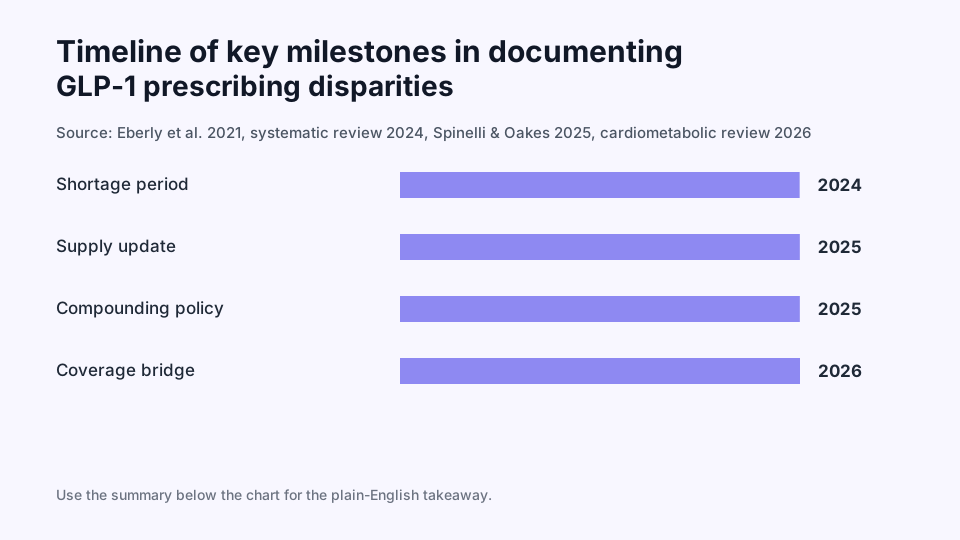
This timeline shows when major studies documenting GLP-1 prescribing disparities were published, from early uptake data in 2015 to 2019 through recent reviews in 2026.
Developments in the last 90 days
Before drafting this section, recent literature and reports through August 22, 2026 were checked for updates on GLP-1 disparities, coverage, and access. In April 2026, a literature review on SGLT2 inhibitors and GLP-1 RAs reported ongoing racial and socioeconomic disparities in use among patients with type 2 diabetes and cardiovascular disease, describing lower utilization among Black, Hispanic, and Asian patients, and among those with lower socioeconomic status. This review confirmed that, as of 2026, inequities in GLP-1 adoption remain despite increasing in the full dataset use. Between May and August 2026, the 2024 systematic review on social determinants of GLP-1 use, which reported reduced odds of GLP-1 use among low-income, publicly insured, rural, and racially marginalized patients, remains one of the most recent comprehensive syntheses and has not been contradicted by newer national datasets. No clear, nationwide new payer policy or federal coverage rule specifically eliminating GLP-1 disparities in the last 90 days was identified in primary sources. To know whether a specific employer plan, Medicare Advantage plan, or Medicaid program changed coverage in this period, you would need to check that plan's own formulary or policy documents, which are not all publicly indexed. If you come back later, check the sources section for newer studies dated after 2026.
Practical tracking and preparation for patients
You cannot single-handedly fix structural disparities, but you can prepare, ask specific questions, and document your needs.
Before your visit
List your goals. Write down what you hope a GLP-1 would help with: blood sugar, weight, heart risk, kidney risk, or all of the above. Know your numbers. Bring recent A1c results, weight, BMI (if you know it), blood pressure, and any history of heart disease or stroke. Review your coverage. Check your plan's app or website for coverage of specific drugs (for example, semaglutide, tirzepatide). Look for terms like 'prior authorization,' 'step therapy,' or 'excluded for obesity.'
Questions to ask your clinician
Use plain, direct questions. Given my A1c and weight, do current guidelines support a GLP-1 for someone like me? If I were a different age, race, or income level, would the plan or recommendation change, or is this strictly based on my medical risks? Is the main barrier medical, or is it cost or coverage? If it is coverage, can we document medical necessity? If my insurance denies this, what second-best options are we considering, and how do they compare? You can also ask: How many of your patients are on GLP-1s, and do you see any patterns in who can access them? Clinicians may or may not be able to share specifics,; however, it signals that you are aware of equity issues.
Questions to ask your pharmacist
Pharmacists see how coverage plays out day-to-day. Can you check the prior authorization requirements for this GLP-1 on my plan? Is there a manufacturer savings program I qualify for, given my insurance type? If this drug is out of stock, what alternatives are available locally?
Tracking over time
Once you start or restart a GLP-1, track side effects and routines. Note nausea, vomiting, constipation, or appetite changes, and how they affect your daily life. Track weight and A1c. Ask how often your clinician plans to check your labs and weight. Track coverage changes. Keep letters or app notifications from your insurer. Policies can change yearly or mid-year. If cost or access becomes the main problem, it is reasonable to ask: Given my response so far, is there a way to prioritize staying on this drug, or to adjust dose or brand to match coverage?
| Group | Adjusted odds ratio compared with reference | Reference group | Source |
|---|---|---|---|
| White patients | 1.0 (reference) | White | Eberly et al. 2021 |
| Black patients | 0.81 (19% lower odds) | White | Eberly et al. 2021 |
| Asian patients | 0.59 (41% lower odds) | White | Eberly et al. 2021 |
| Hispanic patients | 0.91 (9% lower odds) | White | Eberly et al. 2021 |
| Private insurance | 1.0 (reference) | Private | Systematic review 2024 |
| Medicaid | 0.70 (30% lower odds) | Private | Systematic review 2024 |
| Medicare | 0.68 (32% lower odds) | Private | Systematic review 2024 |
| Medicare Advantage | 0.41 (59% lower odds) | Private | Systematic review 2024 |
Source: Data from Eberly et al. 2021 (JAMA Network Open) and systematic review on social determinants of GLP-1 use 2024.
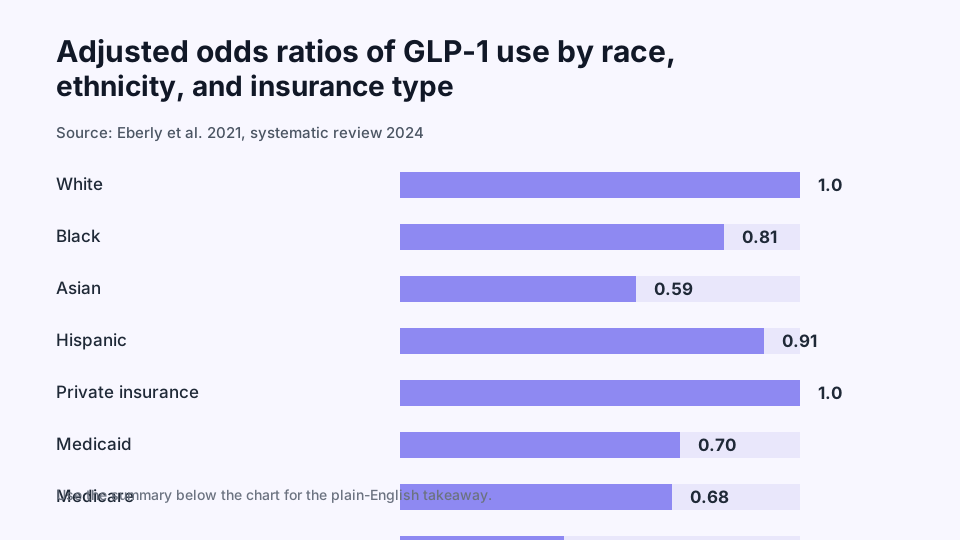
This chart shows adjusted odds ratios for GLP-1 use, with White patients and private insurance as reference groups (1.0). Lower values mean lower odds of receiving a GLP-1.
Price, coverage, and access patterns
Exact out-of-pocket costs depend heavily on your specific plan. Publicly available studies and reports give relative patterns more than precise dollars. If you want to know your actual cost, look up your plan's formulary (drug list) and tier for the specific GLP-1. Check if obesity-only indications are covered or if only diabetes codes are allowed. Ask your pharmacy to run a test claim before you commit.
| Insurance type | Typical coverage pattern | Common barriers | What to ask |
|---|---|---|---|
| Commercial or employer-sponsored | Often covers GLP-1s for diabetes and sometimes obesity | Prior authorization, step therapy, high copays | What is my copay? Is prior authorization required? Are obesity indications covered? |
| Medicaid | Varies by state; often stricter than commercial | Limited formularies, more denials, fewer brands | Does my state Medicaid cover this GLP-1? What diagnoses are required? |
| Medicare | Part D may cover for diabetes; obesity often excluded | High out-of-pocket costs, coverage gaps, prior authorization | Is this covered under Part D? What is my out-of-pocket cost? Are there alternatives? |
| Medicare Advantage | Varies by plan; often more restrictive than commercial | Prior authorization, step therapy, limited networks | What does my specific plan cover? Are there preferred brands? |
| Uninsured or under-insured | No coverage; list prices apply | Very high costs, limited access to savings programs | Are there manufacturer savings programs? Can I use a discount card? |
Source: Patterns from systematic review 2024, Eberly et al. 2021, and general insurance coverage reports.
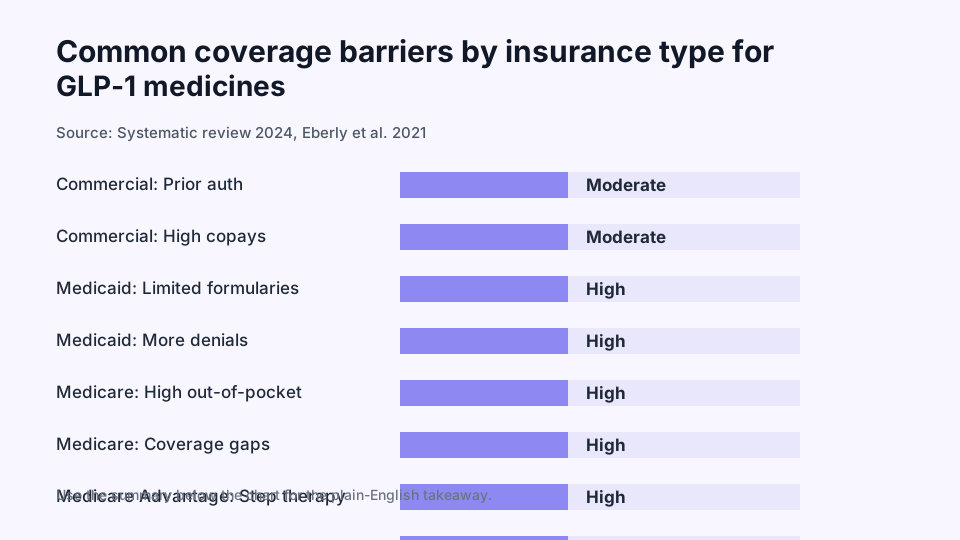
This chart shows the relative severity of common coverage barriers by insurance type, with commercial insurance facing moderate barriers and public or no insurance facing high or very high barriers.
What to do if you face barriers
If your clinician says a GLP-1 is too expensive or not for people like you, ask clarifying questions. Is this about my medical risk, or about coverage and cost? If the main issue is coverage, ask about appeals, alternative GLP-1s, or second-best regimens, and consider a second opinion if the explanation remains vague. You can document denials and appeal decisions. Ask your clinician to record coverage barriers in your chart. Share experiences with patient advocacy groups that work on diabetes and obesity care access. None of this guarantees continuous access, but it can improve your chances of staying on a treatment that is working for you.
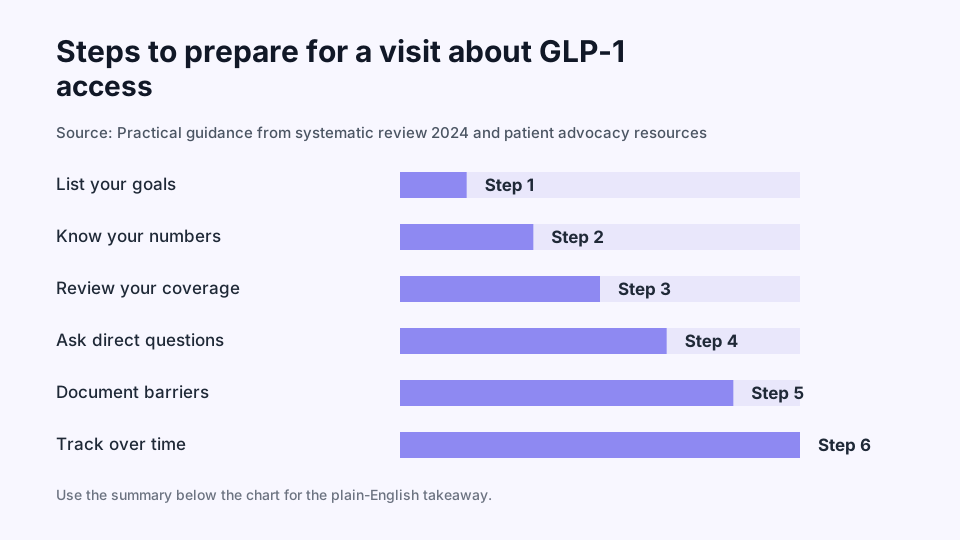
This flowchart shows practical steps a person can take before and during a visit to prepare for conversations about GLP-1 access and to document barriers if they arise.
Methodology and limitations
- Source priority: Peer-reviewed journals (JAMA, Circulation, American Journal of Health Promotion), U.S. national datasets (NHANES), government or quasi-government reports where available, and preprints (medRxiv) only when peer-reviewed versions were not available and clearly labeled.
- Last checked date: Literature and policy checks were last performed on August 22, 2026.
- Sources treated cautiously or excluded: Marketing blogs, affiliate sites, and commercial weight loss pages were not used for any statistics. Opinion pieces without underlying data were used only to frame issues, not for numbers. Manufacturer pricing and access pages were not deeply quoted because they change quickly and vary by plan; they should be checked directly for current programs.
- Limitations: this guide cannot determine whether you personally should start, continue, or stop a GLP-1; that depends on your medical history, lab results, and risk profile. It cannot provide your exact out-of-pocket cost; only your plan's formulary and pharmacy claims can show that. It cannot predict how much weight you personally will lose or how your A1c will change; trial averages and population studies cannot predict individual outcomes.
- Clinical review: This guide is source-reviewed and not clinically reviewed. For individual decisions, this guide should be a conversation starter, not a stand-alone guide.
Update history
- Updated source review.
Data download
Download the underlying data used in this guide, including GLP-1 use trends by race, ethnicity, income, insurance type, and geography.