Introduction
US GLP-1 use, trial weight-loss results, 2026 prices, Medicare access, coverage limits, safety warnings, and questions for a clinician.
Top facts
- 11% - US adults reporting current GLP-1 use for weight loss in 2026
- 15% - US adults reporting ever using a weight-loss GLP-1 in 2026
- 6.9 million - Adults with diagnosed diabetes reporting injectable GLP-1 use in 2024
- 26.5% - Adults with diagnosed diabetes using GLP-1 injectables in 2024
- 14.9% - Mean weight loss with semaglutide 2.4 mg at 68 weeks in STEP 1
- 20.9% - Mean weight loss with tirzepatide 15 mg at 72 weeks in SURMOUNT-1
- $50 - Stated monthly supply cost for eligible Medicare GLP-1 Bridge participants
- 990 - FDA adverse-event reports involving compounded semaglutide by May 31, 2026
What the use statistics do and avoid show
Gallup reported that 11% of US adults were currently taking a GLP-1 medicine for weight loss in its May to June 2026 survey. That rose from 3% in 2024. Gallup also found that 15% had ever used one, which includes people who may have stopped, switched medicines, or used treatment for a limited period. These are self-reported use estimates, not pharmacy dispensing totals. The United States does not publish one live public count that combines prescriptions, fills, cash purchases, insurance claims, and compounded products. Treating those measures as interchangeable would make the trend look more precise than the data allow.
| Measure | Figure | What it means |
|---|---|---|
| Current weight-loss GLP-1 use | 11% of adults in 2026 | About one in nine adults reported current use in Gallup's survey. It is not a fill count. |
| Ever weight-loss GLP-1 use | 15% of adults in 2026 | Includes people who reported trying a medicine at some point. |
| Injectable GLP-1 use with diagnosed diabetes | 26.5% in 2024 | A federal estimate showing injectable GLP-1 medicines were already common in diabetes care. |
| Estimated adults with diagnosed diabetes using an injectable GLP-1 | 6.9 million in 2024 | A national population estimate, not the number of prescriptions. |
Source: Source: Gallup, In U.S., GLP-1 Usage Reaches New High, July 7, 2026; CDC National Center for Health Statistics, GLP-1 Injectable Use Among Adults With Diagnosed Diabetes: United States, 2024.
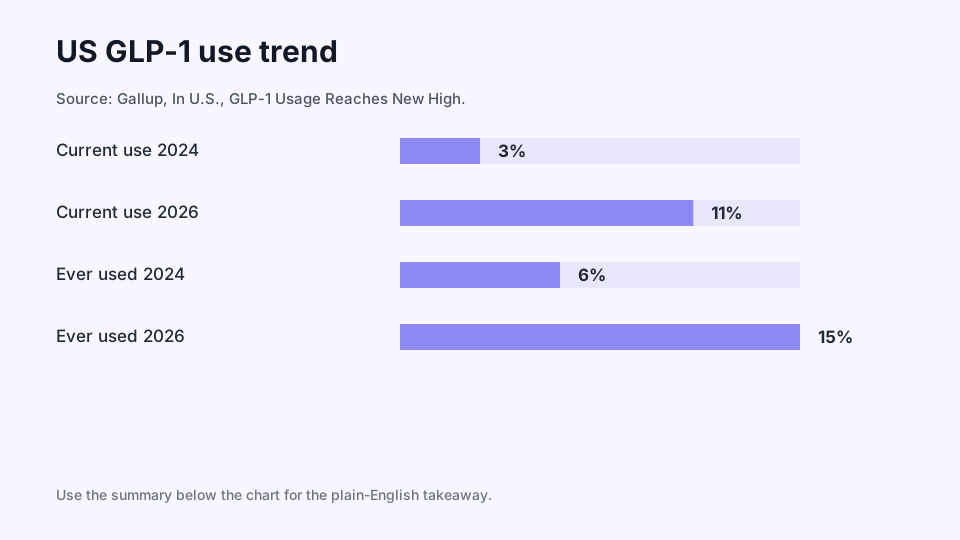
The chart separates current use from ever use, showing both growth in active treatment and a larger group that has tried a weight-loss GLP-1.
Why the trend changes everyday treatment decisions
For people with type 2 diabetes, GLP-1 medicines have been part of care for years. CDC estimated that 6.9 million adults with diagnosed diabetes used an injectable GLP-1 in 2024. The visible expansion in 2026 is happening alongside weight-management choices, including Wegovy, Zepbound, and Foundayo. A choice may involve more than a weekly injection versus a daily tablet. It can turn on the FDA-approved reason for use, diabetes medicines that may affect low blood sugar risk, digestive history, plans for surgery or sedation, pregnancy planning where relevant, and how reliably a person can obtain refills. A clinician and pharmacist can help separate an active ingredient from a brand's specific approved use and label.
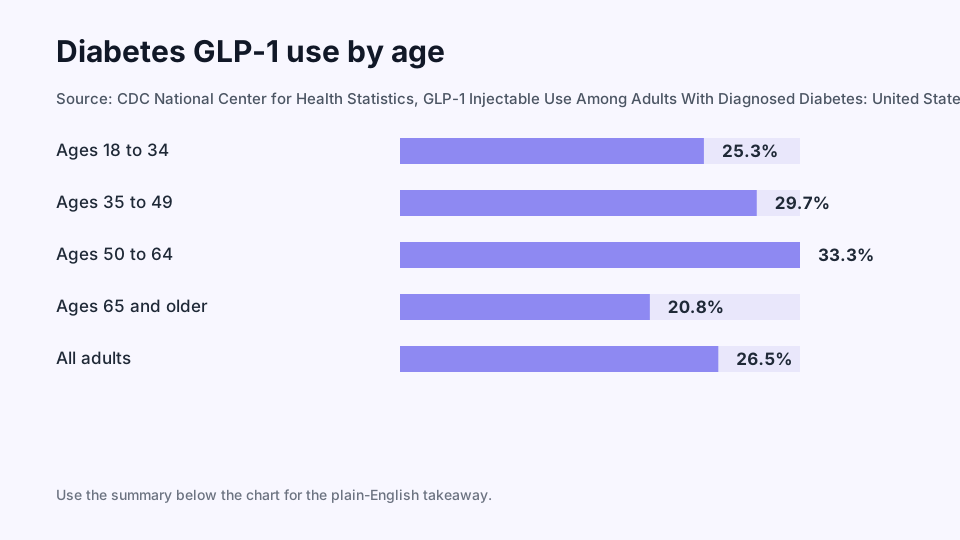
The chart shows that injectable GLP-1 use was reported across age groups among adults with diagnosed diabetes, not only among younger adults.
What weight-loss trials may mean for you
Trial averages are useful for setting expectations, not predicting an individual's result. Participants had defined eligibility criteria, scheduled follow-up, lifestyle support, and a supply of treatment. People also varied widely around the average. In STEP 1, adults without diabetes taking semaglutide 2.4 milligrams with lifestyle intervention lost an average 14.9% of starting weight at 68 weeks, compared with 2.4% with placebo. At a starting weight of 220 pounds, 14.9% is about 33 pounds on average. About 69% lost at least 10% and about 51% lost at least 15%. In SURMOUNT-1, adults without diabetes taking tirzepatide 15 milligrams lost an average 20.9% at 72 weeks, versus 3.1% with placebo. For a 220-pound person, that percentage is about 46 pounds. SURMOUNT-1 and STEP 1 were separate studies, so their averages should not be treated as a direct drug-versus-drug result. For oral orforglipron, sold as Foundayo, Lilly reported 11.1% average loss at 72 weeks in the treatment-policy analysis of ATTAIN-1, compared with 2.1% with placebo. The company also reported 12.4%, or 27.3 pounds, among participants at the highest dose who stayed on treatment. The distinction matters because trial completion and treatment continuation affect the result being described.
| Medicine and trial | Time point | Mean weight change | Practical translation from 220 pounds |
|---|---|---|---|
| Semaglutide 2.4 mg, STEP 1 | 68 weeks | 14.9% | About 33 pounds |
| Tirzepatide 15 mg, SURMOUNT-1 | 72 weeks | 20.9% | About 46 pounds |
| Oral orforglipron, ATTAIN-1 treatment-policy analysis | 72 weeks | 11.1% | About 24 pounds |
| Placebo in STEP 1 | 68 weeks | 2.4% | About 5 pounds |
Source: Sources: Wilding et al., New England Journal of Medicine, 2021; Jastreboff et al., New England Journal of Medicine, 2022; Eli Lilly ATTAIN-1 announcement. Trials had different designs and are not head-to-head comparisons.
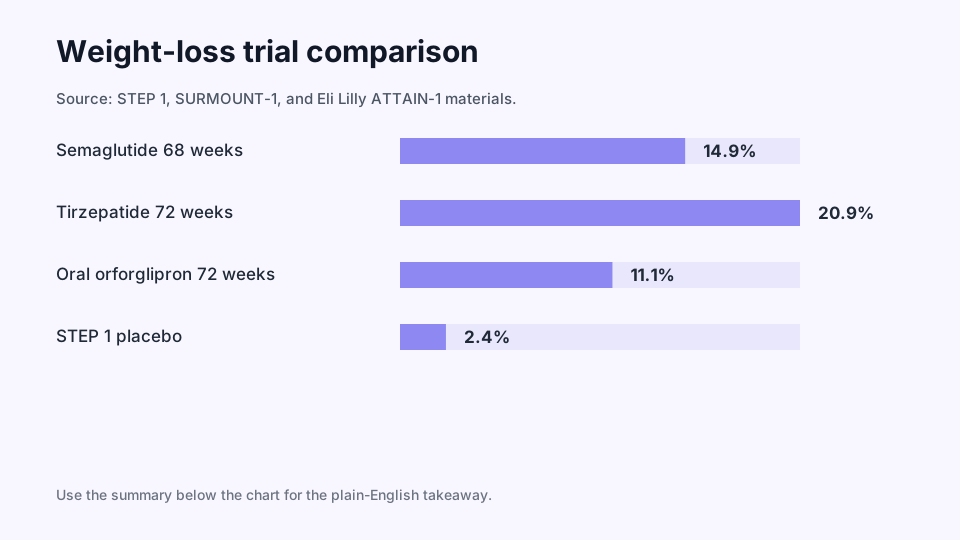
The chart puts trial averages in context for choice discussions, while making clear that the studies were separate and do not provide a direct head-to-head comparison.
Coverage and cost are still the practical barrier
An advertised price is not necessarily the amount a person pays. Deductibles, coinsurance, plan exclusions, pharmacy choice, prior authorization, and savings-offer terms can all change the final amount. Commercial savings offers commonly exclude government-insured patients. Novo Nordisk listed a Wegovy tablet self-pay starting price of $149 per month for certain doses. Its introductory injection offer was $199 per month for the first two monthly fills, then a stated $349 per month for listed standard doses. Lilly listed Zepbound self-pay options from $299 to $449 per month and Foundayo from $149 per month at the lowest tablet strength, with higher strengths carrying higher regular prices. For eligible Medicare Part D beneficiaries, the Medicare GLP-1 Bridge began July 1, 2026. CMS states a $50 monthly supply cost through December 31, 2027. It is a limited demonstration with clinical and enrollment criteria, and people who otherwise have Part D access are not eligible simply because their plan does not list a medicine on its formulary.
| Option | Stated price | Important limit |
|---|---|---|
| Wegovy tablet self-pay offer | Starting at $149 per month | Applies to certain doses and offer terms. |
| Wegovy injection introductory offer | $199 per month for first two fills | Novo Nordisk states $349 per month afterward for listed standard doses. |
| Zepbound self-pay | $299 to $449 per month | Depends on device, dose, refill program, and eligibility. |
| Foundayo self-pay | Starting at $149 per month | Starting price is for the lowest tablet strength. |
| Medicare GLP-1 Bridge | $50 per monthly supply | Only for eligible Part D beneficiaries meeting program requirements. |
Source: Sources: NovoCare Wegovy Savings Offer Program; Eli Lilly Zepbound Cost Information; Eli Lilly Foundayo Coverage and Savings; CMS Medicare GLP-1 Bridge materials. Prices are advertised offers or program terms, not universal pharmacy prices.
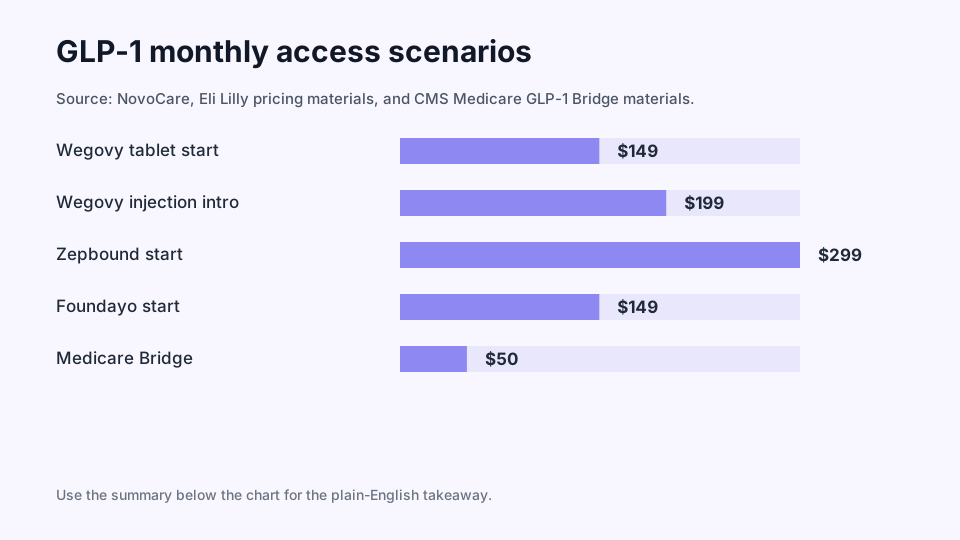
The chart compares stated starting offers and the limited Medicare program price, not guaranteed out-of-pocket costs at a pharmacy.
Maintenance and stopping need a plan
Weight regain after stopping is common, which is why access and affordability deserve attention before treatment begins. In the STEP 1 extension, people who stopped semaglutide regained an average 11.6 percentage points of lost weight during the following year, roughly two-thirds of the loss achieved during treatment. That finding does not mean a person must stay on treatment forever. It does mean a forced stop because of cost, coverage, a pharmacy delay, side effects, or a life change can be difficult. Discussing maintenance, monitoring, and alternatives before a disruption gives a clinician more room to help.
Safety and compounded product limits
FDA-approved labels list gastrointestinal side effects and warnings involving gallbladder disease, pancreatitis, dehydration-related kidney problems, and low blood sugar when some diabetes medicines are used at the same time. They also tell people to inform care teams about planned surgery or deep sedation. Wegovy and Zepbound labels carry boxed warnings about thyroid C-cell tumors seen in rodents and list contraindications involving a personal or family history of medullary thyroid carcinoma or multiple endocrine neoplasia syndrome type 2. On January 13, 2026, FDA asked manufacturers to remove suicidal behavior and ideation language from certain GLP-1 weight-management labels after finding no increased risk. That change does not replace attention to mental health symptoms or a person's history. FDA says compounded drugs do not undergo its premarket review for safety, effectiveness, or quality. By May 31, 2026, FDA had received 990 adverse-event reports involving compounded semaglutide and more than 730 involving compounded tirzepatide. Reports cannot show how often a problem occurs or prove that a product caused it, but they are a reason to use a licensed prescriber and state-licensed pharmacy and to avoid products sold as research use only or not for human consumption.
Questions to take to a clinician or pharmacist
- What is the FDA-approved reason for this medicine in my situation?
- How do my other medicines, diabetes treatment, and medical history affect the choice?
- What side effects or warning signs should prompt a call to the care team?
- Does my plan require prior authorization, and what records are needed?
- What will I pay before and after my deductible?
- Is there a preferred medicine or pharmacy under my plan?
- What is the plan if coverage changes, the pharmacy cannot fill it, or I need to stop?
- Are there any issues related to planned surgery, sedation, pregnancy planning, or a family history of thyroid cancer?
Bring a short record to appointments: current medicines and supplements, past medicine experiences, insurance information, refill dates, out-of-pocket costs, and symptoms such as nausea, constipation, diarrhea, appetite changes, and hydration. If blood sugar is monitored, bring those readings as well. A simple log can make it easier to tell whether a problem is access, cost, side effects, or a medicine question that needs follow-up.
Methodology
- Source priority was FDA labels, FDA safety communications and approvals, CMS materials, CDC survey data, peer-reviewed trials, PubMed, and official manufacturer price materials.
- Sources and dates were checked through August 12, 2026.
- Self-reported use, diabetes-use estimates, trial outcomes, and advertised prices were kept separate. Affiliate pharmacy pages, peptide sellers, social posts, unverified trackers, generic-approval speculation, and claims that compounded products are equivalent to approved drugs were excluded or treated cautiously.
- The figures cannot determine whether a medicine is appropriate for one person, whether a plan will approve it, final pharmacy cost, individual weight change, or individual side-effect risk. Those decisions need a clinician, pharmacist, insurer, and pharmacy.
Update history
- Updated source review.
Data notes
The figures use the reported values shown in the charts and tables. Survey percentages, trial percentages, price offers, and adverse-event reports measure different things and should not be combined into a single prescription total.