Introduction
US GLP-1 prior authorization statistics for 2026, including Medicare, Medicaid, denials, appeals, the $50 Medicare Bridge copay, and practical next steps.
Eight facts that put GLP-1 access in context
- 83.6% - Injectable semaglutide plans requiring PA
- 83.2% - Tirzepatide plans requiring PA
- 83.0% - Oral semaglutide plans requiring PA
- 54% - Selected branded claims eventually approved
- 49% - Selected tirzepatide claims eventually approved
- 7.7% - Medicare Advantage PA determinations denied
- 80.7% - Appealed Medicare Advantage denials overturned
- $50 monthly - Medicare Bridge copay
What the available denial numbers can tell you
Prior authorization, often shortened to PA, is a coverage review before a health plan or pharmacy benefit manager agrees to pay. For a GLP-1 receptor agonist, a medicine that affects appetite, digestion, and blood-sugar signaling, the plan may ask for the diagnosis, treatment purpose, body mass index or BMI, related conditions, past treatment history, and the requested product. The strongest pharmacy-claims study does not give a national GLP-1 denial rate. It examined 205,896 finalized branded-drug fill transactions from 2024 that had already received an initial PA-related rejection. In that selected group, 54% were ultimately approved and 46% ultimately rejected. Among the study's tirzepatide transactions, 49% were ultimately approved. That is meaningful evidence of friction after a rejection, but it is not a prediction that half of all tirzepatide prescriptions fail. The study did not include every prescription written, and it did not separate every diabetes and weight-management use. A person whose plan covers the medicine for their diagnosis may have a very different outcome from someone facing a benefit exclusion.
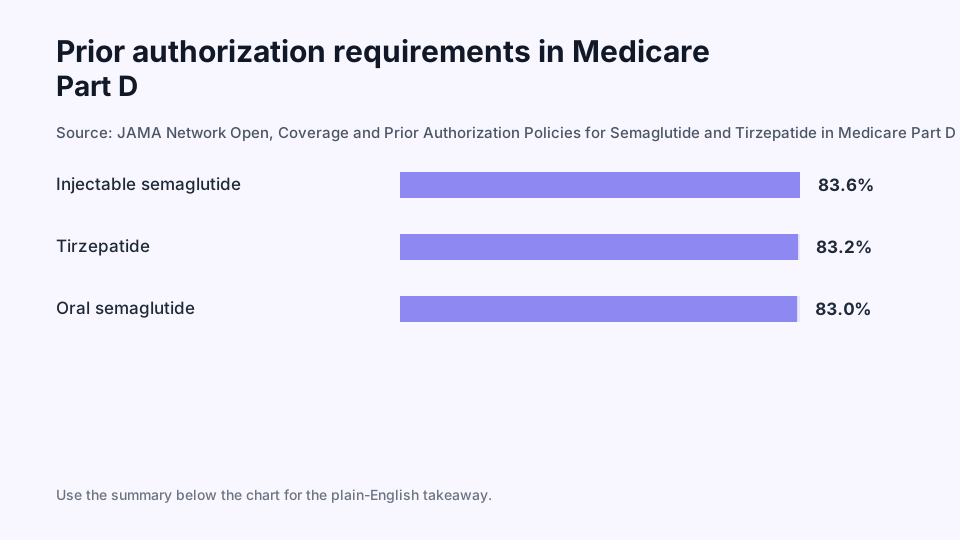
Among Medicare Part D plans that covered each medicine in 2024 Q3, prior authorization was required by more than eight in ten plans.
| Measure | Result | What it means |
|---|---|---|
| Part D plans covering injectable semaglutide that required PA | 83.6% | Most covered plans required review before dispensing. |
| Part D plans covering tirzepatide that required PA | 83.2% | Formulary coverage often came with paperwork. |
| Part D plans covering oral semaglutide that required PA | 83.0% | The pattern was similar across the three studied medicines. |
| Selected branded claims approved after initial PA-related rejection | 54% | This is a final outcome among selected rejected claims, not all prescriptions. |
| Selected tirzepatide claims approved after initial PA-related rejection | 49% | This result cannot determine a specific plan's decision. |
Source: Sources: JAMA Network Open, 2024 Q3 Part D plan observations; JAMA Health Forum, 2024 IQVIA retail-pharmacy claims sample.
A pharmacy rejection is always a coverage denial
A pharmacy rejection is an electronic claim message. It can mean prior authorization is required, the drug is not covered, a refill is too soon, a quantity limit applies, step therapy is required, or information is missing. It is not automatically a final insurer decision. A PA request is the information sent by a prescriber's office for review. A denial is an adverse decision after that review. Knowing which one occurred changes the next conversation: a pharmacist may be able to identify a claim-processing issue, while a clinician's office may need the plan's written criteria and the actual denial reason. In the JAMA Health Forum sample, 35% of selected rejected transactions were finalized the same day. For those taking more than one day, the median time was six days. That does not mean a request will take six days,; however, it explains why a medicine can remain unavailable after the pharmacy first says it needs authorization.
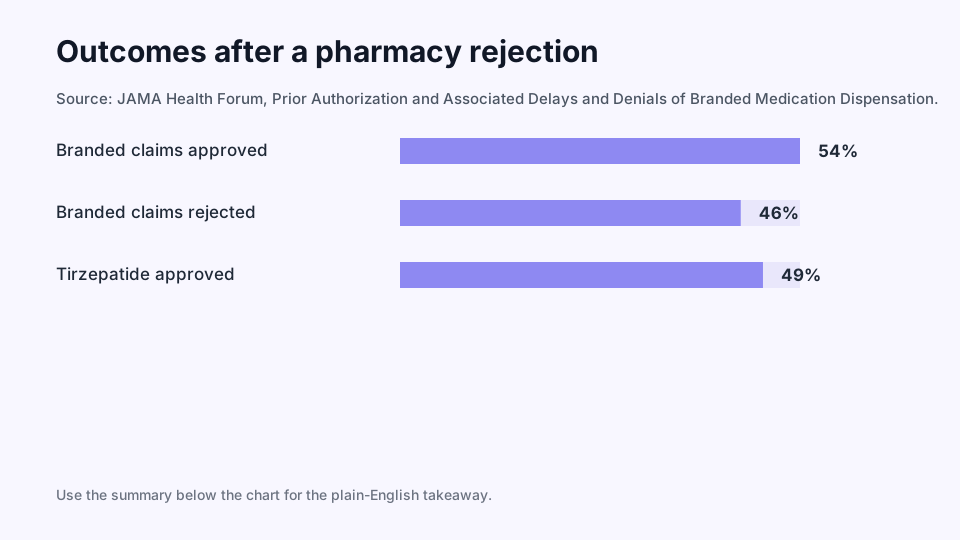
These are final outcomes for selected 2024 pharmacy transactions that had already received an initial PA-related rejection, not all GLP-1 prescriptions.
Medicare rules in 2026
For Medicare Part D, the most directly comparable data show that PA was common for covered injectable semaglutide, tirzepatide, and oral semaglutide plans by 2024 Q3. Those figures concern diabetes products studied in the Part D analysis. They do not establish access to every GLP-1 brand or every FDA-approved use. The Medicare GLP-1 Bridge began July 1, 2026. It is a separate CMS pathway for eligible beneficiaries using certain weight-management GLP-1 medicines. Eligible prescriptions have a $50 monthly copay, but the program still requires a prescription and prior authorization. CMS says the Bridge uses a central claims and PA processor. After a pharmacy claim triggers the process, the prescriber should receive a request electronically or by fax within 24 to 72 hours. CMS says an approval or denial should be sent within 72 hours of submission. Corrected or added information can be resubmitted, but CMS says there is no formal appeal process within the Bridge itself. The $50 payment does not use the Part D deductible or low-income subsidy and does not count toward Part D out-of-pocket spending. The demonstration is scheduled to end December 31, 2027. A person using it should ask how coverage would work if the demonstration ends or their circumstances change.
| Payer or program | Rule or result | Practical implication |
|---|---|---|
| Medicare Part D | PA required by 83.0% to 83.6% of plans covering the three studied medicines | A listed drug may still require a review. |
| Medicare GLP-1 Bridge | Prescription and CMS PA required for eligible weight-management use | It is a standardized route, not ordinary Part D coverage. |
| Medicare GLP-1 Bridge | $50 monthly copay for eligible drugs | Predictable payment for people who qualify, with separate out-of-pocket accounting. |
| Medicaid fee-for-service | 13 state programs covered GLP-1 drugs for obesity treatment in January 2026 | State access remains uneven, and managed-care rules can differ. |
| Medicare Advantage | 7.7% of all PA determinations were partly or fully denied in 2024 | This is a broad all-service benchmark, not a GLP-1 pharmacy rate. |
Source: Sources: CMS Medicare GLP-1 Bridge guidance; JAMA Network Open; KFF analyses using CMS data and state Medicaid policy data.
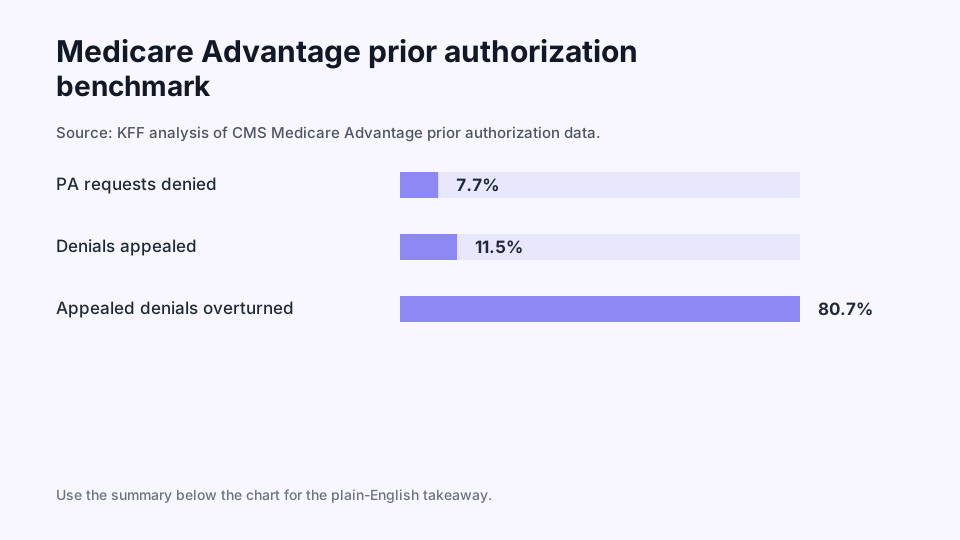
The 2024 figures cover all Medicare Advantage prior authorization determinations, so they provide context for the system but do not predict GLP-1 pharmacy outcomes.
Why the diagnosis and product name matter
A plan may cover one medicine for type 2 diabetes but exclude a related product for weight management. Tirzepatide also acts on glucose-dependent insulinotropic polypeptide, or GIP, alongside GLP-1 pathways. Similar molecules and brand names do not guarantee the same covered use. The Food and Drug Administration, or FDA, label helps define approved uses and safety information, but it does not require an insurer to pay. A request can be medically appropriate and still not satisfy a plan's benefit design, formulary, step-therapy rule, or documentation requirement. This is why a useful first question is whether the issue is an excluded benefit, a non-preferred product, step therapy, a quantity limit, or missing documentation. Each has a different possible route for clarification. A denial notice and the plan's criteria are more useful than a generic estimate of approval odds.
Medicaid access remains uneven
As of January 2026, 13 state Medicaid fee-for-service programs covered GLP-1 drugs for obesity treatment. Coverage for obesity medicines is optional for Medicaid programs, and states that cover these medicines commonly use utilization controls such as prior authorization. That count cannot answer whether an individual Medicaid member is covered. Managed-care plans can use different rules from the state fee-for-service program. Ask the plan, rather than relying on a statewide summary, which product and indication are covered under your specific benefit.
Why an interruption in coverage can matter
Prior authorization statistics describe payment access, not whether a medicine works. But a coverage interruption can matter because GLP-1 treatment is often used as ongoing maintenance rather than a short course. In the STEP 1 extension, participants who stopped semaglutide regained about two-thirds of their prior weight loss during the following year. In SURMOUNT-4, people who continued tirzepatide maintained more weight reduction than people switched to placebo. Trial results cannot tell an individual what will happen, but they help explain why it is reasonable to discuss continuity before a coverage approval expires. Safety and suitability remain individual clinical questions. FDA labels include warnings, contraindications, and common side effects for each product. Do not restart, stop, switch, or change how you use a GLP-1 based on a coverage statistic; discuss an interruption or access problem with the clinician or pharmacist involved in your care.
| Evidence | Finding | What it means for coverage planning |
|---|---|---|
| STEP 1 semaglutide extension | Participants regained about two-thirds of prior weight loss after one year off treatment | A loss of coverage can have consequences beyond a missed refill. |
| SURMOUNT-4 tirzepatide withdrawal trial | Continued treatment maintained more weight reduction than switching to placebo | Longer-term access may be worth discussing before an authorization expires. |
| CMS Bridge | Demonstration scheduled through December 31, 2027 | The $50 arrangement is time-limited. |
| FDA prescribing information | Labels set approved uses, warnings, and contraindications | An FDA label informs the request but does not guarantee plan payment. |
Source: Sources: STEP 1 extension and SURMOUNT-4 PubMed records; CMS Medicare GLP-1 Bridge overview; FDA Wegovy and Zepbound prescribing information.
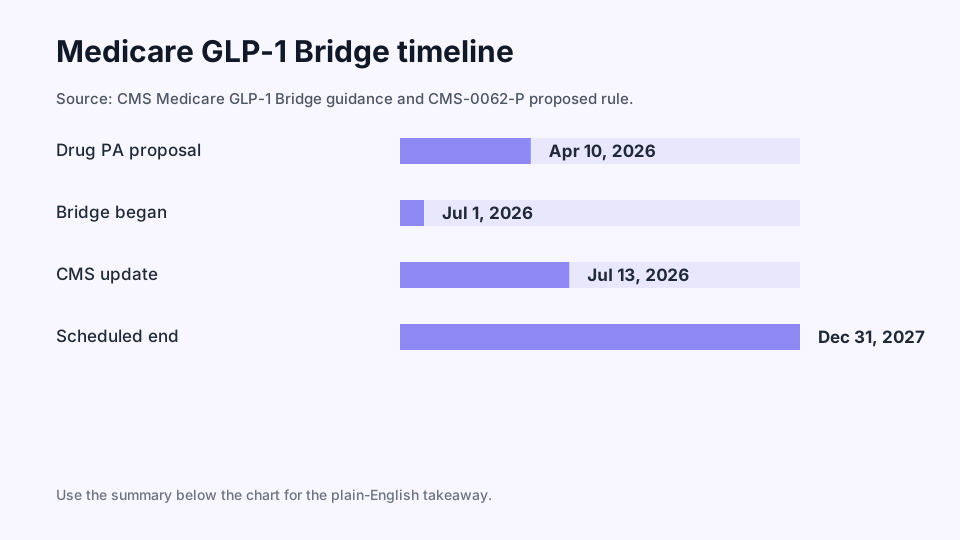
The Bridge created a temporary Medicare access route with a $50 copay for eligible prescriptions, while prior authorization remained part of the process.
Information to bring to a clinician or pharmacist
No record can guarantee approval. A complete, organized set of details can help identify whether a request does not match the plan rule or whether the plan needs more information. Bring the exact plan name, member ID, pharmacy benefit manager if listed, and the current formulary. Keep the exact product name and reason it was prescribed together, since related GLP-1 brands can have different covered uses. Keep the pharmacy rejection message or denial notice. Ask what it says: prior authorization required, non-covered drug, step therapy, quantity limit, or missing information. If you are already using the medicine, approval dates, refill history, treatment start date, and follow-up records may help the care team understand an impending interruption. Questions for the plan, clinician, or pharmacist can be simple: Is this a PA requirement or a final denial? What written criterion was not met? Is the medicine excluded for this use? Is there a preferred product? What information is missing? For the Medicare Bridge, CMS provider guidance and its PA form are the references for exact eligibility criteria.
Methodology
- Source priority was CMS and FDA materials, peer-reviewed JAMA research, PubMed trial records, and KFF analyses that identify underlying CMS or state policy data.
- Sources were last checked August 10, 2026. Dates beside statistics identify the period measured, which is often earlier than the publication date.
- Pharmacy marketing claims, affiliate material, social-media posts, unverified insurer screenshots, and broad denial-rate roundups were excluded or treated cautiously because they often mix rejections, denials, exclusions, and appeals.
- The figures cannot predict an individual's approval, pharmacy price, employer-plan rule, or clinical outcome. The guide is source-reviewed and not clinically reviewed.
- Medicare Advantage results cover all prior authorization determinations, including services beyond prescription drugs, and are not presented as GLP-1-specific rates.
Update history
- Published with CMS Medicare GLP-1 Bridge information, 2026 proposed drug-PA rule status, and the latest cited Medicare, Medicaid, formulary, claims, and trial evidence.
Data notes
The figures reproduce the reported values and their limits. Downloading or tracking your own approval dates, pharmacy messages, costs, doses, side effects, meals, weight, protein, hydration, and habits can make a coverage conversation easier to organize, but does not replace a plan decision or medical guidance.