Introduction
US GLP-1 savings card, self-pay, Medicare, coverage and treatment-maintenance statistics for Wegovy, Zepbound, Mounjaro and Ozempic.
Numbers worth knowing before a refill
- 19% - Firms with 200 or more workers covering GLP-1 medicines primarily for weight loss in 2025
- 43% - Coverage rate among firms with 5,000 or more workers
- $100 - Wegovy covered-card maximum savings per one-month fill
- $100 - Zepbound single-dose pen covered-card maximum savings per month
- $150 - Mounjaro covered-card maximum savings per month
- $1,950 - Mounjaro stated annual covered-card savings cap
- $50 - CMS stated monthly Medicare GLP-1 Bridge cost for eligible beneficiaries
- 11.6 points - Average weight regained one year after semaglutide and lifestyle support stopped
A savings card is help with a price, a coverage decision
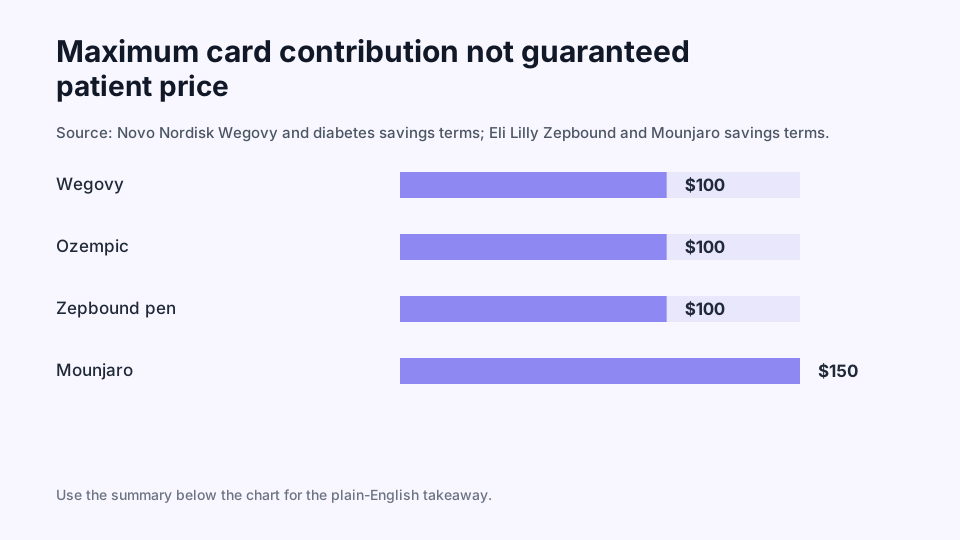
The phrase pay as little as $25 describes the lowest payment available under an offer. It does not mean every eligible person pays $25. The manufacturer contribution has a ceiling, so a person with a $300 copay and a $100 card limit could still owe about $200.<br/><br/>High-deductible plans can make the first fills of a plan year particularly expensive. Until the deductible is met, the plan may leave the person paying much of its negotiated price. A card may lower the pharmacy amount, yet it can reach its annual limit long before December.<br/><br/>Ask the plan whether it uses a copay accumulator or copay maximizer. An accumulator may stop manufacturer assistance from counting toward a deductible or annual out-of-pocket maximum. A maximizer may set cost sharing around available manufacturer help. Novo Nordisk says people in some accumulator-adjustment or maximizer programs may be unable to continue its diabetes savings offer, and Lilly terms also exclude some alternate funding programs.
| Medicine | Advertised payment | Maximum contribution | What the limit means |
|---|---|---|---|
| Wegovy | As low as $25 | Up to $100 per one-month fill | A covered copay above $125 may still leave a payment above $25. |
| Ozempic | As low as $25 | Up to $100 per month | Offer terms apply to commercial coverage and an FDA-approved prescription. |
| Zepbound single-dose pen | As low as $25 | Up to $100 per month and $1,300 per calendar year | A high copay can use the annual cap before the year ends. |
| Mounjaro | As low as $25 | Up to $150 per month and $1,950 per year | This is the largest monthly covered-card cap in this comparison. |
Source: Source: Novo Nordisk Wegovy and diabetes savings terms; Eli Lilly Zepbound and Mounjaro savings terms. Terms can change and eligibility is determined by the manufacturer and pharmacy claim processing.
Cash-pay offers follow different rules
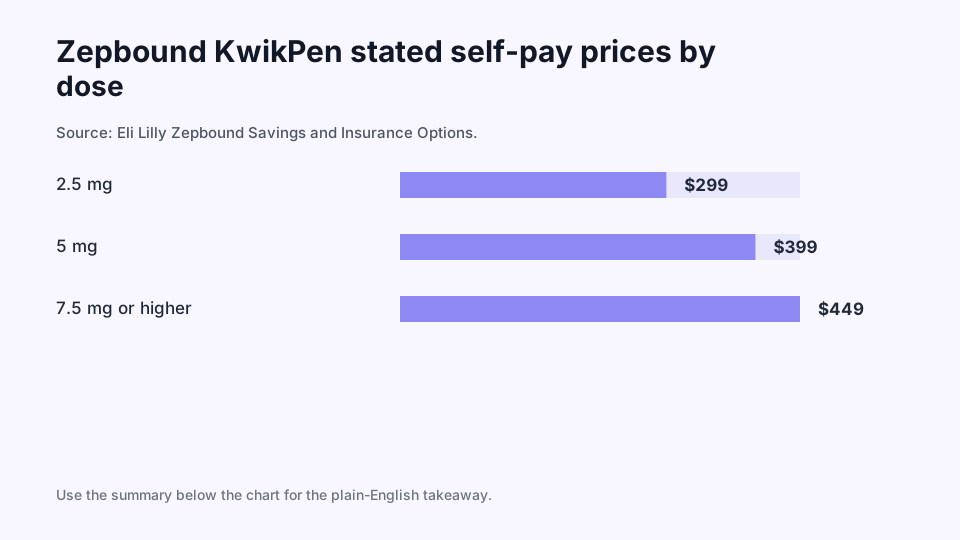
Cash pay is not the same as copay assistance. A self-pay offer is generally processed outside insurance, so it may lower the purchase price while providing no deductible or out-of-pocket credit. Novo Nordisk's Ozempic terms state that self-pay purchases cannot be applied to insurance deductibles or out-of-pocket maximums.<br/><br/>For Zepbound, Lilly's current offers distinguish between the single-dose pen and the single-patient-use KwikPen. The device, dose, coverage status and refill timing can change the available offer. Check the exact product on the prescription rather than assuming a brand-level price applies.<br/><br/>A cash route can be useful for a particular fill, but it may be a poor fit if meeting a deductible would soon lower insured costs. Ask the pharmacy to process the insurance claim first, then compare the final insured amount with the current self-pay terms.
| Medicine and route | Stated price | Limit or condition | Practical reading |
|---|---|---|---|
| Zepbound single-dose pen without commercial coverage | As low as $499 for one month | Up to 13 fills in a calendar year | This is a manufacturer access offer, not an insurance benefit. |
| Zepbound KwikPen without commercial coverage | $299 at 2.5 mg; $399 at 5 mg; $449 at 7.5 mg or higher | Up to 11 fills; terms vary by purchase offer | Dose and device affect the stated price. |
| Ozempic self-pay injection offer | $199 for first two eligible 0.25 mg or 0.5 mg fills; then $349 for 0.25 mg, 0.5 mg or 1 mg; $499 for 2 mg | Terms apply through December 31, 2026 | Processed outside insurance, without deductible credit. |
| Medicare GLP-1 Bridge | $50 per month | Only certain eligible Medicare Part D beneficiaries and specified medicines | This is a CMS program, not a commercial card. |
Source: Source: Eli Lilly Zepbound savings terms, Novo Nordisk diabetes savings terms, and CMS Medicare GLP-1 Bridge materials. Prices are stated program figures, not guaranteed pharmacy prices.
Government coverage has a separate route
Manufacturer copay cards for Wegovy, Ozempic, Zepbound and Mounjaro generally exclude Medicare, Medicaid, Veterans Affairs, Department of Defense and TRICARE beneficiaries. Paying cash for one fill does not usually make a person with government-funded coverage eligible for a commercial card.<br/><br/>On July 1, 2026, the Centers for Medicare & Medicaid Services, or CMS, began the Medicare GLP-1 Bridge. CMS states that certain eligible Medicare Part D beneficiaries can access specified GLP-1 medicines for $50 per month. Eligibility depends on clinical criteria and plan circumstances, so it is not automatic and is not interchangeable with a manufacturer coupon.
| Date | Development | Why it affects a decision |
|---|---|---|
| 2025 | KFF found 19% of firms with 200 or more workers covered GLP-1 medicines primarily for weight loss. | Commercial insurance does not automatically mean obesity-drug coverage. |
| April 15, 2026 | Novo Nordisk updated Wegovy Savings Offer terms. | Savings offers are revised program documents, not permanent benefits. |
| February 23, 2026 | Lilly's Zepbound Self Pay Journey purchase offer began for certain purchases. | Cash pricing can vary by device, dose and refill timing. |
| July 1, 2026 | CMS launched the Medicare GLP-1 Bridge. | Eligible Part D beneficiaries may have a separate access route. |
| December 31, 2026 | Current Zepbound and Mounjaro terms list program end dates. | Do not assume 2027 terms will match current terms. |
Source: Source: KFF 2025 Employer Health Benefits Survey, Novo Nordisk Wegovy terms, Eli Lilly Zepbound and Mounjaro terms, and CMS.
Employer coverage remains uneven
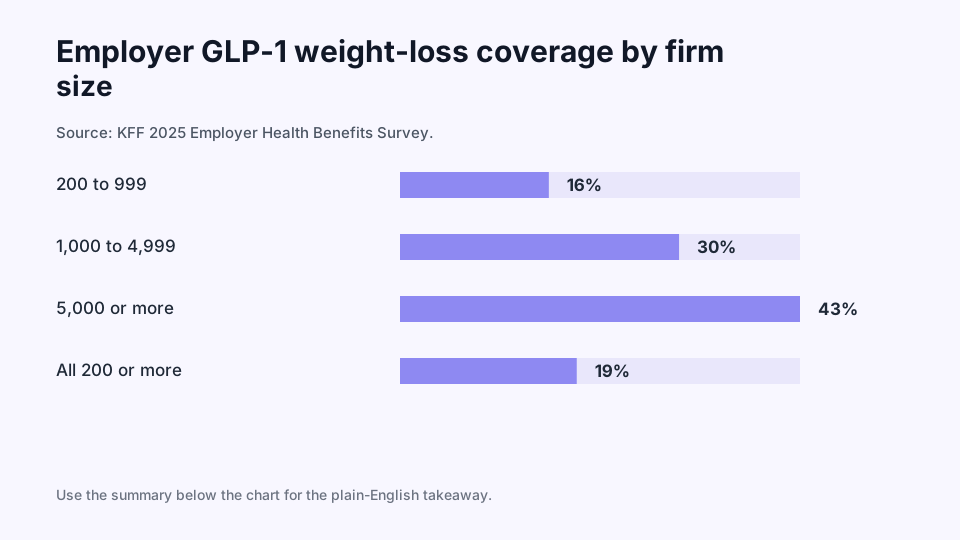
KFF found that 19% of firms with 200 or more workers covered GLP-1 medicines primarily for weight loss in 2025. The figure was 16% for firms with 200 to 999 workers, 30% for those with 1,000 to 4,999 workers, and 43% for firms with 5,000 or more workers.<br/><br/>Those figures describe firms' largest plans, not the percentage of all covered workers. They still explain a common experience: two people with job-based coverage may receive very different answers for the same prescription. An employer's formulary, exclusions and prior-authorization rules matter more than the presence of an insurance card.
Affordability is also a maintenance question
Savings offers can make starting possible, but the cost question often extends beyond the first few months. In the STEP 1 semaglutide extension, participants had lost an average of 17.3% of starting body weight after 68 weeks of semaglutide 2.4 mg. One year after treatment and lifestyle support stopped, they had regained 11.6 percentage points, about two-thirds of their prior loss, leaving an average net loss of 5.6% from baseline.<br/><br/>In SURMOUNT-4, participants lost an average of 20.9% during a 36-week tirzepatide lead-in. During the following 52 weeks, people switched to placebo regained 14.0% from randomization, while those who continued tirzepatide lost another 5.5% on average.<br/><br/>These are structured-trial group averages, not a forecast for one person. They do show why it is reasonable to ask about a maintenance plan before depending on a limited card, a temporary self-pay offer, or coverage that may change at the next plan year.
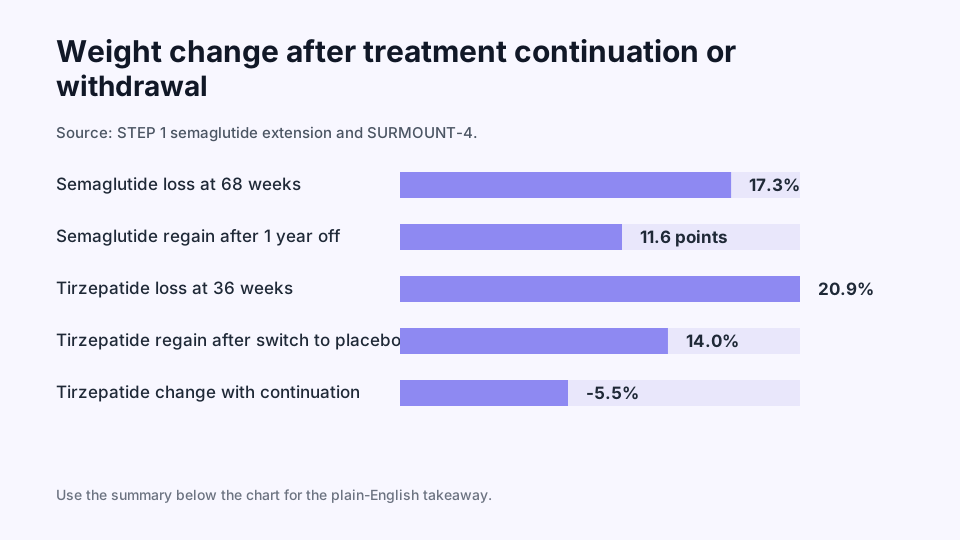
The chart compares average loss during treatment with average regain or further loss after people stopped or continued treatment, showing why a short-term affordability plan may not answer a long-term treatment question.
Safety and pharmacy questions still matter
Cost does not replace a safety review. FDA labels for Wegovy and Zepbound carry a boxed warning about thyroid C-cell tumors and list contraindications for people with a personal or family history of medullary thyroid carcinoma or Multiple Endocrine Neoplasia syndrome type 2. The labels also describe risks including pancreatitis, gallbladder problems, dehydration-related kidney injury, severe gastrointestinal reactions, and low blood sugar when used with certain diabetes medicines.<br/><br/>A clinician or pharmacist can help connect these label warnings to your health history and other medicines. They can also clarify whether the prescribed brand is being used for an FDA-approved indication, what documents a plan may require, and what symptoms should prompt contact with the care team.
Prepare before the next fill
Keep a short refill record with the medicine name, device, prescribed use, remaining deductible, pharmacy quote, insurer payment, and final amount after assistance. It gives you a clearer view of whether the offer is lowering the amount and whether you are nearing an annual cap.<br/><br/>Save the insurer's written decision. Note whether it was approved, denied, pending prior authorization, or subject to step therapy. Ask whether manufacturer support counts toward the deductible and annual out-of-pocket maximum, and confirm the offer expiration date before each fill.<br/><br/>Useful questions include: Is this brand prescribed for an FDA-approved use? What documentation will the plan need? Does assistance count toward my deductible? What will I pay if the savings offer ends? If I have Medicare, do I meet the separate Medicare GLP-1 Bridge criteria?
Methodology
- Source priority was FDA prescribing information, CMS policy, official manufacturer offer terms, peer-reviewed withdrawal trials, and KFF employer-benefit data.
- All listed sources and program figures were checked on August 26, 2026.
- Affiliate coupon sites, pharmacy marketing pages, social posts, crowdsourced price reports, peptide sellers and speculative trackers were excluded. Manufacturer terms were treated cautiously because offers may be revised, revoked or discontinued.
- This guide is source-reviewed and not clinically reviewed. It cannot determine individual eligibility, diagnosis, safety, coverage, prior authorization, pharmacy processing or final payment.
Download the data
Download the figures and table values for personal budgeting notes or a conversation with an insurer, pharmacist or clinician.
Update history
- Updated source review.