Introduction
National GLP-1 shortages are resolved, but access is still tight. Medicare's $50/month Bridge starts July 2026. FDA warns on compounded versions.
main facts about GLP-1 access, cost, and safety in 2026
- Resolved for semaglutide and tirzepatide as of February 2025 - National shortage status - Source: FDA drug shortage alerts
- 12% (about 1 in 8 adults) as of late 2025 - Current U.S. adult GLP-1 use - Source: KFF Health Tracking Poll
- 56% of GLP-1 users say the drugs are difficult to afford - Affordability challenge - Source: KFF Health Tracking Poll
- From ~1 million (2019) to >8 million (2024) - Medicaid prescription growth - Source: KFF Medicaid coverage and spending analysis
- Almost $9 billion nationally - Medicaid gross spending 2024 - Source: KFF Medicaid coverage and spending analysis
- Only 13 states cover GLP-1s for obesity treatment as of January 2026 - State Medicaid obesity coverage - Source: KFF Medicaid coverage and spending analysis
- $50 per month for eligible beneficiaries, July 2026 through December 2027 - Medicare GLP-1 Bridge copay - Source: CMS press release and Medicare GLP-1 Bridge page
- 990 reports for semaglutide, >730 for tirzepatide as of May 31, 2026 - Compounded GLP-1 adverse events - Source: FDA concerns with unapproved GLP-1 drugs
FDA determined that national shortages of semaglutide injection and tirzepatide injection are resolved as of February 21, 2025 and October 2, 2024 respectively. That means manufacturers now produce enough to meet national demand, and the drugs are no longer listed on FDA's drug shortage database. In practice, resolved shortage status does not guarantee your local pharmacy will always have your dose in stock. Supply chains take time to stabilize, and certain strengths may be more popular in your area. You may still see short delays if your pharmacy's wholesaler is catching up or if a specific dose is temporarily out of stock. What has changed is that new prescriptions and dose increases are less likely to be blocked by nationwide shortage flags. Your prescriber and pharmacist no longer have the shortage as a built-in reason to steer you to compounded products or delay your start date.
While shortages were severe, many people turned to compounded GLP-1s from specialty pharmacies or telehealth platforms. Those products filled a gap but carried more risk and less oversight. FDA has now logged 990 adverse event reports for compounded semaglutide and more than 730 for compounded tirzepatide as of May 31, 2026. FDA's position is now clearer: compounded GLP-1s should only be used when an approved product cannot meet a specific medical need, such as a different strength or formulation your clinician documents as necessary. Compounders cannot legally mass-produce injections that are essentially copies of Ozempic, Wegovy, Mounjaro, or Zepbound unless there is a bona fide shortage and other legal conditions are met. FDA warns about dosing errors, salt forms like semaglutide sodium that are not FDA-approved, counterfeit labels, and improperly stored products. If a telehealth service markets compounded semaglutide or tirzepatide as the same as the brand just cheaper, that is a red flag under FDA guidance. The safest default is to use an FDA-approved product through a licensed prescriber and pharmacy whenever that is realistically available and covered for you.
| Measure | Value | What it means for patients |
|---|---|---|
| Semaglutide injection shortage status | Resolved as of February 21, 2025 | Brand-name Ozempic and Wegovy supply is more stable nationally, but local pharmacy gaps can still happen |
| Tirzepatide injection shortage status | Resolved as of October 2, 2024 | New starts and dose escalations on Mounjaro and Zepbound are less likely to be blocked by national shortage flags |
| Share of U.S. adults currently using a GLP-1 | 12% (about 1 in 8) in late 2025 | GLP-1 use is now mainstream among people with diabetes, heart disease, and obesity |
| Share of GLP-1 users who find the drugs difficult to afford | 56% | Even with insurance, many people struggle with monthly costs; cost is a common reason for stopping |
| Medicaid GLP-1 prescriptions 2019 vs 2024 | ~1 million (2019) to >8 million (2024) | Use grew about sevenfold; payers are reacting with tighter rules because of this scale |
| Medicaid gross spending on GLP-1s 2024 | Almost $9 billion nationally | GLP-1s now account for a large share of Medicaid drug budgets, driving coverage debates |
| FDA adverse event reports for compounded semaglutide | 990 reports as of May 31, 2026 | Safety issues with compounded products are documented; adverse events are likely underreported |
| FDA adverse event reports for compounded tirzepatide | >730 reports as of May 31, 2026 | Safety concerns are real; compounded versions are not equivalent to FDA-approved brands |
Source: Data from FDA drug shortage alerts, FDA concerns with unapproved GLP-1 drugs, KFF Health Tracking Poll, and KFF Medicaid coverage and spending analysis.
Until now, Medicare generally could not cover GLP-1 drugs solely for obesity. The Medicare GLP-1 Bridge is a short-term program that creates a $50 per month pathway for certain GLP-1s for weight management starting July 1, 2026 and running through December 31, 2027. If you are on Medicare Part D and meet the Bridge's clinical criteria, such as obesity with specified comorbidities, your out-of-pocket cost could drop to $50 per month instead of several hundred or more. The Bridge operates outside normal Part D coverage, uses a central processor, and applies strict eligibility criteria focused on obesity and related conditions. Eligibility rules are strict. If you already have GLP-1 coverage for diabetes through standard Part D, you may not be eligible for the Bridge for weight loss at the same time. The Bridge is temporary, so it is best thought of as a window of opportunity rather than a stable lifelong benefit. After December 31, 2027, long-term coverage will depend on the BALANCE model and future Medicare policies.
| Detail | Value | Context |
|---|---|---|
| Program start date | July 1, 2026 | Announced by CMS in 2026 |
| Program end date | December 31, 2027 | Temporary demonstration, not permanent coverage |
| Monthly copay for eligible beneficiaries | $50 | Fixed copay regardless of which eligible GLP-1 is prescribed |
| Manufacturer net price under Bridge | $245 per month | Medicare pays most; patient pays $50 |
| Eligibility focus | Obesity with related conditions | Strict clinical criteria; not available if already covered for diabetes under Part D |
| Coverage mechanism | Outside normal Part D flow | Uses central processor, separate from standard pharmacy claims |
| Long-term coverage plan | BALANCE model starting January 2027 for Part D | Bridge is interim step while broader affordability models are tested |
Source: Data from CMS press release, CMS Medicare GLP-1 Bridge page, and related FAQs.
Medicaid GLP-1 prescriptions rose from about 1 million in 2019 to more than 8 million in 2024, with gross spending reaching almost $9 billion. That sevenfold growth has put enormous pressure on state budgets. Only 13 state Medicaid programs cover GLP-1s for obesity treatment as of January 2026, and some states that used to cover have scaled back or removed coverage. Employers are also re-evaluating coverage for weight-loss GLP-1s because of cost burdens. Many have added stricter prior authorization or are considering caps, especially for employees using GLP-1s primarily for weight loss rather than diabetes or heart disease. If you are starting or continuing therapy, it is worth asking directly whether your plan covers GLP-1s for your specific diagnosis, whether there are duration limits, and whether you will need re-approval after 6 to 12 months or after a certain weight loss. Your clinician's office can help with paperwork early, before you run out.
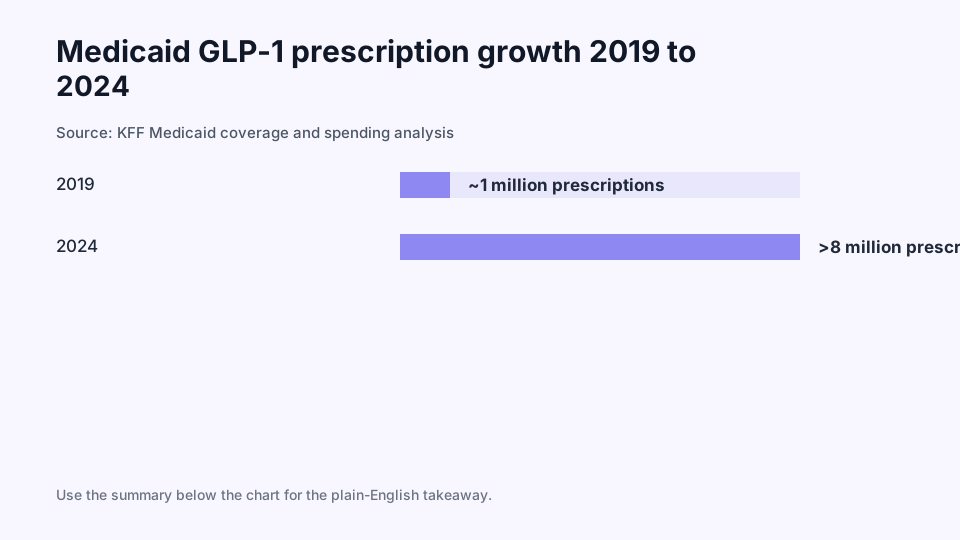
Medicaid GLP-1 prescriptions grew about sevenfold from 2019 to 2024, driving budget pressure and tighter coverage rules in many states.
KFF's late-2025 tracking poll shows that GLP-1 use is now widespread across multiple conditions. Among adults diagnosed with diabetes, 57% report having ever used a GLP-1, and 45% say they are currently using one. Among adults with heart disease, 40% have ever used a GLP-1 and 29% are currently using one. Among those diagnosed as overweight or obese in the past five years, 34% have ever used a GLP-1 and 23% are currently using one. For you, that means GLP-1s are no longer niche. They are already a standard part of care for many people with diabetes and obesity. If you have multiple conditions, such as obesity and heart disease, your clinician may think about GLP-1s both for weight loss and cardiometabolic risk reduction, which can strengthen the case for coverage.
| Condition | Ever used a GLP-1 | Currently using a GLP-1 |
|---|---|---|
| Diabetes | 57% | 45% |
| Heart disease | 40% | 29% |
| Overweight or obese (diagnosed in past 5 years) | 34% | 23% |
| All U.S. adults | 18% | 12% |
Source: Data from KFF Health Tracking Poll, late 2025.
From 2019 to 2021, Medicaid GLP-1 prescriptions started a steep climb, reaching about 1 million in 2019 and climbing toward several million by 2021. Wegovy was approved and demand for GLP-1s for weight management surged, contributing to supply strain. From 2022 to 2023, shortages deepened. FDA's drug shortage database listed multiple GLP-1 products, including semaglutide and tirzepatide injections, as in shortage due to demand outpacing manufacturing. Many patients and telehealth companies turned to compounded GLP-1s, often marketed as lower-cost or more available alternatives. FDA began receiving reports of dosing errors and quality issues. In 2024, FDA warned about unapproved and compounded versions of GLP-1 drugs, reminding patients these products are not FDA-approved and may have quality problems. FDA clarified that compounded drugs that are essentially copies of approved GLP-1s are only allowed under tight conditions, usually tied to active drug shortages. On October 2, 2024, FDA stated the shortage of tirzepatide injection is resolved. On December 19, 2024, FDA reaffirmed tirzepatide's shortage resolution and set 60 to 90 day windows for compounders to wind down copy products. On February 21, 2025, FDA determined the national shortage of semaglutide injection is resolved. In 2025, KFF's late-2025 poll found 12% of adults currently using GLP-1s and 56% of users saying the drugs are difficult to afford. KFF Medicaid analysis showed GLP-1 prescriptions rising to over 8 million in 2024 and gross spending to almost $9 billion, with only 13 state Medicaid programs covering obesity indications by January 2026. Many employers re-evaluated coverage for weight-loss GLP-1s due to cost burdens. In 2026, CMS launched the Medicare GLP-1 Bridge, starting July 1, 2026, giving eligible Medicare Part D beneficiaries access to select GLP-1s for $50 per month through December 31, 2027. On April 1, 2026, FDA updated guidance reminding compounders of legal limits and reiterating that tirzepatide and semaglutide are not on the drug shortage list or 503B bulks list, restricting compounding that copies approved drugs. By May 31, 2026, FDA reported 990 adverse event reports for compounded semaglutide and more than 730 for compounded tirzepatide. CMS plans the Bridge to run through December 31, 2027, after which long-term coverage will depend on the BALANCE model and future Medicare policies.
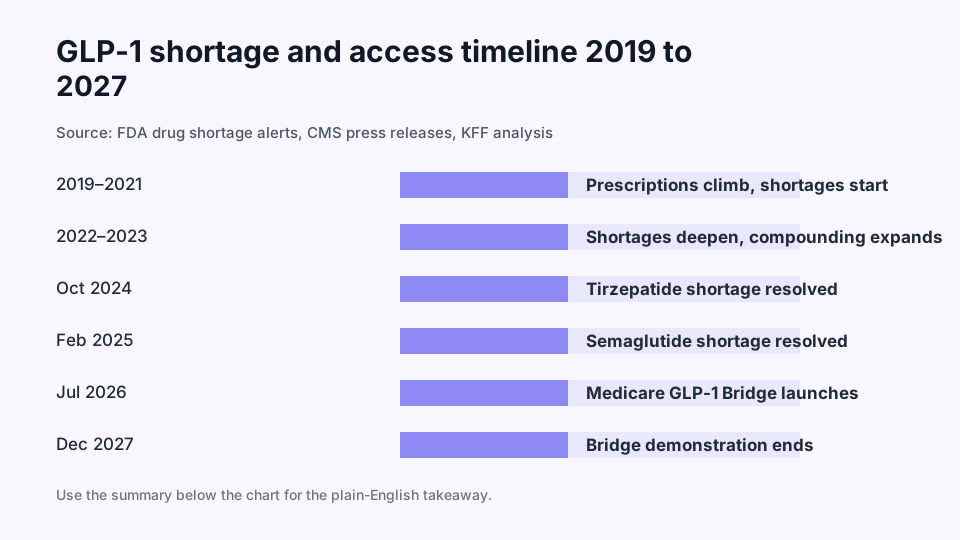
National shortages peaked in 2022 to 2023, were resolved by early 2025, and new Medicare access programs launched in mid-2026.
this guide focuses on shortages and access, not full clinical trial detail,; however, a few high-level usage statistics help put things in context. Large randomized trials have reported double-digit percentage weight loss over about 68 weeks at full doses for semaglutide and tirzepatide when combined with diet and physical activity. To interpret that in practice, if you weigh 250 pounds, a 15% weight loss over about a year would mean losing around 37 to 38 pounds, assuming you can reach and stay on full dose and remain adherent. Individual results vary widely. Some people lose more, some less, and weight loss often slows or partially reverses if the medicine is stopped. For specific weight-loss expectations and comparisons among different GLP-1 medicines, it is best to review individual trial reports and FDA labels with your clinician, as they can match those numbers to your health history and side-effect tolerance.
Use these questions to anchor a conversation. First, ask whether your prescription is for an FDA-approved GLP-1 or a compounded version, and why. Ask for the exact brand or generic name and compare it to FDA-approved products listed on FDA or CMS sites. If it is compounded, ask what specific medical need it addresses that the approved product cannot. Second, ask which indication you are targeting given your conditions, such as diabetes, heart disease, obesity, or sleep apnea. Coverage rules often differ by indication. Clarify whether you are being treated primarily for diabetes, obesity, or another condition. Third, ask what happens if your pharmacy cannot get your dose for a few weeks. Ask about short-term strategies like dose reduction, switching strengths, or using an alternative GLP-1. Discuss how interruptions might affect weight or blood sugar control. Fourth, ask how your insurance will treat this medicine over the next year. Ask about prior authorization, step therapy, or re-approval timelines. You can request your clinician's office to help with paperwork early, before you run out. Fifth, if you are on Medicare, ask whether you qualify for the Medicare GLP-1 Bridge. Bring your BMI, diagnoses, and medication list. Ask whether the Bridge, BALANCE model, or standard Part D coverage applies in your situation. Sixth, ask what side effects you should plan for in the first 1 to 3 months, and who you should call if they get worse. Nausea, vomiting, diarrhea, and constipation are common with GLP-1s. Knowing how your clinician handles these can reduce anxiety. Ask explicitly about warning signs that mean you should stop and seek care. Seventh, ask what happens if you ever decide to stop this medicine. Discuss a plan for lifestyle support, alternative medicines, and monitoring so you are not surprised by changes in weight or blood sugar. Eighth, ask what FDA says about compounded GLP-1s and online sellers. You can refer to FDA's concerns document and ask whether any telehealth offering you use aligns with FDA guidance.
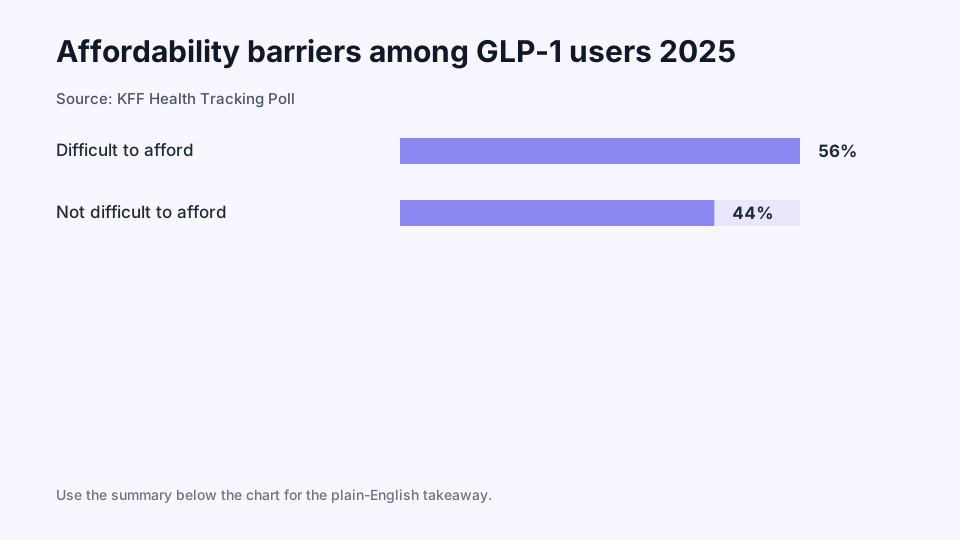
More than half of GLP-1 users say the drugs are difficult to afford, and cost is a common reason for stopping therapy.
Keep track of when your local pharmacy has your dose in stock. If shortages or delays crop up, ask your pharmacist whether nearby branches or mail-order options are more reliable. Mark renewals, prior authorization expirations, and coverage change periods on your calendar, often the start of your plan's fiscal year. Talk to your benefits office or plan about GLP-1 coverage before these dates, especially if your employer has discussed cost concerns. Note nausea, gastrointestinal symptoms, appetite changes, and blood sugar readings if you measure them. This record helps your clinician adjust dose or consider alternatives without guessing. If you ever receive a compounded product, check that it comes from a state-licensed pharmacy, that packaging and labeling are professional and consistent, and that storage instructions match what your clinician described. If the product arrives warm, in damaged packaging, or with spelling errors or odd labeling, contact your clinician or pharmacist immediately.
Long-term therapy typically involves monitoring for side effects and rare complications, watching for coverage changes especially if you switch jobs, states, or Medicare plans, and planning for the possibility of dose adjustments or stopping. Discuss how to manage potential weight regain or changes in blood sugar with your clinician. Survey data show cost is a leading reason people stop GLP-1 therapy, and when medicines stop, weight and blood sugar often drift back toward baseline. Stable supply and predictable coverage reduce the risk of forced interruptions, but long-term maintenance still depends on your plan, clinician decisions, and lifestyle support.
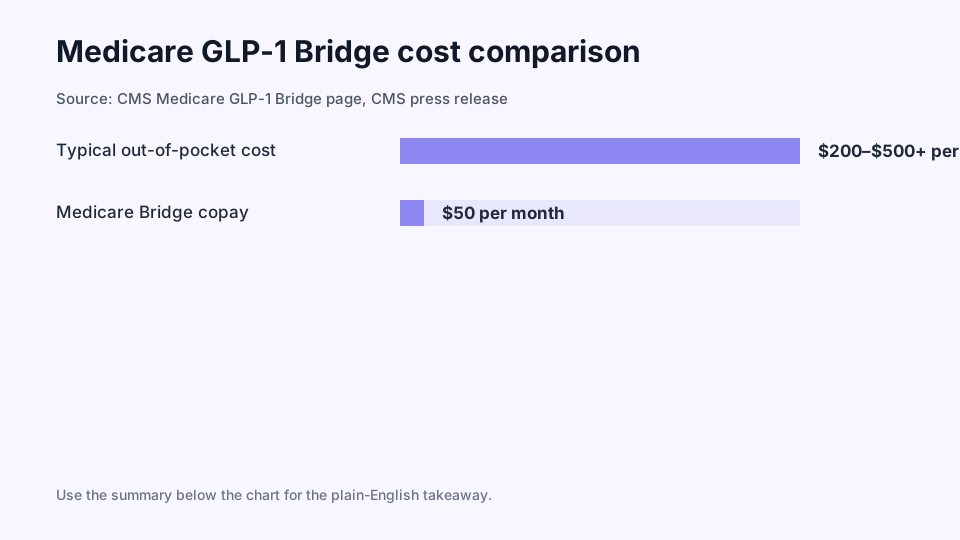
The Medicare GLP-1 Bridge caps patient copays at $50 per month for eligible beneficiaries, compared to typical out-of-pocket costs that can exceed several hundred dollars.
How this guide was researched
- This draft relies first on primary or near-primary sources, especially FDA drug alerts and statements on GLP-1 shortages and compounding, FDA's concerns with unapproved GLP-1 drugs used for weight loss, KFF Health Tracking Polls on GLP-1 use and affordability, KFF analysis of Medicaid coverage and spending on GLP-1s, CMS press releases and program pages for the Medicare GLP-1 Bridge and related affordability models, and CDC adult obesity facts as available at time of access.
- GLP-1 shortage, compounding, Medicare Bridge, Medicaid coverage and national use and affordability data were last checked July 24, 2026. CMS Medicare GLP-1 Bridge page shows a last modified timestamp of July 13, 2026.
- Speculative approval trackers, affiliate marketing pages, peptide sellers, Reddit posts, and general health blogs were not used. News articles and trade publications were used only to clarify context around official CMS and FDA statements and not as primary evidence for safety or coverage rules.
- This draft is source-reviewed only and does not include clinician review or personalized medical advice. It is meant to help you ask focused questions and understand national trends, not to replace a consultation.
Update history
- Page published with July 2026 data on Medicare GLP-1 Bridge launch, FDA compounding guidance, and national shortage resolution.
Download the data
Download the source table used for this statistics page.