Introduction
U.S. GLP-1 diabetes use statistics, trial results, FDA status, safety, Medicare access, insurance barriers, prices, and practical questions to ask.
The numbers to know
- 26.5% - Adults with diagnosed diabetes reporting injectable GLP-1 use in 2024
- 6.9 million - Estimated U.S. adults represented by that 2024 result
- 33.3% - Reported use among adults aged 50 to 64
- 20.8% - Reported use among adults aged 65 or older
- 7.6% to 19.4% - Type 2 diabetes treatment use from 2018 to 2022
- 60.1% - Orders filled within 90 days in one insured health-system study
- $71.90 - Mean out-of-pocket cost per filled 30-day order in that study
- $997.58 - Ozempic list price per pen before coverage or discounts
What the national use statistic can tell you
CDC's National Center for Health Statistics found that 26.5% of civilian, noninstitutionalized U.S. adults with diagnosed diabetes used an injectable GLP-1 medicine other than insulin in 2024. The estimate equals about 6.9 million adults. Put simply, about one in four adults with diagnosed diabetes reported current use, while nearly three in four did not. That remaining group cannot be treated as a list of people who missed out. Some may have type 1 diabetes, use insulin or another medicine, have a reason not to use a GLP-1, face an access barrier, or have different treatment goals. The survey named Ozempic, Wegovy, Trulicity, Mounjaro, Victoza, Saxenda, and Byetta, but did not report the brand, diagnosis, prescription reason, or insurance type for each participant. The newest survey is broad, while the best national type 2 diabetes trend uses a different survey and a different population. Among adults receiving treatment for type 2 diabetes, GLP-1 use rose from 7.6% in 2018 to 19.4% in 2022. Those figures show substantial growth, but they should not be drawn as one seamless trend with the 2024 estimate because the definitions differ.
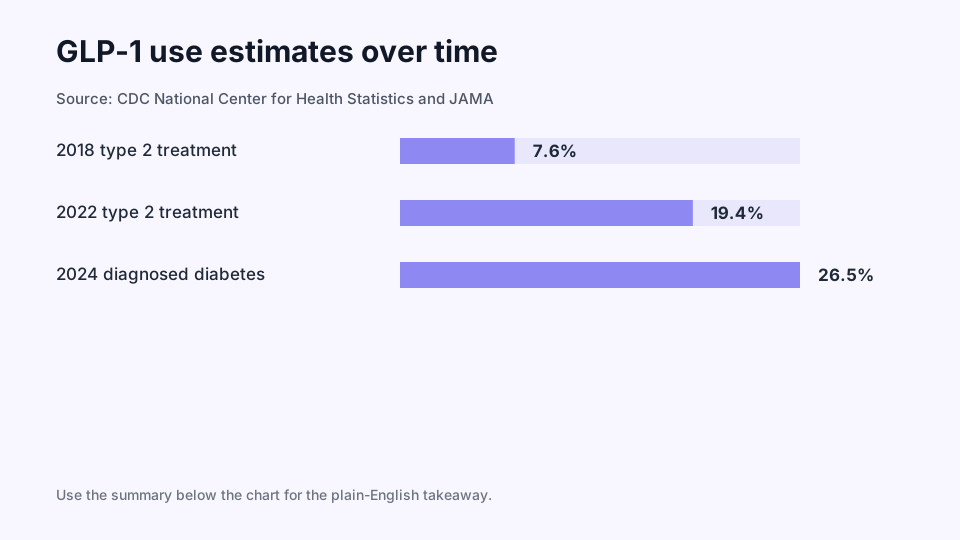
The chart compares reported use across different national survey definitions, showing growth without implying the measures are identical.
| Measure | Result | What it means |
|---|---|---|
| Adults with diagnosed diabetes using injectable GLP-1 in 2024 | 26.5%, or 6.9 million | A current national estimate of reported use, not a measure of eligibility or need. |
| Adults treated for type 2 diabetes using GLP-1 in 2018 | 7.6% | Use was much less common in the earlier type 2-specific measure. |
| Adults treated for type 2 diabetes using GLP-1 in 2022 | 19.4%, or 5.1 million | Nearly one in five treated adults used a GLP-1. The study estimated 26.2 million treated adults. |
| Adults aged 50 to 64 with diagnosed diabetes using injectable GLP-1 in 2024 | 33.3% | This was the highest reported age-group rate in the CDC survey. |
Source: Sources: CDC National Center for Health Statistics, National Health Interview Survey 2024; Hegland, Fang, and Bucher, JAMA, 2024.
Who reported using injectable GLP-1 medicines
Reported use was 27.2% among women and 25.9% among men in the 2024 survey. By age, it rose from 25.3% at ages 18 to 34 to 29.7% at 35 to 49 and 33.3% at 50 to 64, then fell to 20.8% at age 65 or older. The lower estimate in older adults may reflect health conditions, medication burden, coverage, clinician decisions, or other factors. The survey cannot tell which explanation applies. Use also increased across body mass index, or BMI, categories. It was 16.7% among adults in the healthy-weight category, 22.2% among adults with overweight, and 32.4% among adults with obesity. BMI is weight in relation to height. This pattern fits medicines that can address glucose and, for certain products and uses, chronic weight management, but BMI alone does not establish whether a medicine is appropriate. Reported rates differed across racial and ethnic groups: 31.3% among Hispanic adults, 26.5% among non-Hispanic Black adults, 26.2% among non-Hispanic White adults, and 12.1% among non-Hispanic Asian adults. These are use differences, not evidence of different biological response. They should not be used to infer who will benefit from or tolerate a medicine.
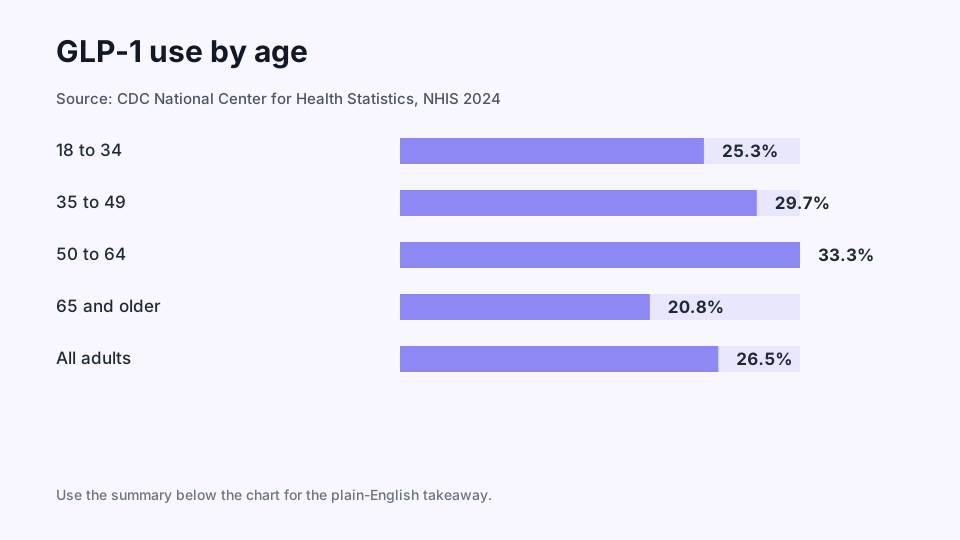
Reported use peaked among adults aged 50 to 64 and was lower among adults aged 65 or older.
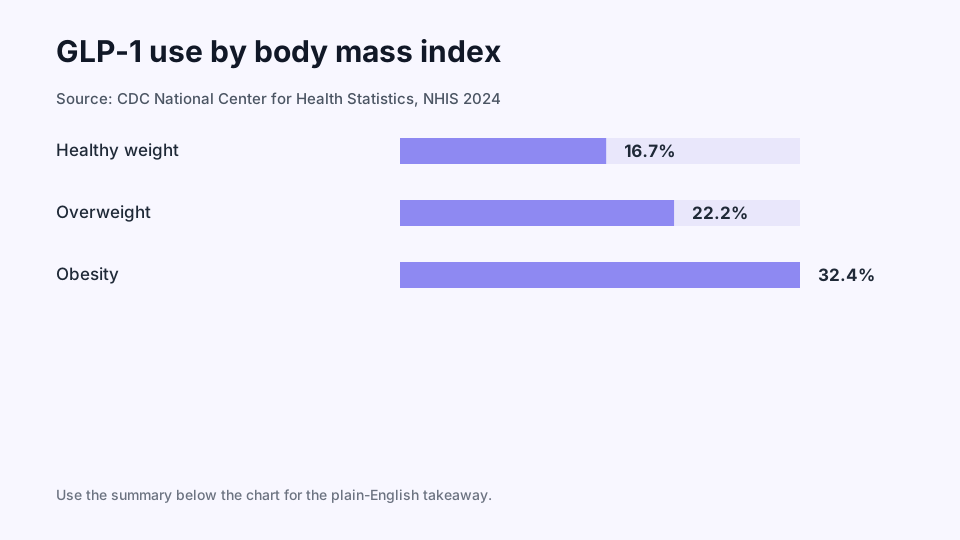
Reported injectable GLP-1 use increased across these BMI categories, which describes use patterns rather than treatment eligibility.
Approval and safety questions to settle first
FDA labels for Ozempic and Mounjaro include improving blood-glucose control in adults with type 2 diabetes. Ozempic also has cardiovascular and chronic kidney disease risk-reduction language for specified adults with type 2 diabetes. These labels are not approvals for type 1 diabetes. A person with type 1 diabetes should discuss their own situation with their diabetes clinician rather than applying a broad population statistic. The labels for Ozempic and Mounjaro have boxed warnings about thyroid C-cell tumors seen in rats. They are contraindicated for people with a personal or family history of medullary thyroid carcinoma or Multiple Endocrine Neoplasia syndrome type 2. Other label risks include severe gastrointestinal reactions, pancreatitis, gallbladder disease, dehydration-related kidney injury, and diabetic retinopathy considerations. A full medicine review matters when appetite, food intake, or glucose readings change. That is particularly important for people also using insulin or a sulfonylurea because low blood sugar risk can change when medicines are used together. Tell the care team about upcoming procedures involving general anesthesia or deep sedation, since labels include aspiration-risk information.
What trial results may mean for weight and A1c
SURPASS-2 directly compared weekly tirzepatide with weekly semaglutide 1 mg in 1,879 adults whose type 2 diabetes was not adequately controlled with metformin alone. Over 40 weeks, average A1c fell by 2.01 to 2.30 percentage points with tirzepatide, depending on dose, and by 1.86 percentage points with semaglutide 1 mg. A1c, also called HbA1c, is a blood test that reflects average glucose over roughly two to three months. Average weight loss was 7.6 kg, 9.3 kg, and 11.2 kg with tirzepatide, compared with 5.7 kg with semaglutide 1 mg. That is about 17 to 25 pounds versus about 13 pounds over 40 weeks. It is a useful comparison for people familiar with Ozempic, but it is not a promise. Starting weight, dose, food intake, activity, other medicines, side effects, and whether treatment continues all affect an individual's result. Nausea occurred in 17% to 22% of the tirzepatide groups and 18% of the semaglutide group. Diarrhea occurred in 13% to 16% and 12%, while vomiting occurred in 6% to 10% and 8%. Trial participants received structured follow-up, so a routine plan for side effects, refills, and questions still matters outside a trial.
| Treatment | Average A1c change | Average weight change | Common stomach effects |
|---|---|---|---|
| Tirzepatide 5 mg | -2.01 percentage points | -7.6 kg, about 17 lb | Nausea 17%, diarrhea 13%, vomiting 6% |
| Tirzepatide 10 mg | -2.24 percentage points | -9.3 kg, about 21 lb | Nausea 19%, diarrhea 15%, vomiting 8% |
| Tirzepatide 15 mg | -2.30 percentage points | -11.2 kg, about 25 lb | Nausea 22%, diarrhea 16%, vomiting 10% |
| Semaglutide 1 mg | -1.86 percentage points | -5.7 kg, about 13 lb | Nausea 18%, diarrhea 12%, vomiting 8% |
Source: Source: Frías and colleagues, The New England Journal of Medicine, SURPASS-2. This was a 40-week trial in adults with type 2 diabetes using metformin; results are averages, not individual predictions.
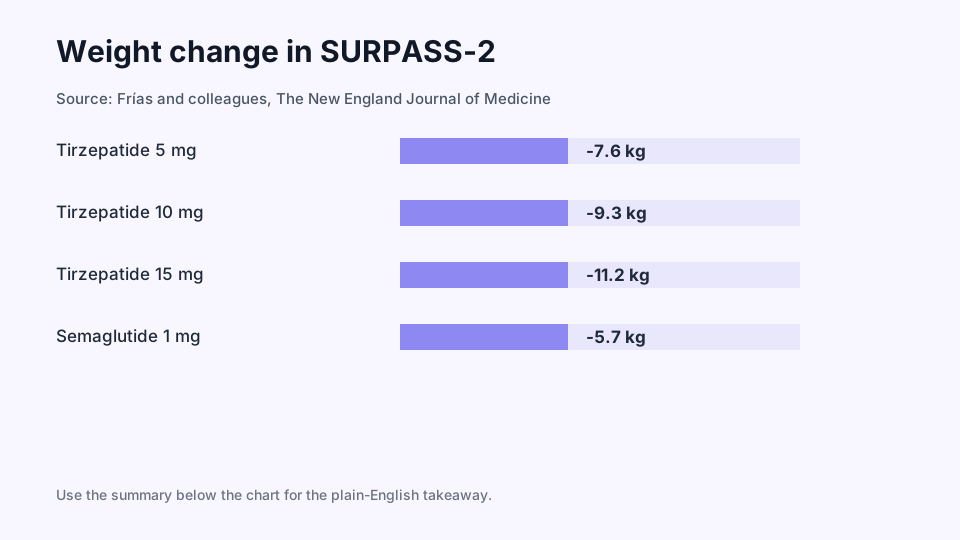
At 40 weeks in adults with type 2 diabetes taking metformin, average weight loss was greater with the studied tirzepatide doses than semaglutide 1 mg.
Coverage can decide whether treatment starts
A prescription is not the same as a filled prescription. In a Colorado health-system study of 9,848 GLP-1 orders among commercially insured people or Medicare beneficiaries, 60.1% were filled within 90 days. Fill rates were 64.6% for people with both diabetes and obesity, 47.5% for diabetes alone, and 37.2% for obesity alone. The study cannot prove why each order went unfilled. Prior authorization, deductibles, copays, an excluded use, pharmacy availability, side effects, personal preference, and a choice to use another treatment can all matter. Before depending on a prescription, ask the insurer or pharmacist what the covered cost is for the exact medicine, strength, quantity, and pharmacy today, and whether authorization must be renewed. Price figures answer different questions. MEPS estimated average annual total GLP-1 expenditure of $6,684 per user with type 2 diabetes in 2022. That is not what a person necessarily paid. In the Colorado study, mean out-of-pocket cost was $71.90 per filled 30-day order in 2023 dollars, also not a national average.
| Measure | Figure | Practical meaning |
|---|---|---|
| Average annual total GLP-1 expenditure per type 2 diabetes user in 2022 | $6,684 | Total spending in MEPS, rather than a personal bill. |
| Mean out-of-pocket cost per filled 30-day order | $71.90 | A single insured health-system estimate, adjusted to 2023 dollars. |
| Orders filled within 90 days | 60.1% | About four in ten orders were not filled within 90 days in that study. |
| Ozempic list price per pen | $997.58 | Before insurance discounts, rebates, deductible status, coupons, or coinsurance. |
| Ozempic self-pay offer after limited initial offer | $349 per 28-day month | Official manufacturer program terms can change and are not insurance. |
| Eligible commercial Mounjaro savings offer with coverage | As low as $25 for up to 3 months | Government beneficiaries are excluded and annual limits apply. |
| Medicare GLP-1 Bridge copay | $50 | For eligible weight-management use, not a Bridge request based on type 2 diabetes. |
Source: Sources: Hegland, Fang, and Bucher, JAMA; Sarpatwari and colleagues, JAMA Health Forum; NovoCare; Lilly; and CMS. Savings offers and demonstration terms can change.
Medicare access has a narrow new route
CMS launched the Medicare GLP-1 Bridge demonstration on July 1, 2026. Through December 31, 2027, certain eligible Medicare Part D beneficiaries can obtain specified GLP-1 medicines for weight management with a $50 copay. The demonstration operates outside normal Part D payment flow. For a person using a GLP-1 for type 2 diabetes, the distinction matters. CMS states that a Bridge prior-authorization request based on type 2 diabetes will be denied. Someone whose Part D plan covers a medicine for a diabetes use should work through their regular plan, including its formulary and utilization rules. Manufacturer savings programs can reduce cost for some commercially insured people, but they are not permanent coverage and generally exclude government beneficiaries. Do not assume a coupon will remain available at the next refill. Ask about the insurer's preferred medicine, renewal dates, and the safe backup plan if a fill is delayed.
Maintenance and interruptions need a plan
Stopping can have consequences beyond an immediate change on the scale. In SURMOUNT-4, adults with overweight or obesity without diabetes who stopped tirzepatide after initial weight loss regained an average of 14.0% of body weight from week 36 to week 88. People who continued lost a further 5.5% over that period. That was not a type 2 diabetes trial, so it cannot forecast exactly what will happen for a person with diabetes. It does show why a coverage loss, supply gap, or decision to stop deserves a conversation before the medicine runs out. Glucose monitoring, other diabetes medicines, symptoms, and treatment goals may need review. Keep a compact record of medicine name, strength, last fill date, glucose readings if you take them, recent A1c and date, weight trend if relevant, side effects, other glucose medicines, and insurance notices. Lina is a GLP-1 companion app for people using Wegovy, Mounjaro, Ozempic, Zepbound, Saxenda, and related medications. It helps users track doses, side effects, meals, weight, protein, hydration, and habits in one place. It is not a medical device or a substitute for medical advice.
Questions for a clinician or pharmacist
Bring questions that connect the medicine to your actual health history and coverage. Useful questions include: What is the FDA-approved reason for this medicine in my case? Do my eye, gallbladder, pancreas, kidney, or stomach symptoms change the discussion? Should other glucose medicines be reviewed if my eating pattern changes? Also ask what symptoms should prompt a same-day call, urgent care, or emergency evaluation. Ask what the plan covers now, what it will require at renewal, and what to do if the pharmacy cannot fill the medicine. A clear answer before an interruption is safer than trying to solve it after the last dose is gone.
Methodology
- Source priority was U.S. federal agencies and regulators, FDA prescribing information and approval letters, federal survey data, official CMS and manufacturer pages, and peer-reviewed studies in major medical journals.
- Sources and current program terms were checked on August 27, 2026. The latest national use estimate identified was CDC's analysis of 2024 National Health Interview Survey data, published in August 2025.
- Affiliate sites, pharmacy marketing blogs, peptide sellers, social-media claims, generic approval trackers, and unverified compounding promotions were excluded or treated cautiously. Manufacturer offers are reported as conditional program terms, not permanent prices.
- National surveys and claims studies cannot determine whether a medicine is appropriate, safe, affordable, prescribed, filled, continued, or effective for one person. Trial averages do not replace individual medical assessment.
- This guide is source-reviewed and not clinically reviewed. It is educational information, not medical advice or a substitute for a clinician or pharmacist reviewing health history and medicines.
Update history
- Published with CDC 2024 use estimates, CMS Medicare GLP-1 Bridge details, current official pricing-program terms, and FDA label information.
Data download
Downloadable figures use the reported values in the tables and figure notes. Values retain source-population differences so they are not treated as one identical national series.