Introduction
US GLP-1 eligibility, access, cost, coverage, trial results and safety limits for Wegovy and Zepbound, checked August 8, 2026.
The numbers that shape access
- 40.3% - US adults age 20+ with obesity, August 2021 to August 2023
- 9.7% - US adults age 20+ with severe obesity
- BMI 30+ - Adult BMI threshold that generally meets the label without another condition
- BMI 27+ - Threshold when paired with a weight-related condition
- 2.3% - Eligible adults prescribed obesity semaglutide or tirzepatide in one large EHR study
- 19% - Firms with 200+ workers covering GLP-1s mainly for weight loss in 2025
- 13 - State Medicaid programs covering obesity GLP-1s under fee-for-service Medicaid in January 2026
- July 1, 2026 - Start date for the temporary Medicare GLP-1 Bridge
The BMI rule is the starting point
For adults, the standard FDA-label framework for chronic weight management is a BMI of 30 or higher, or a BMI from 27 to 29.9 plus at least one weight-related medical condition. Examples named in labels and coverage discussions include high blood pressure, abnormal cholesterol, obstructive sleep apnea, and cardiovascular disease. A BMI of 27 by itself usually does not meet the adult weight-management indication.<br/><br/>BMI is calculated from height and weight. It is a screening measure, not a complete picture of body composition, health history, current medicines, pregnancy plans, or risk. It is still the number insurers and pharmacy benefit managers commonly use first when they review a request.
| Measure | Figure | What it means |
|---|---|---|
| Adults age 20+ with obesity | 40.3% | This is the clearest national estimate of adults who generally meet the BMI 30+ portion of the adult label. |
| Adults age 20+ with overweight | 31.7% | Some, but not all, people in this group may meet the BMI 27 to 29.9 plus condition pathway. |
| Adults age 20+ with severe obesity | 9.7% | Severe obesity means BMI 40+; it is not a separate FDA requirement. |
| Adult chronic weight-management threshold | BMI 30+ | A related condition is not generally needed under the label at this BMI. |
| Alternative adult threshold | BMI 27 to 29.9 plus condition | Documentation of the related condition matters. |
Source: Sources: CDC National Center for Health Statistics obesity estimates; FDA Wegovy and Zepbound prescribing information.
The 40.3% figure is not the full potentially eligible population. It leaves out adults whose BMI is 27 to 29.9 and who have a qualifying condition. It would be wrong, however, to count every adult with overweight, because the related condition is part of that pathway.<br/><br/>There is no single current federal count that applies every label inclusion, medical exclusion, qualifying diagnosis, and insurer policy to every US resident. A JAMA Network Open analysis estimated that nearly 137 million adults could meet then-current semaglutide eligibility across diabetes, weight-management, and cardiovascular indications combined. That broader estimate should not be treated as the number eligible for Wegovy strictly for weight management.
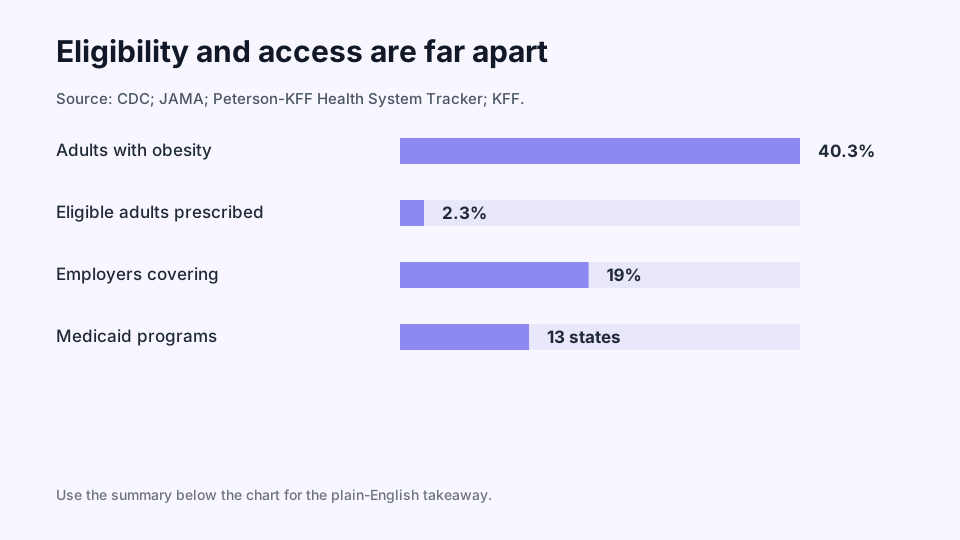
The figure contrasts the large BMI 30+ population with much smaller prescribing and uneven coverage measures.
Age and approved uses change the answer
Wegovy is approved for chronic weight management in adults and in adolescents age 12 and older with obesity. For adolescents, the definition uses an age- and sex-specific BMI at or above the 95th percentile, not adult BMI cutoffs. Zepbound's chronic weight-management indication is for adults.<br/><br/>Wegovy also received FDA approval on March 8, 2024 to reduce major adverse cardiovascular events, or MACE, in certain adults with established cardiovascular disease and overweight or obesity. Zepbound received FDA approval on December 20, 2024 for moderate to severe obstructive sleep apnea in adults with obesity. Those separate uses can matter because coverage may follow a covered indication rather than weight loss alone.
| Date | Milestone | Why it can matter |
|---|---|---|
| June 4, 2021 | FDA approved Wegovy for chronic weight management | Semaglutide 2.4 mg became an FDA-approved obesity treatment. |
| November 8, 2023 | FDA approved Zepbound for chronic weight management | Tirzepatide became an adult obesity-treatment option. |
| March 8, 2024 | FDA approved Wegovy for cardiovascular risk reduction | Some Medicare coverage may be possible for this separate approved use. |
| December 20, 2024 | FDA approved Zepbound for obstructive sleep apnea | The sleep-apnea indication may create a different coverage route. |
| July 1, 2026 | CMS launched Medicare GLP-1 Bridge | Eligible Part D beneficiaries may access certain medicines through December 31, 2027 under program rules. |
Source: Sources: FDA prescribing information and approval materials; Centers for Medicare & Medicaid Services Medicare GLP-1 Bridge.
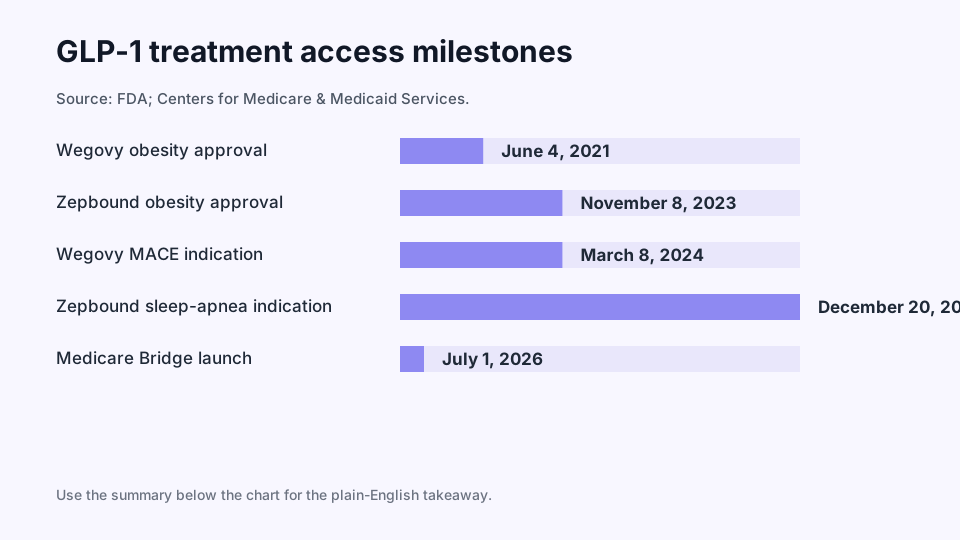
The timeline shows that obesity approvals preceded later indication-specific and temporary Medicare access routes.
Insurance approval can be narrower than the FDA label
An FDA label tells a prescriber which population the agency approved for a medicine. It does not require an insurer to pay. Plans may require prior authorization, documentation of a related condition, records from a lifestyle program, evidence of earlier treatment efforts, or a minimum amount of weight loss for renewal.<br/><br/>In a large electronic-health-record study, 2.3% of 39.1 million adults meeting the study's eligibility criteria received an obesity prescription for semaglutide or tirzepatide between July 2020 and October 2024. Prescription orders are not the same as filled prescriptions or long-term use. Still, the figure shows the distance between meeting criteria and receiving treatment.
Employer coverage varies sharply. In 2025, 19% of firms with 200 or more workers reported that their largest plan covered GLP-1 medicines primarily for weight loss. At firms with 5,000 or more workers, the figure was 43%. These are employer-plan figures, not a promise about an individual worker's benefits.<br/><br/>Medicaid also varies by state. KFF counted 13 state Medicaid programs covering obesity GLP-1 medicines under fee-for-service Medicaid as of January 2026. Prior authorization is common, and managed-care coverage may differ from fee-for-service rules.
Traditional Medicare Part D has generally excluded medicines used solely for weight loss. The temporary Medicare GLP-1 Bridge began July 1, 2026 and is scheduled to run through December 31, 2027. It does not create automatic access for everyone with a BMI of 30 or higher: eligibility, a covered use, prior authorization, and provider certification remain part of the program.
| Measure | Current figure | Practical interpretation |
|---|---|---|
| Eligible adults prescribed in a large EHR study | 2.3% | Eligibility did not translate into broad prescribing in this study. |
| Employers with 200+ workers covering weight-loss GLP-1s | 19% | Coverage is uneven across workplace plans. |
| Fee-for-service Medicaid programs covering obesity GLP-1s | 13 states | State rules and authorization requirements differ. |
| Wegovy introductory official offer | $199 per month | Listed for the first two fills of certain lower injection doses for new users, subject to terms. |
| Wegovy listed offer after introductory fills | $349 per month | A program price for listed injection doses, subject to eligibility and change. |
| Zepbound 2.5 mg official self-pay price | $299 per month | A listed cash price for a specified presentation, not an insured copay. |
| Zepbound higher-dose listed offer | $449 per month | A program offer with stated eligibility and refill conditions. |
Source: Sources: JAMA; Peterson-KFF Health System Tracker; KFF; NovoCare Wegovy Savings Offer Program; Eli Lilly Zepbound Coverage, Affordability, and Savings.
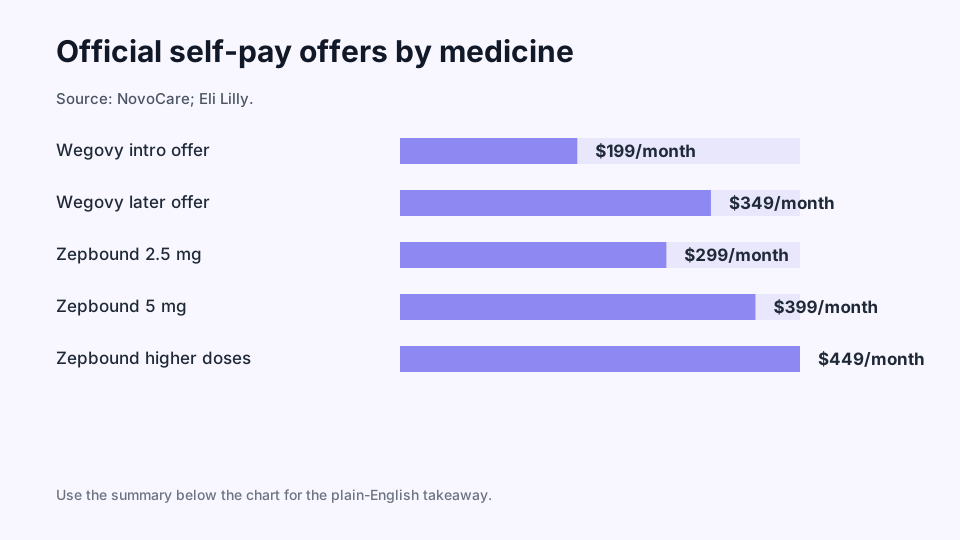
The figure separates official listed self-pay offers from insurance copays and shows why monthly budget planning needs a later-fill estimate.
What trial results may mean for weight loss
Trial averages can help set expectations, but they cannot predict an individual's result or tolerance. In STEP 1, adults without diabetes who received semaglutide 2.4 mg plus lifestyle intervention lost an average of 14.9% of starting weight at 68 weeks, compared with 2.4% with placebo. At a starting weight of 220 pounds, 14.9% is about 33 pounds on average.<br/><br/>In SURMOUNT-1, adults without diabetes receiving tirzepatide lost an average of 15.0%, 19.5%, or 20.9% at 72 weeks across the studied doses, compared with 3.1% with placebo. At 220 pounds, 20.9% is about 46 pounds on average. These were separate trials with different durations, so they are not a head-to-head comparison.
| Medicine and study | Timeframe | Average weight change | What it means |
|---|---|---|---|
| Semaglutide 2.4 mg, STEP 1 | 68 weeks | -14.9% | About 33 pounds from a 220-pound starting weight, on average. |
| Tirzepatide, SURMOUNT-1 lower studied dose | 72 weeks | -15.0% | About 33 pounds from a 220-pound starting weight, on average. |
| Tirzepatide, SURMOUNT-1 middle studied dose | 72 weeks | -19.5% | About 43 pounds from a 220-pound starting weight, on average. |
| Tirzepatide, SURMOUNT-1 higher studied dose | 72 weeks | -20.9% | About 46 pounds from a 220-pound starting weight, on average. |
| Semaglutide STEP 1 extension after stopping | 1 year after treatment | About two-thirds of prior loss regained | Stopping commonly led to regain; maintenance planning matters. |
Source: Sources: New England Journal of Medicine STEP 1 and SURMOUNT-1 trial reports; ClinicalTrials.gov STEP 1 results.
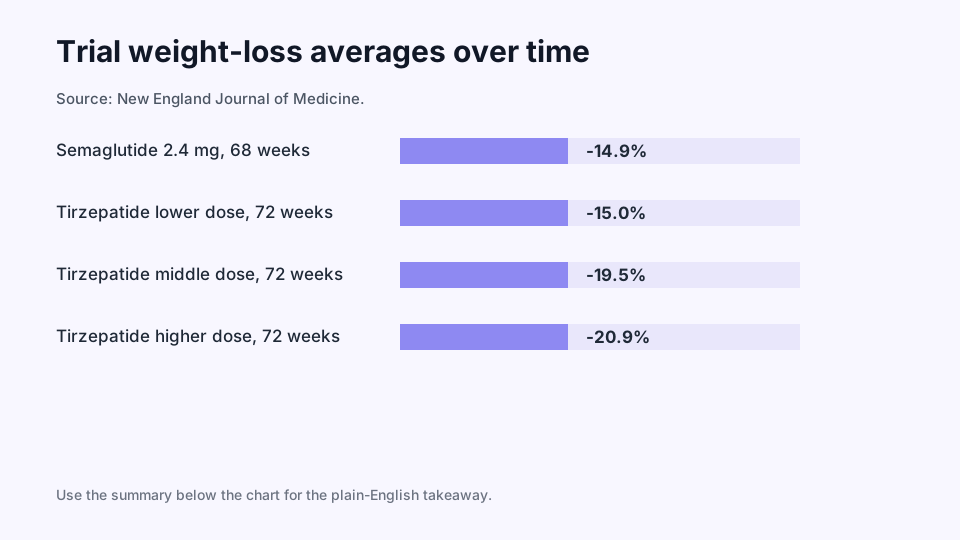
The figure presents average loss from separate trials and keeps the 68-week and 72-week study durations visible.
These medicines are better understood as maintenance treatments than short courses. In the STEP 1 extension, participants regained about two-thirds of the weight they had previously lost during the year after stopping semaglutide. In SURMOUNT-4, participants switched from tirzepatide to placebo regained substantial weight, while those who continued maintained and added to earlier loss.<br/><br/>Regain after stopping is not a personal failure. It is a practical reason to discuss duration, refill reliability, changes in insurance, cash cost, and follow-up before treatment begins or restarts.
Safety and routine questions to raise before starting
The labels list nausea, diarrhea, vomiting, constipation, abdominal pain, indigestion, and related digestive symptoms among the common side effects. Both medicines carry boxed warnings about thyroid C-cell tumors observed in rats. It is unknown whether they cause these tumors in humans.<br/><br/>They are contraindicated for people with a personal or family history of medullary thyroid carcinoma or multiple endocrine neoplasia syndrome type 2. Labels also warn about pancreatitis, gallbladder disease, dehydration-related kidney problems, low blood sugar in some settings, and issues around anesthesia or deep sedation. A BMI result is not a safety clearance.
Bring recent height and weight, your medication list, relevant diagnoses, and your insurance card to a visit. If your BMI is below 30, ask which documented condition supports the request. Ask the pharmacy what the filled price will be before relying on an offer, and ask the plan what it requires for renewal.<br/><br/>Lina is a GLP-1 companion app for people using Wegovy, Mounjaro, Ozempic, Zepbound, Saxenda, and related medications. It helps users track doses, side effects, meals, weight, protein, hydration, and habits in one place. It is a wellness tracking companion, not a medical device or a substitute for medical advice.
Questions to bring to a clinician or pharmacist
- Do I meet the FDA label for this medicine, and what information supports that answer?
- If my BMI is 27 to 29.9, which weight-related condition needs to be documented?
- What warnings, contraindications, or medicine interactions matter for my history?
- What does my plan require for approval, pharmacy choice, and renewal?
- What will I pay if coverage is denied, delayed, or changed at the next plan year?
- What symptoms should prompt me to contact the care team urgently?
- How should I plan for maintenance if the medicine works and I want to continue it?
Methodology
- Source priority was FDA prescribing information and approval materials; CDC and National Center for Health Statistics estimates; CMS and Medicare materials; peer-reviewed trials and utilization research; then official manufacturer offer pages and KFF coverage research.
- Sources were last checked August 8, 2026.
- Marketing claims, affiliate pages, coupon aggregators, pharmacy blogs, social posts, peptide sellers, and unverified coverage trackers were excluded or treated cautiously. Manufacturer cash prices are described as offers that can change.
- The figures cannot determine whether an individual qualifies, can safely use a medicine, receives insurance approval, tolerates treatment, or keeps coverage. Population prevalence cannot produce a precise count applying every label and payer exclusion.
Update history
- Published with FDA labels, CDC prevalence data, CMS Medicare GLP-1 Bridge information, coverage findings, official self-pay offers, and trial evidence checked through August 8, 2026.
Download the data
Downloadable fields include prevalence, BMI thresholds, coverage figures, official offer figures, trial averages, and dated milestones. Source URLs and interpretation notes should remain attached to the figures.