Introduction
Mounjaro cost statistics for the US in 2026, including LillyDirect pricing, savings card limits, Medicare rules, trial results, and safety.
Mounjaro numbers to know
- May 13, 2022 - FDA approval
- 10 years and older - Labeled age
- $499 per month - LillyDirect self-pay start
- $5,988 - Annual self-pay at that rate
- As low as $25 - Covered commercial card floor
- Up to $1,950 yearly - Covered-patient card maximum
- $2,100 - Part D 2026 threshold
- 7.6 to 11.2 kg - SURPASS-2 weight change
What you may pay depends on the payment route
For people paying without insurance, LillyDirect lists Mounjaro starting at $499 per month for listed single-dose prefilled-pen strengths. Keeping that price for a full year would mean about $5,988, before applicable taxes or fees. It is a manufacturer-channel starting price, not a promise that a local pharmacy will match it. For a person with commercial insurance, coverage comes first. If Mounjaro is covered for the diagnosis on the prescription, the pharmacy may apply a fixed copay or coinsurance. Eligible patients with covered commercial insurance may pay as little as $25 for a one-, two- or three-month fill under Lilly's savings-card terms, but the card has per-fill and annual limits and requires an on-label prescription. Eligible commercially insured patients without Mounjaro coverage may pay as low as $499 for one month through the savings card. That is an affordability offer, not insurer approval. Lilly states that government-funded insurance, including Medicare, Medicaid, Veterans Affairs coverage and TRICARE, is excluded from the card.
| Measure | 2026 figure | What it means | Limit |
|---|---|---|---|
| LillyDirect self-pay starting price | $499 per month | About $5,988 across 12 months at the same rate | Taxes and fees may apply |
| Eligible commercial insurance with coverage | As low as $25 | May reduce a covered copay | Card terms and maximum savings apply |
| Eligible commercial insurance without coverage | As low as $499 per month | A manufacturer payment route when coverage is absent | Up to $8,411 annual savings stated in terms |
| Covered commercial annual card savings | Up to $1,950 | The card may not erase all deductible or coinsurance costs | Maximum 13 fills per calendar year |
| Savings-card stated expiry | December 31, 2026 | Terms should be checked again before 2027 | Lilly may amend or end the offer earlier |
Source: Source: Lilly Mounjaro Savings and Coverage and LillyDirect Mounjaro self-pay information, checked August 18, 2026.
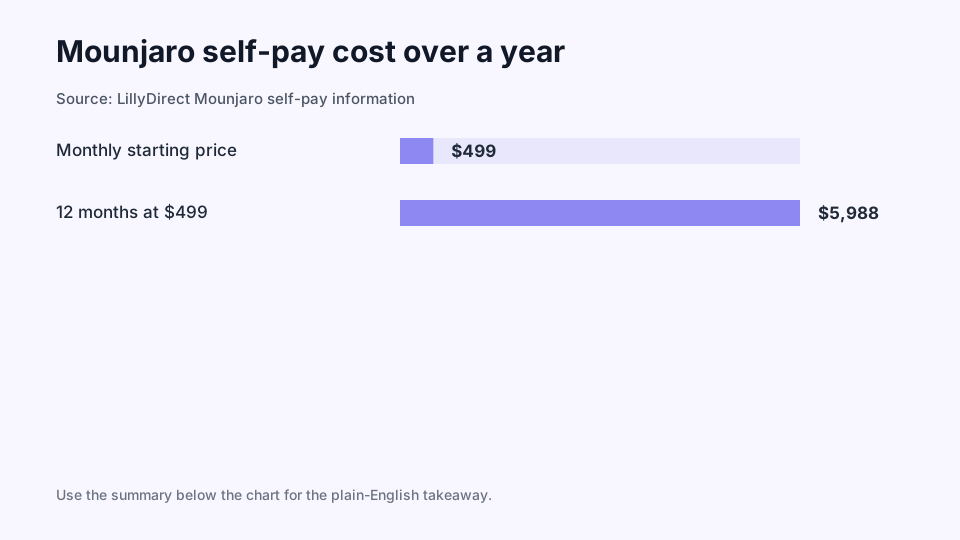
The chart converts LillyDirect's monthly starting price into a yearly planning total before taxes and fees.
Why the diagnosis and brand can change coverage
Insurers commonly evaluate the product name and FDA-approved use, rather than the ingredient alone. Mounjaro's label is for type 2 diabetes. Zepbound is tirzepatide approved for chronic weight management in eligible adults, so a plan may cover one, require prior authorization for another, or exclude both. The savings card also requires a prescription consistent with FDA-approved Mounjaro labeling. A coupon displayed online is not evidence that it will process for a particular prescription. Before a fill, ask the pharmacy whether the claim is covered, whether prior authorization, step therapy or a quantity limit applies, and what the price will be before and after the deductible.
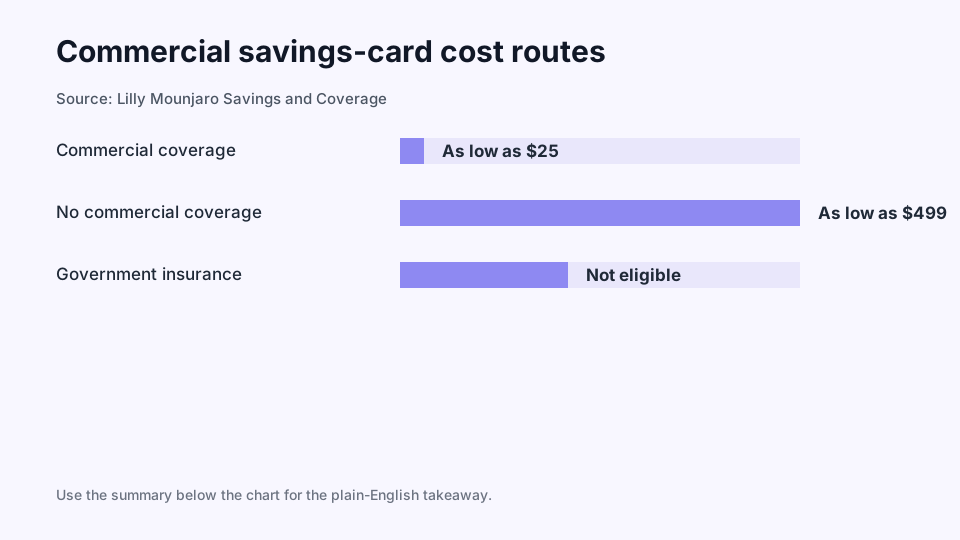
The chart separates the advertised commercial card floors from the exclusion for government-funded insurance.
Medicare can limit spending and does promise coverage
In the standard 2026 Medicare Part D design, the deductible is $615. Covered drugs then have 25% coinsurance until a person reaches the $2,100 annual out-of-pocket threshold. After reaching that threshold, the person pays no cost sharing for covered Part D drugs for the rest of the year. Plans can have different benefit designs and may still use prior authorization or step therapy. The distinction between covered and not covered matters. The cap does not override a formulary exclusion or a denied prior authorization. The Medicare Prescription Payment Plan may spread covered prescription costs through the year, which can make bills easier to budget, but it does not lower the underlying amount owed. CMS began the Medicare GLP-1 Bridge on July 1, 2026. It offers a $50 monthly copay for eligible listed weight-management medicines through December 31, 2027. CMS lists Foundayo, Wegovy and Zepbound KwikPen, not Mounjaro. A person using Mounjaro for type 2 diabetes needs to check their own Part D formulary rather than assume the Bridge applies.
| Medicare item | 2026 figure or status | Practical meaning | Boundary |
|---|---|---|---|
| Standard Part D deductible | $615 | Costs can be higher before the deductible is met | Actual plan designs can differ |
| Part D coinsurance | 25% | Applies after deductible in the standard benefit | Only for covered medicines |
| Part D out-of-pocket threshold | $2,100 | No cost sharing after the threshold for covered Part D drugs | Does not establish coverage |
| Medicare GLP-1 Bridge | $50 monthly copay | A lower-cost route for eligible listed weight-management medicines | Mounjaro is not listed |
| Manufacturer Mounjaro card | Not available | Government-insured patients cannot use it | Includes Medicare and Medicaid |
Source: Source: Centers for Medicare & Medicaid Services Part D redesign instructions, Medicare GLP-1 Bridge information and Lilly Mounjaro Savings and Coverage.
What trial results can tell you about expected change
SURPASS-2 enrolled 1,879 adults with type 2 diabetes whose blood sugar was not adequately controlled on metformin. Participants received tirzepatide or semaglutide 1 mg once weekly for 40 weeks. Hemoglobin A1c, often shortened to A1c, reflects average blood sugar over roughly two to three months. Average A1c reductions were 2.0, 2.2 and 2.3 percentage points with the three Mounjaro groups, compared with 1.9 points with semaglutide 1 mg. Between 82% and 86% of people taking Mounjaro reached an A1c below 7%, compared with 79% taking semaglutide. Those figures describe a diabetes trial population, not a promised result for one person. Average weight fell by 7.6 kg, 9.3 kg and 11.2 kg with Mounjaro 5 mg, 10 mg and 15 mg. That is about 17 to 25 pounds over 40 weeks, compared with 12.6 pounds with semaglutide 1 mg. The comparison does not cover every semaglutide product or dose now available, and it cannot predict which option an insurer will pay for.
| Treatment | Average weight change | Approximate share of starting weight | What the comparison means |
|---|---|---|---|
| Semaglutide 1 mg | -5.7 kg or -12.6 lb | -6.1% | The direct trial comparator |
| Mounjaro 5 mg | -7.6 kg or -16.8 lb | -8.2% | About 4.2 lb more average loss than semaglutide 1 mg |
| Mounjaro 10 mg | -9.3 kg or -20.5 lb | -9.8% | About 7.9 lb more average loss than semaglutide 1 mg |
| Mounjaro 15 mg | -11.2 kg or -24.7 lb | -11.9% | About 12.1 lb more average loss than semaglutide 1 mg |
Source: Source: Mounjaro U.S. Prescribing Information and ClinicalTrials.gov SURPASS-2. Results are trial averages in adults with type 2 diabetes using metformin.
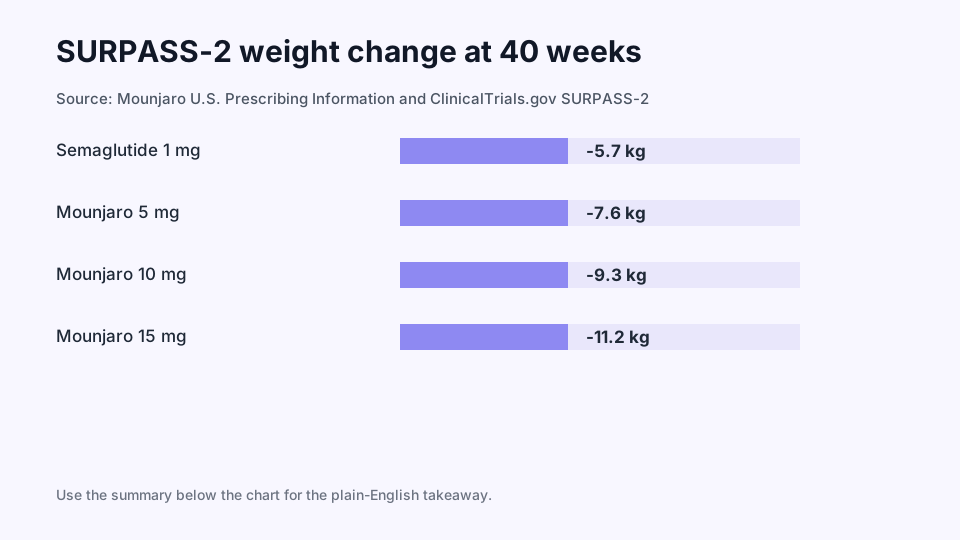
The chart compares average 40-week weight change in adults with type 2 diabetes using metformin in one head-to-head trial.
Maintenance costs matter because stopping can bring regain
Early results are only part of a cost decision. SURMOUNT-4 studied tirzepatide in adults with obesity or overweight without diabetes. It used the same active ingredient as Mounjaro and Zepbound, but it was a weight-management study rather than a Mounjaro diabetes-label study. After a 36-week tirzepatide lead-in, participants had lost an average of 20.9% of body weight. During the following 52 weeks, people switched to placebo regained 14.0% from their week-36 weight, while people who continued tirzepatide lost another 5.5% on average. Results varied, but the trial supports asking about a workable maintenance and coverage plan before treatment begins or restarts. A plan can change its formulary or prior-authorization rules during the year. Keep fill dates, receipts, explanation-of-benefits records, savings-card use and any coverage decisions. Those records can help a pharmacist or insurer explain a rejected claim or a sudden price change.
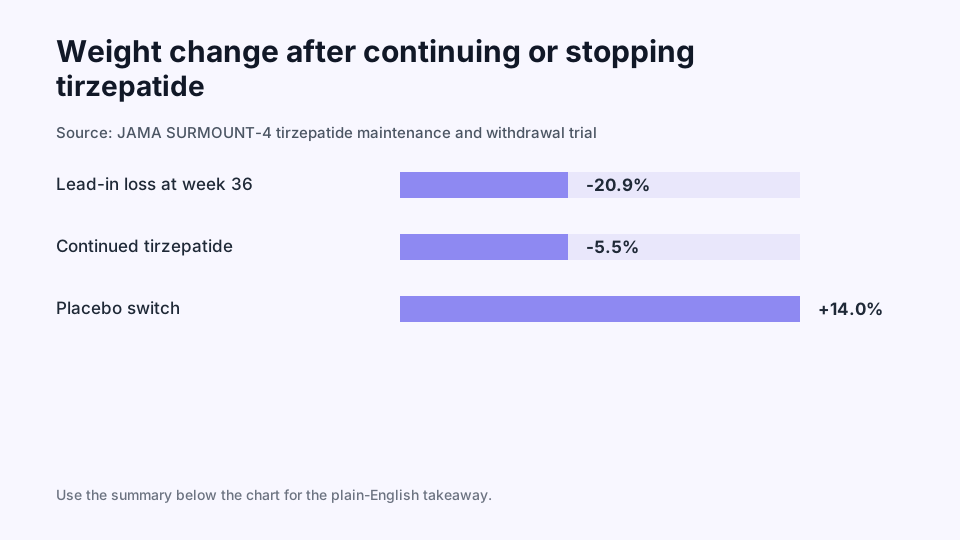
After the 36-week lead-in, continued tirzepatide was associated with further average loss while placebo switch was associated with average regain over 52 weeks.
Safety and pharmacy questions worth raising
Mounjaro can delay stomach emptying and may affect absorption of some oral medicines. Low blood sugar is more likely when it is used with insulin or a sulfonylurea. The common label-listed side effects are nausea, diarrhea, decreased appetite, vomiting, constipation, indigestion and abdominal pain. The label carries a boxed warning about thyroid C-cell tumors observed in rats. Mounjaro is contraindicated for people with a personal or family history of medullary thyroid carcinoma or Multiple Endocrine Neoplasia syndrome type 2. Severe or persistent abdominal pain, severe allergic symptoms or serious dehydration symptoms warrant prompt medical attention. Before a pharmacy visit, bring the exact product name, fill date, amount paid, pharmacy, insurance explanation of benefits and any savings-card information. Ask whether Mounjaro is covered for the diagnosis, whether the deductible applies, whether a 90-day fill is allowed, whether the card can be processed and what rejection reason appears if the claim fails.
Methodology
- Source priority was current FDA materials and prescribing information, then CMS guidance, official Lilly pricing and savings pages, ClinicalTrials.gov and peer-reviewed trial reporting.
- Sources were checked on August 18, 2026. The recent-development review covered May 20, 2026 through August 18, 2026.
- Affiliate coupon pages, pharmacy marketing pages, generic price roundups, social posts, peptide sellers and compounded-drug sellers were excluded or treated cautiously because their terms may be promotional, incomplete or outdated.
- No precise public Mounjaro wholesale acquisition cost was used because the accessible Lilly pricing text reviewed did not reliably display a current numeric figure.
- Trial averages cannot determine an individual's result, safety, diagnosis, insurance approval, savings-card eligibility or pharmacy price. Those questions require the prescribing clinician, pharmacist and insurer.
Update history
- Checked FDA, Lilly, CMS, ClinicalTrials.gov and JAMA sources. Confirmed LillyDirect starting self-pay price, current savings-card end date, 2026 Part D threshold and Bridge program listing.
- CMS Medicare GLP-1 Bridge began. Mounjaro was not included among the listed weight-management medicines.
- FDA determined the tirzepatide injection shortage was resolved.
Download the data
Download the figures used here to keep a personal record of price quotes, coverage changes, fills, side effects, meals, weight, protein, hydration and habits. Lina is a GLP-1 companion app, not a medical device or a substitute for medical advice.