Introduction
Ozempic cost statistics for 2026: self-pay offers, list-price figures, Medicare rules, coverage limits, trial results, side effects, and practical questions.
Eight facts to know
- Type 2 diabetes and certain heart and kidney risk-reduction uses in adults with type 2 diabetes - FDA-approved use
- $199 per month for the first two fills of 0.25 mg or 0.5 mg - New eligible self-pay offer
- $349 per month for 0.25 mg, 0.5 mg, or 1 mg - Ongoing eligible self-pay offer
- $499 per month - Ongoing 2 mg self-pay offer
- As little as $25 per month, with a $100 monthly maximum savings - Commercial savings floor
- $1,027.51 and $997.58 on NovoCare's page - Displayed list-price figures
- $2,100 annual out-of-pocket cap for covered Part D drugs in 2026 - Medicare Part D cap
- 15.8% with 0.5 mg and 20.3% with 1 mg in placebo-controlled trials - Common nausea frequency
What Ozempic is approved to treat
Ozempic contains semaglutide, a glucagon-like peptide-1, or GLP-1, receptor agonist. FDA labeling approves it with diet and exercise to improve blood sugar in adults with type 2 diabetes. The label also includes certain cardiovascular and kidney risk-reduction uses for adults with type 2 diabetes. That approval status matters at the pharmacy counter. A plan may still require prior authorization, step therapy, or a deductible, but type 2 diabetes is a clearer coverage route than seeking Ozempic solely for weight loss. Ozempic can be associated with weight loss, yet it is not FDA-approved specifically for chronic weight management. Wegovy contains the same active ingredient but is the semaglutide brand approved for chronic weight management. The distinction can affect a plan's coverage rules even though both products contain semaglutide.
| Measure | 2026 fact | What it can mean |
|---|---|---|
| Ozempic approval | Type 2 diabetes and specified cardiovascular and kidney risk reduction uses | Coverage is usually evaluated against a covered diagnosis and the plan's criteria. |
| Weight-management approval | Ozempic is not FDA-approved specifically for chronic weight management | A weight-loss-only request may face different coverage rules. |
| Wegovy approval | FDA-approved for chronic weight management | It may be considered under a different benefit or policy than Ozempic. |
| Medicare GLP-1 Bridge | Listed weight-management products include Wegovy, Foundayo, and Zepbound KwikPen | Ozempic is not listed for the program's weight-management benefit. |
Source: Sources: FDA Ozempic prescribing information; FDA Wegovy prescribing information; CMS Medicare GLP-1 Bridge information for Part D plans.
What the cost numbers mean
NovoCare advertises several prices, but they describe different situations. Eligible new self-pay patients can receive 0.25 mg or 0.5 mg pens for $199 a month for the first two fills. The advertised ongoing self-pay price is $349 a month for 0.25 mg, 0.5 mg, or 1 mg, and $499 for 2 mg. For a person paying $349 every month, a simple 12-month calculation is about $4,188. At $499 each month, it is about $5,988. Those figures exclude appointments, laboratory work, supplies, and any care needed for side effects. NovoCare's list-price material currently displays both $1,027.51 and $997.58 for Ozempic pens without clearly explaining the difference on that page. Neither figure tells you what a particular pharmacy will charge. Ask the dispensing pharmacy for its current cash price before assuming a listed amount is your bill.
| Cost route | Reported figure | Practical limit |
|---|---|---|
| Eligible new self-pay offer | $199 per month for first two fills | Applies to eligible new patients using 0.25 mg or 0.5 mg pens. |
| Eligible ongoing self-pay offer | $349 per month for 0.25 mg, 0.5 mg, or 1 mg | About $4,188 across 12 months if the offer and eligibility remain in place. |
| Eligible ongoing 2 mg self-pay offer | $499 per month | About $5,988 across 12 months if the offer and eligibility remain in place. |
| Eligible commercial savings offer | As little as $25 per month | Advertised maximum savings is $100 monthly; government-program participants are generally excluded. |
| Displayed manufacturer list prices | $1,027.51 and $997.58 | The source page does not clearly explain the two displayed values. Verify directly. |
Source: Source: NovoCare Ozempic savings offer and list-price information. Offers are subject to eligibility rules and may change after December 31, 2026.
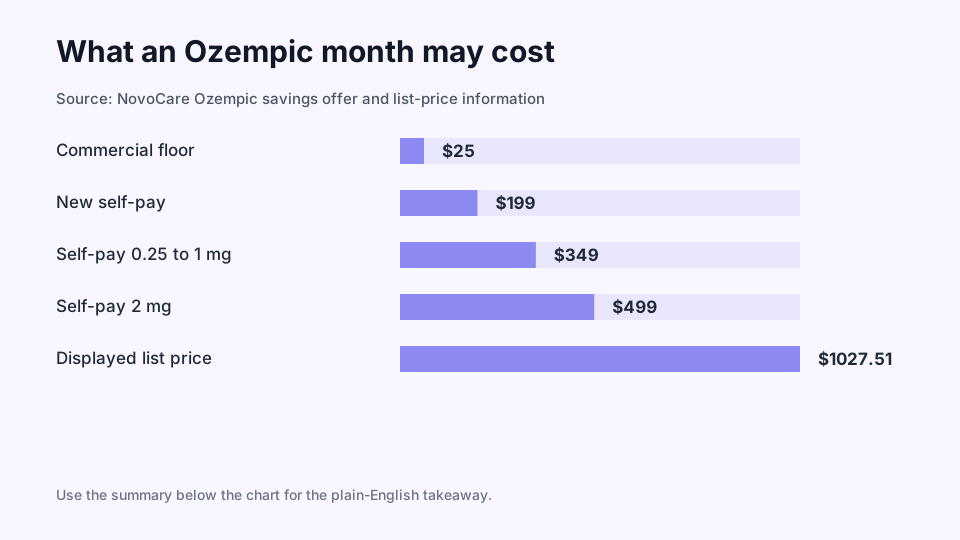
This compares advertised monthly routes and a displayed list-price figure, showing why insurance status and eligibility can change the bill substantially.
Insurance and Medicare can change the bill
For commercial insurance, a covered prescription can still cost more early in the year if you have not met your deductible. A plan may place Ozempic on a particular tier, charge a copay or coinsurance, require prior authorization, or require use of an in-network or mail-order pharmacy. An approval can also have an end date, so renewal requirements matter. Medicare Part D has a $2,100 annual out-of-pocket cap in 2026 for covered Part D medicines. Once a person reaches that cap, they pay $0 for covered Part D drugs for the rest of that calendar year. An Ozempic prescription that is not covered, or a cash purchase made outside Part D, does not automatically count toward that amount. The Medicare Prescription Payment Plan can spread eligible out-of-pocket costs over monthly bills. It does not reduce the total owed. Medicare GLP-1 Bridge is separate from standard Part D coverage: CMS says eligible participants may obtain listed weight-management GLP-1 medicines for $50 monthly through December 31, 2027, but Ozempic is not listed for that benefit.
| Measure | 2026 figure or rule | What to check |
|---|---|---|
| Part D maximum deductible | $615 | A plan can use a lower deductible or no deductible. |
| Part D out-of-pocket cap | $2,100 | Confirm Ozempic is covered and that your purchases are processed through Part D. |
| Prescription Payment Plan | Monthly billing option for eligible out-of-pocket costs | It spreads payments but does not lower the total cost. |
| GLP-1 Bridge copay | $50 per month for eligible participants | The listed weight-management products do not include Ozempic. |
| Commercial coupon eligibility | Government-funded coverage is generally excluded | Confirm eligibility before relying on a savings card. |
Source: Sources: Medicare.gov Part D costs guidance; CMS Medicare GLP-1 Bridge materials; NovoCare Ozempic savings offer.
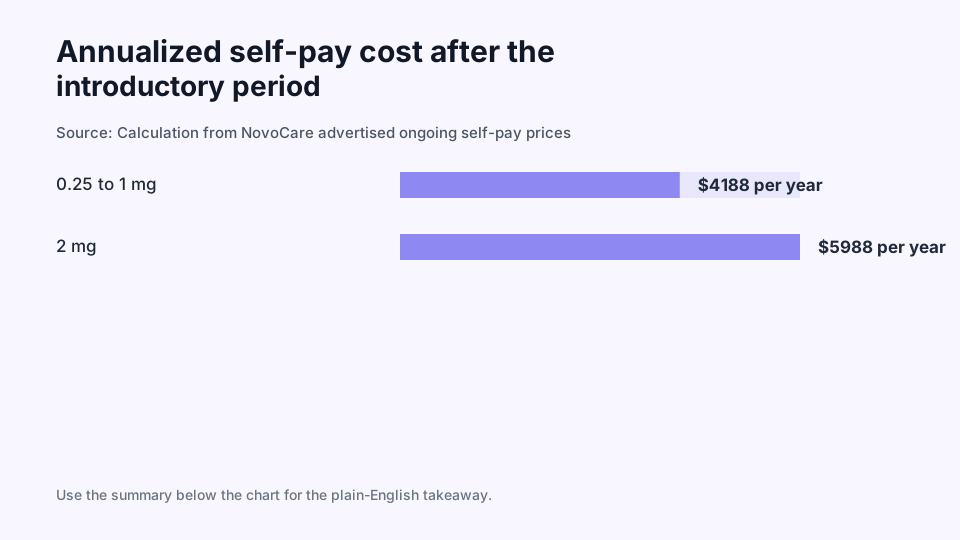
The chart converts the two advertised ongoing monthly self-pay prices into simple 12-month amounts before clinical and laboratory costs.
What trial results can and cannot tell you
For blood sugar control, an FDA-label 40-week study in adults with type 2 diabetes found average A1c reductions of 1.9 percentage points with 1 mg and 2.1 percentage points with 2 mg. A1c, also called HbA1c or glycated hemoglobin, estimates average blood glucose over roughly the previous two to three months. These are group averages, not a prediction for one person. People often ask about weight loss. In STEP 1, people without diabetes receiving 2.4 mg semaglutide plus lifestyle support lost an average 14.9% of starting weight over 68 weeks, compared with 2.4% with placebo plus lifestyle support. That was Wegovy-dose semaglutide, so it is useful context for weight-management expectations but should not be presented as an Ozempic-specific promise. The practical question before starting or restarting is whether the expected benefit can be supported over time. Price changes, a coverage denial, or difficult side effects can interrupt treatment even when a medicine has helped.
| Result | Study figure | What it means in practice |
|---|---|---|
| A1c reduction with 1 mg Ozempic | 1.9 percentage points at 40 weeks | This reflects average glucose improvement in a type 2 diabetes study. |
| A1c reduction with 2 mg Ozempic | 2.1 percentage points at 40 weeks | A result for a study group, not an individual forecast. |
| Weight loss with 2.4 mg semaglutide | 14.9% at 68 weeks | This was a Wegovy-dose weight-management trial in people without diabetes. |
| Placebo weight loss in STEP 1 | 2.4% at 68 weeks | Participants in both groups received lifestyle intervention. |
Source: Sources: FDA Ozempic prescribing information; Wilding JPH and colleagues, New England Journal of Medicine STEP 1 report; ClinicalTrials.gov NCT03548935.
Side effects and staying on treatment
In placebo-controlled Ozempic trials, nausea was reported by 15.8% of people using 0.5 mg and 20.3% using 1 mg, compared with 6.1% using placebo. Diarrhea occurred in 8.5% and 8.8%, compared with 1.9% on placebo. Vomiting occurred in 5.0% and 9.2%, compared with 2.3% on placebo. Those percentages matter because a monthly price is only part of value. A person who is dealing with persistent digestive symptoms may need a conversation with their prescriber or pharmacist about what is happening before deciding whether to continue paying. The FDA label also includes serious warnings, including pancreatitis, gallbladder disease, dehydration-related acute kidney injury, diabetic retinopathy complications, and low blood sugar when used with insulin or certain other diabetes medicines. Ozempic has a boxed warning about thyroid C-cell tumors seen in rodents. The label says it should not be used by people with a personal or family history of medullary thyroid carcinoma or Multiple Endocrine Neoplasia syndrome type 2. A clinician or pharmacist can put the label warnings in the context of an individual's medical history.
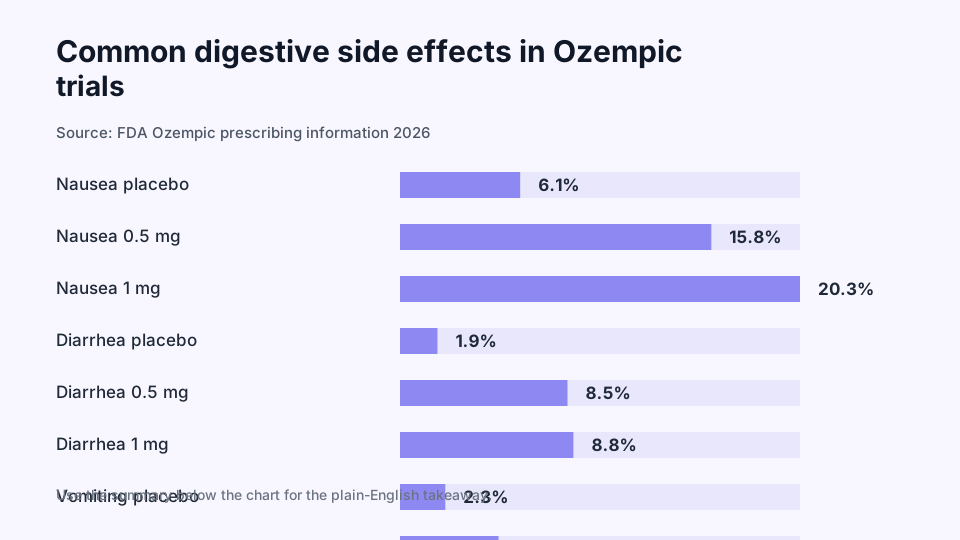
The grouped bars compare reported digestive side effects in placebo-controlled trials and help put tolerability alongside cost planning.
Stopping can affect both weight and budget planning
In the STEP 1 extension, participants stopped 2.4 mg semaglutide after 68 weeks. By week 120, they had regained an average 11.6 percentage points of the weight they had lost, about two-thirds of their earlier loss. Their average net loss from the original baseline was 5.6%. This was Wegovy-dose trial evidence rather than an Ozempic diabetes study, and outcomes vary. Still, it gives a practical reason to discuss maintenance, coverage renewal, and what happens if access ends before treatment begins. A short-term discount may be helpful, but it is not the same thing as a durable plan.
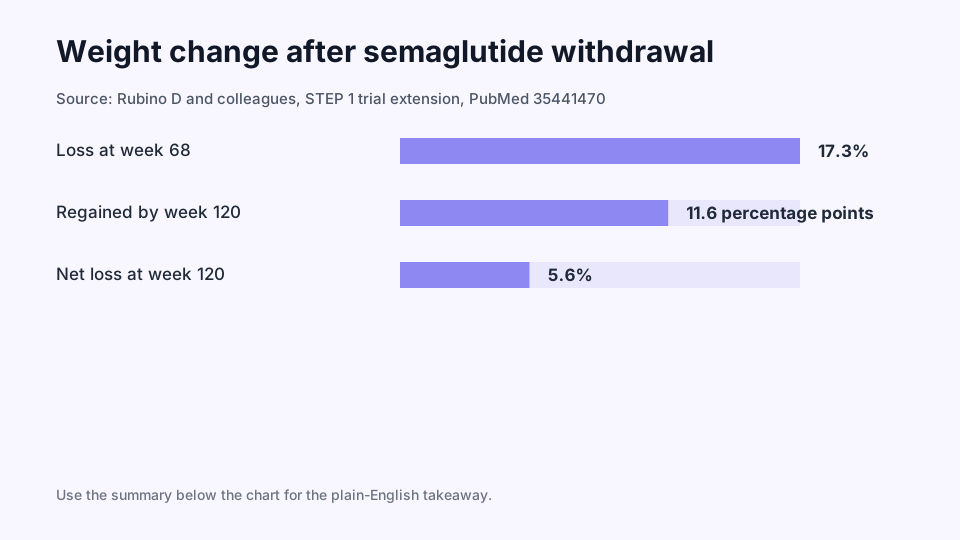
This Wegovy-dose extension shows that average regain after stopping can be substantial, making continued access and maintenance planning relevant from the start.
Questions to ask before a fill
Ask your insurer whether Ozempic is on the formulary for your diagnosis, which tier applies, and what you owe before and after the deductible. Ask whether prior authorization or step therapy is required, which pharmacy is in network, whether there are quantity limits, and when any authorization expires. Ask the pharmacist for the exact price with insurance, the exact cash price, and whether a manufacturer offer can be used with your coverage. If you use a savings offer, ask whether it counts toward a deductible or out-of-pocket maximum. Keep the answer, the fill date, and your explanation of benefits together so that a renewal or appeal is easier to document. FDA has warned about dosing errors and adverse events, including hospitalizations, involving compounded injectable semaglutide. It also says semaglutide sodium and semaglutide acetate are different active ingredients from the semaglutide in FDA-approved products. Lower advertised prices should prompt a careful discussion with a clinician or pharmacist, not an assumption that products are equivalent.
Methodology
- Source priority was FDA prescribing information and safety communications, CMS and Medicare.gov guidance, official Novo Nordisk materials, ClinicalTrials.gov, and peer-reviewed trial publications.
- All linked sources and reported figures were checked on August 14, 2026. Pricing offers, formularies, and authorization rules can change during a plan year.
- Affiliate coupon sites, pharmacy marketing pages, peptide sellers, social posts, generic trackers, and unverified patient reports were excluded or treated cautiously. Manufacturer offers are reported as offers, not permanent prices.
- The guide is source-reviewed and not clinically reviewed. It cannot determine an individual's diagnosis, safety, dose, insurer approval, final pharmacy price, or appropriate treatment choice.
Update history
- Published with current official savings-offer figures, Medicare Part D limits, Medicare GLP-1 Bridge details, FDA label data, and trial evidence.
Data download
The figures and table values are packaged from the source set listed below. Recheck offer terms and plan benefits before using a price for a personal budget.