Introduction
Ozempic weight-loss results, Wegovy comparisons, 2026 US costs, Medicare access, side effects, stopping, and questions for care teams.
Eight facts to know
- Type 2 diabetes, not chronic weight management - Ozempic approved use
- -5.6 kg or -12.3 lb at 40 weeks - Ozempic 1 mg result
- -6.4 kg or -14.1 lb at 40 weeks - Ozempic 2 mg result
- -14.9% at 68 weeks - Wegovy 2.4 mg result without diabetes
- -9.6% at 68 weeks - Wegovy 2.4 mg result with diabetes
- -18.8% at 72 weeks - Wegovy 7.2 mg result without diabetes
- 11.6 percentage points over one year - Regain after stopping
- $50 monthly through December 31, 2027 - Eligible Medicare Bridge copay
What an Ozempic result may look like
For someone taking Ozempic for type 2 diabetes, the closest trial evidence is more useful than a headline from a weight-management study. In a 40-week study of adults using metformin with or without a sulfonylurea, average weight change was -5.6 kg, or -12.3 pounds, with Ozempic 1 mg. With Ozempic 2 mg, it was -6.4 kg, or -14.1 pounds. Participants started near 217 to 221 pounds on average. Those results work out to about 5.7% and 6.4% of starting weight. The FDA label says the difference in body-weight change between the 1 mg and 2 mg groups was not statistically significant in that trial. An average is not a ceiling or a promise. Some people lose less and some lose more. Blood sugar response, other medicines, digestive symptoms, refill interruptions, food intake, activity, and how long treatment continues can all affect what happens in ordinary life.
| Medicine and study setting | Average change | Timeframe | What it means |
|---|---|---|---|
| Ozempic 1 mg with type 2 diabetes | -5.6 kg or -12.3 lb | 40 weeks | A diabetes-trial average, about 5.7% from the group's average starting weight. |
| Ozempic 2 mg with type 2 diabetes | -6.4 kg or -14.1 lb | 40 weeks | About 6.4% from the group's average starting weight; not a dedicated obesity trial. |
| Wegovy 2.4 mg without diabetes | -14.9% | 68 weeks | At 220 lb, 14.9% equals about 33 lb on average. |
| Wegovy 2.4 mg with type 2 diabetes | -9.6% | 68 weeks | Still substantial, but lower than the trial result in people without diabetes. |
| Wegovy 7.2 mg without diabetes | -18.8% | 72 weeks | A higher-dose Wegovy product, not Ozempic. |
Source: FDA Ozempic prescribing information; FDA Wegovy prescribing information; FDA announcement for Wegovy HD.
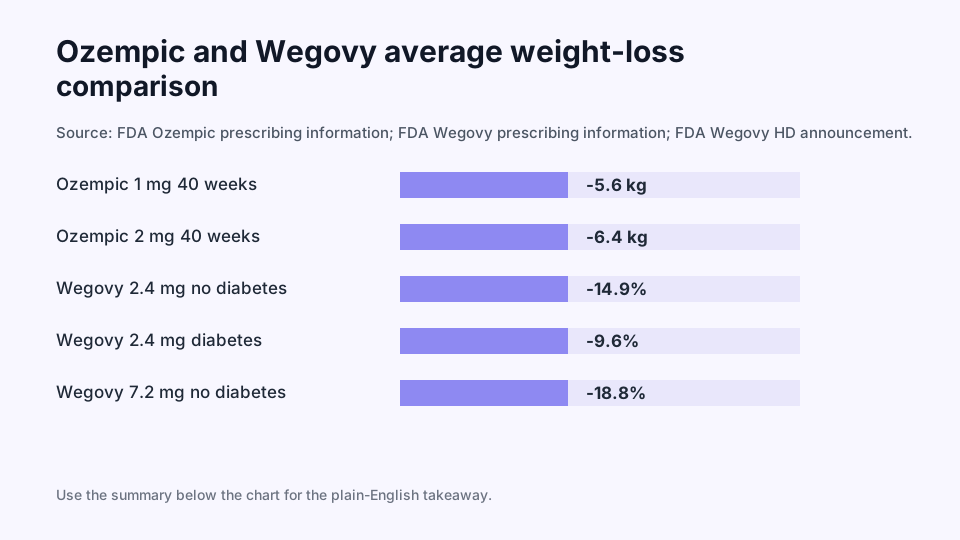
It compares results by product, dose, population, and timeframe so Ozempic diabetes data are not confused with Wegovy weight-management results.
Why the 15% semaglutide statistic is different
The often repeated 14.9% figure comes from STEP 1, a 68-week trial of Wegovy 2.4 mg in 1,961 adults with obesity or overweight plus a weight-related condition who did not have diabetes. Participants also received lifestyle intervention. The placebo group lost 2.4% on average. A percentage helps make the result personal without pretending it predicts your outcome. From a 220-pound starting weight, 5% is 11 pounds, 10% is 22 pounds, and 15% is 33 pounds. A person with type 2 diabetes should also know that the Wegovy label reports a 9.6% average at 68 weeks in its diabetes weight-management trial, compared with 3.4% with placebo. A US claims-based study followed 6,794 adults without type 2 diabetes who remained on semaglutide 2.4 mg for one year. It reported a 14.6 kg, or 14.1%, average loss. It supports the possibility of strong results among people who stay continuously treated, but it was observational rather than randomized and several authors were Novo Nordisk employees or shareholders.
| Loss from starting weight at 68 weeks | Wegovy 2.4 mg | Placebo | Practical meaning |
|---|---|---|---|
| At least 5% | 83.5% | 31.1% | About five out of six Wegovy participants reached this threshold. |
| At least 10% | 66.1% | 12.0% | About two out of three Wegovy participants reached this amount. |
| At least 15% | 47.9% | 4.8% | Nearly half reached 15%, so it was common but far from certain. |
| At least 20% | 30.2% | 1.7% | About three out of ten reached one-fifth of starting weight. |
Source: FDA Wegovy prescribing information, 68-week adult weight-management study population without type 2 diabetes.
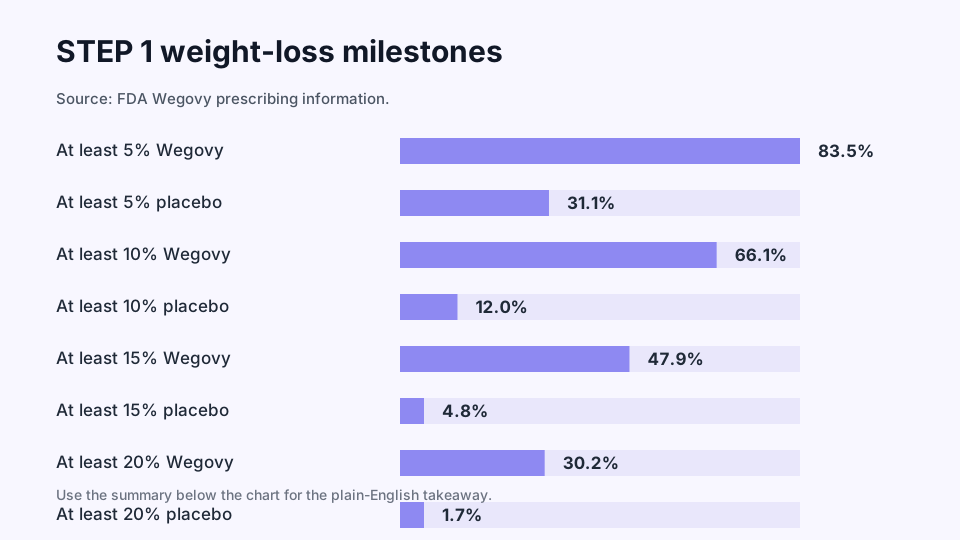
It shows that large average loss included a wide range of individual outcomes, with fewer participants reaching higher thresholds.
Continuing treatment and stopping
Semaglutide is generally studied as ongoing treatment, not as a brief course. In the STEP 1 extension, people who had taken semaglutide for 68 weeks and then stopped regained an average 11.6 percentage points during the following year. Their average net loss from the original starting point was 5.6% at week 120. Regain is not a personal failure, and it does not happen in exactly the same way for everyone. It does make access planning part of the decision. Before starting or restarting, it is reasonable to ask about likely coverage duration, refill delays, travel, what happens if a medicine is interrupted, and how progress will be followed over time. For people with established cardiovascular disease and overweight or obesity but without diabetes, the SELECT trial found fewer major adverse cardiovascular events, or MACE. MACE combines cardiovascular death, nonfatal heart attack, and nonfatal stroke. Over an average 39.8 months, events occurred in 6.5% of semaglutide participants and 8.0% of placebo participants, an absolute difference of 1.5 percentage points in that specific higher-risk group.
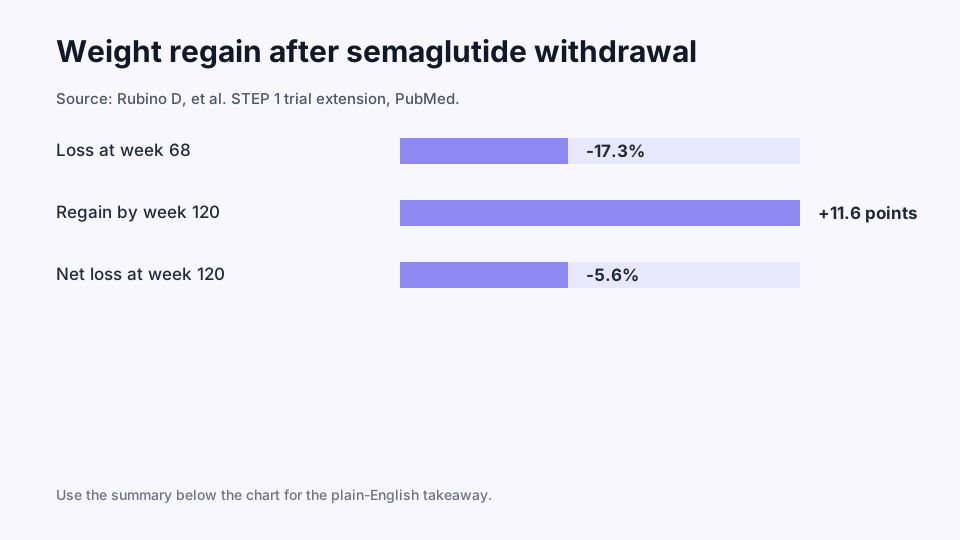
It shows why treatment continuity and an interruption plan can matter after substantial initial weight loss.
Cost and coverage in the United States
Cash offers and insurance coverage are separate questions. Novo Nordisk's official Ozempic self-pay offer lists $199 monthly for the first two eligible fills of 0.25 mg or 0.5 mg through December 31, 2026. After that, the listed self-pay price is $349 monthly for 0.25 mg, 0.5 mg, or 1 mg, and $499 for 2 mg, subject to program terms and eligibility. Those figures are not a guaranteed pharmacy price, and they do not mean an insurer covers the prescription. Savings programs can exclude some insurance types, change over time, and may not count toward a deductible or out-of-pocket maximum. Ask the pharmacy for its current price and ask the insurer whether the diagnosis, product, prior authorization, step therapy, or quantity limit affects the claim. The Centers for Medicare & Medicaid Services, or CMS, launched the Medicare GLP-1 Bridge on July 1, 2026. CMS says eligible Medicare Part D beneficiaries can receive eligible GLP-1 medicines with a $50 monthly copay through December 31, 2027. It is a temporary demonstration outside the usual Part D payment flow, so the deductible does not apply and the copay does not count toward Part D out-of-pocket spending. Eligibility and the specific medicine still matter.
| Route | Listed amount | Dates | Important limit |
|---|---|---|---|
| Eligible Ozempic self-pay offer for first two 0.25 mg or 0.5 mg fills | $199 monthly | Through December 31, 2026 | Program terms and eligibility apply. |
| Eligible Ozempic self-pay offer after introductory fills for 0.25 mg, 0.5 mg, or 1 mg | $349 monthly | Current offer checked August 19, 2026 | Not the same as insurance coverage. |
| Eligible Ozempic self-pay offer for 2 mg | $499 monthly | Current offer checked August 19, 2026 | Program terms can change. |
| Eligible Medicare GLP-1 Bridge copay | $50 monthly | July 1, 2026 to December 31, 2027 | Requires program and medicine eligibility. |
Source: NovoCare Ozempic offer and CMS Medicare GLP-1 Bridge materials, checked August 19, 2026.
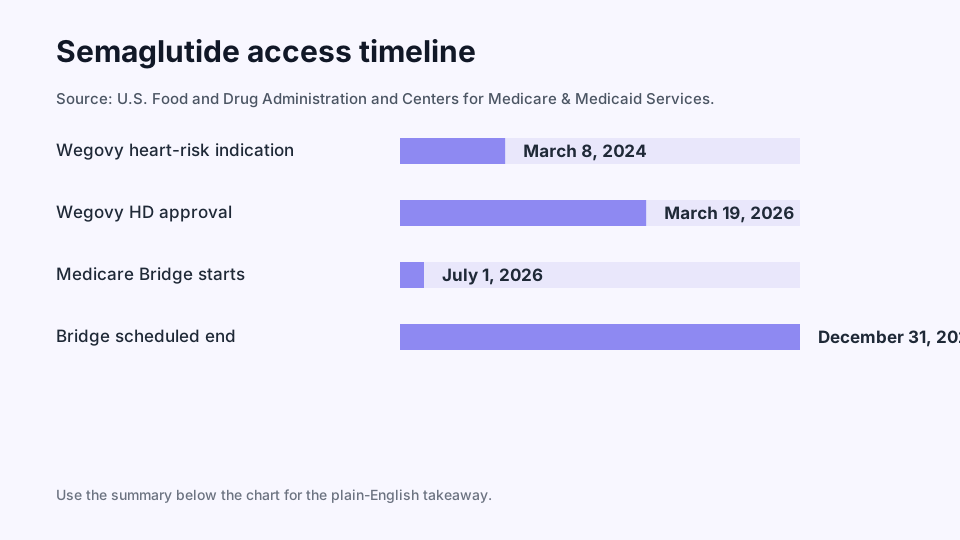
It places the current higher-dose Wegovy option and temporary Medicare access program in date order.
Side effects and safety questions
The most common Ozempic adverse reactions are nausea, vomiting, diarrhea, abdominal pain, and constipation. For many people, the practical issue is whether symptoms interfere with hydration, meals, work, sleep, or activity. Recording when symptoms happen and what else changed can give a clinician or pharmacist useful context. The Ozempic label contains warnings that need individual review, including pancreatitis, gallbladder problems, kidney injury related to volume depletion, severe stomach problems, diabetic retinopathy complications, low blood sugar when used with insulin or a sulfonylurea, and a boxed warning about thyroid C-cell tumors seen in rodents. A medicine list matters because the low-blood-sugar risk can rise with insulin or sulfonylureas. Tell clinicians and procedural teams about GLP-1 use before planned surgery or deep sedation. Delayed stomach emptying may matter in that setting. Do not treat compounded semaglutide as automatically interchangeable with FDA-approved Ozempic or Wegovy. FDA says compounded drugs should generally be used only when a person's medical needs cannot be met by an FDA-approved drug, and it reported 990 adverse-event reports associated with compounded semaglutide as of May 31, 2026. Reports cannot prove causation, and underreporting is possible.
A practical routine for appointments and refills
A simple record is usually more useful than frequent scale checks. Consider noting a starting weight, current medicines, blood pressure if you already monitor it, and a recent hemoglobin A1c, often called A1c or HbA1c. A1c estimates average blood sugar over roughly the prior two to three months. During the first months, a weekly weight taken on the same scale under similar conditions can show a trend. Note appetite, nausea, vomiting, diarrhea, constipation, abdominal pain, hydration, and whether side effects are getting in the way of normal routines. Lina is a GLP-1 companion app for people using Wegovy, Mounjaro, Ozempic, Zepbound, Saxenda, and related medications. It helps users track doses, side effects, meals, weight, protein, hydration, and habits in one place. Useful questions for a clinician or pharmacist include whether Ozempic is being considered for diabetes control, weight management, or both; whether a weight-management product fits the diagnosis and coverage better; which symptoms need prompt contact; and what to do if a refill is delayed. Ask the insurer what documentation it needs before the prescription reaches the pharmacy.
| Question | Current source-backed figure | Why it matters |
|---|---|---|
| Common digestive effects | Nausea 44%, diarrhea 30%, vomiting 24%, constipation 24% in Wegovy 2.4 mg adult trials | Sets expectations for the symptoms people most often track. |
| Stopping for side effects | 6.8% stopped Wegovy because of adverse reactions in pooled adult trials | Shows how often tolerability led to permanent stopping. |
| Gallstones | 1.6% with Wegovy versus 0.7% with placebo | Separates uncommon but meaningful risks from common symptoms. |
| Weight after stopping | STEP 1 extension reported about two-thirds of prior loss regained after withdrawal | Makes maintenance and access planning part of the decision. |
| Medicare Bridge | $50 monthly for eligible beneficiaries through December 31, 2027 | Separates a demonstration copay from ordinary plan coverage. |
Source: FDA Wegovy prescribing information, STEP 1 extension, and CMS Medicare GLP-1 Bridge materials cited in this guide.
Methodology
- Source priority was FDA prescribing information and safety communications for approvals, warnings, and label trial results; peer-reviewed trials and PubMed records for longer-term evidence; CMS for Medicare access; and NovoCare for current manufacturer offer terms.
- Sources and access information were checked on August 19, 2026.
- Affiliate sites, telehealth marketing, pharmacy blogs, peptide sellers, social media, generic approval trackers, and unverified price roundups were excluded. Manufacturer-funded real-world research was included with the funding relationship stated.
- Trial averages cannot predict an individual's weight change, side effects, coverage approval, cash price, safest medicine, or whether to start, stop, restart, switch, or change treatment. Those decisions depend on medical history, diagnosis, other medicines, pregnancy plans, tolerability, and local coverage rules.
Update history
- Checked FDA labels, CMS Medicare GLP-1 Bridge information, and NovoCare offer terms. Added Wegovy HD and current Medicare Bridge details.
Data notes
The figures use published group averages and stated program amounts. Percentages, kilograms, pounds, dates, and copays are preserved as reported by the cited primary or near-primary sources. Downloadable structured data should be used for education and comparison, not to estimate an individual outcome.