Introduction
Semaglutide (Ozempic, Wegovy, Rybelsus) side effect statistics for 2026: nausea, GI issues, discontinuation rates, serious risks, heart benefits, and what to track.
Semaglutide is a GLP-1 (glucagon-like peptide-1) receptor agonist approved in the United States under three brand names: Ozempic for type 2 diabetes, Wegovy for chronic weight management, and Rybelsus as an oral tablet for type 2 diabetes. All three contain the same active ingredient but differ in dose, form, and approved use. Understanding the side effect profile matters because semaglutide works well for many people, but the statistics show that tolerability varies widely and planning ahead can make the difference between staying on treatment or stopping early.
this guide walks through the side effect statistics from major trials, FDA label warnings, cardiovascular outcome data, and real-world patterns reported through 2026. The goal is to help you understand what the numbers mean in practice: how often side effects occur, how severe they tend to be, which risks are rare but serious, and how to prepare if you are considering, starting, restarting, or staying on semaglutide.
Top facts about semaglutide side effects in 2026
- ~50%+ - Gastrointestinal side effects affect roughly half or more of people on higher-dose semaglutide in obesity trials
- 7–9% - About 7 to 9% of people on Wegovy 2.4 mg weekly in STEP 1 stopped treatment due to gastrointestinal issues
- ~20% - Ozempic labels list nausea in up to 20% of people at diabetes doses
- ~20% reduction - In SELECT, semaglutide 2.4 mg reduced major adverse cardiovascular events by about 20% in people with obesity and established heart disease
- ~2/3 regain - After stopping semaglutide, participants in a follow-up study regained about two-thirds of weight lost within a year
- Approved 2024 - FDA has approved Wegovy for reducing risk of heart attack, stroke, and cardiovascular death in adults with obesity and established cardiovascular disease
- Rare but real - Wegovy label warns about risk of acute pancreatitis and gallbladder disease, both rare but serious
- Safety risk - FDA warns against unapproved and compounded GLP-1 products sold for weight loss due to dosing, purity, and contamination concerns
What semaglutide is and how it works
Semaglutide is a synthetic version of a hormone your gut naturally makes after eating. GLP-1 slows stomach emptying, boosts insulin release when blood sugar is high, and reduces appetite. These actions explain both the benefits (weight loss, better blood sugar control) and the most common side effects (nausea, vomiting, constipation, diarrhea). The medicine is given as a once-weekly injection (Ozempic, Wegovy) or a daily oral tablet (Rybelsus). Doses range from 0.25 mg to 2.4 mg weekly for injections and 3 mg to 14 mg daily for tablets, with higher doses generally used for weight management.
FDA approved Ozempic for type 2 diabetes in 2017, Rybelsus in 2019, and Wegovy for chronic weight management in 2021. In March 2024, FDA approved Wegovy to reduce the risk of cardiovascular death, heart attack, and stroke in adults with obesity or overweight and established cardiovascular disease. This cardiovascular indication is based on the SELECT trial, which showed a roughly 20% reduction in major adverse cardiovascular events (MACE) compared with placebo.
Most common side effects and what they feel like
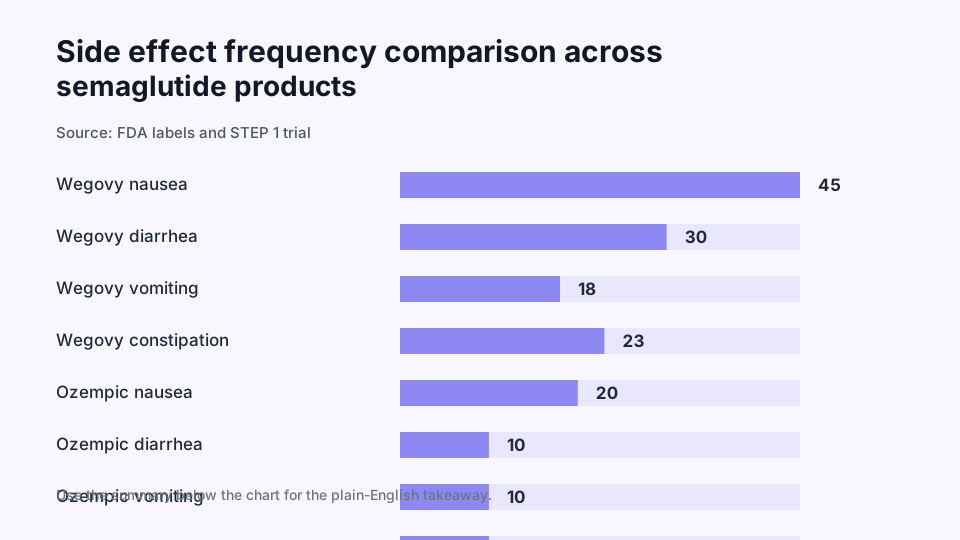
The most frequently reported side effects across all semaglutide products are gastrointestinal. In the STEP 1 trial of Wegovy 2.4 mg weekly, nausea was reported by about 40 to 50% of participants, diarrhea by about 30%, vomiting by 15 to 20%, and constipation by 20 to 25%. These symptoms were most common during dose escalation and often lessened over time, but not for everyone. About 7 to 9% of participants stopped Wegovy specifically because of gastrointestinal side effects, and in the full dataset discontinuation was around 10 to 15%.
At lower doses used for type 2 diabetes, the Ozempic label lists nausea in up to 20% of people, diarrhea in about 10%, and vomiting in about 10%. Rybelsus, the oral form, shows similar patterns with nausea in 15 to 20%, diarrhea in 10 to 15%, and vomiting in about 10%. The oral form requires taking the tablet on an empty stomach with a small amount of water, then waiting at least 30 minutes before eating or taking other medicines, which can affect morning routines and tolerability.
In practice, these side effects usually show up within the first few days after a dose increase. Many people describe feeling queasy, full quickly, or having an upset stomach that lasts a day or two. For some, symptoms settle once the dose is stable. For others, they persist or worsen, leading to a decision to lower the dose or stop. The statistics tell you that stomach side effects are more likely than not, but they do not predict how you personally will feel.
| Product | Dose range | Nausea | Diarrhea | Vomiting | Constipation | Discontinuation due to GI issues |
|---|---|---|---|---|---|---|
| Wegovy (obesity) | 2.4 mg weekly | ~40–50% | ~30% | ~15–20% | ~20–25% | ~7–9% |
| Ozempic (diabetes) | 0.5–2 mg weekly | ~20% | ~10% | ~10% | ~10% | Lower, often single-digit % |
| Rybelsus (diabetes) | 3–14 mg daily | ~15–20% | ~10–15% | ~10% | ~10% | ~5–10% depending on dose |
Source: Percentages are approximate and drawn from FDA labels and STEP 1 trial data. Exact rates vary by dose and individual tolerance.
Serious and rare risks
Semaglutide labels carry warnings about several serious but uncommon risks. Acute pancreatitis (inflammation of the pancreas) has been reported in clinical trials and post-marketing surveillance. The absolute number of cases is low, but the condition can be severe and requires immediate medical attention. Warning signs include severe upper abdominal pain that may radiate to the back, persistent vomiting, and fever. If you have a history of pancreatitis, your clinician will weigh whether semaglutide is appropriate.
Gallbladder disease, including gallstones and cholecystitis (inflammation of the gallbladder), has also been reported more frequently in people taking semaglutide compared with placebo. Rapid weight loss itself increases gallstone risk, so it can be hard to separate the effect of the medicine from the effect of losing weight quickly. Symptoms include severe pain in the upper right abdomen, nausea, vomiting, and sometimes fever. If you already have gallstones or a history of gallbladder problems, discuss this risk before starting.
The labels also include a boxed warning about thyroid C-cell tumors based on rodent studies. Semaglutide caused thyroid tumors in rats and mice at doses much higher than human doses. It is not known whether semaglutide causes thyroid tumors in humans,; however, the medicine is contraindicated in people with a personal or family history of medullary thyroid carcinoma or Multiple Endocrine Neoplasia syndrome type 2 (MEN 2). If you have unexplained neck lumps, hoarseness, or difficulty swallowing, tell your clinician.
Other rare but serious risks listed in the labels include severe allergic reactions, kidney problems (especially in people who become dehydrated from vomiting or diarrhea), diabetic retinopathy complications in people with diabetes, and low blood sugar (hypoglycemia) when semaglutide is used with insulin or sulfonylureas. The in the full dataset rate of serious adverse events in major trials was similar between semaglutide and placebo, meaning most differences were in tolerability rather than dangerous events.
Cardiovascular benefits and the SELECT trial
The SELECT trial enrolled adults with obesity or overweight and established cardiovascular disease but without diabetes. Participants were randomized to semaglutide 2.4 mg weekly or placebo and followed for a median of about 40 months. The primary outcome was a composite of cardiovascular death, nonfatal heart attack, or nonfatal stroke (MACE). Semaglutide reduced MACE by about 20% compared with placebo, a statistically significant and clinically meaningful result.
This finding led FDA to approve Wegovy in March 2024 for reducing the risk of cardiovascular death, heart attack, and stroke in adults with obesity or overweight and established cardiovascular disease. For people in this group, the cardiovascular benefit can outweigh the risk of gastrointestinal side effects and other tolerability issues. The trial also showed that the safety profile in this population was consistent with earlier obesity trials, with gastrointestinal events being the most common adverse reactions.
If you have obesity and a history of heart attack, stroke, or peripheral artery disease, the SELECT data suggest that semaglutide may lower your chance of another major cardiovascular event. This is a different calculation than using semaglutide primarily for weight loss without cardiovascular disease. Your clinician can help you weigh the cardiovascular benefit against your personal side effect risk and other factors like cost and access.
| Outcome | Semaglutide 2.4 mg weekly | Placebo | Relative risk reduction |
|---|---|---|---|
| MACE (CV death, nonfatal MI, nonfatal stroke) | ~6.5% | ~8.0% | ~20% |
| Cardiovascular death | ~2.5% | ~3.0% | ~15% |
| Nonfatal heart attack | ~2.7% | ~3.5% | ~28% |
| Nonfatal stroke | ~1.5% | ~1.9% | ~7% (not statistically significant) |
Source: Approximate event rates from SELECT trial published in NEJM. Follow-up was about 40 months. MACE = major adverse cardiovascular events; MI = myocardial infarction; CV = cardiovascular.
Weight regain and what happens when you stop
One of the most important statistics for people considering semaglutide is what happens after stopping. A follow-up study of participants who completed a semaglutide weight-loss trial found that within one year of stopping the medicine, participants regained about two-thirds of the weight they had lost. Blood pressure, cholesterol, and blood sugar also trended back toward baseline levels. This does not mean semaglutide is ineffective,; however, it does mean the medicine is not a permanent fix.
In practice, this means you should think about how long you are willing or able to stay on semaglutide and what lifestyle changes you can sustain after stopping. Some people plan to stay on a maintenance dose indefinitely. Others use semaglutide as a bridge to build new habits around food, activity, and sleep, then taper off. Either approach can work, but the statistics suggest that without continued treatment or major lifestyle changes, weight regain is likely.
For people with type 2 diabetes, stopping semaglutide usually means blood sugar rises back toward pre-treatment levels unless another diabetes medicine or significant lifestyle change continues. A1c (HbA1c, a measure of average blood sugar over about three months) typically increases within a few months of stopping. This is why clinicians often recommend a plan for what comes next before you stop, rather than stopping abruptly without a follow-up strategy.
Dose escalation and why it matters
Semaglutide is started at a low dose and increased gradually over several weeks or months. For Wegovy, the typical schedule is 0.25 mg weekly for four weeks, then 0.5 mg for four weeks, then 1 mg, 1.7 mg, and finally 2.4 mg, with each step lasting at least four weeks. For Ozempic, the schedule is similar but may stop at 1 mg or 2 mg depending on the indication. Rybelsus starts at 3 mg daily for 30 days, then increases to 7 mg, and may go to 14 mg if needed.
This gradual increase is designed to reduce side effects, but it also means the first few months involve repeated dose changes, and each change can bring a new wave of nausea or stomach discomfort. Many people find the first dose increase (from 0.25 mg to 0.5 mg for Wegovy, or from 3 mg to 7 mg for Rybelsus) the hardest. If side effects are severe at any step, your clinician may slow the escalation or hold at a lower dose.
Understanding this pattern helps you prepare. If you start semaglutide, expect the first 8 to 12 weeks to be the most uncomfortable. Plan lighter meals, avoid high-fat or heavy foods around dose days, and keep your clinician informed about what you are feeling. If you can tolerate the escalation phase, side effects often improve once you reach a stable maintenance dose.
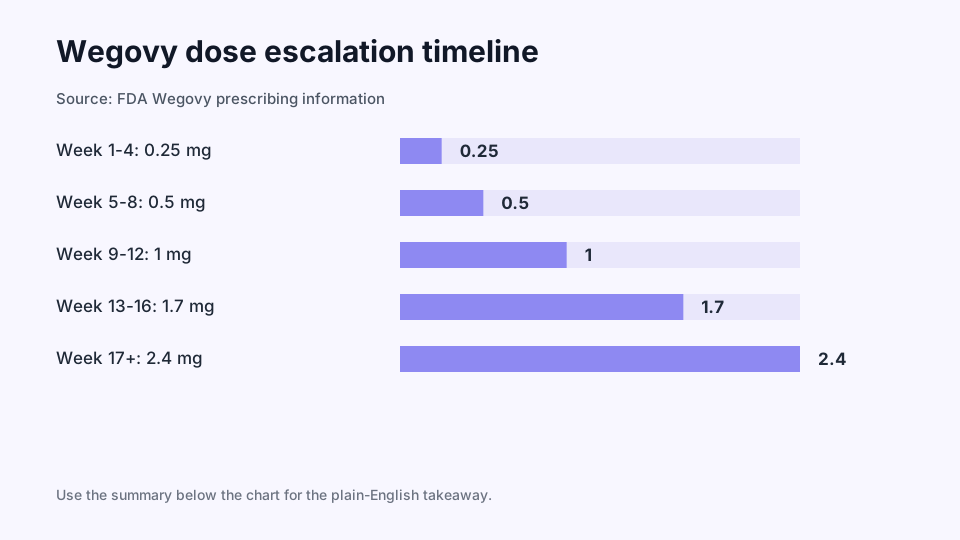
Typical Wegovy escalation schedule starts at 0.25 mg weekly for four weeks, then increases every four weeks to 0.5 mg, 1 mg, 1.7 mg, and finally 2.4 mg maintenance dose, with each step potentially bringing new side effects.
Comparing semaglutide to other GLP-1 medicines
Semaglutide is not the only GLP-1 medicine available in 2026. Tirzepatide (Mounjaro for diabetes, Zepbound for weight loss) is a dual GIP/GLP-1 receptor agonist that often produces more weight loss than semaglutide but with a similar side effect profile. Liraglutide (Saxenda for weight loss, Victoza for diabetes) is an older daily injection with lower weight loss and somewhat less nausea than higher-dose semaglutide. Dulaglutide (Trulicity) is a weekly injection for diabetes with a side effect profile similar to Ozempic.
In head-to-head trials, tirzepatide has shown greater weight loss than semaglutide, but gastrointestinal side effects remain the most common issue. Some people who cannot tolerate semaglutide do better on liraglutide because the dose is lower and the escalation is slower. Others find that switching from one GLP-1 to another does not change their side effect experience much because the mechanism is similar.
If you are comparing options, ask your clinician about the trade-offs: how much weight loss or A1c reduction you might expect, how often you need to inject or take a pill, what the side effect rates look like in trials, and what your insurance covers. The statistics for semaglutide are well established, but they are not dramatically different from other GLP-1 medicines in terms of tolerability.
Cost, coverage, and access in the United States
Semaglutide list prices in the United States are high. Wegovy typically costs around $1,300 to $1,500 per month without insurance. Ozempic and Rybelsus have similar list prices. Most people do not pay the full list price because of insurance, manufacturer savings programs, or pharmacy discount cards, but out-of-pocket costs vary widely depending on your plan and whether your use is for diabetes, obesity, or cardiovascular risk reduction.
Insurance coverage for semaglutide depends on the indication. Most plans cover Ozempic and Rybelsus for type 2 diabetes, often with prior authorization. Coverage for Wegovy for weight loss is less consistent; some plans exclude weight-loss medicines entirely, while others cover Wegovy with restrictions. The March 2024 FDA approval of Wegovy for cardiovascular risk reduction has started to change coverage patterns, and some insurers now cover Wegovy for people with obesity and established cardiovascular disease even if they previously excluded weight-loss indications.
Medicare Part D traditionally did not cover medicines for weight loss,; however, the Medicare GLP-1 Bridge program launched by CMS in 2024 and 2025 is expanding access for certain GLP-1 medications used to reduce cardiovascular risk. This means some Medicare beneficiaries with obesity and cardiovascular disease may now have coverage for Wegovy under Part D, depending on their plan. Check with your plan or use the CMS Medicare GLP-1 Bridge resources to see if you qualify.
Novo Nordisk, the manufacturer of Ozempic, Wegovy, and Rybelsus, offers savings programs and patient assistance for people who qualify. These programs can reduce out-of-pocket costs significantly, but eligibility rules vary. If cost is a barrier, ask your clinician or pharmacist about manufacturer programs, pharmacy discount cards, or alternative GLP-1 medicines that may be covered differently by your plan.
| Product | Typical list price per month | Common insurance coverage | Medicare Part D coverage | Manufacturer savings program |
|---|---|---|---|---|
| Wegovy 2.4 mg weekly | ~$1,300–$1,500 | Variable; improving for CV indication | Expanding under Medicare GLP-1 Bridge for CV risk | Yes, eligibility varies |
| Ozempic 1–2 mg weekly | ~$900–$1,000 | Usually covered for type 2 diabetes with prior auth | Yes, for diabetes | Yes, eligibility varies |
| Rybelsus 7–14 mg daily | ~$900–$1,000 | Usually covered for type 2 diabetes with prior auth | Yes, for diabetes | Yes, eligibility varies |
Source: Prices are approximate and vary by pharmacy and insurance. Coverage details depend on individual plan and indication. Check CMS and Novo Nordisk resources for current programs.
Unapproved and compounded semaglutide products
During periods of semaglutide shortage in 2022 and 2023, compounded versions of semaglutide became widely available from compounding pharmacies, online sellers, and wellness clinics. FDA has issued multiple warnings about unapproved GLP-1 drugs, including compounded semaglutide, citing concerns about dosing accuracy, purity, contamination, and lack of FDA oversight. Some compounded products have been found to contain incorrect doses, impurities, or even entirely different substances.
As of 2026, FDA has clarified that compounding of semaglutide is generally not permitted when the approved products are available, except in specific circumstances allowed under federal compounding law. If you are considering a compounded or unapproved semaglutide product, understand that the side effect risks are less predictable and the product may not contain what the label claims. FDA-approved Ozempic, Wegovy, and Rybelsus from a licensed pharmacy are the safest options.
Some online sellers market semaglutide as a research chemical, peptide, or dietary supplement. These products are not FDA-approved for any use and carry significant safety risks. If a product is much cheaper than the approved brands, requires no prescription, or is sold by a company that does not appear to be a licensed pharmacy, it is likely unapproved and potentially unsafe.
What to track and how to prepare
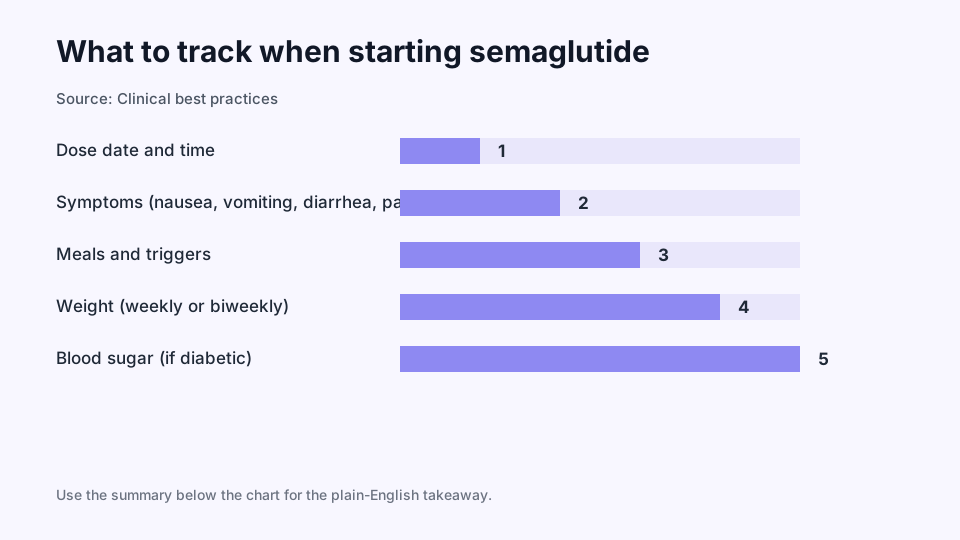
If you are starting semaglutide, tracking a few main things can help you and your clinician make decisions about dose, timing, and whether to continue. Consider keeping a simple weekly log that includes the date and time of your dose, any symptoms (nausea, vomiting, diarrhea, constipation, stomach pain), what you ate that day, and how you felt in the full dataset. You do not need a fancy app; a notebook or phone note works fine.
Track your weight and waist measurement every one to four weeks, not daily. Daily weight fluctuates with water, food, and hormones, and obsessing over small changes can be stressful. A weekly or biweekly measurement gives you a clearer trend without the noise. If you have diabetes, track your blood sugar and A1c as your clinician recommends, and watch for low blood sugar if you are also taking insulin or a sulfonylurea.
Before starting, write down your current medicines, supplements, and any history of pancreatitis, gallbladder disease, thyroid problems, or severe stomach issues. Bring this list to your appointment and ask directly how semaglutide fits with your history. If you have questions about side effects, cost, or how long you might stay on the medicine, ask them before you start, not after you have already paid for the first month.
If side effects become severe, do do not simply wait them out. Repeated vomiting, inability to keep fluids down, severe abdominal pain, or signs of dehydration (dark urine, dizziness, confusion) should prompt urgent medical review. The label warnings about pancreatitis and gallbladder disease are there because these conditions can be serious and require immediate care.
A simple weekly log helps you and your clinician see patterns and make decisions about dose and timing, especially during the escalation phase when side effects are most common.
Questions to ask your clinician or pharmacist
Before starting semaglutide, consider asking your clinician these questions: Given my history of [condition], how do you see the risk-benefit of semaglutide for me? What side effects should I watch for, and when should I call you instead of waiting? How long do you expect me to stay on this medicine, and what is the plan if I need to stop? If I cannot tolerate the full dose, can I stay on a lower dose and still get benefit? What other GLP-1 medicines might be options if semaglutide does not work for me?
Ask your pharmacist about cost and coverage: What will my out-of-pocket cost be for the first month? Are there manufacturer savings programs I qualify for? If my insurance does not cover this, what are my options? Can I use a discount card or patient assistance program? If I am considering a compounded product because of cost, what are the safety risks compared with the FDA-approved version?
If you are already on semaglutide and having side effects, ask: Is this level of nausea or stomach pain normal, or should I be concerned? Can I slow down the dose increases to reduce side effects? What can I do to manage nausea or constipation at home? If I stop, what is the plan for my weight or blood sugar? Will I need another medicine, or should we focus on lifestyle changes?
Real-life scenarios and decision points
Consider a 45-year-old person with obesity and a history of heart attack. They start Wegovy and have moderate nausea during the first few dose increases but tolerate it with smaller meals and ginger tea. By the time they reach 2.4 mg weekly, the nausea has mostly settled, and they lose about 12% of their body weight over six months. Their cardiologist explains that the SELECT trial data suggest a 20% reduction in future heart attacks and strokes, which feels worth the early discomfort. They plan to stay on Wegovy long-term and work with a dietitian to build habits they can keep if they ever need to stop.
Now consider a 35-year-old person without diabetes or heart disease who starts Wegovy primarily for cosmetic weight loss. They have severe nausea and vomiting at the 0.5 mg dose, miss work twice, and feel miserable. Their clinician suggests slowing the escalation or trying a lower dose, but the person decides the side effects are not worth it for their goals. They stop Wegovy after six weeks and focus on working with a dietitian and personal trainer instead. Both decisions are reasonable; the statistics do not tell you which choice is right for you.
A third scenario: a 60-year-old person with type 2 diabetes starts Ozempic 0.5 mg weekly. They have mild nausea for a few days after each injection but no vomiting or severe symptoms. Their A1c drops from 8.5% to 7.0% over three months, and they lose about 10 pounds. They stay on Ozempic for two years, then their insurance changes and no longer covers it. They switch to a different diabetes medicine, and within six months their A1c rises back to 8.0% and they regain most of the weight. They wish they had planned ahead for what would happen if they lost coverage.
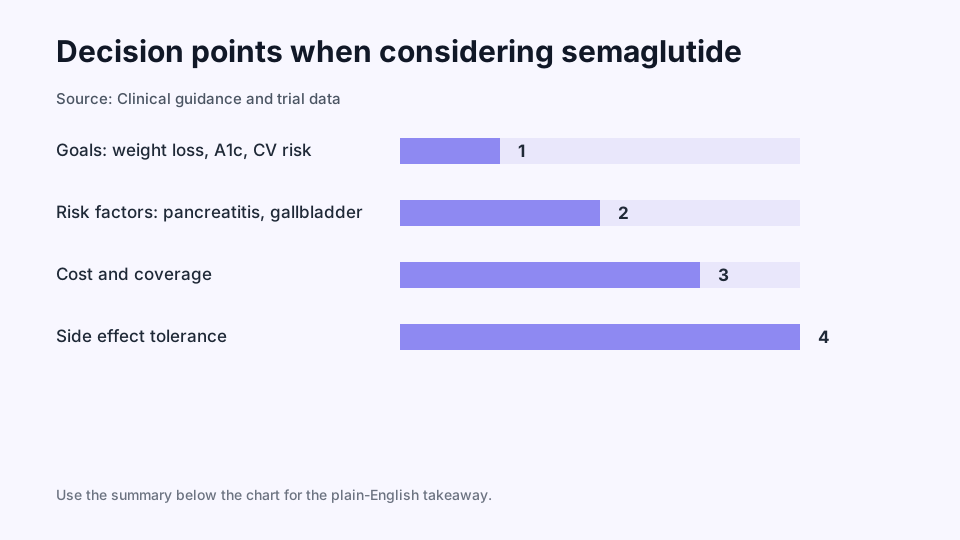
Your decision to start, continue, or stop semaglutide depends on your goals (weight loss, blood sugar control, cardiovascular risk reduction), risk factors (history of pancreatitis or gallbladder disease), cost and insurance coverage, and how you tolerate side effects.
Limitations of the statistics and what they cannot tell you
The statistics in this guide come from clinical trials, FDA labels, and peer-reviewed studies. They tell you what happened on average in large groups of people, but they cannot predict your personal experience. You might be in the half of people who have no nausea, or you might be in the 10% who stop because of severe side effects. The numbers give you a sense of likelihood, not certainty.
Trial populations are also not perfectly representative of everyone who uses semaglutide in real life. Most trials excluded people with severe kidney disease, active pancreatitis, or certain other conditions. If you have complex medical issues, your risk profile may be different from the trial averages. This is why decisions about starting, continuing, or stopping semaglutide must be made with a clinician who knows your full history.
The statistics also cannot tell you whether the benefits outweigh the risks for you personally. That calculation depends on your goals (weight loss, blood sugar control, cardiovascular risk reduction), your tolerance for side effects, your financial situation, and your ability to stay on treatment long-term. A 20% reduction in heart attacks may be life-changing if you have heart disease, or it may feel abstract if you are young and healthy. The numbers are the same, but the meaning is different.
Looking ahead what might change after 2026
Semaglutide is well established in 2026, but the market around GLP-1 medicines continues to evolve. Newer medicines like tirzepatide and oral GLP-1 options are expanding. Generic or biosimilar versions of semaglutide may eventually become available, which could lower costs. Insurance coverage policies are shifting as more data on cardiovascular and other health outcomes accumulate. Medicare and Medicaid policies may continue to expand access, or they may tighten depending on budget pressures and political decisions.
Long-term safety data will also continue to grow. Most semaglutide trials followed people for one to three years, but many people are now using the medicine for longer. Post-marketing surveillance and real-world studies will help clarify whether rare risks become more common with longer use, and whether benefits like cardiovascular risk reduction hold up over decades.
If you are starting semaglutide in 2026, expect the core side effect profile to stay the same, but watch for updates on coverage, cost, and long-term outcomes. Check FDA and CMS pages annually, and ask your clinician about new data or policy changes that might affect your treatment plan.
| Question | Current source-backed figure | Why it matters |
|---|---|---|
| Common digestive effects | Nausea 44%, diarrhea 30%, vomiting 24%, constipation 24% in Wegovy 2.4 mg adult trials | Sets expectations for the symptoms people most often track. |
| Stopping for side effects | 6.8% stopped Wegovy because of adverse reactions in pooled adult trials | Shows how often tolerability led to permanent stopping. |
| Gallstones | 1.6% with Wegovy versus 0.7% with placebo | Separates uncommon but meaningful risks from common symptoms. |
| Weight after stopping | STEP 1 extension reported about two-thirds of prior loss regained after withdrawal | Makes maintenance and access planning part of the decision. |
| Medicare Bridge | $50 monthly for eligible beneficiaries through December 31, 2027 | Separates a demonstration copay from ordinary plan coverage. |
Source: FDA Wegovy prescribing information, STEP 1 extension, and CMS Medicare GLP-1 Bridge materials cited in this guide.
How this guide was built
- This guide prioritizes FDA prescribing information (Wegovy, Ozempic, Rybelsus labels), major peer-reviewed trials (STEP 1, SELECT), and main regulator and government pages (FDA press releases, CMS coverage pages). Where possible, statistics are drawn directly from these primary or near-primary sources.
- Core safety and side effect information for semaglutide products was last checked against FDA labels and main trials on July 22, 2026.
- Marketing blogs, affiliate sites, peptide sellers, and speculative approval trackers were excluded. General news summaries and commentaries were used only to cross-check against primary sources, not as main evidence for side effect rates or safety.
- This guide cannot determine for an individual patient whether you personally will tolerate semaglutide well or poorly, whether your benefits outweigh your specific risks, or the exact cost and coverage details for your insurance plan and pharmacy. Decisions about starting, continuing, or stopping semaglutide must be made with a clinician who knows your full medical history. This text is source-reviewed only and not a substitute for medical advice.
Update history
- Updated source review.
Data download
Download the source table used for this statistics page.
Gastrointestinal side effects are most common with higher-dose Wegovy, but all semaglutide products share a similar pattern, with nausea being the most frequently reported symptom.