Introduction
U.S. tirzepatide trial results, Zepbound approval, side effects, pricing, Medicare access, coverage questions, and what happens after stopping.
Eight facts to know
- 20.9% - Average loss with 15 mg at 72 weeks in SURMOUNT-1
- 57% - 15 mg participants losing at least 20% of starting weight
- 20.2% - Average loss with tirzepatide in SURMOUNT-5
- 13.7% - Average loss with semaglutide in the same trial
- 14.0% - Average regain after switching to placebo in SURMOUNT-4
- $299 - Listed regular self-pay price for 2.5 mg per 28 days
- $50 - Stated Medicare GLP-1 Bridge copay for eligible beneficiaries
- 6.2% - 15 mg participants discontinuing because of adverse events
What tirzepatide is approved to treat
Tirzepatide acts at glucose-dependent insulinotropic polypeptide, or GIP, and glucagon-like peptide-1, or GLP-1, receptors. People often call it a GLP-1 medicine, although it acts at both receptors. Zepbound is the tirzepatide brand FDA-approved for chronic weight management in eligible adults. Mounjaro contains the same ingredient but is the brand approved for type 2 diabetes. FDA also approved Zepbound for adults with obesity and moderate-to-severe obstructive sleep apnea. That indication does not mean every person with snoring or tiredness qualifies. A clinician determines whether the labeled use and a person's health history fit.
| Date | Milestone | Why it matters |
|---|---|---|
| June 4, 2022 | SURMOUNT-1 published online | The landmark 72-week obesity trial reported up to 20.9% average loss. |
| November 8, 2023 | FDA first approved Zepbound | Tirzepatide received a U.S. obesity brand separate from Mounjaro. |
| December 20, 2024 | FDA approved the sleep-apnea indication | A second indication was added for qualifying adults with obesity. |
| May 11, 2025 | SURMOUNT-5 published online | A direct tirzepatide and semaglutide comparison became available. |
| July 1, 2026 | Medicare GLP-1 Bridge began | Eligible beneficiaries gained a temporary access route for listed products. |
Source: Sources: NEJM SURMOUNT-1; NEJM SURMOUNT-5; FDA approval announcement; CMS Medicare GLP-1 Bridge.
What 20.9 percent weight loss means
SURMOUNT-1 enrolled 2,539 adults with obesity, or with overweight plus a weight-related condition, who did not have diabetes. At week 72, average weight change was 15.0% with 5 mg, 19.5% with 10 mg, and 20.9% with 15 mg. The placebo group lost 3.1% on average. At a 200-pound starting weight, 20.9% is about 42 pounds. At 250 pounds, it is about 52 pounds, and at 300 pounds, about 63 pounds. Those conversions make the trial average easier to picture, but they are not a target or a prediction. Weight change varied, and the trial included lifestyle support alongside medicine. The timeframe matters as much as the percentage. Participants had a 20-week gradual dose-escalation period, and the study followed them for 72 weeks. A person deciding after a few weeks or months is looking far earlier than the endpoint behind the headline number.
| Treatment group | Average weight change | Lost at least 5% | Lost at least 20% |
|---|---|---|---|
| Tirzepatide 5 mg | -15.0% | 85% | Not a primary headline result |
| Tirzepatide 10 mg | -19.5% | 89% | 50% |
| Tirzepatide 15 mg | -20.9% | 91% | 57% |
| Placebo | -3.1% | 35% | 3% |
Source: Source: New England Journal of Medicine, SURMOUNT-1. The treatment-regimen analysis includes outcomes regardless of whether participants remained on assigned treatment.
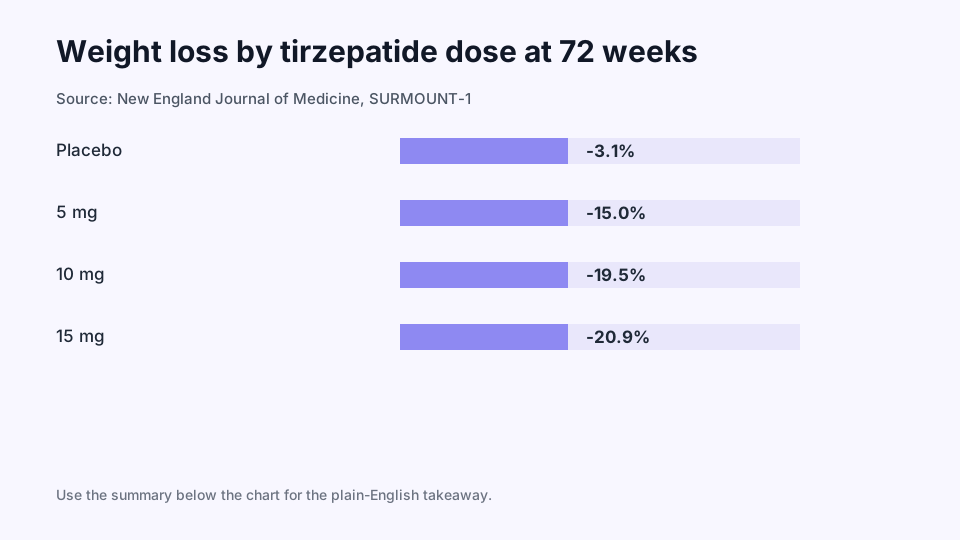
The chart compares average 72-week weight change across the studied tirzepatide doses and placebo, showing that the headline result took more than a year.
How tirzepatide compared with semaglutide
SURMOUNT-5 offers the cleanest comparison with semaglutide because the medicines were tested in the same randomized 72-week trial. Among 751 adults without diabetes, average weight change was 20.2% with tirzepatide and 13.7% with semaglutide at the highest dose each participant could tolerate. The difference was about 6.5 percentage points of starting weight. For a person beginning at 250 pounds, that is roughly 16 pounds on average. It is useful evidence, but it does not settle the best choice for every person. Insurance rules, out-of-pocket cost, other medicines, prior response, and tolerability can matter as much as the group average.
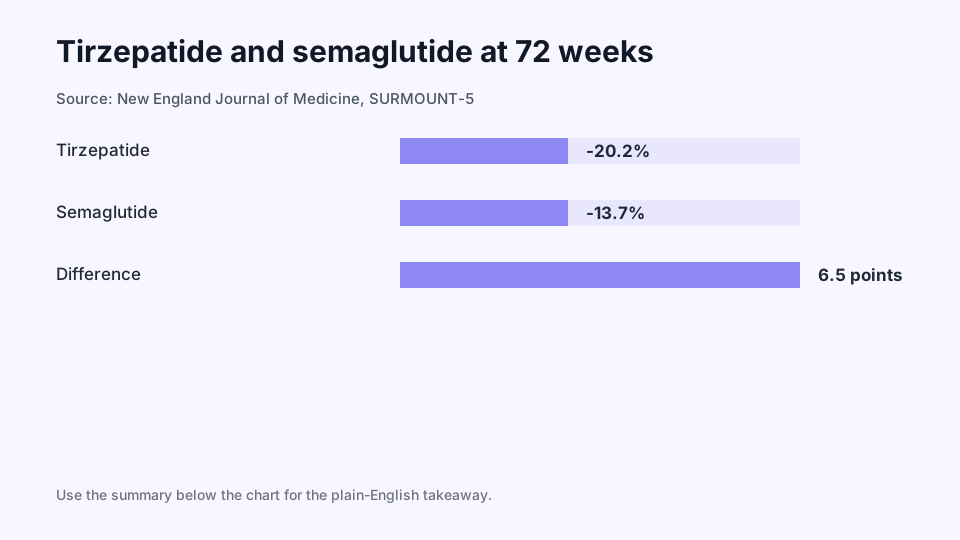
The direct comparison shows a 6.5-percentage-point average difference in starting-weight loss at week 72, rather than a comparison between separate trials.
What happened when treatment stopped
SURMOUNT-4 began with 36 weeks in which all participants received tirzepatide. People who reached randomization had lost 20.9% on average. They then either continued tirzepatide or switched to placebo for another 52 weeks. People who continued lost another 5.5% on average from week 36 to week 88. People switched to placebo regained 14.0% over the same period. From the beginning through week 88, average loss was 25.3% with continued tirzepatide and 9.9% after the placebo switch. Regain is not a personal failure, and the trial cannot predict an individual's path after stopping. It does show that obesity treatment often needs a long-term conversation about cost, coverage changes, side effects, follow-up, and a plan if access ends.
| Period and group | Average weight change | Practical meaning |
|---|---|---|
| Before randomization, 36-week tirzepatide lead-in | -20.9% | Participants had already lost substantial weight before the withdrawal comparison. |
| Week 36 to week 88, continued tirzepatide | -5.5% | Average loss continued after the lead-in. |
| Week 36 to week 88, switched to placebo | +14.0% | Average regain followed withdrawal. |
| Beginning to week 88, continued tirzepatide | -25.3% | Average total loss with ongoing treatment. |
| Beginning to week 88, placebo switch | -9.9% | Some initial loss remained on average, despite regain. |
Source: Source: JAMA, SURMOUNT-4. The post-randomization figures describe participants who completed the 36-week lead-in and were randomized.
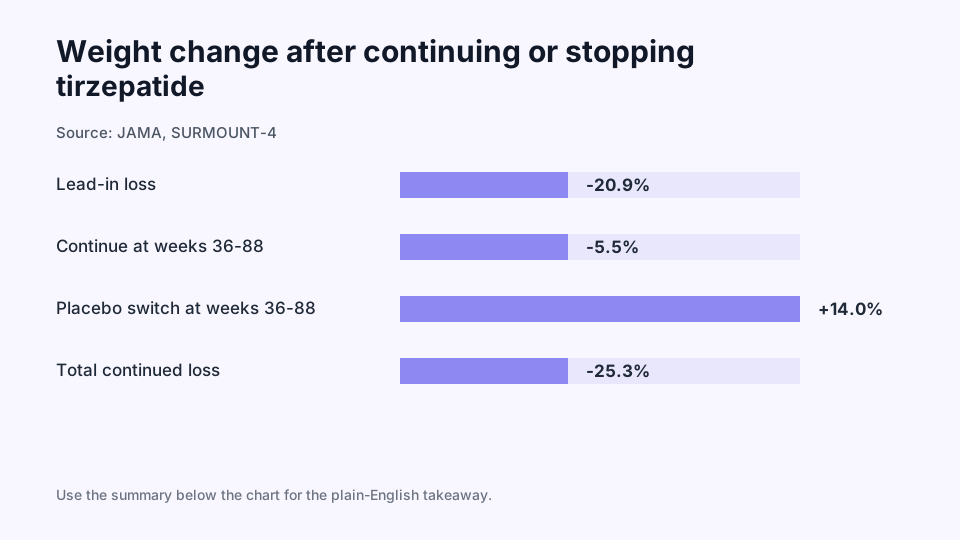
After participants first lost weight on tirzepatide, continued treatment was linked with further average loss while a placebo switch was linked with average regain.
Longer follow-up in people with prediabetes
A three-year SURMOUNT-1 analysis focused on participants with obesity and prediabetes. At week 176, average weight change was 19.7% with 15 mg, 18.7% with 10 mg, and 12.3% with 5 mg, versus 1.3% with placebo. During treatment, type 2 diabetes was diagnosed in 1.3% of tirzepatide-treated participants and 13.3% of placebo participants. That result is encouraging for people with prediabetes, but it does not prove permanent diabetes prevention after treatment ends. After 17 weeks off treatment, diagnoses rose in both groups. A1c, also called HbA1c or hemoglobin A1c, estimates average blood sugar over roughly the prior two to three months and may be one measure a clinician follows.
Cost coverage and Medicare access
Lilly's listed self-pay terms are manufacturer program prices, not insurance coverage and not a promise of what every pharmacy will charge. A listed month is 28 days, and taxes or fees may apply. Commercial savings programs have eligibility rules, and people with Medicare, Medicaid, or other government insurance should not assume they qualify. Private plans may exclude weight-management medicines, require prior authorization, require a diagnosis, or prefer another medicine first. Ask about the exact Zepbound formulation, the prior-authorization criteria, renewal rules, deductible, and pharmacy channel. A manufacturer announcement that a template plan will add coverage does not establish coverage under a particular employer plan. The CMS Medicare GLP-1 Bridge started July 1, 2026 and runs through December 31, 2027. CMS says eligible Medicare Part D beneficiaries may access listed medicines through this temporary program with a $50 copay, subject to eligibility and prior authorization. CMS lists Zepbound KwikPen, rather than single-dose pens or vials, for the Zepbound option.
| Item | Current figure or rule | What it means |
|---|---|---|
| Zepbound 2.5 mg | $299 per 28 days | Lilly's listed regular self-pay price for named vial or KwikPen options. |
| Zepbound 5 mg | $399 per 28 days | A manufacturer price that can change. |
| Zepbound 7.5 mg | $499 regular price, $449 eligible continuing-fill offer | The offer has timing and eligibility conditions. |
| Zepbound 10 mg, 12.5 mg or 15 mg | $699 regular price, $449 eligible continuing-fill offer | This is not a final-cost guarantee or insurance reimbursement. |
| Medicare GLP-1 Bridge | $50 stated copay | Only eligible beneficiaries and eligible products through December 31, 2027. |
Source: Sources: Lilly Zepbound coverage, affordability, and savings; CMS Medicare GLP-1 Bridge. Prices and program terms can change.
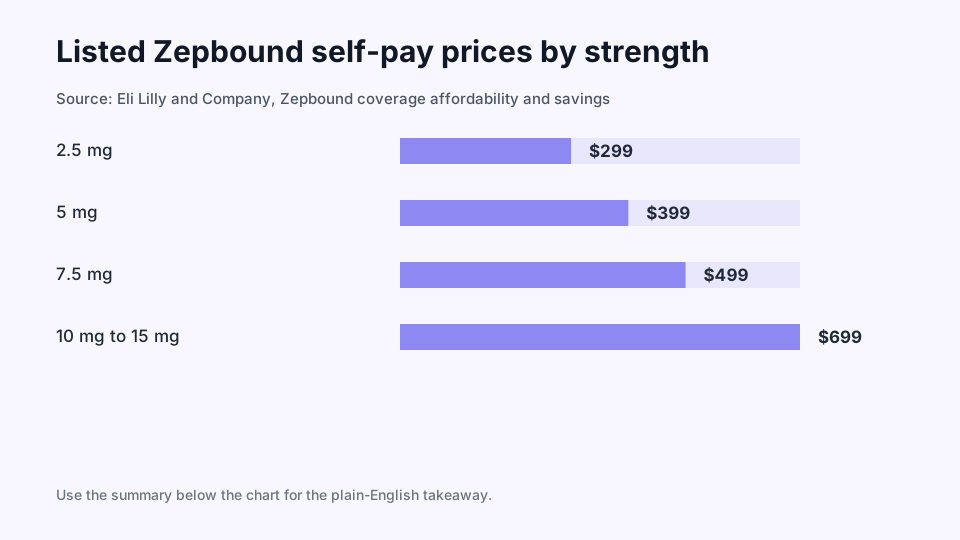
The chart shows Lilly's listed regular 28-day self-pay prices before any eligible continuing-fill offer, which are separate from insurance coverage and final pharmacy cost.
Side effects and safety limits to discuss
In SURMOUNT-1, the most common effects were gastrointestinal: nausea, diarrhea, constipation, vomiting, and abdominal discomfort. They were usually mild to moderate and occurred most often while doses were being increased. Adverse events led 6.2% of the 15 mg group to discontinue, compared with 2.6% of the placebo group. Zepbound's FDA label has a boxed warning based on thyroid C-cell tumors in rats. Whether tirzepatide causes these tumors in humans is unknown. It should not be used by people with a personal or family history of medullary thyroid carcinoma or with Multiple Endocrine Neoplasia syndrome type 2. In January 2026, FDA requested removal of the suicidal behavior and ideation warning from certain GLP-1 receptor agonist labels after its review did not identify an increased risk. That finding does not replace a conversation about mood or mental-health changes when they are relevant to a person's care.
Questions that can make an appointment more useful
- Is Zepbound approved for the reason I am seeking treatment?
- Does my history raise concerns about thyroid cancer risk, gallbladder disease, pancreatitis, kidney problems, pregnancy, or my other medicines?
- If I use diabetes medicines, could treatment change the safety or dose needs of those medicines?
- Which Zepbound formulation does my plan cover, and what prior authorization and renewal documentation does it require?
- What will my expected pharmacy cost be after my deductible and any approved benefit?
- If cost, side effects, or coverage force a stop, what follow-up plan makes sense?
- Is the product being dispensed an FDA-approved product rather than a compounded tirzepatide product?
FDA says compounded tirzepatide products are not FDA-approved. As of May 31, 2026, FDA had received more than 730 adverse-event reports associated with compounded tirzepatide. These reports cannot prove a compounded product caused an event and may be incomplete, but they are a reason to ask clearly about the product source and instructions for use.
A simple record for follow-up visits
A useful record can be brief. Keep the injection date, prescribed dose, weight trend, appetite changes, nausea or bowel symptoms, hydration, refills, and any coverage problem. If a clinician has asked you to monitor blood pressure, sleep-apnea treatment, A1c, or other labs, keep those results with the dates. Lina is a GLP-1 companion app for people using Wegovy, Mounjaro, Ozempic, Zepbound, Saxenda, and related medications. It helps users track doses, side effects, meals, weight, protein, hydration, and habits in one place. It is a wellness tracking companion, not a medical device or a substitute for medical advice.
Methodology
- Source priority was FDA and CMS materials for approval, safety, access, and coverage; peer-reviewed randomized trials and ClinicalTrials.gov for trial outcomes; then official Lilly materials for current manufacturer price and savings terms.
- Sources were last checked August 2, 2026. Prices, savings programs, formularies, eligibility rules, and FDA labeling can change.
- Excluded or treated cautiously: affiliate pages, peptide sellers, generic blogs, social-media anecdotes, pharmacy marketing, approval trackers, and unsupported pricing claims. Lilly coverage announcements are treated as manufacturer statements, not proof of individual-plan coverage.
- Trial averages cannot determine whether a person will qualify, tolerate treatment, obtain prior authorization, pay a stated amount, or regain a particular amount after stopping. A prescriber, pharmacist, and the actual insurer can address those personal questions.
Download the data
Downloadable figures cover trial weight change, direct comparison, withdrawal outcomes, and listed self-pay prices. Values reproduce the source figures cited in this guide.
Update history
- Published with U.S. trial, FDA, CMS, and Lilly information checked through August 2, 2026.