Introduction
Wegovy side effect statistics for 2026: nausea, diarrhea, vomiting, gallstones, pancreatitis, discontinuation rates, and what they mean for weight loss and...
Wegovy (semaglutide) is now one of the most studied weight and cardiovascular medicines in the US. The big picture on side effects is that most adults have some stomach issues at the start (nausea, diarrhea, vomiting, constipation), a minority stop because of these, and serious risks like pancreatitis or gallbladder disease are uncommon but real. At the same time, Wegovy trials show large, sustained weight loss and a 20% cut in major heart events (heart attack, stroke, cardiovascular death) in people with heart disease. If you are considering Wegovy or already on it, the question is how often side effects happen, how bad they are likely to be for you, and what to watch for. this guide walks through those numbers in plain language and links them to day-to-day routines, cost, coverage, and questions for your clinician.
Top facts: Wegovy side effects and outcomes in 2026 (US)
- Nausea 44%, diarrhea 30%, vomiting 24%, constipation 24%, abdominal pain 20% - Most common side effects in adult weight-loss trials
- 6.8% on Wegovy 2.4 mg vs 3.2% on placebo (roughly 1 in 15 adults stop) - Permanent discontinuation due to side effects
- 1.6% Wegovy injection vs 0.7% placebo; 3.8% vs 0% in pediatric obesity trial - Gallstones in adults
- About 0.2 cases per 100 patient-years on Wegovy vs less than 0.1 on placebo - Acute pancreatitis
- 0.4 cases per 100 patient-years Wegovy vs 0.2 placebo, mostly tied to dehydration - Serious kidney injury
- 3.3% on Wegovy 2.4 mg and 5.8% on Wegovy 7.2 mg vs 1% placebo - Hair loss
- 20% relative risk reduction in CV death, non-fatal MI, non-fatal stroke in patients with established CV disease and BMI 27 or higher - Cardiovascular benefit (MACE reduction)
- 14.9% body weight loss vs 2.4% placebo in STEP 1 (68 weeks); up to 18.8% in 7.2 mg trials - Average weight loss
In adult weight-loss trials of Wegovy injection 2.4 mg once weekly, nausea affected 44% of people on Wegovy vs 16% on placebo. In daily life, nearly half of users feel some nausea, especially in the first months as the dose escalates. It might mean smaller, slower meals, avoiding high-fat foods, or timing injections away from big social meals. Diarrhea occurred in 30% on Wegovy vs 16% placebo. About 3 in 10 people have looser stools. This can be mild or inconvenient; severe diarrhea can lead to dehydration and increase kidney risk. Vomiting affected 24% Wegovy vs 6% placebo. About 1 in 4 users vomit at some point. Repeated vomiting, especially early, may prompt dose adjustments or pausing and increases risk of dehydration. Constipation occurred in 24% Wegovy vs 11% placebo. Some people swing the other way and feel slowed digestion, bloating, or painful stools. Hydration and fiber matter more here. Abdominal pain (all types grouped) affected 20% vs 10% placebo. Stomach discomfort, not always clearly nausea or cramps, is common. Headache (10 to 14%), fatigue (5 to 11%), dizziness (4 to 8%), and reflux or heartburn (around 5%) are also more frequent on Wegovy than placebo. These symptoms cluster during dose escalation, the first 16 to 20 weeks. The label explicitly shows that serious GI reactions (severe nausea, vomiting, diarrhea) occur more during this titration period and are why dose increases may be delayed in some patients. You can reasonably expect some stomach symptoms; many people manage them by eating smaller, lower-fat meals, avoiding big meals close to the injection, and keeping hydration steady (water or oral rehydration solutions). If your job or caregiving role does not allow sudden bathroom trips or feeling unwell, plan injections and dose escalations around lighter days or weekends, and discuss slower titration with your prescriber.
| Side effect | Wegovy 2.4 mg (%) | Placebo (%) | What it means in practice |
|---|---|---|---|
| Nausea | 44 | 16 | Nearly half of users feel some nausea, especially in the first months as the dose escalates |
| Diarrhea | 30 | 16 | About 3 in 10 people have looser stools; severe diarrhea can lead to dehydration |
| Vomiting | 24 | 6 | About 1 in 4 users vomit at some point; repeated vomiting may prompt dose adjustments |
| Constipation | 24 | 11 | Some people feel slowed digestion, bloating, or painful stools |
| Abdominal pain | 20 | 10 | Stomach discomfort, not always clearly nausea or cramps, is common |
| Headache | 14 | 10 | Headaches are more frequent on Wegovy than placebo |
| Fatigue | 11 | 5 | About 1 in 10 users report fatigue |
Source: Source: Wegovy US Prescribing Information (Revised 06/2026), Adverse Reactions 6.1
In pooled adult obesity or overweight trials, 6.8% of patients on Wegovy 2.4 mg permanently stopped treatment due to adverse reactions vs 3.2% on placebo. The most common causes were nausea (1.8%), vomiting (1.2%), and diarrhea (0.7%), again mainly GI. In 7.2 mg high-dose trials, 5% stopped due to side effects, similar to 2.4 mg (5%) and higher than placebo (2%), with GI events the main reason. In pediatric obesity (12 years and older), 2.3% stopped Wegovy due to GI side effects vs 1.5% placebo. In practice, roughly 1 in 15 adults will find side effects intolerable, even with dose adjustments. That is a small fraction, but it is enough that you should know quitting is common and not a failure, especially if you gave it a fair try and stayed in close contact with your clinician.
These are the side effects worth remembering and planning for, even though they are rare.
Gallstones (cholelithiasis) occurred in 1.6% of adults on Wegovy injection vs 0.7% on placebo, and 2.5% on Wegovy tablets vs 1% placebo. In teens (12 and older), 3.8% Wegovy vs 0% placebo. Gallbladder inflammation (cholecystitis) occurred in 0.6% Wegovy injection vs 0.2% placebo in adults. Rapid weight loss itself raises gallstone risk; Wegovy adds a bit more risk even after adjusting for weight loss. Typical symptoms are sharp right upper abdominal pain, often after eating, sometimes with fever or jaundice. If you already have gallstones, mention this before starting Wegovy. Report any severe right-sided abdominal pain or fever promptly; early imaging and management help prevent complications.
Confirmed acute pancreatitis occurred in 4 Wegovy-treated adults vs 1 placebo in weight-loss trials, about 0.2 vs less than 0.1 cases per 100 patient-years. Post-marketing reports include severe and even fatal cases, though numbers are small. Pancreatitis shows up as severe, persistent upper abdominal pain that can radiate to the back, often with nausea and vomiting. In practice, over several years of use, this is a low-probability but high-impact risk. If you have had pancreatitis before, many clinicians avoid Wegovy or use it with extra caution.
In adult weight-loss trials, 7 Wegovy-treated patients (0.4 cases per 100 patient-years) developed acute kidney injury vs 4 placebo (0.2 per 100 patient-years). Most cases were tied to dehydration from severe GI side effects. If you have kidney disease, Wegovy may still be used, but you and your prescriber need a clearer plan for monitoring. Any phase of persistent vomiting or diarrhea should trigger a call to your clinician to discuss fluids, labs, or temporary dose changes.
Mean resting heart rate rose 1 to 4 beats per minute vs placebo in adult weight-loss trials. About 26% of Wegovy-treated adults had maximum increases of 20 bpm or more at any visit vs 16% on placebo. Teens had similar patterns, with more 20 bpm or higher jumps. Many people never notice this, but those with arrhythmias or advanced heart disease may need closer monitoring. Wegovy cardiovascular trial showed in the full dataset CV benefit despite this small heart-rate rise.
On Wegovy 2.4 mg, 6% reported dysesthesia (abnormal sensations like burning, tingling). On Wegovy 7.2 mg, 22% reported dysesthesia; some needed dose reduction or stopping. You might notice unusual skin sensations, most often on higher doses; they are usually reversible when dose is lowered or stopped.
At 2.4 mg, 3.3% had hair loss vs 1% placebo. At 7.2 mg, 5.8% vs 1% placebo. Pediatric trial: 4% hair loss on Wegovy vs 0% placebo. This appears tied to weight loss and metabolic change rather than direct toxicity. For some, it is a minor cosmetic issue; for others, it deeply affects body image.
| Side effect | Wegovy rate | Placebo rate | What to watch for |
|---|---|---|---|
| Gallstones (cholelithiasis) | 1.6% (injection), 2.5% (tablets) | 0.7% (injection), 1% (tablets) | Sharp right upper abdominal pain, often after eating, sometimes with fever or jaundice |
| Gallbladder inflammation (cholecystitis) | 0.6% | 0.2% | Severe right-sided abdominal pain or fever |
| Acute pancreatitis | 0.2 per 100 patient-years | Less than 0.1 per 100 patient-years | Severe, persistent upper abdominal pain that can radiate to the back, often with nausea and vomiting |
| Acute kidney injury (AKI) | 0.4 per 100 patient-years | 0.2 per 100 patient-years | Persistent vomiting or diarrhea causing dehydration; reduced urine output |
| Heart-rate increases (20 bpm or more) | 26% | 16% | Palpitations, arrhythmias, or heart-rate changes in people with heart disease |
| Dysesthesia (2.4 mg) | 6% | Not reported | Abnormal sensations like burning, tingling |
| Dysesthesia (7.2 mg) | 22% | Not reported | Abnormal sensations like burning, tingling; may need dose reduction |
| Hair loss (2.4 mg) | 3.3% | 1% | Hair thinning, mostly tied to weight loss |
| Hair loss (7.2 mg) | 5.8% | 1% | Hair thinning, mostly tied to weight loss |
Source: Source: Wegovy US Prescribing Information (Revised 06/2026), Warnings and Precautions 5.3, 5.4, 5.5, Adverse Reactions 6.1
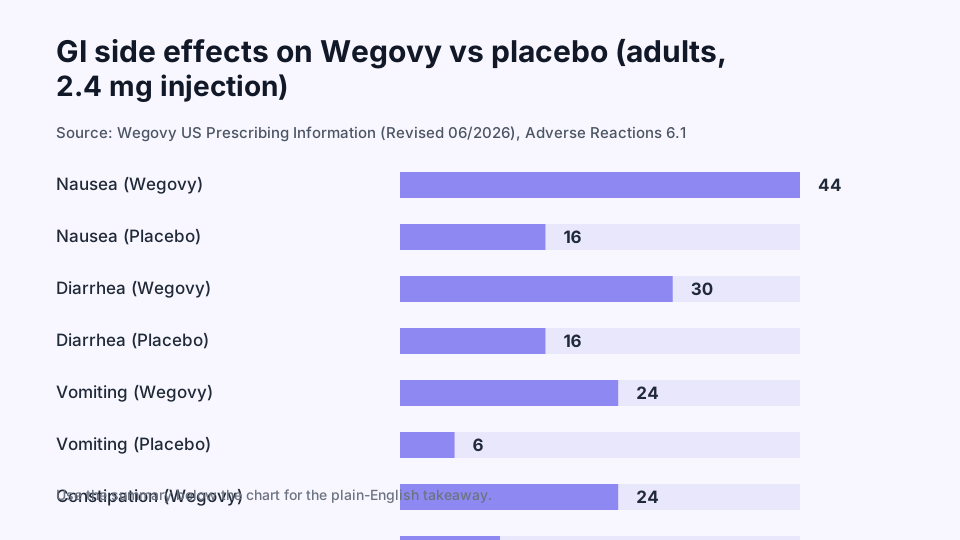
This chart shows the percentage of adults who experienced common GI side effects in Wegovy 2.4 mg injection trials compared with placebo, helping readers see at a glance that nausea, diarrhea, vomiting, constipation, and abdominal pain are more frequent on Wegovy.
In STEP 1 (NCT03548935) and related trials, adults with obesity or overweight and comorbidities lost an average 14.9% of body weight on Wegovy vs 2.4% on placebo at 68 weeks. About 66 to 72% achieved 10% or more weight loss, and 47 to 52% achieved 15% or more loss, compared with 10 to 27% and 4 to 13% on placebo. In the 7.2 mg high-dose trials, average losses approached 18.8% vs 3.9% placebo, with nearly 80% achieving 10% or more loss and 63 to 64% achieving 15% or more. Starting at 250 lb, typical Wegovy injection use over roughly 68 to 72 weeks can mean losing 37 to 47 lb, depending on dose. On oral Wegovy tablets, average loss was 13.6%, so about 34 lb off a 250-lb baseline.
A separate study of semaglutide withdrawal in people with obesity showed that after 68 weeks on semaglutide plus lifestyle and major weight loss, participants who stopped the medicine regained about two-thirds of the weight they lost over the next year, whereas those who stayed on maintained most of their loss. Practically, Wegovy is not a course that ends; the body tends to regain weight if the medicine is stopped and nothing replaces it. Long-term, this looks more like blood pressure or cholesterol medication, ongoing treatment with periodic reevaluation.
In the NEJM CV outcomes trial (Semaglutide and cardiovascular outcomes in obesity without diabetes), 17,604 adults with BMI 27 or higher, established cardiovascular disease, and no diabetes received Wegovy 2.4 mg weekly vs placebo for a mean 33 months; median follow-up roughly 41.8 months. Result: 20% relative risk reduction in MACE (CV death, non-fatal heart attack, non-fatal stroke), hazard ratio 0.80 (95% CI 0.72 to 0.90). In practice, for 1,000 similar patients treated several years, you prevent about 20 major CV events that would otherwise have occurred. For someone who has already had a heart attack or stroke, this benefit can be as important as the weight loss itself.
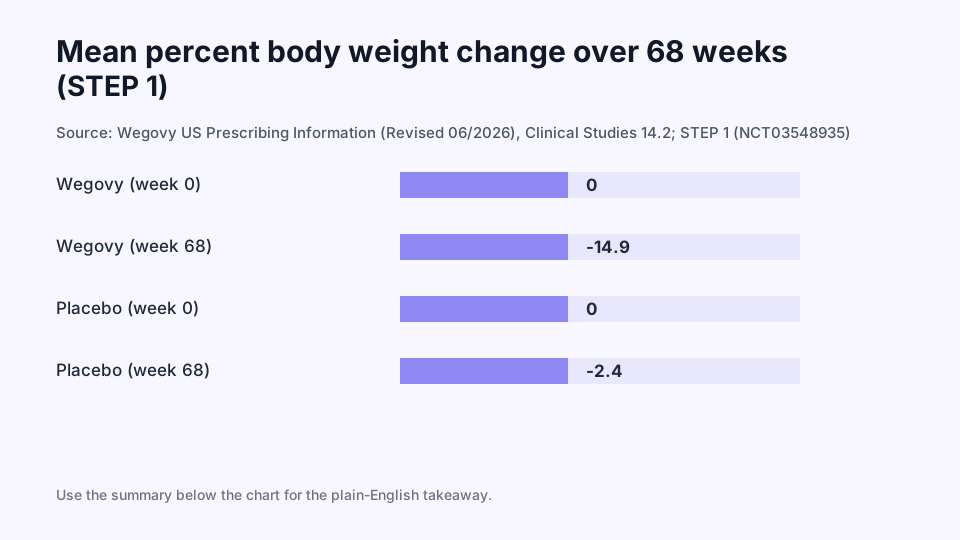
This chart shows the average weight loss trajectory over 68 weeks for adults on Wegovy 2.4 mg weekly vs placebo in the STEP 1 trial, helping readers visualize the magnitude and timeline of weight loss.
| Item | Data point | What it means for you |
|---|---|---|
| Medicare GLP-1 Bridge patient cost | $50 per month for all Wegovy dose strengths (pen and pill) for eligible Part D beneficiaries between July 1, 2026 and Dec 31, 2027 | If you have Medicare Part D and meet clinical criteria (BMI and risk factors), your Wegovy out-of-pocket cost is fixed at $50 per month during the program window |
| Medicare GLP-1 Bridge program details | Program is nationwide, separate from standard Part D, and costs do not count toward Part D out-of-pocket phases | You get predictable Wegovy pricing but still pay your usual Part D costs for other drugs |
| Commercial insurance plus Wegovy Savings Card | Eligible patients with coverage can pay as little as $25 per month, subject to maximum savings per prescription (for example, $100 for 1-month scripts) | If your employer or private plan covers Wegovy for weight or CV risk, the manufacturer savings card can sharply cut your copay |
| Self-pay or high-deductible plans | Manufacturer self-pay offers quoted as range pricing (for example, starter and maintenance pens, oral tablets) on Novo Nordisk patient sites and third-party summaries | If you lack coverage, you may still access structured pricing offers through Novocare; exact monthly amounts depend on dose and program terms |
| Coverage check tools | Online Wegovy coverage checker and savings portals from Novo Nordisk | You (or your clinician office) can quickly check whether your plan covers Wegovy and what steps are needed (prior authorization, documentation) |
Source: Source: CMS Medicare GLP-1 Bridge page; CMS press releases; Novo Nordisk Novocare Wegovy savings and coverage pages
2017 to 2021: Initial US approval of semaglutide for type 2 diabetes (Ozempic and later Rybelsus). 2021: STEP 1 and related trials publish major weight-loss results (around 15% mean loss at 68 weeks) in NEJM. 2021 to 2022: FDA approves Wegovy injection 2.4 mg for chronic weight management in adults with obesity or overweight plus comorbidities. 2023: NEJM publishes semaglutide cardiovascular outcomes trial showing 20% reduction in major adverse cardiovascular events (MACE) in adults with established cardiovascular disease and BMI 27 or higher but no diabetes. March 2024 (CV indication): FDA approves Wegovy to reduce risk of MACE (CV death, non-fatal heart attack, non-fatal stroke) in adults with established CV disease and obesity or overweight. 2025 to 2026 (label expansion): Wegovy label adds pediatric obesity indication (12 years and older) for weight reduction and maintenance, higher-dose 7.2 mg injection for selected adults needing additional weight loss, oral Wegovy tablets (25 mg) with similar average exposure to 2.4 mg injection in people without diabetes, and accelerated approval for non-cirrhotic MASH (metabolic dysfunction-associated steatohepatitis) with moderate to advanced fibrosis. June 2026: Wegovy label updated (Revised 06/2026), including detailed side effect statistics and removal of earlier suicidal behavior and ideation warning based on updated data. July 1, 2026: Medicare GLP-1 Bridge launches nationwide, allowing eligible Medicare Part D beneficiaries to access Wegovy (all strengths, injection and tablet) for $50 monthly for weight management and cardiovascular indications through Dec 31, 2027.
June 15, 2026: FDA communication on unapproved GLP-1 drugs. The FDA reiterates that compounded or unapproved GLP-1 drugs are not the same as approved products like Wegovy, and should only be used when an FDA-approved drug cannot meet a patient medical needs. This matters if you are offered semaglutide shots from clinics or websites not dispensing FDA-approved Wegovy. June 2026: Wegovy label revision (Revised: 06/2026). The prescribing information is updated with detailed GI, gallbladder, dysesthesia, hair loss, fracture, and lab abnormality rates, and clarified guidance on heart rate increases, kidney injury, and pulmonary aspiration risk during anesthesia. May 6, 2026: CMS announcement of $50 monthly GLP-1 access. CMS announces that eligible Medicare Part D beneficiaries can access certain GLP-1 medicines, including Wegovy, for $50 per month starting July 1, 2026 through Dec 31, 2027. July 1 to 8, 2026: Medicare GLP-1 Bridge formally launched. CMS confirms the program is active; independent summaries show Wegovy is included among eligible products with fixed $50 copay and related manufacturer discounts. No additional last-90-days change was found in FDA or NEJM regarding new Wegovy safety signals beyond the updated 2026 label.
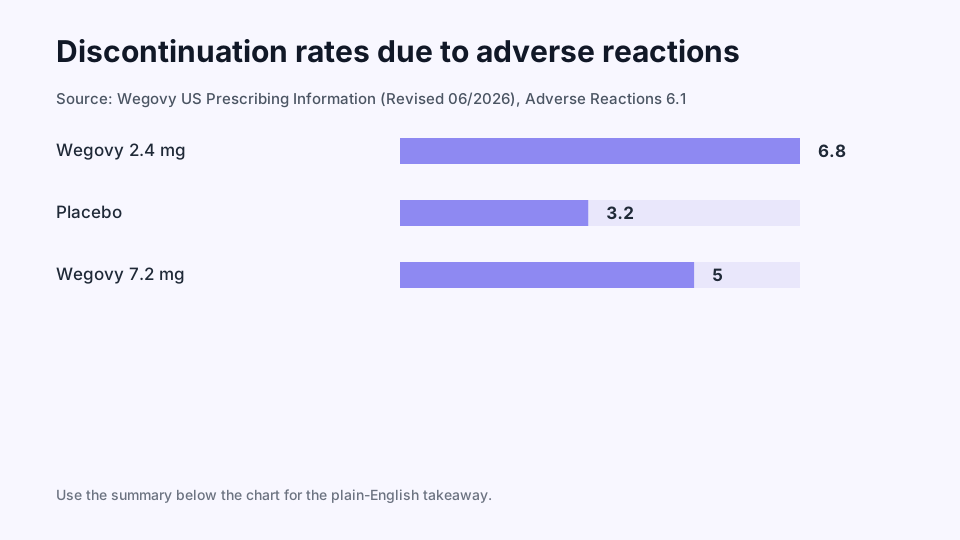
This chart shows the percentage of adults who permanently stopped treatment due to adverse reactions in Wegovy trials, helping readers understand that roughly 1 in 15 adults on Wegovy 2.4 mg stop because side effects are too bothersome.
Side effect statistics matter most if they change what you do before and during treatment.
Consider asking your clinician or pharmacist: Gallbladder and pancreas history: I have had gallstones or pancreatitis before. How does that change my Wegovy risk? Kidney function: I have kidney disease or reduced eGFR. What labs will we watch, and what signs should I report quickly? Heart rhythm and heart rate: I have arrhythmias or palpitations. How will we monitor my heart rate on Wegovy? Other medicines: Which of my oral medicines might be affected by Wegovy slowing stomach emptying? Do we need extra monitoring? Pregnancy and breastfeeding plans: When should I stop Wegovy if I plan pregnancy? What are safer options during pregnancy?
The dose-escalation schedule is specifically designed to reduce GI side effects, but symptoms are still common. Practical steps: Symptom diary: Track nausea, vomiting, diarrhea, constipation, abdominal pain, dizziness, headaches in a simple notebook or app. Note timing after injections and around meals. Fluid and weight tracking: Record daily fluid intake. Watch weight and note any sudden changes or signs of dehydration (dry mouth, dizziness, dark urine). Stool and pain flags: New or severe right-upper-quadrant pain, fever, jaundice: call urgently (possible gallbladder issue). Severe, persistent upper abdominal pain radiating to back: urgent evaluation (possible pancreatitis).
At this stage, most people report fewer acute GI symptoms but need to manage chronic issues and long-term risks. Practical routines: Regular labs and check-ins: HbA1c (if you have diabetes or prediabetes), fasting glucose, kidney function, liver tests, lipase or amylase as your clinician recommends. Vision checks for diabetes: If you have diabetic retinopathy, ask about eye exams after starting Wegovy, since rapid glucose improvement can transiently worsen retinopathy. Heart rate and blood pressure: Home blood pressure monitor and pulse check can help spot sustained changes.
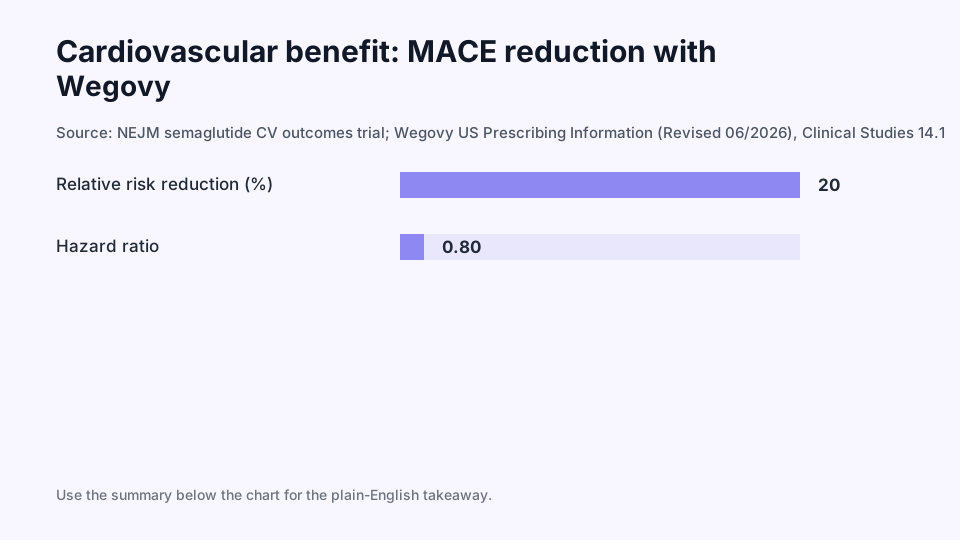
This chart shows the 20% relative risk reduction in major adverse cardiovascular events (MACE: CV death, non-fatal heart attack, non-fatal stroke) in adults with established CV disease and BMI 27 or higher treated with Wegovy vs placebo, helping readers see the cardiovascular benefit in context.
Methodology: how this guide was built
- Source priority: this guide relies primarily on US Wegovy prescribing information (2026 label) for approvals, indications, dose schedules, and detailed side effect incidence; ClinicalTrials.gov STEP 1 record (NCT03548935) and NEJM publications for trial design and weight-loss statistics; NEJM CV outcomes trial for MACE reduction and cardiovascular safety context; PubMed semaglutide withdrawal study for weight-regain data; FDA press releases and safety communications for cardiovascular indications and compounded GLP-1 safety; CMS Medicare GLP-1 Bridge pages for current Medicare coverage and cost caps; Novo Nordisk and Novocare patient and coverage resources for savings and access structures.
- Last checked date: The latest primary sources and regulator or company updates were checked on July 23, 2026.
- Source types excluded or treated cautiously: Marketing blogs, coupon sites, and generic health blogs were not used for clinical safety or approval claims. Third-party cost guides were read only to cross-check manufacturer program descriptions; the core cost statements here come from CMS and Novo Nordisk own patient resources, not affiliate content. Social media, Reddit, and YouTube were not used.
- What this guide cannot determine for an individual patient: It cannot predict your personal side effect profile, weight loss, or cardiovascular benefit. It cannot decide whether Wegovy is appropriate for your diagnoses, medications, or pregnancy plans. It does not provide dosing instructions beyond what is summarized from the label; actual dosing must follow a clinician order. Insurance coverage varies; you will need plan-specific verification through your insurer, pharmacy benefits manager, or Novocare checker.
- Review type: This is source-reviewed only. No clinician reviewer has been supplied. Clinical decisions should be made between you and your healthcare team using primary documents and local guidelines.
Update history
- Updated source review.
Data download
Download the source table used for this statistics page.