Introduction
Wegovy 2026 results, cost, Medicare access, maintenance, side effects, and FDA-approved forms explained with U.S. trial and real-world data.
Wegovy facts for 2026
- 14.9% - Average loss at 68 weeks with 2.4 mg in STEP 1
- 83.5% - Reached at least 5% loss in STEP 1
- 9.6% - Average loss at 68 weeks in the type 2 diabetes trial
- 14.5% - Average loss at 52 weeks in a U.S. real-world cohort
- 11.6 points - Average body-weight regain in the year after stopping in STEP 1 extension
- 18.8% - Average loss at 72 weeks with Wegovy HD 7.2 mg in an obesity trial
- $1,349.02 - Manufacturer list price per package before insurance or savings
- $50 - Copay for eligible Medicare GLP-1 Bridge beneficiaries through 2027
| Date | Milestone | Why it matters |
|---|---|---|
| June 2021 | FDA approved Wegovy injection for chronic weight management. | Semaglutide 2.4 mg became a weight-management medicine, separate from diabetes-only products. |
| March 8, 2024 | FDA approved a cardiovascular-risk indication for certain adults with established cardiovascular disease and overweight or obesity. | This use is separate from weight management. |
| December 2025 | FDA labeling added Wegovy tablets for adult weight reduction and cardiovascular-risk reduction. | Wegovy now includes a daily oral option as well as injections. |
| March 19, 2026 | FDA approved Wegovy HD, a 7.2 mg weekly injection, for certain adults. | The higher-dose form has separate tolerability and coverage questions. |
| July 1, 2026 | CMS launched the Medicare GLP-1 Bridge. | Eligible Part D beneficiaries can access certain GLP-1 medicines outside standard Part D payment. |
Source: Sources: FDA Wegovy prescribing information, FDA approval announcements, and CMS Medicare GLP-1 Bridge materials.
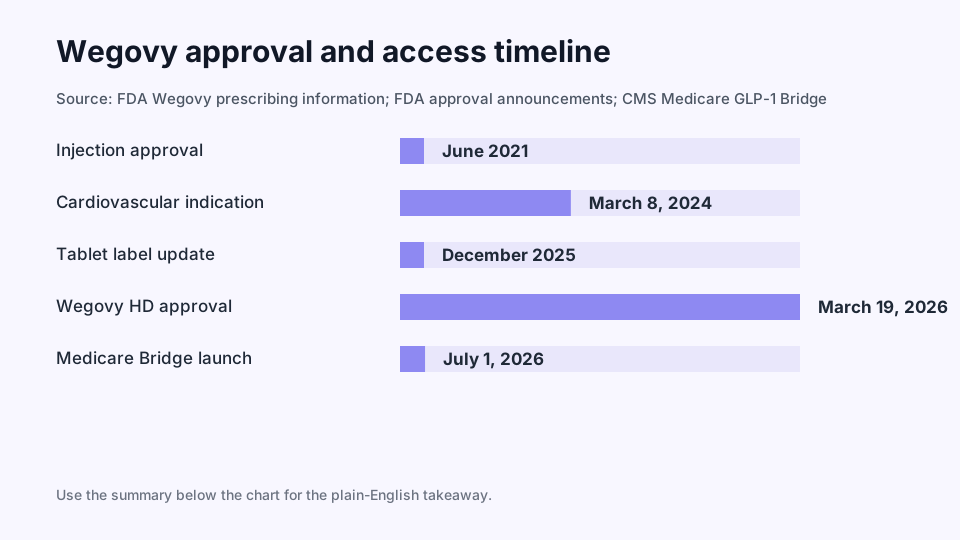
This timeline shows that FDA approval changes and Medicare access changes occurred at different times and have different practical effects.
What the weight-loss numbers mean in pounds
The 14.9% figure comes from STEP 1, a 68-week study of 1,961 adults with obesity, or overweight plus a weight-related condition, who did not have diabetes. Participants received weekly semaglutide 2.4 mg or placebo with lifestyle intervention. The placebo group lost 2.4% on average, so the treatment-placebo difference was about 12.4 percentage points. Percentage loss is easier to compare across starting weights. At 250 pounds, 14.9% works out to about 37 pounds. That is a group average over more than a year, not a target or a promise. Results can vary with diabetes status, the treatment a person can tolerate, interruptions, other medicines, health conditions, eating patterns, activity, sleep, and biology. The early months are not a fair test of the 68-week average. Participants spent time gradually increasing treatment before extended maintenance. A slow start does not establish a final outcome,; however, persistent symptoms, access gaps, or weight changes are useful things to bring to follow-up.
| Starting weight | 5% loss | 10% loss | 14.9% STEP 1 average | 20% loss |
|---|---|---|---|---|
| 180 lb | 9 lb | 18 lb | 27 lb | 36 lb |
| 220 lb | 11 lb | 22 lb | 33 lb | 44 lb |
| 250 lb | 13 lb | 25 lb | 37 lb | 50 lb |
| 300 lb | 15 lb | 30 lb | 45 lb | 60 lb |
Source: Calculation from the FDA-label STEP 1 mean 14.9% weight loss at 68 weeks. The pound amounts are illustrations, not individual forecasts.
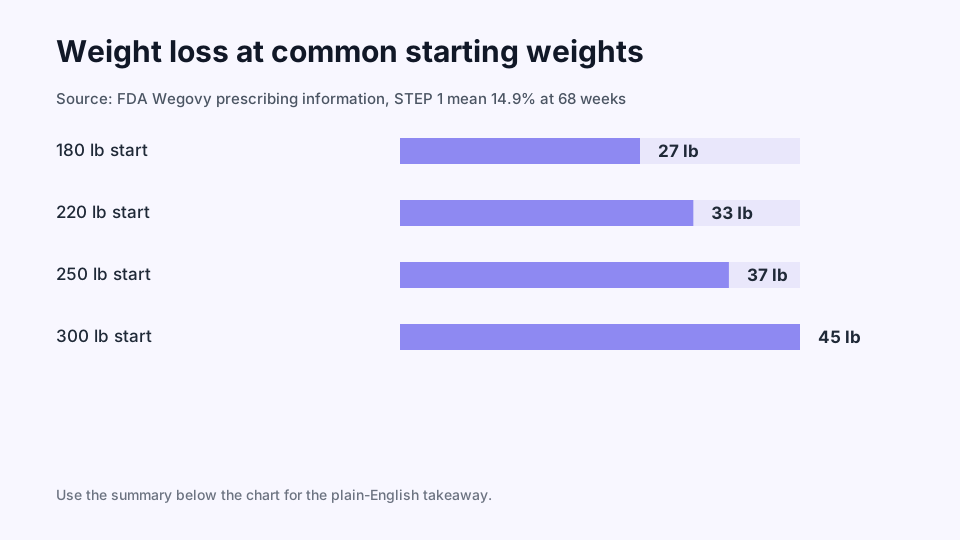
The chart converts the STEP 1 group average into pound equivalents and makes clear why starting weight changes the pound total.
How standard Wegovy, Wegovy HD, and real-world results compare
In STEP 1, 83.5% of people taking Wegovy reached at least 5% loss, 66.1% reached at least 10%, 47.9% reached at least 15%, and 30.2% reached at least 20% by week 68. Those milestones show why an average needs context. About three in 10 reached 20%, while most did not. People with type 2 diabetes had a lower average in the 68-week FDA-label trial: 9.6% with Wegovy 2.4 mg versus 3.4% with placebo. That remains meaningful average loss, but it is not the often-quoted 14.9% result from the population without diabetes. The current label reports 18.8% average loss at 72 weeks with Wegovy HD 7.2 mg in an obesity trial, compared with 15.5% with 2.4 mg and 3.9% with placebo. In a separate 72-week trial of adults with type 2 diabetes and obesity, the 7.2 mg result was 13.2%. These are trial-group averages, not evidence that every person on standard Wegovy should change form or strength. A 2025 retrospective U.S. cohort of people who remained on semaglutide 2.4 mg for a year found 14.5% average loss at 52 weeks and 14.8% at 68 weeks among those with recorded weights. It included 4,424 eligible people, but recorded weights were available for fewer people at each follow-up. That selection matters: people able to continue treatment and remain in the data may differ from people who stopped because of cost, shortages, side effects, or other reasons.
| Group | Mean weight change | Time point | Practical meaning |
|---|---|---|---|
| STEP 1 placebo | -2.4% | 68 weeks | Lifestyle support alone produced a smaller average change in this trial. |
| STEP 1 Wegovy 2.4 mg, without diabetes | -14.9% | 68 weeks | The best-known standard Wegovy trial average. |
| STEP 2 placebo, type 2 diabetes | -3.4% | 68 weeks | A comparison point for the diabetes trial. |
| STEP 2 Wegovy 2.4 mg, type 2 diabetes | -9.6% | 68 weeks | Diabetes status can change expectations. |
| Wegovy HD obesity trial, 2.4 mg | -15.5% | 72 weeks | A standard-dose comparator in the higher-dose trial. |
| Wegovy HD obesity trial, 7.2 mg | -18.8% | 72 weeks | A higher group average, with its own safety and access considerations. |
| U.S. SCOPE cohort | -14.5% | 52 weeks | Observed among people who remained on treatment for one year. |
Source: Sources: June 2026 FDA Wegovy prescribing information and Ruseva et al., PubMed 40122077. Trial and real-world populations are not interchangeable.
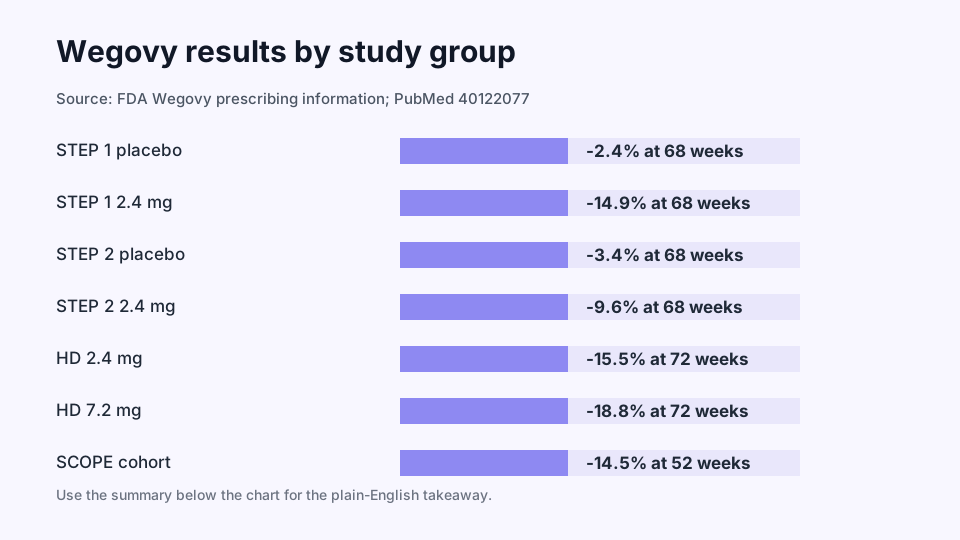
The figure compares different study groups rather than treating one Wegovy statistic as a universal expectation.
Maintenance and regain matter before starting
Wegovy is approved to reduce excess body weight and help maintain weight reduction long term. That does not require a person to stay on it forever,; however, it does mean a short course should not be assumed to have a permanent effect. In the STEP 1 extension, participants stopped semaglutide and lifestyle intervention after week 68. During the next year, they regained an average 11.6 percentage points of body weight, about two-thirds of the loss they had achieved. Cardiometabolic improvements moved back toward baseline too. This finding cannot tell a particular person exactly what will happen after a stop. It does make a maintenance conversation practical rather than optional. Before starting or restarting, ask how long coverage may last, what renewal paperwork is needed, and what plan makes sense if a pharmacy or insurer interruption occurs.
Cost, insurance, and Medicare access
Novo Nordisk lists $1,349.02 per package for Wegovy pill, standard pen, and Wegovy HD pen. That is a list price before insurance, rebates, manufacturer savings offers, or a pharmacy's cash price. The amount at checkout can be lower, similar, or sometimes higher depending on the plan deductible, pharmacy, and eligibility rules. Commercial coverage commonly involves prior authorization and renewal requirements. Approval can depend on the FDA-approved reason for use, plan rules, clinical documentation, and the specific form prescribed. A coverage check is useful, but it is not a final promise until the plan and pharmacy process the claim. CMS launched the Medicare GLP-1 Bridge on July 1, 2026. Eligible Medicare Part D beneficiaries can obtain certain GLP-1 medicines through December 31, 2027 with a $50 copay. It is a temporary demonstration outside normal Part D coverage and payment, so the $50 does not count toward the Part D deductible or true out-of-pocket spending. Eligibility and prior-authorization requirements still apply.
| Access point | Current figure | What it means |
|---|---|---|
| Wegovy package list price | $1,349.02 | Before insurance, rebates, savings offers, and pharmacy-specific pricing. |
| Medicare GLP-1 Bridge copay | $50 | For eligible beneficiaries in the temporary CMS program. |
| Bridge end date | December 31, 2027 | Access is time-limited and is not standard Part D coverage. |
| Standard Part D spending credit | Not included | Bridge copays do not count toward the Part D deductible or true out-of-pocket spending. |
Source: Sources: NovoCare Wegovy cost, coverage, and savings resources and CMS Medicare GLP-1 Bridge materials, checked August 20, 2026.
Side effects and safety questions to take seriously
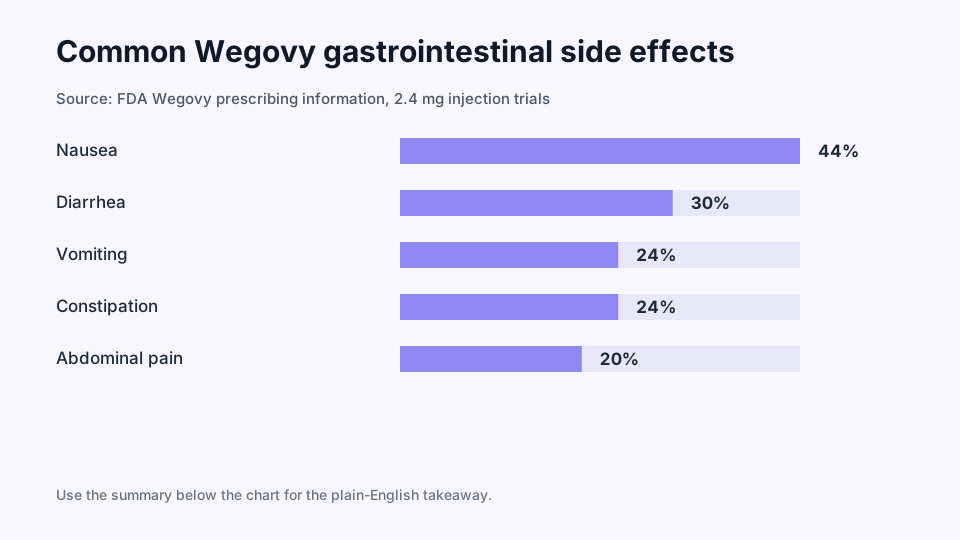
In Wegovy 2.4 mg injection trials, nausea occurred in 44% of participants, diarrhea in 30%, vomiting in 24%, constipation in 24%, and abdominal pain in 20%. These are all-severity event rates. They do not mean a person will have every symptom,; however, they explain why food and fluid tolerance, bowel changes, and symptom timing are worth recording. Permanent discontinuation because of adverse reactions occurred in 6.8% of Wegovy participants versus 3.2% with placebo. Nausea, vomiting, and diarrhea were leading reasons for stopping. A pattern of symptoms is more useful at an appointment than trying to recall one hard day. The FDA label carries a boxed warning about thyroid C-cell tumors observed in rodents. It is unknown whether semaglutide causes these tumors in humans. Wegovy should not be used by people with a personal or family history of medullary thyroid carcinoma, called MTC, or multiple endocrine neoplasia syndrome type 2, called MEN 2. The label also addresses pancreatitis, gallbladder disease, dehydration-related kidney injury, low blood sugar when used with certain diabetes medicines, diabetic retinopathy complications, serious allergic reactions, and aspiration concerns around anesthesia or deep sedation. Tell a surgical or anesthesia team about Wegovy before a planned procedure. For symptoms that feel severe, unusual, or urgent, contact the appropriate medical service rather than waiting for a routine follow-up.
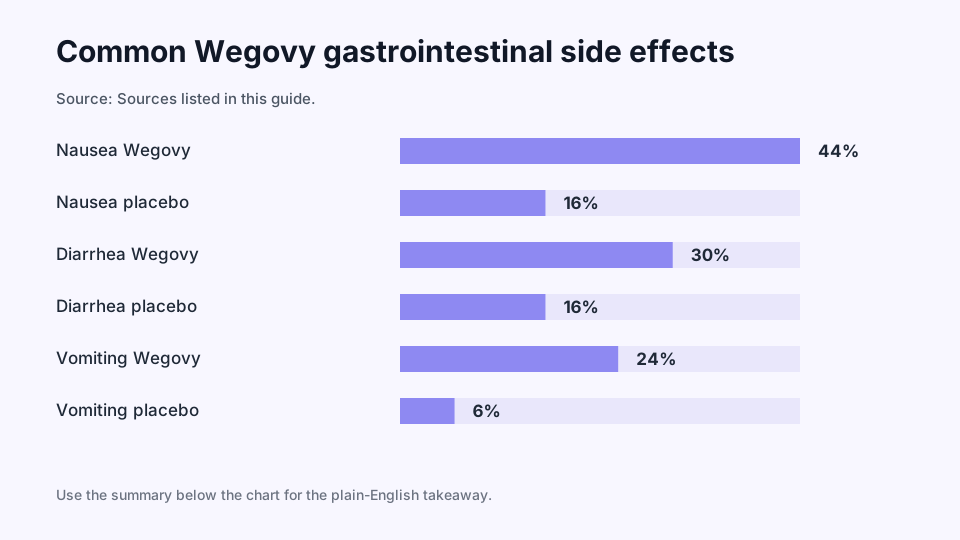
The figure shows the most frequent gastrointestinal events reported in trial groups, which can guide a practical conversation about symptom monitoring.
A routine that makes follow-up more useful
Keep a simple record of weight, symptoms, food and fluid tolerance, bowel changes, sleep, activity, and any blood-pressure or blood-glucose readings the clinical team asks for. Lina is a GLP-1 companion app for people using Wegovy, Mounjaro, Ozempic, Zepbound, Saxenda, and related medications. It helps users track doses, side effects, meals, weight, protein, hydration, and habits in one place. Tracking does not replace medical care or settle whether a medicine is appropriate. It can make a follow-up conversation more specific, especially when a change follows an insurance delay, a new medicine, a shift in eating tolerance, or a difficult week.
Questions for a clinician or pharmacist
Bring the questions that affect safety and affordability before a prescription is sent or renewed. • What FDA-approved reason am I using Wegovy for, and which form is relevant to that use? • How might delayed stomach emptying affect my other medicines? • Do any diabetes medicines I use raise the risk of low blood sugar? • Which symptoms need a same-day call, urgent care, or emergency care? • What should I tell a surgical or anesthesia team before a planned procedure? • What are my insurer's prior-authorization and renewal rules, and what documentation is needed? • If coverage ends, what are realistic options besides an abrupt unplanned stop? • Does my pharmacy have the prescribed form and strength available? • If compounded semaglutide is being considered, why is an FDA-approved product unavailable or unsuitable? FDA says compounded GLP-1 products are not FDA-approved and are not reviewed for safety, effectiveness, or quality before marketing. A compounded product is not automatically equivalent to FDA-approved Wegovy.
Methodology
- Source priority was FDA prescribing information and announcements, CMS documents, ClinicalTrials.gov, peer-reviewed journals, PubMed-indexed studies, and official manufacturer cost and coverage materials.
- All approval, label, list-price, and Medicare Bridge details were checked August 20, 2026.
- Affiliate sites, telehealth marketing, pharmacy blogs, social posts, unverified compounding sellers, and unsourced GLP-1 roundups were excluded. Manufacturer-funded real-world research was included only when peer reviewed and is described with its selection limits.
- The evidence cannot determine medical suitability, insurance approval, pharmacy stock, final out-of-pocket cost, preferred form, or an individual's weight loss, regain, or side-effect experience.
Update history
- Checked the June 2026 Wegovy label, March 2026 Wegovy HD approval, July 2026 Medicare GLP-1 Bridge materials, official list price, and cited trial and real-world evidence.
Data behind the figures
The figures use the FDA-label trial percentages, official cost and Medicare Bridge figures, and the cited PubMed real-world cohort result. Values are rounded exactly as reported in the source material.