Introduction
Zepbound U.S. cost statistics for 2026: self-pay prices, $25 commercial savings, Medicare Bridge access, trial results, safety, and coverage questions.
The numbers people are comparing
- $299 - Lowest listed self-pay price
- $449 - Higher-dose eligible offer
- $25 - Commercial savings-card floor
- $50 - Medicare Bridge amount
- 72 weeks - SURMOUNT-1 duration
- 20.9% - Average loss at 15 mg
- 14.0% - Withdrawal-study regain
- 4.8% to 6.7% - Adverse-reaction discontinuation
What Zepbound costs depends on how you get it
For self-pay purchases through Lilly's current KwikPen program, the listed price starts at $299 for 2.5 mg and $399 for 5 mg per 28 days. The regular listed amount rises to $499 at 7.5 mg and $699 at 10 mg, 12.5 mg, and 15 mg. Those are program prices rather than a promise of a retail pharmacy cash price. Eligible people purchasing 7.5 mg through 15 mg can receive a $449 offer. Lilly says a higher-dose refill purchase must be completed within 45 days of delivery or receipt of the previous fill to continue the offer. Keep the received date, not merely the prescription date, because an appointment delay, travel, or a pause may affect eligibility. For eligible people whose commercial insurance already covers Zepbound, Lilly says its savings program can reduce the amount to as low as $25 for a one- or three-month supply of single-dose pens. That is a manufacturer program figure with eligibility rules and dollar limits. It is not a universal $25 insurance copay, and government beneficiaries are excluded. Medicare is now a separate route. Beginning July 1, 2026, eligible Medicare Part D beneficiaries may access the Zepbound KwikPen through the Medicare GLP-1 Bridge for $50 per month through December 31, 2027. The Bridge is not universal Part D coverage. Existing coverage, plan type, clinical eligibility, and program requirements can determine whether someone qualifies.
| Access route or strength | Current amount | Supply | What can change the figure |
|---|---|---|---|
| KwikPen self-pay 2.5 mg | $299 | 28 days | Listed program price; initiation strength |
| KwikPen self-pay 5 mg | $399 | 28 days | Listed program price |
| KwikPen self-pay 7.5 mg | $449 offer or $499 regular | 28 days | Eligibility and timely refill purchase |
| KwikPen self-pay 10 mg | $449 offer or $699 regular | 28 days | Eligibility and timely refill purchase |
| KwikPen self-pay 12.5 mg | $449 offer or $699 regular | 28 days | Eligibility and timely refill purchase |
| KwikPen self-pay 15 mg | $449 offer or $699 regular | 28 days | Eligibility and timely refill purchase |
| Eligible commercial coverage | As low as $25 | One or three months | Coverage and savings-card eligibility |
| Eligible Medicare Bridge participant | $50 | Monthly | Part D and Bridge eligibility; KwikPen only |
Source: Source: Eli Lilly Zepbound savings and cost information, and Centers for Medicare & Medicaid Services Medicare GLP-1 Bridge materials, checked August 16, 2026.
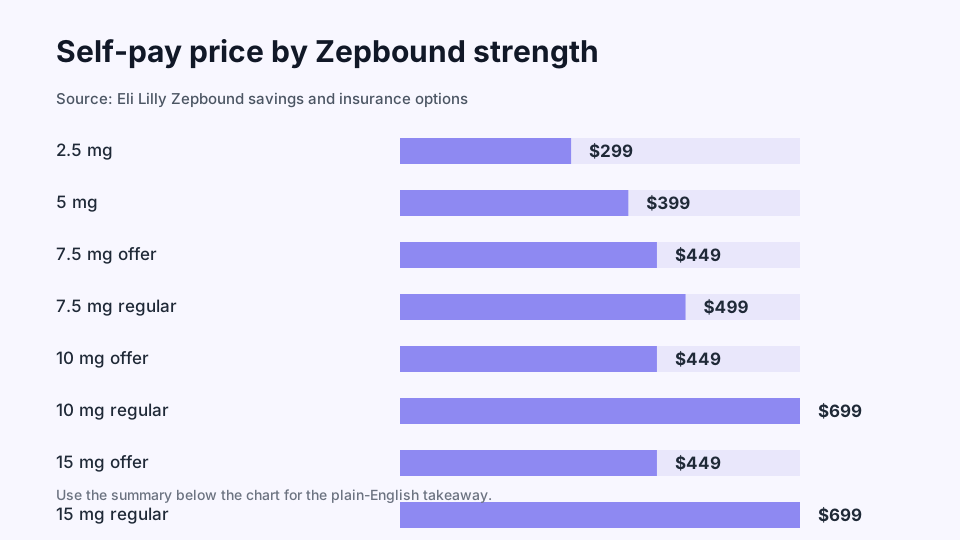
Listed self-pay prices rise after initiation, while the eligible $449 offer lowers the higher-dose amount if its refill and program terms are met.
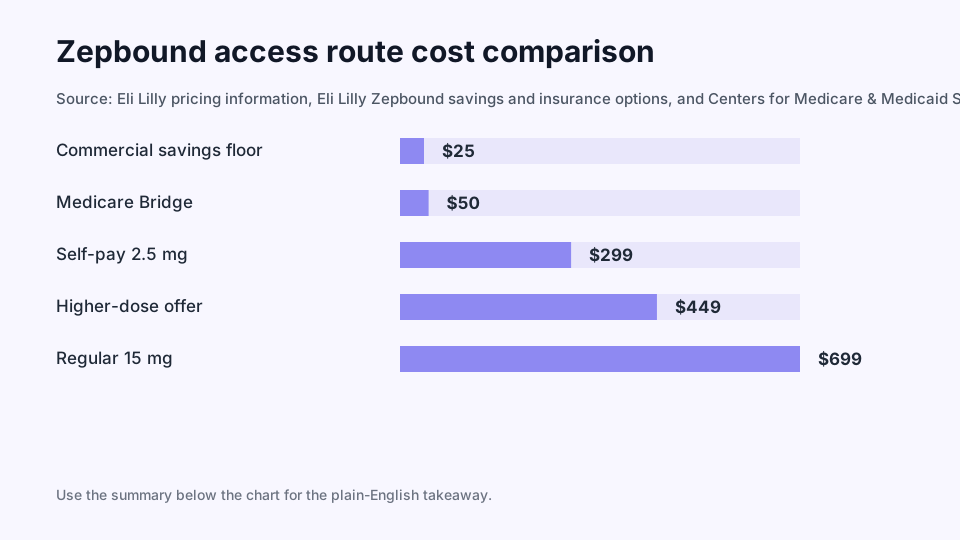
The route of access can have a much larger effect on monthly cost than the strength alone, but each lower amount has eligibility requirements.
Coverage questions to settle before the first fill
Ask the insurer whether Zepbound is covered, excluded, or covered only after prior authorization. Prior authorization is an insurer review before it agrees to pay. Plans may ask for body mass index, called BMI, related conditions, treatment history, or evidence that treatment is helping. Employer coverage is uneven. Lilly announced Employer Connect on March 5, 2026, a platform for employers and program administrators to build obesity-drug benefits, but that does not create coverage for every worker. Your formulary, not a national statistic, decides whether the medicine is included. Before accepting a prescription route, write down the full 28-day cost. Include a copay or cash amount, tax, delivery, pharmacy fees, clinician visits, and any program membership fee. Also save prior authorization decisions, appeal letters, and the terms and end date of a savings program. Lilly's current KwikPen self-pay savings-card terms end December 31, 2026. A person relying on a cash offer should check the price and terms before that date rather than assuming the same amount will continue next year.
What the weight-loss trials mean
In SURMOUNT-1, 2,539 adults with obesity or overweight plus a weight-related condition, but without type 2 diabetes, were followed for 72 weeks. Average weight change was 15.0% at 5 mg, 19.5% at 10 mg, and 20.9% at 15 mg, compared with 3.1% with placebo. Participants also received reduced-calorie diet and physical-activity support. For someone starting at 250 pounds, 20.9% is about 52 pounds. That is a group average after roughly 16 and a half months, not a promise and not a target dose. The average includes people who lost more, lost less, or discontinued treatment. SURMOUNT-5 compared tirzepatide with semaglutide in 751 adults with obesity and no diabetes over 72 weeks. Average weight change was 20.2% with tirzepatide and 13.7% with semaglutide. The comparison can inform a conversation about options, but it cannot tell someone which medicine their insurer will cover or which side effects they will tolerate.
| Study and group | Average weight change | What the result means |
|---|---|---|
| SURMOUNT-1 tirzepatide 5 mg | -15.0% | Average change over 72 weeks with lifestyle support |
| SURMOUNT-1 tirzepatide 10 mg | -19.5% | Group average, not an individual forecast |
| SURMOUNT-1 tirzepatide 15 mg | -20.9% | About 52 pounds from a 250-pound starting weight |
| SURMOUNT-1 placebo | -3.1% | Shows the trial context for the medicine groups |
| SURMOUNT-5 tirzepatide | -20.2% | Head-to-head result versus semaglutide |
| SURMOUNT-5 semaglutide | -13.7% | Different medicine; price and coverage were not compared |
Source: Source: SURMOUNT-1 and SURMOUNT-5 publications in the New England Journal of Medicine.
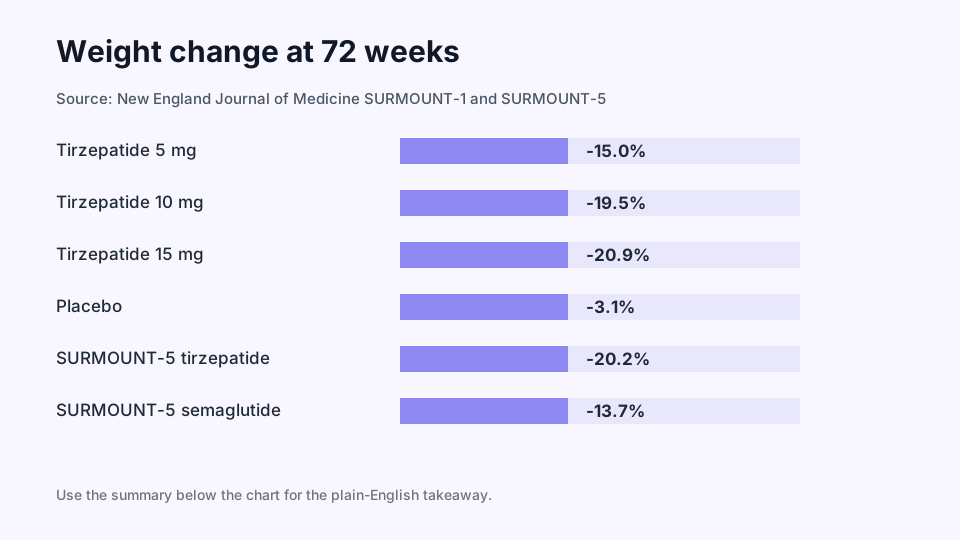
The 72-week trials show group-average weight change with different study comparisons; they do not forecast an individual's result.
Maintenance changes the cost conversation
A lower first-month price does not answer whether treatment will be affordable over time. In the randomized withdrawal study in the FDA label, participants first lost an average of 20.9% during 36 weeks of open-label Zepbound treatment. From week 36 to week 88, people switched to placebo regained 14.0% of body weight on average, while people who continued treatment lost another 5.5%. Stopping treatment is not a personal failure. The study shows that continued treatment was associated with maintaining more weight loss in that study population. Before starting, it is reasonable to discuss how coverage renewals, savings-program changes, follow-up visits, and a possible interruption would be handled. A person restarting after a gap should not use a past schedule as a substitute for clinical guidance. Contact the prescriber or pharmacist about the interruption, current medicines, side effects, and the safest appropriate next step.
| Period and group | Average weight change | Practical meaning |
|---|---|---|
| First 36 weeks open-label Zepbound | -20.9% | Participants entered the randomized phase after substantial average loss |
| Week 36 to week 88 placebo switch | +14.0% | Average regain after tirzepatide withdrawal |
| Week 36 to week 88 continued Zepbound | -5.5% | Average further loss among people who continued |
Source: Source: FDA Zepbound prescribing information, revised February 2026, reporting the randomized withdrawal study.
Safety and routine questions worth bringing to care
The FDA label lists nausea, diarrhea, vomiting, constipation, abdominal pain, and indigestion among the common adverse reactions. In pooled weight-management trials, nausea occurred in 25% to 29% of treated participants, diarrhea in 19% to 23%, vomiting in 8% to 13%, and constipation in 11% to 17%, depending on dose. These effects commonly occurred during dose escalation and often decreased over time. Adverse reactions led 4.8% to 6.7% of participants across the 5 mg through 15 mg groups to discontinue treatment in pooled trials. Stomach-related symptoms were the main reason. A pharmacist can help someone review other medicines and decide what symptoms or interaction concerns need prompt contact with the prescriber. Zepbound has a boxed warning about thyroid C-cell tumors seen in rats. It is unknown whether tirzepatide causes these tumors in humans. The label says it should not be used with a personal or family history of medullary thyroid carcinoma, called MTC, or multiple endocrine neoplasia syndrome type 2, called MEN 2. The label also warns about severe gastrointestinal reactions, dehydration-related kidney injury, gallbladder disease, pancreatitis, serious allergic reactions, low blood sugar when used with certain diabetes medicines, and changes in absorption of some oral medicines. Pregnancy planning, upcoming procedures, a history of severe stomach symptoms, and all current medicines belong in the conversation with a clinician or pharmacist.
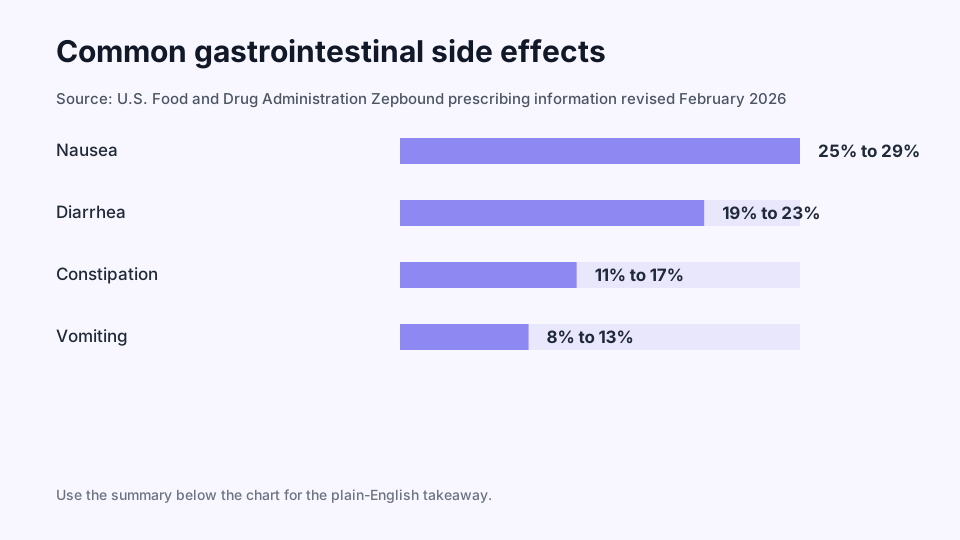
These pooled trial ranges show how often common gastrointestinal reactions occurred across doses, not the severity or duration for one person.
A simple preparation list
Keep a record of your coverage route, formulary result, pharmacy route, and true 28-day cost. If you use a savings offer, record the enrollment date, offer expiration date, and the date you received the last fill. That makes it easier to spot a missed refill window before it affects the next purchase. For a prior authorization or appeal, save diagnosis information, BMI history, weight-related conditions, sleep-apnea documentation when relevant, and past plan decisions. For your own follow-up, track weight trend, side effects, appetite changes, sleep, daily functioning, and any measurements your clinician asks for. Lina is a GLP-1 companion app for people using Wegovy, Mounjaro, Ozempic, Zepbound, Saxenda, and related medications. It helps users track doses, side effects, meals, weight, protein, hydration, and habits in one place. Useful questions include: Is this being prescribed for an FDA-approved use? What documents does my plan need? What happens if the plan denies renewal? Are any of my medicines affected by delayed stomach emptying? What symptoms should lead me to call urgently? If the cost changes, what medically appropriate options should we discuss?
Methodology
- Sources were checked on 2026-08-16, prioritizing regulator pages, prescribing information, ClinicalTrials.gov records, peer-reviewed journals, PubMed or NCBI records, official company pages, and government payer guidance.
- Statistics were selected for practical patient relevance: approval status, eligibility, expected results, safety, cost, coverage, access, and tracking questions.
- Weak sources, speculative launch or pricing claims, affiliate pages, peptide sellers, Reddit, YouTube, and generic blogs were excluded or treated as unverified.
- This is source-reviewed educational content, not medical advice, diagnosis, treatment instruction, or a plan-specific coverage decision. A clinician, pharmacist, insurer, or public program contact is needed for individual decisions.
- Source priority was FDA prescribing information and announcements, CMS guidance, ClinicalTrials.gov, peer-reviewed trial publications, and official Eli Lilly pricing, savings, and access pages.
- All pricing, access, approval, safety, and trial materials were checked on August 16, 2026. The review looked for relevant published changes from May 16, 2026 through August 16, 2026.
Update history
- Published with U.S. price, savings, Medicare GLP-1 Bridge, FDA label, and trial information checked through this date.
- CMS launched the Medicare GLP-1 Bridge cited in this guide.
Data download
Downloadable data includes the published price points, access-route amounts, trial averages, withdrawal outcomes, and adverse-reaction ranges used in the charts and tables.