Introduction
Zepbound numbers are most useful when they answer practical questions: how much weight people lose, how long results take, what side effects show up, and which payment path may apply. This guide separates trial averages from real-life expectations and keeps commercial insurance, LillyDirect self-pay, Medicare OSA coverage, and Medicare GLP-1 Bridge access in separate lanes.
Top facts (2026 snapshot)
- November 8, 2023 - FDA approval date for obesity and overweight
- December 20, 2024 - Second FDA indication (OSA)
- BMI 30 or higher, or BMI 27 or higher plus condition - Who it is for (weight)
- 15 to 22 percent over 72 weeks - Typical weight loss range
- 499 to 1,086.37 dollars - Official list-price range per fill
- As low as 25 dollars per month - Savings card pricing (with coverage)
- 299 to 449 dollars per month - LillyDirect self-pay vial prices by dose
- 50 dollars per month - Medicare GLP-1 Bridge copay if eligible
- Thyroid C-cell tumor risk - Boxed warning
Zepbound is designed for adults who are living with obesity or overweight plus a weight-related medical problem, not for cosmetic weight loss. The FDA-approved indications are chronic weight management in adults with Body Mass Index (BMI) 30 or higher (obesity), or BMI 27 or higher (overweight) and at least one condition such as high blood pressure, type 2 diabetes, high cholesterol, obstructive sleep apnea, or cardiovascular disease. As of December 20, 2024, Zepbound is also approved for adults with moderate-to-severe obstructive sleep apnea (OSA) and obesity. For you, that means Zepbound is aimed at people whose weight is already affecting health and who are trying to reduce those risks over years, not weeks.
How much weight people lose, and how fast
In the SURMOUNT-1 trial and related studies, tirzepatide was tested over 72 weeks, a little under a year and a half. People on higher doses of Zepbound lost roughly 15 to 22 percent of their starting weight over 72 weeks when they also followed a reduced-calorie diet and increased physical activity. Someone starting at 200 pounds might lose 30 to 44 pounds over that timeframe if their response is around the trial average. Analyses of tirzepatide trials show that most weight loss happens in the first 9 to 12 months, then slows and plateaus. In practice, many people see the steepest drop in the first 6 to 9 months, then smaller changes after that.
Higher doses, like 10 milligrams and 15 milligrams once weekly, tended to produce greater average weight loss than lower doses, but also more gastrointestinal side effects. Your clinician will usually start low and increase gradually, balancing effectiveness with tolerability. What this means day-to-day is that Zepbound is not a quick crash-diet tool. It is a slow, steady medication meant to help your body reset to a lower weight over many months, while you adjust eating, movement, and routines.
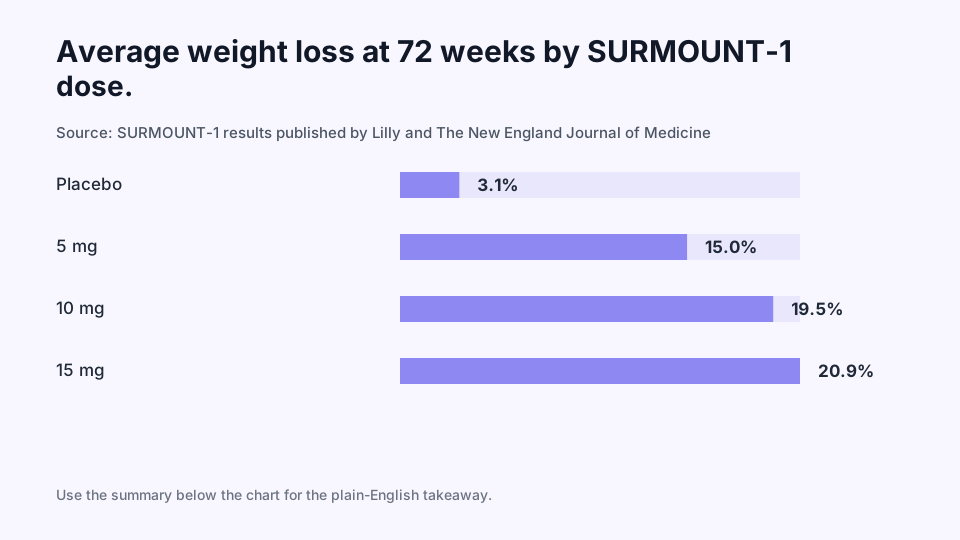
Higher doses produced larger average weight loss, but the jump from 10 mg to 15 mg was smaller than the jump from placebo to treatment.
How Zepbound compares to other GLP-1 options
Zepbound is a dual-agonist. It activates receptors for glucose-dependent insulinotropic polypeptide (GIP) and glucagon-like peptide-1 (GLP-1), two gut hormones that affect appetite, fullness, and blood sugar. Many people have heard of GLP-1 medicines like semaglutide, sold as Ozempic or Wegovy. Zepbound acts on both GIP and GLP-1 pathways. In late-stage trials, Zepbound helped patients achieve an average weight reduction around 20 percent, compared with about 15 percent for Wegovy in its own trials. For someone at 250 pounds, that rough comparison is 50 pounds versus about 37 pounds if they respond near those averages.
This does not mean Zepbound is better for every person. Side effects, availability, coverage, and other health conditions all matter. But it helps explain why many clinicians consider tirzepatide one of the strongest approved options for weight reduction right now.
Price, coverage, and statistics
| Item | Data point | What it means in practice | Source |
|---|---|---|---|
| List price per month | 499 to 1,086.37 dollars per fill, depending on product and route. | The amount paid at the pharmacy can differ from list price because insurance, pharmacy charges, savings programs, and cash-pay routes apply differently. | Lilly pricing information |
| Savings card with coverage | As low as 25 dollars for a 1- or 3-month prescription for commercially insured patients whose plans cover Zepbound. | If your employer insurance covers Zepbound, the savings card may shrink your copay to a typical pharmacy copay level. | Lilly investor release |
| Savings card without coverage | LillyDirect self-pay vial prices are listed at 299 dollars for 2.5 mg, 399 dollars for 5 mg, and 449 dollars for higher approved vial doses in the Self Pay Journey Program. | If your plan excludes weight-loss drugs, the cash-pay vial route may be cheaper than pharmacy list price but still hundreds of dollars per month. | LillyDirect self-pay pricing release |
| Medicare GLP-1 Bridge | Eligible Medicare Part D beneficiaries can access certain GLP-1 medicines for a 50-dollar monthly copay from July 1, 2026 through December 31, 2027. | This is separate from normal Part D payment flow and has eligibility criteria, prior authorization, and product limits. | CMS Medicare GLP-1 Bridge |
| Commercial formulary placement | Added to Express Scripts National Preferred Formulary and Cigna Healthcare commercial formularies in December 2023. | If your plan uses these pharmacy benefit managers, coverage became more likely from late 2023 onward. | Lilly investor release |
| Medicare and Medicaid for OSA | Medicare Part D and state Medicaid plans may cover Zepbound when prescribed for OSA, separate from the Bridge program for weight management. | If you have OSA plus obesity, your clinician can sometimes use that indication to access coverage that is different from weight-loss-only coverage. | CMS and Lilly Medicare information |
Source: Lilly pricing information, LillyDirect self-pay pricing, Lilly savings terms, and CMS Medicare GLP-1 Bridge guidance. Exact out-of-pocket costs vary by plan and eligibility.
If you cannot find a clear number for your own copay or coinsurance, the missing source is your specific insurance formulary and benefit documents. A pharmacist or benefits specialist can check this for you.
Timeline of Zepbound milestones in the U.S.
| Date | Milestone | What it means |
|---|---|---|
| June 2022 | SURMOUNT-1 trial results published | Lilly announced that once-weekly tirzepatide led to large weight loss over 72 weeks in adults with overweight or obesity. |
| November 8, 2023 | First FDA approval (obesity and overweight) | The U.S. FDA approved Zepbound for chronic weight management in adults with obesity or overweight plus at least one weight-related condition. |
| December 1 to 15, 2023 | Initial commercial formulary placement | Express Scripts and Cigna Healthcare added Zepbound to main formularies, meaning many commercially insured people could start getting coverage. |
| December 5, 2023 | Zepbound available in U.S. pharmacies | Lilly reported that Zepbound was now on pharmacy shelves in six doses, and launched its commercial savings card program. |
| December 20, 2024 | Second FDA indication (OSA) | FDA approved Zepbound as the first prescription medicine for adults with moderate-to-severe obstructive sleep apnea and obesity. |
| January 8, 2025 | Medicare and Medicaid coverage for OSA | CMS clarified that Medicare Part D and Medicaid plans can cover Zepbound for obstructive sleep apnea, subject to usual rules. |
| December 1, 2025 | Lower LillyDirect self-pay vial prices announced | Lilly listed self-pay vial prices starting at 299 dollars per month for 2.5 mg, 399 dollars for 5 mg, and 449 dollars for higher approved vial doses in the Self Pay Journey Program. |
| July 1, 2026 | Medicare GLP-1 Bridge began | CMS opened a short-term bridge program with a 50-dollar monthly copay for eligible Medicare Part D beneficiaries using certain GLP-1 weight-management medicines. |
Source: FDA approval announcements, Lilly access releases, LillyDirect pricing, and CMS Medicare GLP-1 Bridge guidance.
What the numbers mean in daily life
Clinical trials often talk in percentages, which can feel abstract. Here is how it maps to real numbers. A 15 percent loss at 220 pounds means about 33 pounds lost, bringing weight to around 187 pounds. A 20 percent loss at 250 pounds means about 50 pounds lost, bringing weight to around 200 pounds. A 22 percent loss at 300 pounds means about 66 pounds lost, bringing weight to around 234 pounds. Not everyone hits these averages. Some lose more; some lose less. Real-world results also depend on diet, activity, other medications, and how consistently someone can stay on the weekly schedule.
| Starting weight | Percent loss | Pounds lost | New weight |
|---|---|---|---|
| 200 pounds | 15 percent | 30 pounds | 170 pounds |
| 200 pounds | 20 percent | 40 pounds | 160 pounds |
| 220 pounds | 15 percent | 33 pounds | 187 pounds |
| 250 pounds | 20 percent | 50 pounds | 200 pounds |
| 300 pounds | 22 percent | 66 pounds | 234 pounds |
Source: Examples based on SURMOUNT-1 trial average weight loss ranges. Individual results vary.
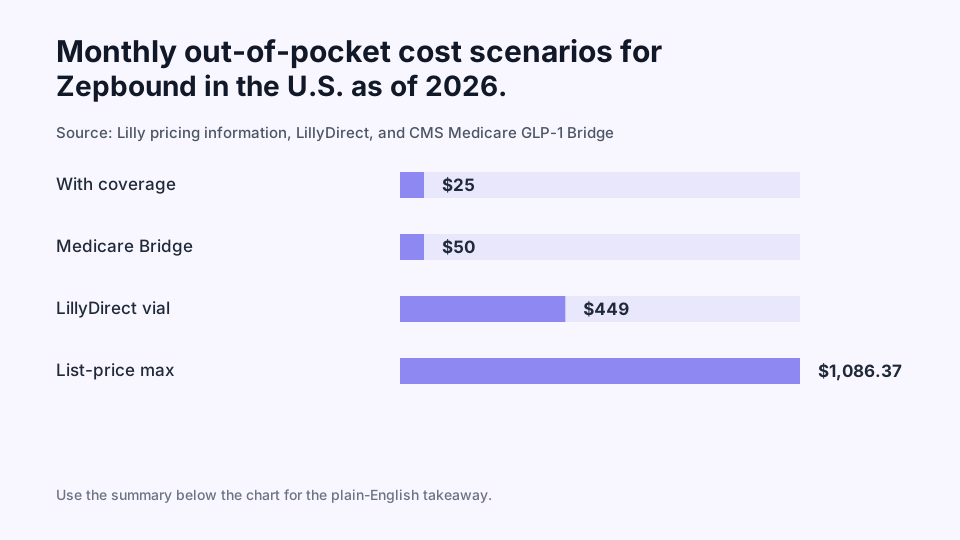
The lowest advertised routes have strict eligibility rules, while the list-price maximum is far above the main savings and self-pay paths.
Trials and statistics
The core obesity data for Zepbound comes from randomized, double-blind, placebo-controlled trials, including SURMOUNT-1 and others. In SURMOUNT-1, weekly tirzepatide was compared to placebo in adults with overweight or obesity without diabetes. At 72 weeks, mean weight loss at higher doses was in the mid-teens to low-20s percent of starting weight. Many participants reached 5 percent weight loss or more, often used as a marker for meaningful health benefit.
Most common side effects were gastrointestinal: nausea, diarrhea, vomiting, and constipation. These events were generally mild to moderate, happened more during dose escalation, and decreased over time. Trial reports described the safety profile as similar to other incretin-based therapies, medicines that act on gut hormone receptors like GLP-1. Later analyses looked at time to weight plateau with tirzepatide. Many participants reached most of their total weight loss by around one year, with smaller changes after that.
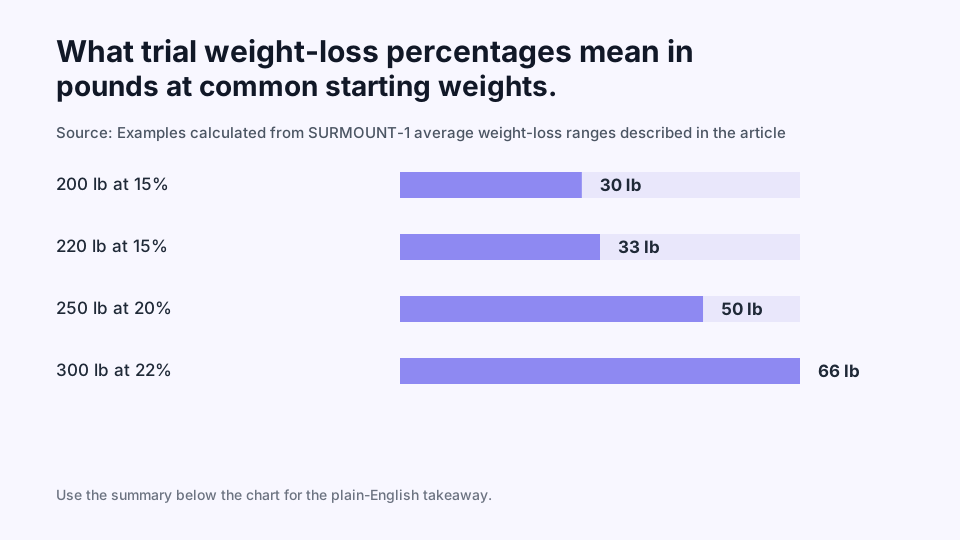
A 20 percent trial result sounds abstract until it is turned into something concrete like 50 pounds from a 250-pound starting weight.
Practical tracking and patient preparation
If you are considering Zepbound or already using it, the numbers matter most when they connect to routines and decisions. Bring a focused list to your clinic visit so it is productive. Ask about eligibility and goals: Do I meet the criteria for Zepbound based on my BMI and health conditions? What amount of weight loss would you consider realistic for me over the next 12 to 18 months? Ask about safety and history: Does my personal or family history include thyroid cancer, especially medullary thyroid carcinoma, or Multiple Endocrine Neoplasia type 2 (MEN2)? Have I had pancreatitis before, and how does that affect the risk profile? Which symptoms should make me stop the drug and call you or go to urgent care?
Ask about side effects and routine: What gastrointestinal side effects do you see most often, and how can I plan for them? How should I time injections around busy days, travel, or important events? What should I do if I miss a dose? Ask about cost and coverage: Is Zepbound on my plan's formulary, and at what tier? Can your office or the pharmacy run a test claim to estimate my monthly copay? Am I eligible for the Lilly savings card, LillyDirect self-pay, or Medicare GLP-1 Bridge? Ask about the long-term plan: If I respond well, how long do you see me staying on Zepbound? How will we track my weight, blood pressure, cholesterol, blood sugar, and sleep? What is the exit plan if I want to stop later?
What to track at home
You do not need a research-level spreadsheet, but a simple log helps connect your experience to the data. Consider tracking weekly weight on the same scale at a similar time of day. Look for trends over months, not day-to-day fluctuations. Note days with nausea, vomiting, diarrhea, constipation, or abdominal pain. Mark when doses increase; this often lines up with gastrointestinal symptoms. If you have obstructive sleep apnea, track subjective ratings of sleep quality, daytime sleepiness, or CPAP use. Bring health markers from clinic visits: blood pressure, laboratory values like cholesterol and blood sugar. A1c is a blood test that reflects average blood sugar over about three months. Bringing this log to appointments helps your clinician judge whether Zepbound is giving enough benefit to justify staying on it, and whether dose adjustments or extra monitoring are needed.
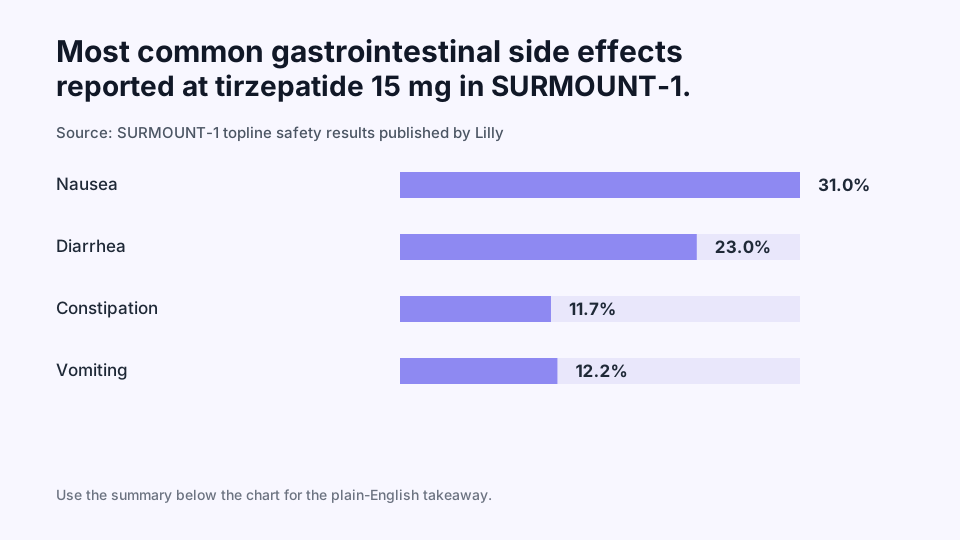
Nausea and diarrhea were the most common trial side effects, while vomiting was less common but still meaningful at the highest dose.
How these statistics were chosen
Methodology: how these statistics were chosen
- Sources were rechecked on July 22, 2026, with priority given to FDA labeling, CMS coverage guidance, Lilly pricing pages, ClinicalTrials.gov records, and peer-reviewed trial analyses.
- Weight-loss ranges use SURMOUNT-1 and related tirzepatide analyses; pound examples are simple calculations from those published percentages and are not individual predictions.
- Cost figures separate list price, commercial savings-card pricing, LillyDirect self-pay vial pricing, and Medicare GLP-1 Bridge access because each route has different eligibility rules.
- The guide does not provide medical advice or plan-specific coverage decisions. A clinician, pharmacist, insurer, or Medicare program contact is needed for individual eligibility.
Update history
- Updated pricing and coverage details to include Lilly's official 2026 price range, LillyDirect self-pay vial prices, and the Medicare GLP-1 Bridge program that began July 1, 2026.
Data download
Download the source table used for this statistics page.