Introduction
GLP-1 insurance coverage in the United States changed quickly in 2026, especially after the Medicare GLP-1 Bridge began on July 1. This guide separates Medicare, Medicaid, employer insurance, and affordability data so coverage questions can be checked against the right payer route.
Top facts for 2026
- July 1, 2026 - Medicare GLP-1 Bridge start date.
- December 31, 2027 - Scheduled Medicare GLP-1 Bridge end date.
- 50 dollars per month - Medicare GLP-1 Bridge copay for eligible beneficiaries.
- 13 states - Medicaid fee-for-service programs covering GLP-1s for obesity as of January 2026 in KFF analysis.
- 19 percent - KFF share of large firms offering health benefits that covered GLP-1 agonists when used primarily for weight loss in 2025.
- 43 percent - KFF share of the largest firms with at least 5,000 workers covering GLP-1s for weight loss in 2025.
- 67 percent - Business Group on Health surveyed employers covering GLP-1s for weight management in 2026.
- 56 percent - KFF share of GLP-1 users saying the drugs were difficult to afford.
The hard part about GLP-1 insurance coverage is that one word, coverage, hides several different systems. Medicare, Medicaid, employer plans, commercial marketplace plans, savings cards, cash-pay programs, and temporary demonstrations all use different rules. A person can be eligible under a drug label and still face a denial, prior authorization, step therapy, high coinsurance, or a product-specific exclusion.
The most useful 2026 change is Medicare Bridge access. It gives eligible Medicare Part D beneficiaries a 50-dollar monthly route for certain GLP-1 weight-management medicines from July 1, 2026 through December 31, 2027. That does not mean every GLP-1 product is covered in every form, and it does not replace ordinary Part D coverage for other approved indications.
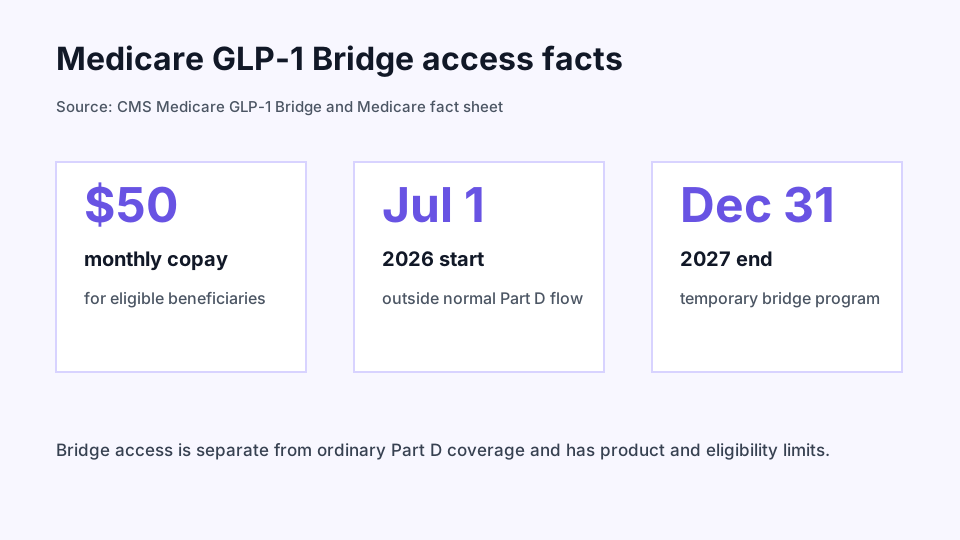
The program is dated, temporary, and product-limited, so eligibility needs to be checked against CMS and Medicare materials.
How Medicare coverage changed in 2026
CMS says the Medicare GLP-1 Bridge operates outside the Medicare Part D benefit coverage and payment flow. Eligible beneficiaries pay a 50-dollar copay, the Part D deductible does not apply to the Bridge drug, and the copay does not count toward TrOOP costs. Medicare.gov says the Bridge covers Foundayo tablets, Wegovy injection or tablet, and Zepbound KwikPen, while Zepbound single-dose pens and vials are excluded.
That separation matters because ordinary Part D rules still apply to GLP-1s used for other approved indications. CMS provider information says type 2 diabetes, moderate-to-severe obstructive sleep apnea, and noncirrhotic metabolic dysfunction-associated steatohepatitis with moderate to advanced liver scarring can be eligible for Part D coverage. Weight-management-only access runs through the Bridge when a beneficiary meets the program rules.
| Route | Who it is for | Cost or rule | Source |
|---|---|---|---|
| Medicare GLP-1 Bridge | Eligible Part D beneficiaries seeking GLP-1 access solely to reduce excess body weight or maintain weight reduction. | 50-dollar monthly copay from July 1, 2026 through December 31, 2027. | CMS Medicare GLP-1 Bridge |
| Part D diabetes coverage | Beneficiaries prescribed a GLP-1 for type 2 diabetes when the plan covers the product under ordinary formulary rules. | Plan-specific deductible, copay, coinsurance, and prior authorization rules may apply. | CMS provider and Part D plan information |
| Part D OSA coverage | Beneficiaries prescribed a relevant product for moderate-to-severe obstructive sleep apnea when label and plan rules are met. | Separate from the Bridge because the indication is not weight management alone. | CMS provider information |
| Part D MASH coverage | Beneficiaries prescribed for noncirrhotic MASH with moderate to advanced liver scarring when applicable label and plan rules are met. | Plan-specific coverage still applies. | CMS provider and Part D plan information |
| Excluded Bridge forms | People trying to use Bridge access for Zepbound single-dose pens or vials. | Medicare.gov fact sheet says those Zepbound forms are not covered by the Bridge. | Medicare GLP-1 Bridge fact sheet |
Source: CMS Medicare GLP-1 Bridge program page, CMS provider information, CMS Part D plan information, and Medicare.gov fact sheet.
Medicaid coverage remains uneven by state
KFF describes Medicaid obesity-drug coverage as limited. In January 2026, KFF counted 13 state Medicaid fee-for-service programs covering GLP-1s for obesity treatment. KFF also reported that 16 state Medicaid programs covered GLP-1s for obesity treatment in its October 2025 budget survey before several states changed course.
Medicaid is a state-by-state coverage question. Even when a state covers GLP-1s for obesity treatment, KFF says utilization controls such as prior authorization are typical. That means a person needs the state Medicaid preferred drug list, prior authorization criteria, and diagnosis-specific policy, not a national yes-or-no answer.
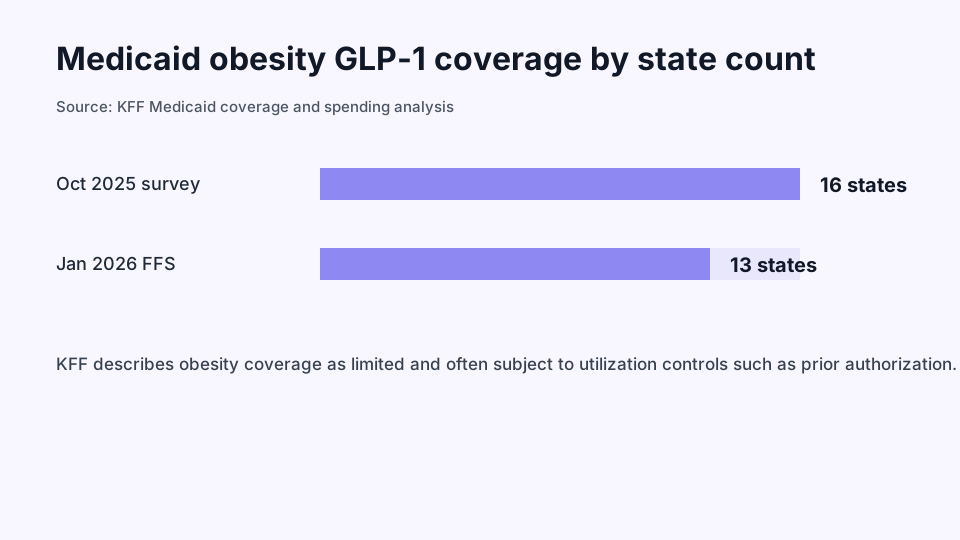
The KFF count dropped from 16 state programs in October 2025 to 13 state fee-for-service programs in January 2026.
| Signal | Number or status | What it means | Source |
|---|---|---|---|
| January 2026 obesity coverage count | 13 state Medicaid fee-for-service programs. | A minority of state programs covered GLP-1s for obesity treatment at that point. | KFF Medicaid analysis |
| October 2025 obesity coverage count | 16 state Medicaid programs. | Several state decisions shifted between the survey and January 2026. | KFF Medicaid analysis |
| Utilization management | Prior authorization is typical when covered. | Coverage can still require documented eligibility and plan review. | KFF Medicaid analysis |
| Diabetes treatment | Broader Medicaid access than obesity-only use. | GLP-1s used for type 2 diabetes are often treated differently from obesity-only prescriptions. | KFF Medicaid analysis |
| Future model activity | BALANCE Model activity runs on a separate policy timeline. | Coverage demonstrations and state policy may continue to change after 2026. | KFF BALANCE Model overview |
Source: KFF Medicaid coverage of and spending on GLP-1s and KFF BALANCE Model overview.
Employer coverage depends on plan design and survey sample
Employer-sponsored insurance covers a large share of working-age Americans, but employer GLP-1 statistics do not line up into a single national rate. KFF, Mercer, Business Group on Health, and benefit-plan surveys use different employer sizes and samples. The practical pattern is still clear: diabetes coverage is common, weight-management coverage is more selective, and large employers are under pressure from utilization and spend.
KFF reported that nearly one in five large firms offering health benefits covered GLP-1 agonists when used primarily for weight loss in 2025, and that 43 percent of the largest firms with at least 5,000 workers did so. Mercer reported 44 percent of employers with 500 or more employees covered weight-loss medications in 2024, rising to 64 percent among employers with 20,000 or more workers. Business Group on Health reported that 67 percent of its surveyed employer members covered GLP-1s for weight management in 2026.
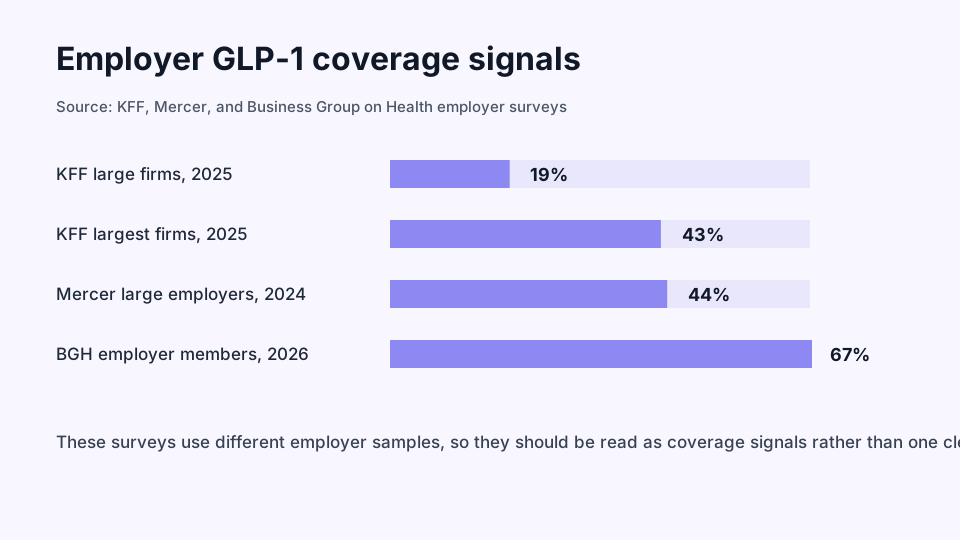
Large employers are more likely to report weight-management coverage, but survey design changes the number substantially.
| Source | Coverage statistic | Population | How to read it |
|---|---|---|---|
| KFF 2025 Employer Health Benefits Survey | 19 percent covered GLP-1 agonists when used primarily for weight loss. | Large firms offering health benefits. | Useful broad employer-benefit benchmark. |
| KFF 2025 Employer Health Benefits Survey | 43 percent covered GLP-1s for weight loss. | Largest firms with at least 5,000 workers. | Shows higher coverage among very large firms. |
| Mercer employer benefits release | 44 percent covered obesity drugs in 2024. | Employers with at least 500 employees. | A large-employer signal using Mercer survey framing. |
| Mercer employer benefits release | 64 percent covered obesity drugs in 2024. | Employers with at least 20,000 employees. | Shows coverage concentration among the biggest employers. |
| Business Group on Health 2026 survey | 67 percent covered GLP-1s for weight management. | 105 employer members surveyed February to March 2026. | A large-employer member sample, not an all-employer national rate. |
| International Foundation of Employee Benefit Plans | 9 percent of employers not covering weight-loss GLP-1s were considering adding coverage. | Employer benefit-plan survey respondents. | Signals future interest, while many exclusions remain. |
Source: KFF 2025 Employer Health Benefits Survey, Health Affairs employer health benefits article, Mercer employer benefits release, Business Group on Health 2026 GLP-1 survey, and International Foundation of Employee Benefit Plans survey report.
Why coverage can still feel expensive
KFF polling shows that GLP-1 use has become common enough for affordability to matter beyond narrow benefit-policy circles. KFF reported that 18 percent of adults had ever taken a GLP-1 drug and 12 percent were currently taking one in the poll. Just over half of GLP-1 users said the drugs were difficult to afford, including 55 percent of users with health insurance.
That finding matches what patients experience at the pharmacy counter. Insurance can cover part of the cost, cover the full cost, deny the claim, apply coinsurance to a high list price, require prior authorization, or apply a coupon after the plan response. KFF topline data reported that 48 percent of GLP-1 users said insurance covered part of the cost and they paid the rest, while 22 percent said insurance covered all of the cost.
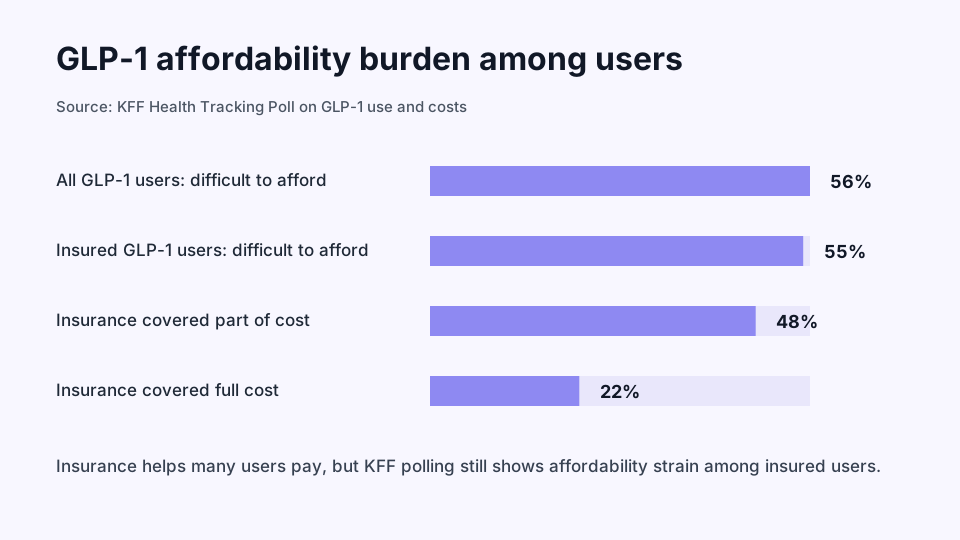
The affordability problem remains visible even among people whose insurance covers at least part of the cost.
Coverage controls to expect
Coverage does not always mean immediate access. Employer plans and public programs often use prior authorization, objective eligibility checks, participation requirements, limited formularies, or prescriber restrictions. Business Group on Health said surveyed employers used strategies such as validating clinical eligibility with objective biometric data, requiring participation in a weight-management program, limiting prescribing to specific providers, and excluding certain medications from the formulary.
A practical coverage check should separate the medicine, indication, product form, diagnosis, payer, and pharmacy channel. Wegovy tablets, Wegovy injection, Zepbound KwikPen, Zepbound vials, Mounjaro, Ozempic, and other GLP-1 products can have different rules even when they are related medicines. The same person can receive a different answer for diabetes, obesity, sleep apnea, cardiovascular risk reduction, or MASH.
| Document or detail | Why it matters | Who can confirm it |
|---|---|---|
| Exact drug and form | Coverage can differ by brand, dose form, pen, vial, tablet, or KwikPen. | Pharmacy, prescriber, insurer, or Medicare Bridge materials. |
| Diagnosis and indication | Diabetes, obesity, OSA, MASH, and cardiovascular-risk indications can trigger different rules. | Clinician and insurer. |
| Prior authorization criteria | Plans may require BMI, lab values, past treatment attempts, or enrollment in a support program. | Insurer, pharmacy benefit manager, or benefits team. |
| Formulary tier and exclusions | A drug can be listed, preferred, nonpreferred, excluded, or covered only after review. | Plan formulary and pharmacy benefit manager. |
| Out-of-pocket estimate | The final price may depend on deductible status, coinsurance, coupons, and pharmacy channel. | Pharmacist or insurer test claim. |
| Program eligibility | Medicare Bridge, savings cards, Medicaid, and employer programs have separate criteria. | Medicare, Medicaid office, manufacturer support, or benefits team. |
Source: CMS Medicare GLP-1 Bridge materials, KFF Medicaid analysis, KFF affordability polling, and Business Group on Health employer survey.
How to interpret these statistics
The numbers in this guide should be used as a map, not a personal coverage decision. Medicare Bridge access is a federal program with published dates and product rules. Medicaid coverage depends on state policy. Employer coverage depends on the employer, plan year, pharmacy benefit manager, and benefit design. Commercial savings cards depend on insurance type and program terms.
The most reliable next step is usually a test claim or written policy check. Ask the clinician for the exact National Drug Code or product form if needed, ask the pharmacy to run the claim, ask the insurer for prior authorization criteria, and ask the benefits team whether weight-management GLP-1s are excluded. For Medicare Bridge, use CMS and Medicare.gov materials because ordinary Part D language can give an incomplete answer.
Questions to ask before assuming coverage
- Is the prescription for diabetes, obesity, OSA, MASH, cardiovascular risk reduction, or another labeled use?
- Is this exact brand and form on the formulary?
- Does the plan require prior authorization, step therapy, a BMI threshold, or a support program?
- Will the claim run through ordinary insurance, Medicare GLP-1 Bridge, Medicaid, a savings card, or cash pay?
- What will the monthly cost be after deductible, coinsurance, coupon, or program rules are applied?
- Does coverage continue for maintenance, or does the plan require renewed proof of response?
Methodology: how these coverage statistics were chosen
- Sources were checked on July 22, 2026, prioritizing CMS, Medicare.gov, KFF, Health Affairs, employer-benefit survey sponsors, and official program pages.
- Statistics were selected for practical coverage decisions: payer route, eligibility, monthly cost signal, state coverage, employer coverage, affordability burden, and plan controls.
- Weak sources, affiliate pages, unsourced plan anecdotes, social posts, and claims without a date or survey population were excluded or treated as unverified.
- Employer survey numbers were not merged into one national rate because the samples differ by firm size, membership, year, and survey design.
- This is source-reviewed educational content, not medical advice, legal advice, treatment instruction, or a plan-specific coverage decision. A clinician, pharmacist, insurer, Medicare contact, Medicaid office, or benefits team is needed for individual decisions.
Update history
- Initial publication with Medicare GLP-1 Bridge details, Medicaid state coverage counts, employer coverage survey signals, affordability polling, and source-review methodology.
Data download
Download the source table used for this statistics page.